
Evaluating the financial viability of importing interior fit-out materials from China for commercial real estate developments—such as multi-family apartment buildings, boutique hotels, or private villa complexes—requires looking past simple factory-floor price quotes.
Many international developers calculate prospective savings based solely on the gap between a domestic invoice and a Chinese factory ex-works (EXW) quote. In practice, true project savings are determined by total landed costs, which factor in ocean freight, import tariffs, domestic trucking, third-party quality control, and potential job site waste reduction.
By leveraging the unique, one-stop interior decoration industrial cluster in Foshan, Guangdong, commercial procurement managers can systematically reduce their total material spend. This guide breaks down the actual cost-saving percentages, structural efficiencies, and underlying risks of sourcing from China.
Key Takeaways
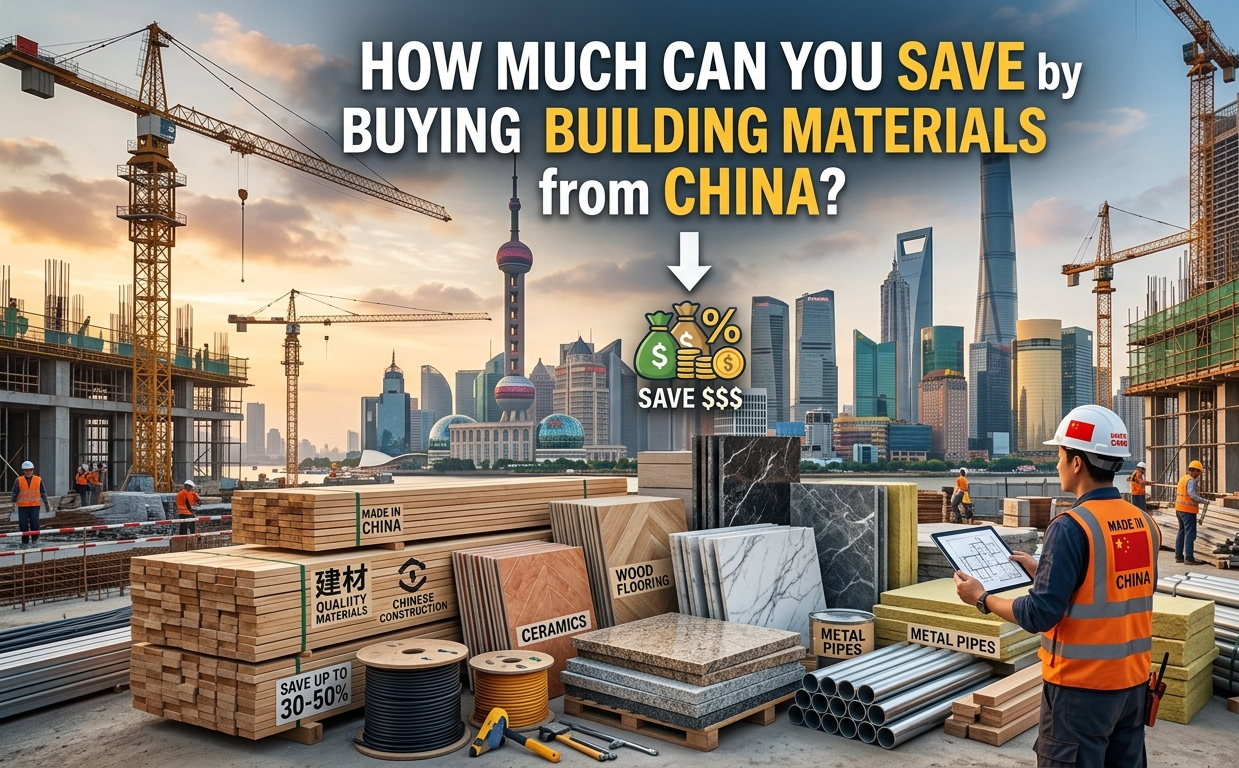
- Realistic Baseline Savings: Importing structural building materials and custom interior joinery from Foshan typically yields net savings of 30% to 50% compared to Western domestic sourcing, even after accounting for current 2026 maritime freight and import tariffs.
- The Cluster Multiplier: Foshan’s unique (geographical advantage) allows a single project buyer to purchase ceramic tiles, custom millwork, aluminum fenestration, and loose furniture within a 50-kilometer radius, cutting multi-vendor coordination costs.
- Risk Management is the Profit Margin: The savings realized from lower production costs can be completely erased if a developer fails to invest in on-the-ground technical inspections, leading to the shipment of out-of-tolerance components that cause labor delays on-site.
What is the Actual Cost Reduction Percentage Across Key Material Categories?
Savings are not uniform across all product lines. Categories with high raw material costs and automated production yield lower margins, while products requiring high labor inputs, specialized surface finishing, and intricate custom machining offer much larger savings.
Based on historical B2B project procurement data in Foshan, here is a realistic breakdown of net savings by category:
| Product Category | Average Factory Savings (vs. Western Brands) | Key Drivers of Cost Efficiency in Foshan |
| Custom Kitchen & Wardrobe Joinery | 40% – 55% | High-volume automated CNC nesting lines, low-cost local access to PUR adhesives and premium films. |
| Aluminum Windows & Bifold Doors | 35% – 50% | Local glass processing integration, specialized architectural hardware ecosystems. |
| Porcelain Tiles & Sanitary Ware | 25% – 40% | Massive continuous kiln operations in Nanhai/Chancheng, automated weight-pressing lines. |
| Loose Hospitality Furniture | 45% – 60% | Concentrated upholstery and timber frame master-craftsmen networks in Shunde district. |
Why Does Foshan’s One-Stop Ecosystem Provide Greater Savings Than Decentralized Sourcing?
When an international project buyer sources materials from scattered industrial zones across China—for example, buying tiles from Fujian, windows from Shandong, and furniture from Zhejiang—the overhead of inland freight, independent warehouse staging, and separate export customs clearances erodes the project’s bottom line.
Foshan eliminates these fragmented logistics through localized supply chain integration.
Because every major finish required for a full hotel or apartment interior fit-out is manufactured within a single municipal zone, buyers benefit from massive structural consolidation efficiencies. Instead of paying for five separate Less-Than-Container Load (LCL) shipments—which attract high destination terminal handling fees—an on-the-ground agent can stage your production runs at a single local warehouse.
By executing a calculated, density-stratified container loading plan (placing heavy tiles and sanitary ware on the container floor and volumetric flat-pack cabinetry or compressed upholstery on top), you maximize both the weight and volume caps of a 40ft HQ container, lowering your ocean freight cost per square meter to the absolute minimum.
What Hidden Costs Routinely Inflate Chinese Procurement Budgets?
To achieve maximum financial savings, project developers must factor the following variable line items into their preliminary feasibility spreadsheets:
- Inland Logistics and Port Fees: This includes factory-to-warehouse transport, container dunnage, strapping, export handling documentation, and local port terminal charges (THC).
- Import Tariffs and Anti-Dumping Duties: Depending on the destination country, specific materials like porcelain tiles or certain aluminum profiles face targeted anti-dumping duties or structural trade tariffs. These must be analyzed before selecting specific product specifications.
- Job Site Wastage Margins: Unlike domestic ordering where a contractor can quickly source an extra missing piece from a local distributor, replacement items shipped from China require time. Buyers must add a strict 5% to 8% buffer on flat tiles, trim profiles, and matching hardware to account for on-site installation errors.
- On-the-Ground Quality Control (QC): B2B procurement requires independent third-party oversight. Budgeting for live production audits and pre-shipment inspections is mandatory to avoid shipping defective products.
How Does a 1:1 Physical Mockup Save Thousands of Dollars in On-Site Labor?
The most expensive failure point in international real estate procurement is structural incompatibility discovered at the job site. If a custom wardrobe is manufactured 5mm too wide, or if an integrated kitchen appliance cutout lacks proper ventilation clearance, fixing the error during final construction requires intensive local carpentry modifications or complete product re-orders.
To avoid these costly mistakes, developers must implement the 1:1 Scale Physical Mockup Rule at the factory level in Foshan.
[Architectural Blueprints] ➔ [1:1 Physical Mockup Assembled in Foshan] ➔ [On-Site Technical Verification] ➔ [Mass CNC Production Release]
Before authorizing a full production run for a 100-unit apartment building or a hotel layout, the primary OEM factory must construct a complete, physical prototype room using the exact specified substrates, hardware, and surface veneers.
Your on-the-ground sourcing team then physically tests the assembly: checking plumbing access routes, testing hardware cycle metrics, verifying appliance clearances, and checking color lots under standardized lighting. Resolving structural discrepancies on a factory floor in Foshan costs practically nothing compared to halting an active construction site overseas.
为什么选择HSY sourcing (Why Choose HSY Sourcing)
Maximizing your procurement savings while protecting your build timeline requires an independent, technically skilled representative based directly inside the Foshan cluster. The HSY Sourcing Team manages your commercial real estate risk through strict field operational procedures:
- Transparent Project Representation: We operate entirely on a fixed service-fee model. We maintain zero hidden factory alliances and accept no supplier commissions, ensuring all original factory-floor discounts and raw pricing are passed directly to your development team.
- Technical Engineering Oversight: We do not simply look at aesthetics. Our on-the-ground team reviews technical CAD submittals, measures panel moisture levels with digital calipers, checks PUR edge-banding consistency, and cross-checks fire-retardant (Class B1) and environmental (CARB Phase 2/E0) test documents.
- Cross-Vendor Finish Alignment: We eliminate color lot variations across different manufacturing types by physically transporting master control film and veneer samples between independent cabinet factories, interior door lines, and wall-panel extruders.
- Volumetric Loading Optimization: At our staging facilities, we oversee dense, mixed-material container packing. We safely layer heavy architectural surfaces with volumetric contract furniture, minimizing transit damage and maximizing container cube utilization.
Frequently Asked Questions (FAQ)
Is it financially viable to source materials from China for a single high-end luxury villa?
Yes, provided the villa utilizes premium, high-customization specifications. While standard retail items might not justify the fixed logistics and customs clearance fees, custom luxury villa interiors—requiring large seamless bamboo charcoal fiber wall slates, custom book-matched wood veneers, premium bifold aluminum systems, and bespoke furniture—routinely generate net savings of 35% or more compared to local high-end European or American luxury suppliers.
How does HSY Sourcing protect project buyers from currency fluctuations and material cost shifts?
We secure fixed-price contracts with local manufacturers during the initial shop-drawing sign-off phase. By locking in material volumes upfront and utilizing structured milestone payment terms linked to specific production achievements, we shield our clients from short-term commodity spikes or currency movements during the manufacturing cycle.
How do we handle international building code compliance for commercial projects?
Our team reviews your local building regulations (such as North American ASTM standards or European CE classifications) during the technical review stage. We source from pre-vetted OEM factories whose production lines are independently audited and certified by global firms like SGS or Intertek, and we verify batch testing metrics before loading.