

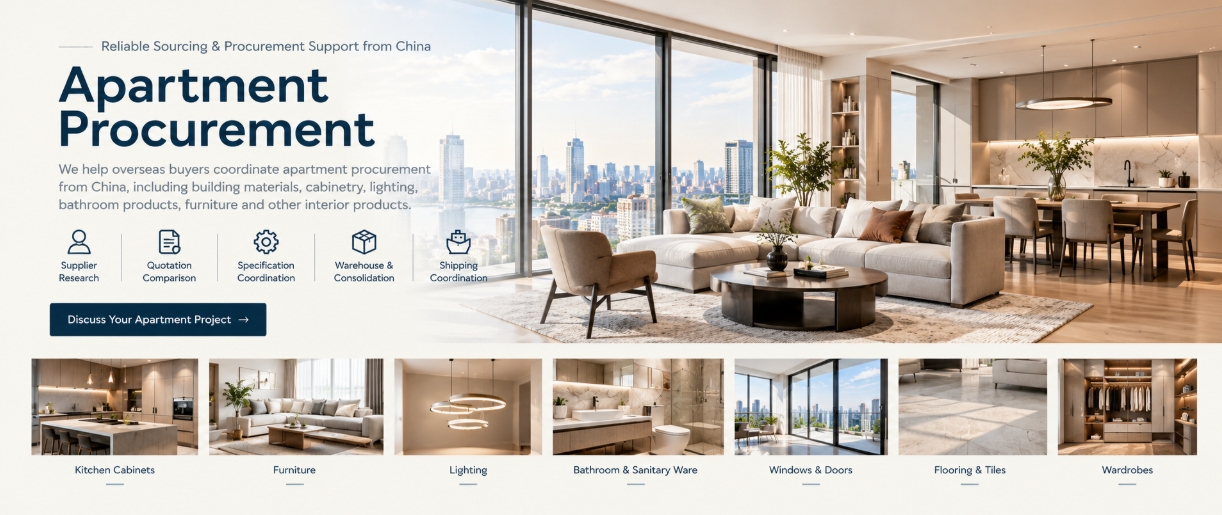
HSY Sourcing helps overseas buyers coordinate apartment procurement from China, covering selected building materials, cabinetry, lighting, bathroom products, furniture, and other interior products.
Whether you are renovating an apartment, furnishing several units, or coordinating purchases from multiple suppliers, we can help with supplier research, quotation comparison, specification communication, and purchasing follow-up according to the agreed scope.
Based in Foshan, Guangdong, China, HSY works with third-party suppliers and manufacturers. We are a sourcing and procurement coordination service, not a manufacturer. Supplier product costs and HSY service fees are handled separately so that you can understand the scope and cost of the services involved.
If you have a product list, floor plan, Bill of Quantities (BOQ), or drawings, these documents can help establish which items are ready for quotation and which require further clarification.
Discuss Your Apartment Procurement Requirements
When Do You Need Apartment Procurement Support?
Apartment procurement can involve anything from purchasing a few interior products to coordinating several categories for a renovation or furnishing project. The amount of support required depends on the products, quantities, specifications, and purchasing schedule.
HSY may be able to assist when you need to:
- Source several categories of building materials and interior products from China.
- Find suppliers for kitchen cabinets, wardrobes, windows, doors, flooring, lighting, or bathroom products.
- Compare quotations from different suppliers against consistent specifications.
- Coordinate custom-made products that require drawings, dimensions, or finish confirmation.
- Purchase similar products for several apartments while maintaining consistent specifications.
- Arrange receiving and consolidation when goods are purchased from multiple suppliers.
Not every project requires a comprehensive procurement service. If you only need one product category, it may be more appropriate to discuss a specific sourcing service. If several categories need to be purchased and coordinated, a broader procurement arrangement may be more suitable.
Building Materials and Interior Products for Apartments
The products required for an apartment depend on the property, design, renovation scope, and intended use. Some buyers need only furniture and decorative products, while others need to coordinate fixed cabinetry, doors, flooring, bathroom products, and other materials.
Kitchen Cabinets and Wardrobes
Kitchen cabinets and wardrobes are often made to specific dimensions and configurations. Before requesting quotations, buyers should clarify cabinet layouts, board materials, finishes, hardware, internal fittings, and any special storage requirements.
For custom-made products, drawings and written specifications are important. Suppliers may otherwise quote different constructions or materials, making direct price comparisons unreliable.
Where required, HSY can help coordinate supplier quotations and communicate product specifications. Final dimensions, installation conditions, and approved shop drawings should be confirmed by the relevant project professionals and suppliers before production.
Windows and Doors
Apartment window and door requirements vary according to the building, opening dimensions, design, climate, and applicable local requirements.
Relevant details may include frame material, profile dimensions, glass configuration, hardware, finish, opening direction, and installation conditions. For replacement projects, the existing openings and site conditions need to be established before final specifications are approved.
HSY can help coordinate sourcing enquiries and supplier communication for agreed requirements. Product selection and technical compliance should be checked against the project specifications and destination-country regulations.
Flooring and Tiles
Flooring and tiles need to be assessed against the intended application, dimensions, surface finish, installation method, and expected quantities.
For projects involving multiple apartments, buyers should confirm whether the same product, finish, and batch requirements apply across all units. Additional quantities for cutting, breakage, and future replacement should be considered by the project team where appropriate.
When comparing quotations, make sure the material, thickness or product specification where relevant, dimensions, finish, packaging, and quantity are clearly stated.
Lighting
Lighting requirements may include ceiling lights, pendant lights, wall lights, downlights, and other fixtures specified by the designer or project team.
Important considerations include fixture dimensions, mounting arrangements, finish, light output, colour temperature, electrical specifications, and compatibility with the intended installation.
Where products will be installed in a particular country, buyers should verify applicable electrical and product compliance requirements before ordering. Product appearance alone is not sufficient to establish technical suitability.
Bathroom Products and Sanitary Ware
Bathroom procurement may include basins, toilets, faucets, showers, bathtubs, bathroom accessories, and other specified products.
Before purchasing, confirm the required dimensions, installation arrangements, connection specifications, finishes, and compatibility with the bathroom layout. Where several products must work together, it is useful to review the relevant technical information before confirming the order.
Furniture
Furniture sourcing may cover beds, sofas, dining tables, chairs, storage units, desks, and other items required for the apartment.
The quotation should specify dimensions, materials, finishes, upholstery, quantities, packaging, and any custom requirements. Products that appear similar in catalogue photographs may differ in construction and materials.
For projects involving several units, an approved product specification and finish reference can help reduce unintended differences between orders.
The product categories included in an HSY engagement depend on the actual requirements and the suppliers available for the project.
Common Challenges in Apartment Procurement
Purchasing from China can provide access to a wide range of products and suppliers, but successful procurement depends on how clearly the requirements are defined and how the orders are coordinated.
Comparing Quotations on a Consistent Basis
Two suppliers may quote different prices for products that look similar. Differences may include materials, dimensions, hardware, construction, finishes, packaging, and commercial terms.
Before comparing prices, buyers should establish a common specification and identify any differences between the offers. Otherwise, a lower quotation may simply reflect a different product.
HSY can help collect and compare supplier information for the agreed requirements. The quality and completeness of a comparison depend on the specifications and information available from each supplier.
Keeping Specifications Consistent Across Apartments
When the same products are required for several apartments, consistency becomes an important purchasing consideration.
Cabinet finishes, tile selections, furniture dimensions, lighting models, and bathroom fittings should be recorded clearly if they are intended to match across units. Any approved substitutions should be documented before orders are placed.
This is particularly relevant when purchasing takes place in stages or when different suppliers are responsible for related products.
Coordinating Custom-Made Products
Custom cabinetry, wardrobes, windows, and certain doors require more information than standard catalogue products.
Dimensions, drawings, finishes, hardware, opening arrangements, and installation conditions may need to be confirmed before manufacturing. Changes made after production begins can affect cost and schedule.
Buyers should establish who is responsible for site measurement, technical approval, and final drawing sign-off. HSY can assist with supplier communication where included in the agreed scope, but this does not replace the responsibilities of the project architect, designer, installer, or manufacturer.
Managing Different Supplier Schedules
Products from different suppliers may be ready at different times. Some items may be made to order, while others may be available from existing stock.
The purchasing plan should account for the relevant production schedules, packaging, delivery to the warehouse if required, and the intended shipping arrangement. A shipment date should not be assumed until the supplier schedules and logistics arrangements have been confirmed.
Planning Receiving and Shipment
When goods come from multiple suppliers, buyers need to consider where the products will be received, how they will be identified, whether storage is required, and how the shipment will be organized.
Product dimensions and packaging can affect the loading plan. Consolidation arrangements should therefore be discussed alongside purchasing and delivery schedules, rather than left until all goods are ready.
How HSY Coordinates Apartment Procurement
HSY’s role is to coordinate agreed sourcing and purchasing activities between overseas buyers and relevant suppliers. The process varies by project, but typically follows several stages.
1. Review the Project Requirements
We first need to understand the project type, destination country, product categories, approximate quantities, available specifications, and expected schedule.
If you already have a BOQ, product schedule, floor plan, or drawings, these documents can help identify which products can be quoted and which require more information.
2. Research Suitable Suppliers
Based on the agreed scope, HSY can research potential suppliers and collect relevant product and commercial information.
Supplier suitability depends on the products required, specifications, order quantities, available documentation, and commercial terms. Supplier research does not automatically mean that every supplier has undergone a factory audit or independent verification.
Where a factory visit or more detailed supplier assessment is required, the scope should be discussed separately.
3. Collect and Compare Quotations
Supplier offers should be reviewed against the same product requirements wherever possible.
The comparison may cover materials, dimensions, finishes, quantities, packaging, production schedules, payment terms, and delivery conditions. Any differences that affect the purchasing decision should be clarified before an order is confirmed.
The purpose is to help you understand the offers more clearly, not simply to select the lowest quoted price.
4. Coordinate Specifications and Drawings
For products that require customization, HSY can help communicate questions and outstanding details between the buyer and supplier, where this service is included.
Depending on the product, this may involve material selections, finish references, hardware details, dimensions, product samples, or shop drawings.
The buyer or designated project professional remains responsible for approving design intent and relevant technical requirements. Suppliers remain responsible for their manufacturing obligations.
5. Follow Up on Purchasing Activities
Once orders are confirmed, agreed follow-up may include communication with suppliers about production progress, outstanding information, and expected readiness.
The extent of follow-up depends on the engagement. Manufacturing schedules and completion remain subject to the relevant supplier and production conditions.
6. Arrange Agreed Quality and Logistics Services
If required, HSY can discuss quality inspections, warehouse receiving, cargo consolidation, and shipping coordination.
These services should be defined before work begins. Inspection criteria, reporting requirements, storage arrangements, handling services, and shipping responsibilities may affect the scope and fees.
Not every apartment procurement engagement includes all of these activities.
Quality Control for Apartment Products
Quality control should be planned around the product specification and the risks associated with the order.
Depending on the agreed inspection scope, checks may include:
- Comparing selected product details against approved specifications.
- Checking dimensions or visible finishes where these checks are included.
- Reviewing packaging and visible damage.
- Recording agreed inspection findings through photographs or reports.
The inspection stage matters. Some details are easier to check before packaging, while other issues may only become apparent during installation or use.
Before an inspection is arranged, clarify what will be checked, the applicable criteria, the timing, and the reporting format. An inspection covers the agreed scope and cannot guarantee that every item is free of defects.
If you require a more detailed inspection arrangement, see our Quality Control & Factory Inspection service.
Warehouse Receiving and Cargo Consolidation
Apartment projects that purchase products from multiple suppliers may benefit from a coordinated receiving and shipping arrangement.
Depending on the agreed service, the process may involve:
- Coordinating delivery of goods from suppliers to the designated warehouse.
- Recording received packages and available shipping information.
- Arranging storage where required and agreed.
- Grouping goods from multiple suppliers for shipment.
- Coordinating loading preparation and relevant shipping arrangements.
Warehouse receiving should not be confused with detailed product inspection. Checking package quantities or recording visible damage does not necessarily confirm the internal condition, dimensions, or full specification of every product.
Storage periods, handling, repacking, detailed checks, and shipping arrangements should be confirmed in advance because they may involve additional charges.
Learn more about our Foshan Warehouse & Cargo Consolidation service and Cargo Consolidation & Shipping service.
What to Prepare Before Requesting Apartment Procurement
You do not need to have every document finalized before contacting HSY. However, the more specific your requirements are, the easier it is to determine which suppliers and services may be suitable.
Where available, prepare the following information:
- Destination country: The country and intended delivery location.
- Project scope: Whether you are renovating one apartment, furnishing several units, or purchasing for another defined purpose.
- Product categories: For example, kitchen cabinets, flooring, windows and doors, lighting, furniture, or bathroom products.
- Quantities: Estimated quantities or the number of units involved.
- Drawings and specifications: BOQ, floor plans, CAD drawings, product schedules, dimensions, material specifications, or reference images.
- Schedule: Expected purchasing date and required delivery period.
- Required services: Supplier sourcing, quotation comparison, specification coordination, quality inspection, warehouse receiving, consolidation, or shipping arrangements.
If you are still developing the design, explain which decisions have already been made and which remain open. This helps distinguish products that are ready for quotation from those that require further design or technical clarification.
Frequently Asked Questions
What does apartment procurement from China involve?
Apartment procurement involves sourcing and coordinating the purchase of products required for an apartment renovation, furnishing project, or multi-unit requirement. Depending on the scope, this may include supplier research, quotation comparison, specification communication, order follow-up, and agreed logistics services.
The exact activities depend on the products and services confirmed for the project.
Can HSY help source products for a single apartment?
You can discuss your requirements with HSY, including sourcing for a single apartment. Suitability depends on the product categories, quantities, supplier requirements, and the scope of assistance needed.
For a single product category, a category-specific sourcing service may be more appropriate than broader procurement coordination.
Can HSY coordinate procurement for several apartments?
HSY can discuss procurement coordination for projects involving several apartments. Where products need to be repeated across units, clear specifications, approved finishes, quantities, and purchasing records are useful for maintaining consistency.
The appropriate approach depends on the project scope and the number of product categories involved.
Which products can be sourced for apartment projects?
Potential categories include kitchen cabinets, wardrobes, windows and doors, flooring, tiles, lighting, bathroom products, furniture, and selected interior materials.
The actual sourcing scope depends on your requirements and the suitability of available suppliers.
Can HSY compare quotations from different suppliers?
HSY can help collect and compare quotations for the agreed requirements. A meaningful comparison needs sufficiently clear specifications so that differences in materials, construction, dimensions, finishes, quantities, and commercial terms can be identified.
A quotation comparison does not guarantee that the lowest-priced supplier will be the most suitable.
Do I need drawings or a BOQ before contacting HSY?
No. You can begin with a description of the project and the product categories you need. However, drawings, specifications, and a BOQ can help suppliers provide more relevant quotations.
For custom-made products, confirmed dimensions and approved technical details are especially important before production.
Can products from multiple suppliers be consolidated in China?
Cargo consolidation can be discussed when products are purchased from multiple suppliers. The arrangements depend on the suppliers’ delivery schedules, warehouse requirements, packaging, quantities, and shipping plan.
Storage, receiving, handling, and shipping fees should be clarified in advance.
Does HSY inspect every product before shipment?
Not automatically. Quality inspection must be agreed according to the product, order, inspection stage, and required criteria.
If inspection is required, the scope, reporting format, timing, and fees should be confirmed before the service begins.
How are supplier prices and HSY service fees handled?
Supplier product prices and HSY service fees should be treated as separate costs. Before sourcing work begins, the agreed scope and applicable fees should be clarified.
Supplier quotations may differ according to materials, specifications, quantities, production requirements, and commercial terms.
Can I use HSY for only one product category?
Yes, you can discuss sourcing support for a specific product category within HSY’s service capabilities. If you need only furniture, lighting, bathroom products, or another defined category, a category-specific sourcing arrangement may be more suitable than a multi-category procurement service.
Discuss Your Apartment Procurement Requirements
If you are renovating an apartment, furnishing several units, or coordinating purchases from different suppliers in China, share your project requirements with HSY Sourcing.
Tell us your destination country, the products you need, approximate quantities, available drawings or specifications, and expected schedule. We can then discuss the relevant sourcing scope, supplier requirements, and service fees.
Contact HSY Sourcing to discuss your apartment procurement requirements.


