

Cargo Consolidation & Shipping from Foshan, China
When you source building materials or interior goods from multiple factories in Foshan and the surrounding Guangdong region, you face a logistics question: do you pay separate freight for each supplier’s goods, or find a way to combine everything into one shipment?
For most project buyers sourcing tiles, furniture, cabinetry, sanitary ware, windows, and lighting from different factories, separate shipments are the expensive default. Consolidating through a single point — our Foshan warehouse — is the practical alternative. Everything arrives at one address, is checked and packed together, and loads into one or two containers.
HSY Sourcing manages cargo consolidation and sea freight for clients sourcing through us. This page explains how it works, what it costs relative to the alternatives, and what you need to know about documentation and transit times before shipping from Foshan.
What Cargo Consolidation Actually Means
Cargo consolidation — sometimes called LCL consolidation or cargo stuffing — means collecting goods from multiple suppliers into a single shipment rather than shipping each supplier’s goods separately.
In the context of an interior fit-out project sourced from Foshan, it works like this: your tile order finishes production at a factory in Nanzhuang. Your kitchen cabinets finish at a factory in Longjiang. Your sanitary ware comes from a factory in Chancheng. Each factory is 20 to 40 minutes from our warehouse. We collect from each factory, bring everything to our warehouse, cross-check quantities against your order, plan the container loading sequence, and load everything into one 20ft or 40ft container.
You pay one freight rate. One bill of lading. One set of customs documentation at your destination.
The alternative — three separate FCL or LCL shipments from three factories — costs roughly two to three times more in total freight charges for the same volume of goods, and generates three times the paperwork for your customs broker.
What We Manage on the Shipping Side
Goods collection from factories We arrange domestic freight from each factory to our Foshan warehouse. For factories within the Foshan and Shunde cluster, collection is straightforward and fast. For suppliers further afield — Zhongshan for lighting, Kaiping for faucets — we arrange collection as part of the same logistics plan.
Warehouse receiving and cross-checking When goods arrive at our warehouse, we check quantities against your purchase orders and flag any shortfalls or discrepancies before the container is packed. Finding a missing carton before the container loads is manageable; finding it after the vessel has departed is not.
Container loading and packing plan We plan the loading sequence based on the fragility and weight of each product category. Heavy and durable goods — tiles in reinforced cartons, boxed sanitary ware — load first. Lighter and more fragile items — lighting in foam-padded boxes, flat-pack furniture — load on top or against container walls with separation. We photograph the loaded container before sealing.
Export documentation We prepare the commercial invoice, packing list, and arrange the bill of lading with the freight carrier. For goods requiring a certificate of origin — which is most building material exports from China, and is required for preferential tariff treatment in many destination markets — we arrange this through the relevant authority. For goods requiring product-specific certificates (test reports, compliance certificates), we compile these from factories as part of the order process.
Freight booking We book sea freight through established freight carriers operating from Guangzhou Nansha or Yantian ports, which are the main departure points for Foshan-originating cargo. We are not a freight forwarder and do not have our own shipping lines; we work with freight partners and pass the freight cost to you at cost without markup. Our fee covers the consolidation and logistics coordination work, not the freight itself.
Shipment notification and tracking Once the vessel departs, we provide you with the bill of lading number and vessel details so your customs broker at the destination can prepare for arrival. We share estimated arrival dates and update you on any vessel schedule changes.
FCL vs LCL — Which Makes Sense for Your Order
This is the question most buyers ask when they start thinking about shipping from Foshan. The answer depends on your total cargo volume.
FCL (Full Container Load) means you book an entire container — 20ft or 40ft — for your goods alone. You pay a fixed rate for the container regardless of how much of it you fill. A 20ft container holds approximately 25–28 cubic metres of cargo; a standard 40ft holds approximately 55–60 cubic metres; a 40ft high-cube (the most common container type for building materials) holds approximately 67–72 cubic metres.
FCL is cost-effective when your cargo volume fills at least 60–70% of the container. For most interior fit-out projects sourcing 6 or more categories, FCL is the more economical option. FCL also means your goods are not co-loaded with other shippers’ cargo, which reduces the risk of damage from incompatible co-loading.
LCL (Less than Container Load) means your goods share a container with other shippers’ cargo. You pay for the cubic metres your goods occupy, plus handling fees at the origin and destination consolidation depots. LCL is practical for smaller shipments — typically below 10–12 cubic metres — but above that volume, FCL becomes cheaper per cubic metre once handling fees are included.
For building materials specifically, LCL has an additional practical limitation: ceramic tiles, large-format stone slabs, and glass products are fragile and heavy. Co-loading these with unknown cargo from other shippers in an LCL container creates damage risk. For fragile building material categories, FCL is preferable if the volume justifies it.
Practical guidance for our clients: most apartment or hotel project orders we manage fill a 40ft container or more. For smaller villa projects or single-category orders, we advise on the most cost-effective option at the outset based on your product list and quantities.
Sea Freight Transit Times from Foshan
Foshan cargo typically departs from Guangzhou Nansha Port or Yantian Port (Shenzhen). Transit times below are port-to-port estimates and vary by carrier, vessel schedule, and season.
| Destination Region | Approximate Transit Time |
|---|---|
| Southeast Asia (Singapore, Malaysia, Thailand, Vietnam, Indonesia, Philippines) | 5 – 15 days |
| Australia and New Zealand | 18 – 28 days |
| Middle East (UAE, Saudi Arabia, Qatar, Kuwait) | 18 – 28 days |
| East Africa (Kenya, Tanzania, Mozambique) | 22 – 32 days |
| West Africa (Nigeria, Ghana, Côte d’Ivoire) | 28 – 38 days |
| South Africa | 25 – 35 days |
| North Africa (Egypt, Morocco) | 22 – 32 days |
| United Kingdom and Northern Europe | 28 – 38 days |
| Mediterranean (Spain, Italy, Greece, Turkey) | 25 – 35 days |
| North America (US West Coast) | 16 – 22 days |
| North America (US East Coast) | 28 – 38 days |
These are current typical ranges. Actual transit time depends on the carrier’s vessel rotation, port congestion at the destination, and any transshipment delays. We provide the carrier’s scheduled transit time when we book freight; the above figures are for planning purposes.
Allow additional time for:
- Customs clearance at the destination port: typically 2–5 working days for routine clearance, longer if documents are incomplete or goods are selected for physical inspection
- Inland delivery from the destination port to your site or warehouse: varies by destination country and distance from port
Export Documentation: What Is Required
This is the area where incomplete or inaccurate documentation causes costly delays at the destination port. We prepare the following for every shipment:
Commercial Invoice — lists the buyer, seller, goods description, quantity, unit price, and total value. The declared value on the commercial invoice is used by destination customs to calculate import duties. It must be accurate; underdeclaring value to reduce import duty is a customs offence in most countries and creates liability for the importer.
Packing List — lists every carton in the shipment with dimensions, gross weight, and contents. Your destination customs broker and receiving team use this document. We prepare the packing list in detail — not as a single-line summary — because destination customs occasionally cross-checks packing lists against physical cargo.
Bill of Lading (B/L) — the shipping contract between the cargo owner and the carrier. The B/L is the title document for the goods; the original B/L (or a sea waybill for consignments where original documents are not required) is needed by your customs broker to clear the goods at destination. We send you the B/L details as soon as they are issued by the carrier.
Certificate of Origin (CO) — confirms that goods were manufactured in China. Most countries require a CO for customs clearance. For shipments to countries with preferential trade agreements with China (ASEAN members, New Zealand, Australia, and others under RCEP), the CO may allow a reduced import duty rate. We arrange the CO through the relevant Chinese authority — typically the China Council for the Promotion of International Trade (CCPIT) or the local Chamber of Commerce.
Product-specific certificates — for goods with compliance requirements: test reports for formaldehyde emission compliance in cabinetry, CE certificates for applicable products going to Europe, WELS certificates for sanitary ware going to Australia, SAA certificates for lighting going to Australia. We compile these from factories as part of the order process and include them with the shipping documentation set.
Additional documents some destinations require:
- Fumigation certificate: required for wooden packaging (pallets, timber crates) shipped to Australia, New Zealand, the US, and many other countries. We use ISPM 15-compliant heat-treated timber packaging to avoid this requirement wherever possible; where wooden packaging cannot be avoided, we arrange fumigation and the associated certificate.
- Phytosanitary certificate: occasionally required for natural wood or plant-based materials. Relevant mainly for solid wood furniture and natural rattan; we confirm requirements for your specific goods and destination.
Freight Cost: What to Expect
We do not publish freight rates because they change weekly with carrier pricing and vary significantly by destination, container type, and cargo weight.
What we can tell you is how the cost structure works:
FCL sea freight is priced per container (20ft or 40ft high-cube). The rate varies by route and season. Rates from Guangzhou to major destinations have been volatile in recent years; for budget planning, ask us for a current indicative rate when you are planning your project.
Domestic collection (from factories to our warehouse) is charged per trip or per weight/volume depending on the factory location and cargo size. For factories within the Foshan and Shunde cluster, domestic collection costs are relatively modest. For factories further afield, we advise on collection costs at the planning stage.
Warehouse handling is charged at a fixed rate per CBM or per pallet position, covering receiving, cross-checking, repacking where necessary, and container loading.
Documentation fees cover certificate of origin, bill of lading charges, and any product-specific certificates not already paid for by the factory.
We provide a complete cost breakdown — factory prices, our service fee, domestic collection, warehouse handling, freight, and documentation — before any order is confirmed. There are no surprise charges added after goods are ready to ship.
Frequently Asked Questions
Can you consolidate goods from suppliers we have sourced independently — not just suppliers you found for us?
Yes. Some clients use us purely as a consolidation and shipping service for goods they have sourced themselves from Foshan-area factories. We collect from your suppliers, receive at our warehouse, check quantities, and arrange the shipment. We charge for the consolidation and logistics coordination work; the freight is passed through at cost. Contact us with your supplier locations and cargo details for a quote.
How far in advance do you need to know about a shipment?
For a standard consolidated FCL shipment, we need approximately 7–10 working days’ notice from the time the last goods arrive at our warehouse to the vessel departure date. This allows time for goods receiving, cross-checking, packing, documentation preparation, and container booking. For time-sensitive shipments, shorter lead times may be possible depending on carrier availability; contact us to discuss.
What happens if goods arrive at the warehouse damaged from the factory?
We photograph and document goods on receipt at our warehouse. If damage is found, we notify you immediately and contact the factory. Where damage is minor and can be repaired, we manage this at the factory or at our warehouse. Where goods need to be returned to the factory for replacement, we advise on the timeline impact and options. Goods with significant damage are not loaded without your instruction.
Can you ship to a destination not listed in your transit time table?
Yes. The table above covers the most common destinations for our clients but is not exhaustive. We arrange freight to most global destinations. For less common destinations, we obtain a rate from freight partners and advise on transit time and any documentation requirements specific to that country.
Do you handle air freight?
Occasionally, for small urgent orders or samples. Air freight is significantly more expensive per kilogram than sea freight and is not practical for building materials in any meaningful volume. For samples sent ahead of a bulk sea freight shipment — a tile sample, a hardware finish sample — we can arrange air freight or express courier.
Our goods include both standard cartons and fragile items like tiles and large glass panels. Can you handle mixed cargo?
Yes, and this is the standard composition of a building material project shipment. We plan container loading specifically to protect fragile items — tiles in reinforced cartons on the container floor, glass panels in A-frame timber crates against the container wall, lighter goods on top. We have experience loading mixed building material cargo and plan each container accordingly.
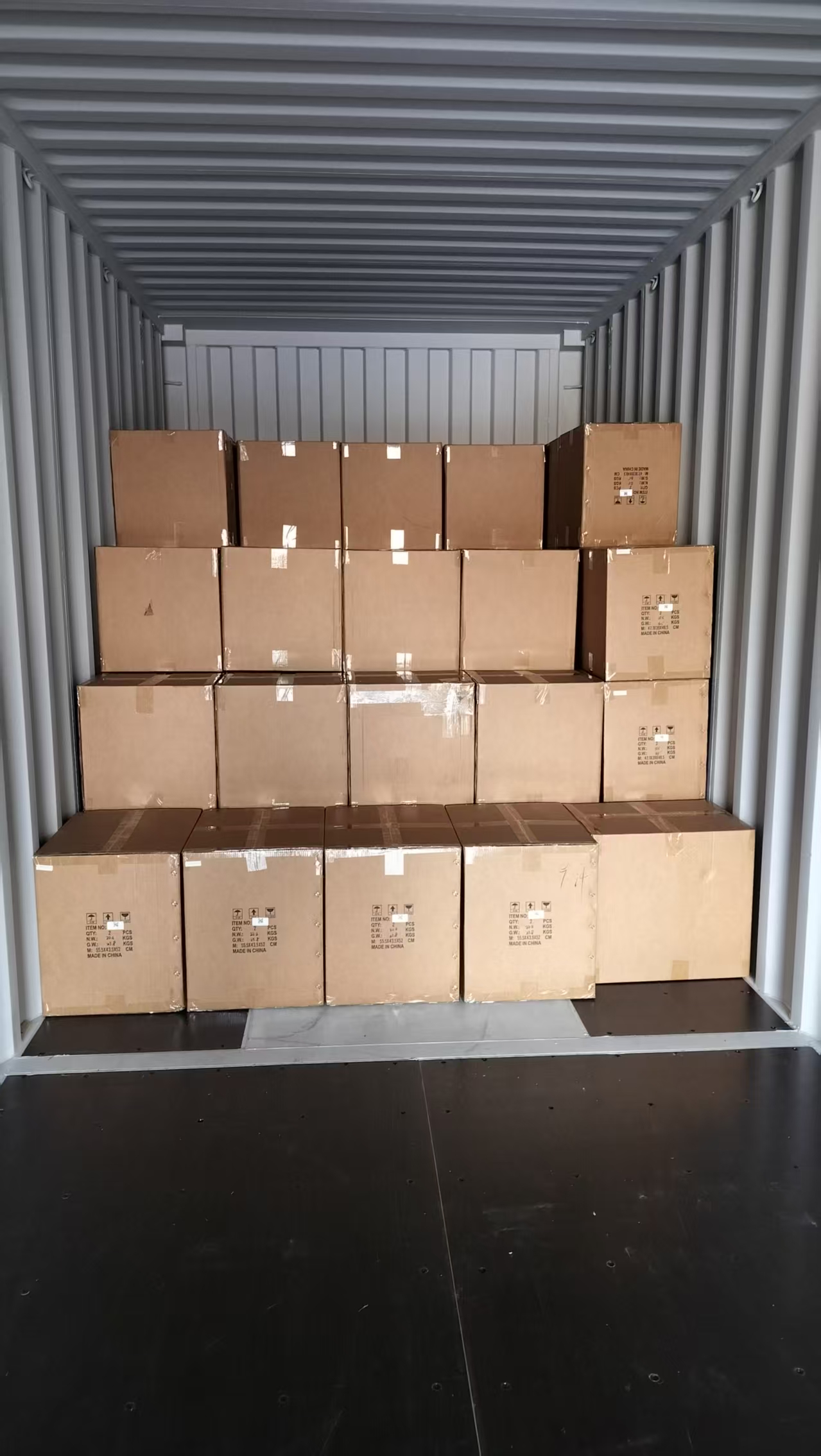
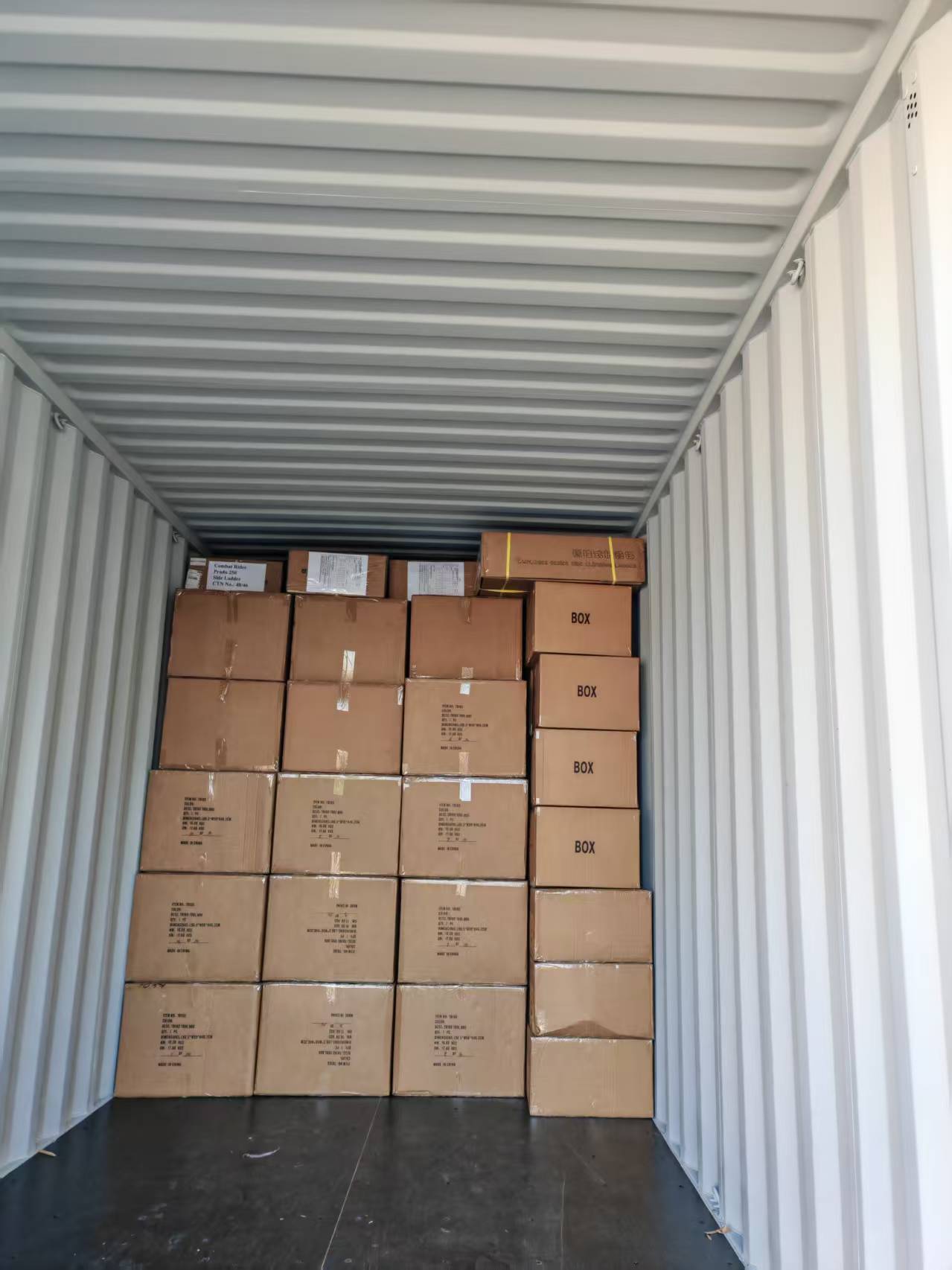
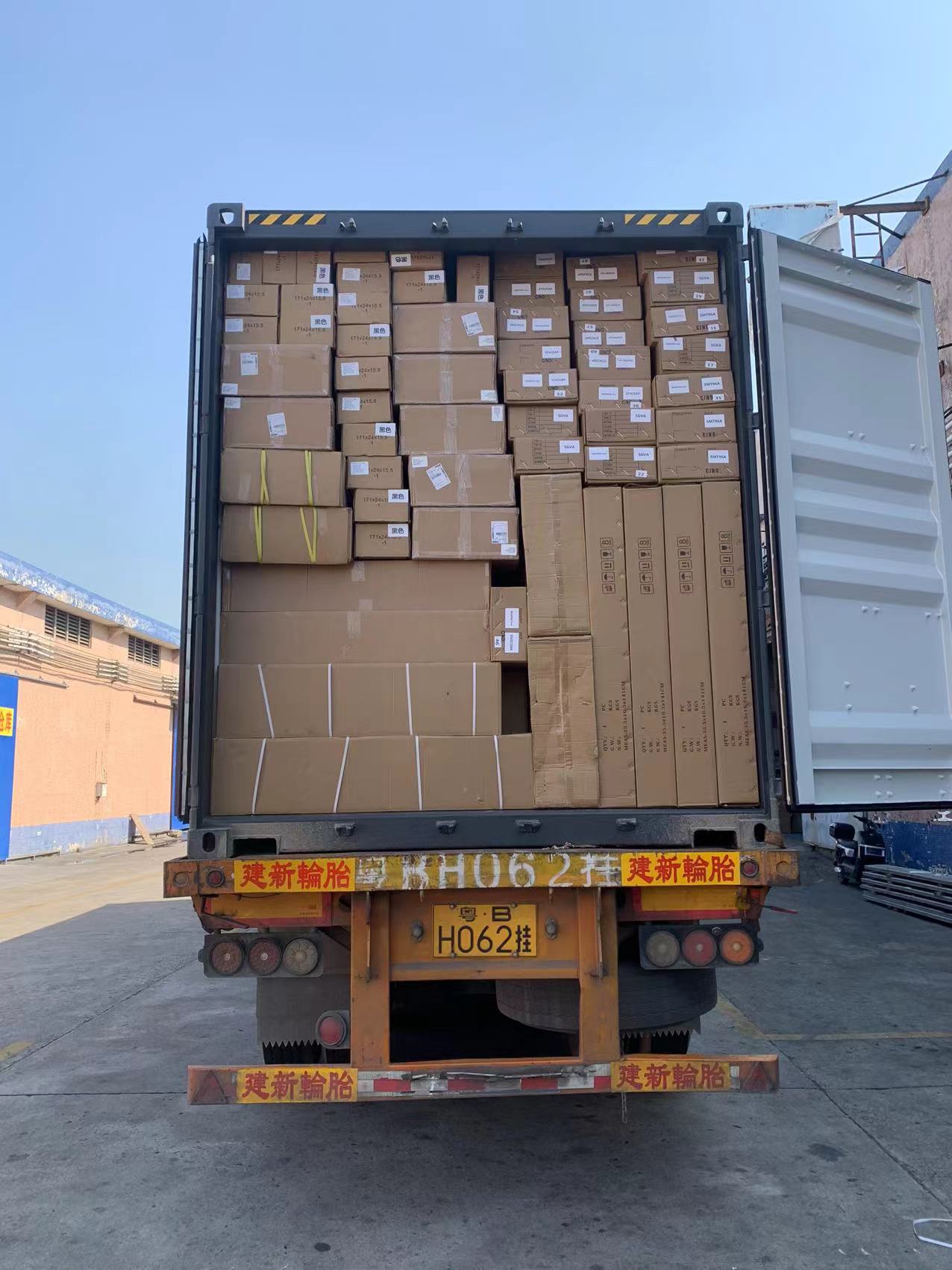
HSY Sourcing — Cargo Consolidation and Sea Freight from Foshan, China. Building materials, furniture, lighting, and interior goods from multiple Foshan suppliers, consolidated at our Foshan warehouse and shipped to your destination port.


