

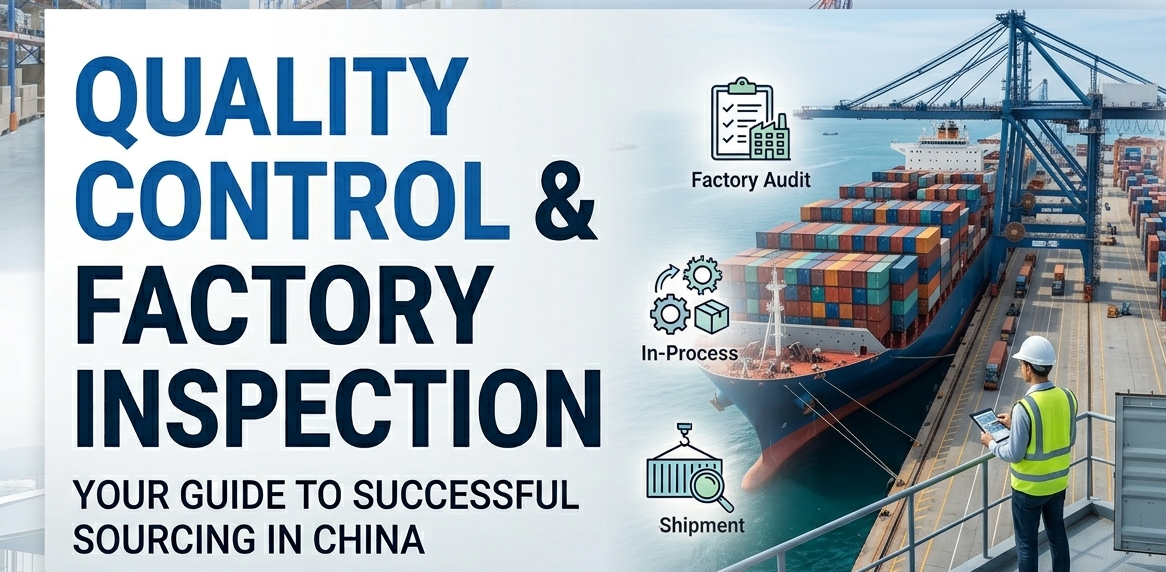
Quality Control & Factory Inspection in China
Quality problems with goods sourced from China almost always have one thing in common: nobody was at the factory to catch them before the goods were packed and shipped.
A defect found at a factory before packing costs the time to fix it. The same defect found on a construction site in another country costs the repair, the logistics of getting replacement goods, the installation delay, and possibly a contractual penalty. The financial case for pre-shipment inspection is straightforward once you have experienced the alternative.
HSY Sourcing is based in Foshan, Guangdong. We conduct quality control and factory inspection for building materials, furniture, lighting, sanitary ware, kitchen cabinets, aluminium windows, and other interior goods sourced from Foshan and the surrounding Guangdong manufacturing clusters. We also provide inspection as a standalone service for buyers who have sourced independently and need a local inspector before goods ship.
This page explains what types of inspection we conduct, what we check for each product category, how we report findings, and what inspection realistically can and cannot achieve.
👉 Request an inspection quote — we respond within 24 hours.
Why QC for Building Materials Is Different
Quality control for building materials and interior goods has some specific characteristics that differ from general consumer goods inspection.
Fragility and batch consistency matter more than pass/fail. For ceramic tiles, the key QC concern is not simply “is this tile defective” but “are all tiles in this shipment from the same production batch, and does the batch match the approved sample in colour and calibre.” A single defective tile is a minor issue. A shipment of tiles with 5% colour variation between batches is a significant site problem.
Technical specifications are often invisible. Whether a kitchen cabinet carcass uses E1 or CARB Phase 2 compliant board cannot be determined visually. Whether a faucet body is brass or zinc alloy requires a weight check or material test. Whether an aluminium window profile meets the specified wall thickness requires a digital gauge. These checks require knowledge of what to look for and the right tools — a photographic report from someone walking around a factory is not the same as a structured technical inspection.
Volume and sampling logic apply differently to different categories. For 500 identical ceramic basins, AQL sampling (checking a statistically valid sample against a defect rate threshold) is the practical approach. For 20 custom aluminium window units in 15 different sizes, every unit needs to be checked against its individual shop drawing specification. The inspection method needs to match the product type and order structure.
Defects that matter to a developer or hotel operator differ from defects that matter to a retail buyer. A minor surface scratch on furniture destined for a hotel guestroom is a reject; the same scratch on a furniture wholesale pallet might be acceptable. We calibrate inspection standards to the end use of the goods, not a generic consumer product checklist.
Types of Inspection We Conduct
Pre-Shipment Inspection (PSI)
Pre-shipment inspection is the most commonly requested type and the most important checkpoint in the sourcing process. It takes place when production is complete and goods are ready to pack — before they are loaded onto trucks or into containers.
We inspect finished goods against:
- The approved sample or specification document confirmed at the start of the order
- The purchase order specifications (dimensions, materials, quantities, finishes, hardware)
- Any compliance certificates or test reports that should accompany the goods
For building materials and interior goods, PSI is not a generic checklist. What we check depends on the product category, as described in the category-specific section below.
A PSI report includes: overall pass/fail result against the agreed acceptance criteria, photographs of inspected goods including close-ups of any defects found, a defect classification table (critical, major, minor), quantity count verification, and packaging assessment. We send the report within 24 hours of completing the inspection.
If goods fail inspection, we communicate the specific findings to you and the factory immediately. We do not release goods to shipping without your instruction after a failed inspection.
Production Monitoring (Mid-Production Inspection)
Production monitoring takes place during manufacturing — typically when 30–60% of the order is complete. The purpose is to catch issues while there is still time to correct them within the production schedule, rather than finding problems at the end when the factory’s options for rectification are limited.
For building materials and interior goods, the most common issues caught at this stage are:
Material substitution — a factory using a lower-grade board specification than contracted when the specified grade is out of stock; a faucet factory substituting a generic cartridge when the named-brand cartridge is unavailable; a cabinet factory using standard EVA edge banding adhesive instead of specified PUR. None of these are detectable from photographs or after finishing is complete.
Dimensional deviation — a production run of custom cabinets or aluminium windows that has drifted from the specified dimensions partway through production due to a CNC programming error or template wear.
Finish inconsistency — a lacquered cabinet door batch where the spray settings have shifted between production runs, causing a visible colour variation between early and late production.
Production monitoring reports cover: materials in use versus contracted specification, workmanship assessment on completed units, production progress against the delivery schedule, and any issues identified with recommended actions.
Factory Audit
A factory audit is a structured assessment of a factory’s production capability, management systems, and compliance status before placing an order. It is relevant for buyers who have identified a potential new supplier and want independent verification of the factory’s actual capabilities before committing to a purchase.
A factory audit covers:
- Factory registration and business licence verification
- Production equipment and capacity assessment relevant to the specific product type
- Quality management systems and internal QC processes
- Worker numbers and working conditions (relevant for buyers with ethical sourcing requirements)
- Storage and handling conditions for materials and finished goods
- Certification status for relevant standards
A factory audit is not a guarantee that goods from that factory will meet your specifications — that requires ongoing inspection at the order level. It is an informed starting point for supplier selection and due diligence.
Warehouse Receiving Inspection
When goods are collected from factories and arrive at our Foshan warehouse, we conduct a receiving check: carton count versus packing list, external carton condition, and spot-check of goods from any cartons showing damage. This check is part of our standard consolidation service and catches discrepancies — short shipments, damaged packaging, mislabelled cartons — before goods are loaded into a container.
What We Check by Product Category
Ceramic and Porcelain Tiles
- Batch consistency: all tiles in the order from the same production batch (same firing code)
- Colour verification against approved sample under standard lighting (not direct sunlight or fluorescent only)
- Calibre check: dimensional tolerance between tiles within the batch (standard tolerance ±0.5mm for calibre, ±0.3% for size)
- Surface inspection: glaze pinholing, crazing, chips, uneven glaze application — using AQL 2.5 for major defects on a statistically valid sample
- Warpage check: lippage between adjacent tiles tested with a straightedge
- Quantity count and packing: carton quantities, carton labelling, cushioning between tile faces
Kitchen Cabinets and Wardrobes
- Board specification: verify board grade (E1/CARB Phase 2) against factory’s test certificate and purchase contract
- Edge banding: adhesive type (PUR vs EVA), banding width, adhesion quality, corner finish
- Door and drawer front: finish consistency, colour match against approved sample, surface defects
- Hardware: brand verification (hinge brand, drawer runner brand) against purchase contract; function test (smooth operation, soft-close engagement)
- Dimensional check: spot-check of cabinet dimensions against shop drawings
- Assembly hardware packs: completeness and labelling for flat-pack orders
Furniture (Upholstered and Casegoods)
- Frame construction: accessible joint check for solid frame furniture; identification of frame material (solid timber vs engineered wood) where relevant
- Foam density: weight-based check on sample cushion where foam density is specified
- Fabric: no pulls, no inconsistent dyeing, colour match against approved sample; fabric brand verification where specified
- Surface finish: lacquer, veneer, or wrap consistency; no visible defects under standard lighting
- Hardware: drawer function, hinge operation, handle security
- Dimensions against purchase order and approved sample
- Packaging: adequate corner and surface protection for container transit
Aluminium Windows and Doors
- Profile wall thickness: digital gauge measurement on a sample of units; comparison against specified minimum
- Glass unit specification: IGU label reading (glass thickness, coating, cavity width, fill gas) against purchase contract
- Thermal break: visual confirmation of polyamide strip presence and width (accessible at frame ends before glazing bead is installed)
- Powder coat: colour comparison against approved RAL reference; film thickness measurement on a sample
- Hardware function: opening and closing operation, friction stay engagement, handle security, lock function
- Dimensional check against shop drawings: each size verified for a sample of units
- Weatherseal: correct installation and continuity around frame perimeter
Sanitary Ware (Toilets, Basins, Bathtubs)
- Glaze quality: surface inspection for pinholes, glaze pooling, crazing, chips — under raking light, not flat-on lighting
- Dimensional check: basin depth, toilet footprint, bathtub rim dimensions against purchase order
- Colour consistency across the batch against approved white or colour reference
- Flushing mechanism function for toilets: basic flush test where water connection is available
- Packaging: foam padding, carton strength, stacking labelling
Faucets and Bathroom Fittings
- Body material check: weight comparison between inspected units and a reference brass-body unit (zinc alloy is noticeably lighter)
- Cartridge brand: confirmation against purchase contract where named-brand cartridge is specified
- Finish: no pitting, no uneven coating, colour consistency across the batch
- Function: basic operation test — smooth handle movement, no sticking
Lighting Fixtures
- Driver brand verification against purchase contract
- CCT consistency: visual check under power on a sample of units; spot-check with colour meter for orders where tight binning is specified
- IP rating: review of factory test certificate for outdoor and wet-area fixtures
- Finish and physical condition: no broken diffusers, no lens scratches, complete driver compartment
- Quantity count and packaging
Large-Format Stone and Sintered Stone Slabs
- Visual inspection for cracks, chips, pinholes, and surface defects — each slab individually for high-value orders
- Thickness check with digital gauge
- Batch consistency: vein pattern and background colour comparison across slabs for book-matched orders
- A-frame crating and foam interleaving check before loading
AQL Sampling: What It Means in Practice
AQL (Acceptable Quality Level) is a sampling method used to inspect a statistically valid portion of a large batch and determine whether the batch meets an acceptable defect rate.
For building material and interior goods inspections, the most commonly used AQL levels are:
| AQL Level | Meaning | When We Use It |
|---|---|---|
| AQL 1.5 | Very tight — suitable for critical items | High-value decorative items, precision hardware |
| AQL 2.5 | Standard — the most common level | Tiles, sanitary ware, standard furniture |
| AQL 4.0 | More permissive — suits lower-risk categories | Carton packaging check, standard accessories |
AQL sampling means we check a sample size determined by the batch quantity and the AQL level. If the number of defects found in the sample exceeds the threshold, the batch fails and we negotiate with the factory on rectification.
AQL sampling does not guarantee that zero defective units exist in a batch. It is a statistically valid method to assess whether the defect rate in a batch is within an acceptable range. For orders where zero defects is a hard requirement — high-end hotel rooms, visible luxury villa finishes — 100% inspection is the appropriate method, but it is significantly more time-consuming and costly.
We advise on the appropriate inspection method for your specific order at the planning stage.
What an Inspection Report Includes
Every inspection we conduct results in a written report, sent within 24 hours of completing the inspection. A standard report includes:
Summary section — overall result (pass / conditional pass / fail), inspection date, factory name and location, purchase order reference, number of units inspected.
Quantity verification — count of units present against purchase order quantity; any discrepancies noted.
Specification check — comparison of inspected goods against purchase order specifications for each measurable parameter.
Defect findings — defect classification table (critical, major, minor) with defect type, quantity, and percentage of sample affected. Photographs of each defect type found.
Packaging assessment — carton condition, labelling accuracy, protection adequacy for the product type.
Overall recommendation — pass (goods may be released for shipping), conditional pass (minor issues to be confirmed by buyer before release), or fail (goods should not be released pending rectification).
The report is in English and is formatted to be usable as supporting documentation for a supplier dispute if defects are found after shipment.
Standalone Inspection: For Buyers Who Sourced Independently
We provide inspection as a standalone service for buyers who have found their own suppliers in Foshan or Guangdong and need a local inspector before shipment. You do not need to have sourced through us for this service.
For standalone inspections, we need: the factory address, the purchase order specification or an approved sample reference, the product category and quantity, and your preferred inspection date. We book the inspection directly with the factory and provide the report to you.
Standalone inspection fees are charged per man-day at the factory, with the number of days depending on the product category, batch size, and inspection type required. We provide a quote when you send us the inspection details.
Frequently Asked Questions
Do I need to be present at the factory for the inspection?
No. We conduct the inspection on your behalf and send you the report with photographs. If a significant issue is found, we communicate with you directly before deciding whether to release goods or require rectification. You make the release decision; we manage the communication with the factory.
How far in advance do I need to book an inspection?
For standard pre-shipment inspections in Foshan and Shunde, 3–5 working days’ notice is usually sufficient. For factories further afield in Guangdong, or during peak pre-holiday production periods (before Chinese New Year and Golden Week), we recommend booking 7–10 working days ahead. For production monitoring visits, we schedule these when we place the order and build them into the production timeline.
The factory says they have their own QC team. Do I still need an independent inspection?
Yes, if the goods matter to you. A factory’s internal QC team works for the factory. Their interest is in passing goods through production efficiently, not in applying your acceptance criteria. Independent inspection means the inspector’s obligation is to you, not to the factory’s production schedule. This is not a criticism of factory QC teams — it is a structural conflict of interest that exists regardless of the factory’s intentions.
What happens if goods fail inspection?
We communicate the specific failure findings to you and the factory immediately, with photographs. The options from there depend on the nature and scale of the failure: minor issues may be rectified by the factory within a day or two and re-inspected; major issues may require a partial or full re-production; critical issues may warrant rejecting the batch and discussing remedies under the purchase contract. We manage the communication with the factory, but the decision on how to proceed is yours. This is why having a clear purchase contract with defined acceptance criteria and a remedies clause matters — it determines your options when something goes wrong.
Can you inspect goods in factories outside Guangdong Province?
For factories in Guangdong Province, we conduct inspections directly. For factories in other provinces — Zhejiang, Jiangsu, Shandong — we work with inspection partners in those regions. We advise on this when the inspection location is confirmed. For most of our clients sourcing building materials and interior goods, the relevant factories are within Guangdong.
HSY Sourcing — Quality Control & Factory Inspection in China. Pre-shipment inspection, production monitoring, and factory audits for building materials, furniture, lighting, sanitary ware, kitchen cabinets, and aluminium windows — based in Foshan, Guangdong.


