
Key Takeaways:
- Segment Specifications by Zone: High-traffic hotel corridors require high-impact, scratch-resistant co-extrusion composites or solid SPC cores. Guestroom bed-heads require acoustic-backed, tactile real wood veneers or high-definition PUR-laminated bamboo charcoal fiber panels.
- Prioritize Certified Regulatory Standards: Do not accept generalized datasheets. Hospitality projects require verified Class B1 (or ASTM E84 Class A) fire-retardant performance and strict E0 or EN 717-1 formaldehyde compliance.
- Factor in Acoustic Dampening: Wall panels in guestrooms should be integrated with high-density acoustic foam or felt backing layers to minimize room-to-room sound transmission.
- Account for Base Wall Irregularities: Large-format panels cannot be glued directly to raw, uneven concrete walls without telegraphing imperfections. Always specify a coordinated aluminum or steel batten sub-frame system.
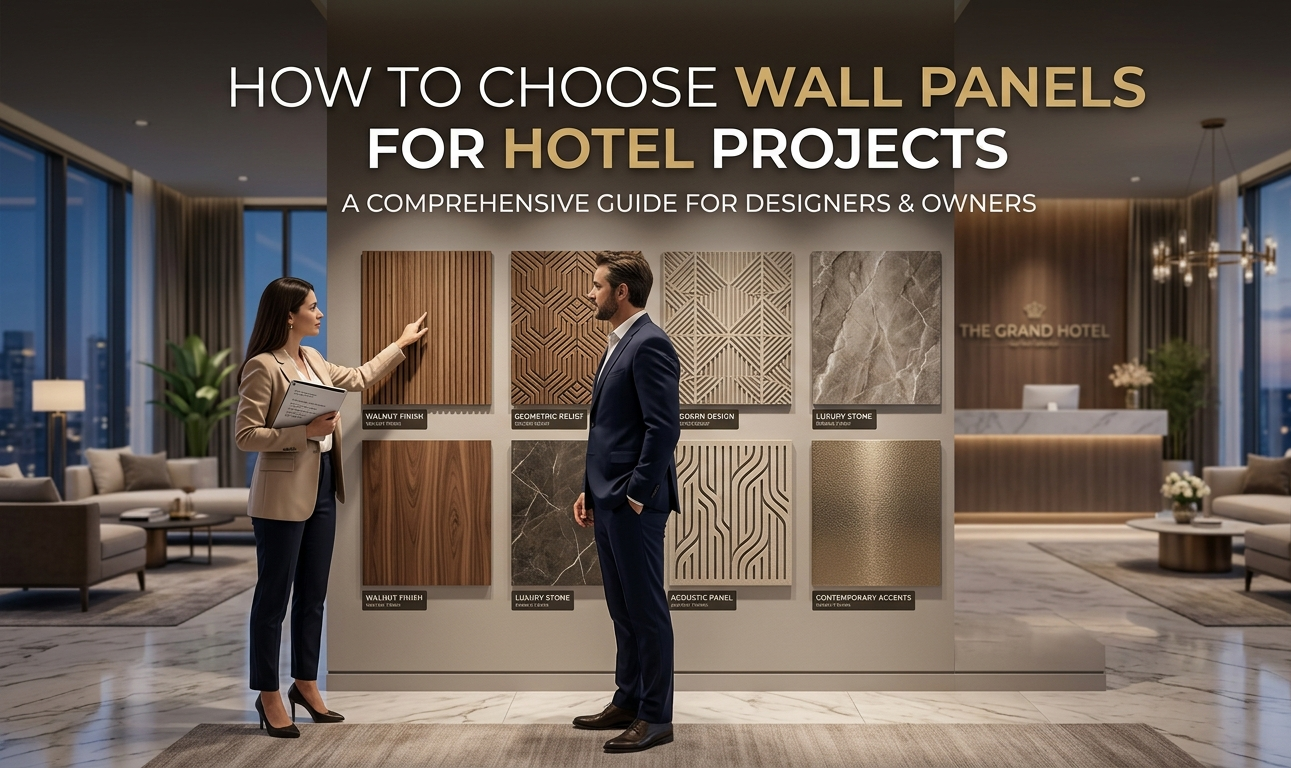
Procuring wall panels for a hotel development project is vastly different from selecting residential finishes. In a hospitality setting, wall coverings must simultaneously satisfy strict international building codes, handle continuous physical impacts from luggage carts, provide acoustic isolation between keys, and minimize room downtime during future renovations.
As the primary global manufacturing hub for interior building materials, Foshan offers deep supply chain capabilities for engineered panels. However, navigating the technical variations between factory tiers requires clear procurement criteria.
This guide outlines the critical structural, regulatory, and logistical metrics necessary to select the correct wall panels for a commercial hospitality development.
Which Core Materials Can Withstand Commercial Hotel Traffic?
Selecting a panel core based purely on aesthetics or a catalog photo often leads to premature structural failure. The core material determines the panel’s impact resistance, moisture stability, and weight-bearing capacity.
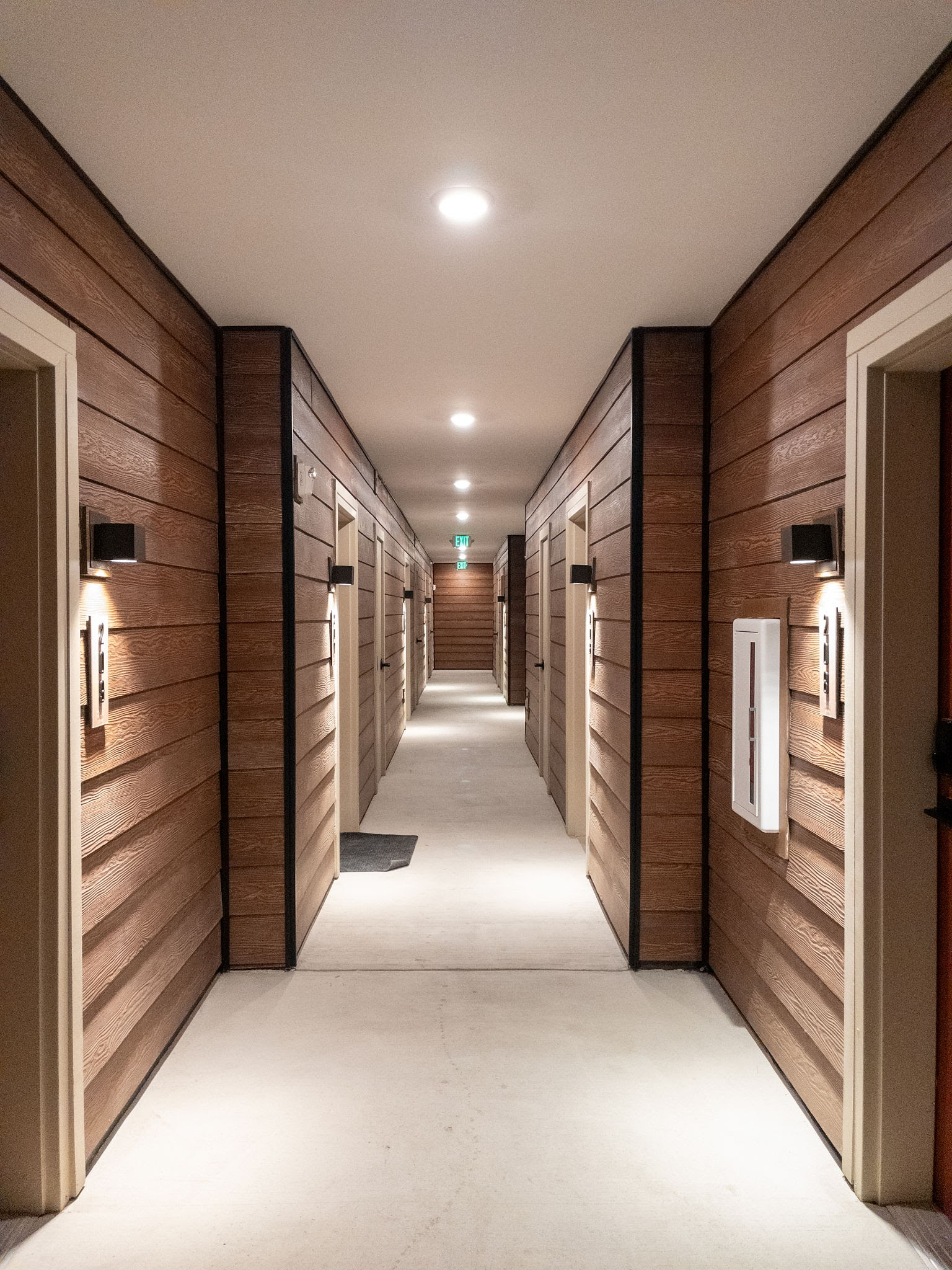
High-Density Wall Paneling in a Commercial Hotel Corridor. Source: VIDOK / Getty Images
As shown in the corridor environment above, wall panels must maintain absolute structural alignment across extended spans. The primary material choices available in the Foshan cluster serve completely different functional purposes:
- Bamboo Charcoal Fiber Composites: Highly recommended for guestrooms and public areas. They combine lightweight handling with strong water resistance and minimal thermal expansion. They provide an ideal substrate for high-end PUR hot-melt film laminations.
- Stone Plastic Composite (SPC) Solid Cores: Best for high-impact zones like service corridors and luggage staging areas. SPC cores feature an exceptionally high concentration of calcium carbonate, making them virtually puncture-proof and highly rigid, though significantly heavier to transport.
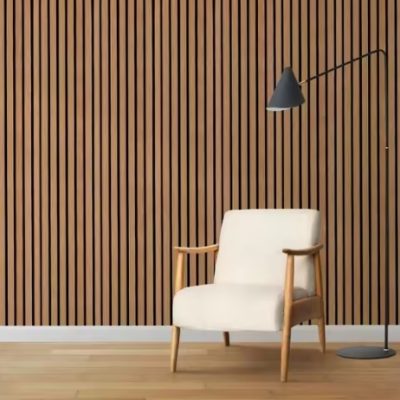
- Wood-Plastic Composites (WPC) Fluted Profiles: Ideal for feature walls, lobby backdrops, and ceiling transitions. Their hollow-core design reduces overall structural dead-load while providing distinct linear vertical geometry. Ensure the internal wall ribs are at least 1.8mm thick for commercial use.
What Fire and Acoustic Standards Must Your Hotel Wall Cladding Meet?
You cannot legally hand over a hospitality asset if the interior wall linings fail local commercial compliance checks. This is the single largest point of friction for international developers importing directly from factory lines.
First, clarify the fire classification required by your local jurisdiction. In most European and Asian markets, public spaces require a minimum of Class B1 (Flame Retardant) under EN 13501-1. For the North American market, you must specify materials that pass the ASTM E84 Class A tunnel test. Mandate that the factory provide recent, independent batch test reports from third-party auditors like SGS or Intertek for your exact specified panel profile.
Second, address sound transmission. Guestroom walls must maintain high acoustic separation. Standard bare composite panels can reflect sound waves, increasing interior echo.
To resolve this, specify panels integrated with an IXPE or high-density polyester acoustic felt backing layer. This configuration absorbs internal ambient frequencies and helps the overall wall assembly meet typical hotel target metrics of STC 50 (Sound Transmission Class) or higher.
How Do You Select the Right Surface Finish for Long-Term Maintenance?
The outer surface of the wall panel takes the direct brunt of guest interactions, cleaning chemicals, and localized UV exposure from guestroom windows.
| Finish Technology | Typical Thickness | Best Use Case | Maintenance Profile |
| Commercial PVC Film | 0.16mm to 0.22mm | Standard guestrooms, mid-scale apartments | Highly washable; scratch-resistant; cost-effective |
| High-Pressure Laminate (HPL) | 0.7mm to 1.0mm | High-traffic corridors, elevator lobbies | Extreme impact resistance; completely chemical-proof |
| Engineered Wood Veneer | 0.3mm to 0.5m | Luxury suites, VIP lounges, villas | Requires UV-cured protective lacquers; premium tactile feel |
For PVC film finishes, ensure the production contract specifies scratch-resistant, anti-fingerprint top-coats. Cheap, thin films (under 0.12mm) will easily tear when scraped by metallic luggage corners, exposing the raw white or grey composite core beneath.
Furthermore, always mandate PUR (Polyurethane Reactive) hot-melt lamination. Standard cold-glue lamination will systematically fail and delaminate when exposed to localized guestroom humidity or changes in the building’s central HVAC air pressure.
Why is the Sub-Frame Engineering Critical for Large-Scale Hotel Installations?
A major technical pitfall discovered during on-site installation is wall deflection. Raw masonry or concrete walls inside a newly built hotel structure are rarely perfectly plumb; variations of 10mm to 20mm over a 3-meter span are common.
If your procurement team orders flat, large-format panels intending to glue them directly to the blockwork, the finished wall will telegraph every structural warp, creating misaligned joints and un-level surfaces.
Incorrect Direct Glue Installation:
Raw Wall (Uneven)  ~~~~~~~[Glue Layer]=======> Finished Panel Mirrors Wall Warping

Correct Sub-Frame Installation:
Raw Wall (Uneven)  ~~~~~~~ [Adjustable Clip] ---- [Level Aluminum Batten] ======> Flush Panel Surface
To achieve a true 4-star or 5-star finish, include a coordinated aluminum interlocking clip-rail or batten system in your master Bill of Quantities (BOQ). The lightweight metal track is mounted and leveled mechanically against the uneven blockwork using adjustable structural brackets.
The wall panels are then secured to the level tracking using hidden stainless steel clips. This creates a uniform finish, provides a hidden cavity for routing electrical conduits and LED drivers, and creates a small ventilation gap that prevents rising structural dampness from affecting the decorative panels.
Why Choose HSY Sourcing for Your Hotel Wall Panel Sourcing?
Operating directly out of the industrial manufacturing centers of Foshan, HSY Sourcing serves as your independent engineering, quality control, and supply chain management division on the ground.
- Comprehensive BOQ Material Matching: We don’t just act as a middleman product finder. We analyze your architectural interior design (ID) packages and technical shop drawings to ensure that your panel dimensions, matching corner profiles, and sub-frame layouts form a single, fully compatible system.
- Direct Factory Floor Monitoring: Our quality inspectors physically visit the lamination and extrusion lines in Foshan. We perform weight-density verification on raw cores, execute 180-degree peel tests on the PUR lamination lines, and measure tongue-and-groove milling alignment with digital calipers before any cargo is packed.
- Regulatory Compliance Verification: We write your specific market compliance mandates (such as EN 13501 Class B1, ASTM E84 Class A, and E0 emission limits) directly into the binding manufacturer contracts. We cross-verify that the production batch accurately matches the certified lab submittals.
- Logistical Damage Mitigation: Wall panels for hotels are typically manufactured to custom lengths (such as 2.8m to 3.2m) to allow for seamless floor-to-ceiling installations. We manage the consolidation of these over-length assets at our local facility, designing and supervising the loading of heavy, horizontal plywood crates to prevent structural bowing during container shipping.
Visit www.hsysourcing.com to share your project’s material schedules and architectural layouts. Let our local engineers build a compliant, tightly managed supply chain for your next hospitality development.
Frequently Asked Questions (FAQ)
Q: Can we run embedded LED strip lighting directly inside the wall panel joints?
A: Yes. Many modern wall panel profiles manufactured in Foshan feature specialized aluminum transitional joints specifically designed to house low-voltage LED tracks. When ordering, you must specify these aluminum extrusion channels in your BOQ so they are manufactured with matching depths to your panels.
Q: How do we prevent color shade differences between panels in the same hotel guestroom?
A: Color shifting occurs when a factory utilizes different film batches or mixes different manufacturing lots. For hotel projects, we explicitly instruct the factory to secure the entire project’s film requirement from a single production run of the film supplier. We then verify color consistency across the cut panels under a standard D65 light box prior to the final lamination phase.
Q: What is the optimal panel thickness for a standard hotel guestroom backdrop?
A: For flat bamboo charcoal fiber or co-extrusion wood composite panels mounted over a sub-frame batten system, a core thickness of 5mm to 8mm is highly recommended. This thickness provides sufficient structural rigidity to handle wall attachments (such as bedside lamps and switches) without flexing or cracking.