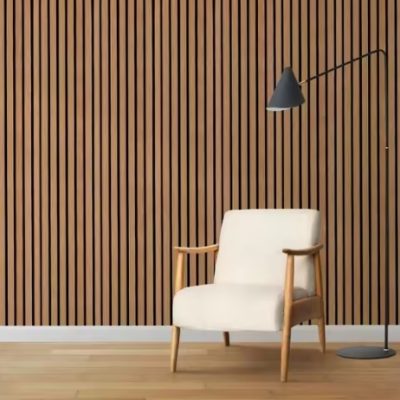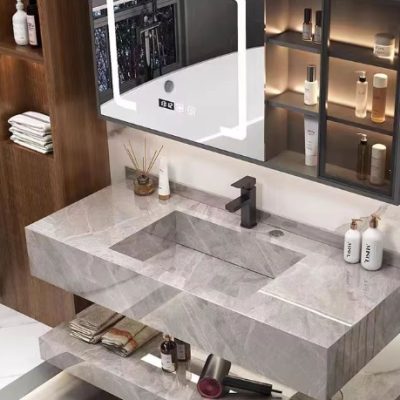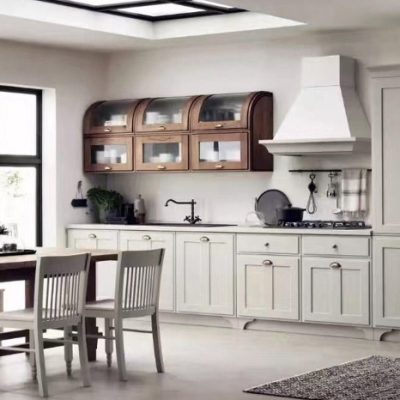


Developing or constructing a luxury villa in Europe requires navigating strict energy efficiency mandates, rigorous structural safety standards, and high local labor costs. Procurement of finishing materials—such as custom thermal break windows, fitted kitchen millwork, large-format porcelain slabs, and sanitary ware—accounts for 30% to 40% of total construction budgets.
Sourcing these custom packages directly from manufacturing clusters in Foshan and Shunde allows European builders to access advanced automated manufacturing at 30% to 45% lower costs than domestic Western European distributors.
However, importing into the European Union (EU), United Kingdom (UK), or Switzerland requires strict adherence to regional construction standards. Products must comply with the EU Construction Products Regulation (CPR), carry valid CE/UKCA markings, meet stringent thermal transmittance ($U$-value) thresholds, and satisfy low-VOC emissions criteria.
Key Takeaways
- Regulatory Compliance: Structural elements (windows, doors, safety glass) imported into Europe must comply with relevant Harmonized European Standards (hEN) and carry verifiable CE marking supported by Declaration of Performance (DoP) documents.
- Thermal Performance Mandates: Northern and Central European building codes require window assemblies with low overall thermal transmittance ($U_w \le 0.8\text{ to }1.2\,\text{W/m}^2\text{K}$). Specify triple-glazed Low-E units with argon gas and PA66 polyamide thermal break strips.
- Emissions Standards: All internal millwork, cabinetry, and wooden flooring must meet E0 or ENF low-formaldehyde standards and comply with EU REACH regulations for chemical adhesives and coatings.
- Logistics Weight Limits: European road transport regulations strictly enforce container axle load limits. A $40\text{ft}$ High Cube container carrying heavy porcelain tiles and natural stone must not exceed regional gross road-weight limits (typically $21,000\text{kg}$ to $24,000\text{kg}$ of net cargo depending on destination country transit laws).
How Do European Building Codes and CE Standards Affect Material Procurement in Foshan?
Importing building materials into the European market requires meeting specific performance criteria rather than simply buying standard off-the-shelf Chinese factory profiles.
European Compliance Verification Flow:
Factory Raw Specs ──> Notified Body Test Reports ──> Declaration of Performance (DoP) ──> CE / UKCA Marking
1. The Construction Products Regulation (CPR) and CE Marking
Under EU Regulation No 305/2011, construction products permanently incorporated into building works must display the CE mark.
- Glazing and Windows: Windows and exterior doors fall under EN 14351-1. Glass units must meet EN 12150 (thermally toughened safety glass) and EN 14449 (laminated safety glass).
- Verifying Certificates: Request official test reports issued by recognized international testing bodies (such as TÜV, Intertek, or SGS) linked to an accredited Notified Body. Generic, self-declared factory certificates without backing test data risk customs rejection at destination ports.
2. Thermal Transmittance ($U$-Values) and Airtightness
European energy efficiency regulations (such as Germany’s GEG or France’s RE2020) dictate low building envelope heat loss:
- Frame Systems: Windows must utilize multi-chamber aluminum profiles with broad PA66 GF25 polyamide thermal barrier strips (at least $24\text{mm}$ to $34\text{mm}$ strip depth).
- Glass Units: Specify triple glazing ($5\text{mm Low-E} + 12\text{A} + 5\text{mm Clear} + 12\text{A} + 5\text{mm Low-E}$) filled with 90% Argon gas to achieve glass $U_g$ values below $0.7\,\text{W/m}^2\text{K}$.
Which Material Categories Yield the Highest Quality and Cost Efficiency for European Villas?
Not all products offer equal savings when sourced from China. The table below outlines key categories where Foshan manufacturing excels for high-end European builds:
| Category | Recommended European Technical Spec | Key Compliance Standard | Typical Foshan Savings |
| Thermal Break Windows & Doors | 6063-T5 aluminum, $\ge 2.0\text{mm}$ wall, PA66 thermal strip, triple Low-E | EN 14351-1, EN 12150 ($U_w \le 1.0\,\text{W/m}^2\text{K}$) | 40% – 50% |
| Custom Millwork & Kitchens | 18mm E0/ENF plywood or moisture-resistant MDF, PUR edge-banding | EN 717-1 (Formaldehyde), REACH compliant finishes | 35% – 45% |
| Sintered Stone & Porcelain | Large-format porcelain slabs ($1200\times 2700\text{mm}$, $1600\times 3200\text{mm}$), water absorption $< 0.1\%$ | EN 14411, ISO 10545 | 45% – 60% |
| Sanitary Ware & Fittings | Solid surface bathtubs, 304/316 stainless steel or brass PVD faucets | EN 200 (Faucets), CE mark for ceramic sanitary ware | 30% – 40% |
Custom Joinery Cross-Section Specs:
 [Door Front: Lacquer / Veneer on MDF]
   └── [Edge Sealing: Waterproof PUR Glue Seam]
        └── [Carcass: 18mm E0/ENF Birch Plywood]
             └── [Hardware: Soft-Close Concealed Hinges - Rated 100k Cycles]
How Can Builders Prevent Site Fitting and Dimensional Errors During Procurement?
The main challenge in custom overseas procurement is managing dimensional tolerances between raw site masonry and factory-finished joinery.
1. Working from As-Built Drawings, Not Initial Concept Designs
Architectural floor plans change during concrete pouring and wall plastering. Production drawings for custom cabinetry, vanity units, and glass partitions must be based on verified as-built site measurements taken after sub-floors and final wall renders are completed.
2. Scribe Panel Allowances
European walls are rarely perfectly plumb. Custom kitchen and wardrobe shop drawings should incorporate 20mm to 30mm adjustable fill/scribe strips at wall-to-cabinet intersections. This allows site installers to trim filler panels on-site to match exact wall contours without altering structural cabinet dimensions.
3. Factory Pre-Assembly Mock-Ups
For complex luxury villa joinery, enforce a 100% factory trial assembly on the shop floor before finishing and packing. The factory must assemble the complete kitchen run or closet system to check drawer clearances, door alignment reveals ($1.5\text{mm}$ to $2\text{mm}$ uniform gaps), appliance cutout dimensions, and hardware function.
Technical Shop-Drawing Sign-Off Gateway:
Site As-Built Dimensions ──> Factory 2D/3D CAD Drawing ──> Appliance Spec Cross-Check ──> Client Approval ──> CNC Cutting
How Does the Logistics and Inspection Process Work for Shipping to European Ports?
Shipping consolidated building packages to major European container terminals (such as Rotterdam, Hamburg, Felixstowe, Antwerp, or Genoa) requires structured logistics management.
Consolidation & Shipping Timeline:
Phase 1: In-Line Factory Quality Inspection (Weeks 4–6)
 └── Phase 2: Foshan Staging Warehouse Collection (Week 7)
      └── Phase 3: Container Loading & Weight Balance Audit (Week 8)
           └── Phase 4: Ocean Transit to EU Port (30–40 Days)
                └── Phase 5: EU Customs Clearance & On-Carriage Delivery
- Weight Distribution Management: European road haulage strictly limits axle loads. High-density items like tiles and natural stone must be placed flat along the container floor, while lighter cabinetry boxes occupy the top space. Total net cargo weight should be capped based on destination road haulage regulations (typically $\le 21,500\text{kg}$ for standard EU inland transport without special permits).
- ISPM-15 Wood Packaging Compliance: All solid wood pallets, frames, and bracing timber used inside the container must undergo heat treatment or fumigation and bear a clear IPPC stamp (ISPM-15). Non-compliant timber results in container holds or mandatory re-export by EU port health authorities.
- Unified Export Documentation: To streamline EU import clearance, all factory invoices must be merged into a single Master Commercial Invoice and Packing List mapping carton numbers, HS codes, weights, volumes, and material descriptions.
Why Partner with HSY Sourcing for Your European Villa Project in Foshan?
Managing custom orders across multiple specialized factories in Foshan requires technical oversight, knowledge of European standards, and a continuous physical presence on the ground. HSY Sourcing operates as your technical procurement team in Foshan.
1. Deep Technical Knowledge of European Building Standards
We understand the specific technical expectations of European architects and builders. From verifying $U$-value performance calculations on aluminum window frames to checking low-VOC board certifications, we ensure products align with your regional building code requirements before production begins.
2. Comprehensive Shop-Drawing Review
Our in-house technical team audits factory CAD shop drawings against your architectural plans. We check scribe allowances, structural glass deflection limits, hardware load capacities, and plumbing/electrical cutout locations to eliminate installation issues on-site.
3. Multi-Stage On-Site Quality Control
We enforce rigorous inspection checkpoints on the factory floor:
- Raw Material Verification: Checking aluminum wall thickness, PA66 thermal strip authenticity, board emission grades, and paint film thickness.
- Trial Assembly Audits: Inspecting pre-assembled kitchen, vanity, and wardrobe units in the factory prior to packing.
- Loading Supervision: Overseeing container loading at our central Foshan warehouse to ensure correct weight layering, application of air dunnage bags, and proper cargo lashing.
4. Staging Warehouse and Container Consolidation
We collect items from your various suppliers at our central Foshan staging warehouse. We consolidate your windows, joinery, tiles, and sanitary ware into optimized 20ft or 40ft High Cube containers, handling export customs and providing complete document packages for smooth EU customs entry.
Frequently Asked Questions About Sourcing Building Materials for European Projects
Do Foshan factories provide genuine CE certificates for aluminum windows and glass?
Leading tier-1 export manufacturers in Foshan provide valid CE test reports issued by recognized international testing bodies (such as TÜV or Intertek) for glass safety (EN 12150) and window performance (EN 14351-1). We verify the authenticity of these test reports and Notified Body numbers before placing orders.
What is the typical total lead time from order placement to arrival at a European job site?
Production generally takes 35 to 45 days after shop drawings and material samples are officially approved. Ocean freight from South China ports (Shenzhen/Nansha) to major Western European ports (e.g., Rotterdam, Hamburg, Felixstowe) takes 30 to 40 days. Plan for a total lead time of 75 to 90 days from drawing sign-off to site delivery.
How do you ensure imported cabinetry complies with strict European indoor air quality standards?
We require factories to use certified E0 or ENF grade substrates (particleboard, MDF, or plywood) that meet or exceed European formaldehyde emission limits ($\le 0.05\text{ mg/m}^3$). We verify mill certificates and conduct board core inspections prior to manufacturing.
How are fragile items like large porcelain slabs and glass protected during sea transport?
Large-format porcelain slabs and insulated glass units are packed in fully enclosed, fumigated plywood crates lined with thick EVA shock-absorbing foam. Inside the container, crates are loaded vertically or mounted on heavy steel A-frames anchored directly to the container’s internal D-rings using high-tensile ratchet straps.