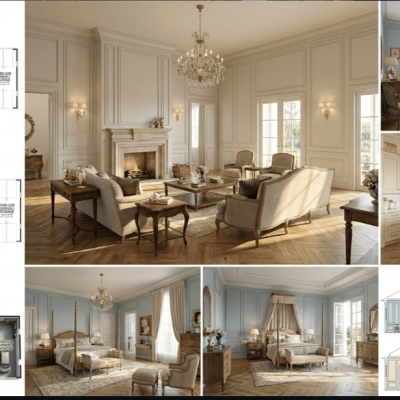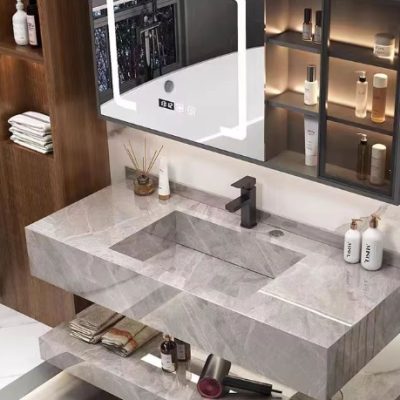


A homeowner walks into a stone showroom, reviews a row of illuminated displays, and stops in front of a slab with exceptional, dramatic veining. The contrast is striking, the color movement is artistic, and it immediately captures attention. The natural thought that follows is: This is the most beautiful slab I have seen. I must use it for the villa.
The problem is not that the slab is beautiful. The problem is that the decision has been made before asking where the slab will be installed, how the space will be used, or what fabrication challenges the stone presents.
A marble that looks breathtaking on a showroom floor can turn out to be an expensive mistake if it is selected purely for its visual impact without considering technical suitability. For a luxury villa project, the right natural stone is not necessarily the rarest, most expensive, or most dramatically veined option available.
The most effective marble selection is born from a simple principle: The best marble is the one whose appearance, technical characteristics, fabrication requirements, and long-term maintenance match the application.
A Beautiful Slab Can Still Be the Wrong Material for the Application
Marble selection must always begin with a fundamental question: Where will this stone live?
Different architectural applications subject natural stone to entirely different forms of stress. A dramatic marble that performs magnificently on a vertical feature wall may struggle when exposed to the daily friction, moisture, and chemical agents found in a busy kitchen. Conversely, a stone chosen for a quiet guest bathroom vanity may lack the slip resistance required for a main entrance floor or the structural consistency needed for a cantilevered staircase.
According to the Natural Stone Institute, true marble is a calcite-based material that reacts with mild acids commonly found in household foods, beverages, and cleaning products. This does not mean marble should be automatically banned from active living spaces. Rather, it means that using marble in a kitchen or bar requires the homeowner to understand and accept the likelihood of natural surface evolution over time.
The First Question Should Be “Where Will This Marble Be Used?”
To avoid costly missteps, evaluate each intended surface based on its specific operational environment:
Kitchens and Islands
Kitchen work surfaces experience high levels of contact with water, cooking oils, acidic ingredients (such as citrus, wine, and vinegar), and heat. A dramatic, highly porous, or heavily fissured marble may demand constant vigilance. If a homeowner falls in love with a striking stone for an island, they must intentionally accept the realities of everyday maintenance, potential etching, and staining risks.
Bathrooms and Wet Areas
Bathrooms involve constant moisture exposure, soap residues, and cosmetic chemicals. Sealing is critical, and the surface finish plays a major role in slip resistance—particularly on shower floors. Honed finishes are frequently specified here to minimize the visual impact of water spots and soap accumulation.
Flooring and High-Traffic Circulation
Floors bear the brunt of foot traffic, abrasive dust, and tracked-in grit. Softer marbles or those with high mineral variance can show wear patterns faster in heavy walkways. Surface finish, tile or slab thickness, and daily cleaning protocols dictate whether a stone floor maintains its appeal over the years.
Feature Walls and Fireplaces
Vertical surfaces generally experience minimal physical wear, abrasion, or chemical exposure. This makes vertical applications—such as living room feature walls, reception backgrounds, and fireplace surrounds—the ideal setting to showcase highly dramatic, artistic, or delicate marbles that might be impractical horizontally.
Stairs and Architectural Details
Staircases demand edge durability, adequate slab thickness, and structural integrity under dynamic loads. Selection must account for nosing fabrication, reinforcement requirements, and slip considerations.
The Most Dramatic Veining Can Create the Biggest Fabrication Challenge
Visual movement is often what draws buyers to a specific marble, but intense veining introduces significant complexity during fabrication.
When a slab features heavy, directional linear patterns, the design cannot be evaluated solely on a single, isolated piece in a showroom. Fabricators must carefully plan how those veins flow across:
- Kitchen sink cut-outs and hob cut-outs
- Waterfall island edges and mitered corners
- Multiple wall panels meeting at interior or exterior corners
- Drawer and cabinet fronts clad in stone
- Continuous flooring runs and thresholds
Strong veining increases cutting waste because the fabricator must discard portions that do not align or match the required continuity. A slab that looks magnificent on its own can create awkward visual dead-ends or jarring pattern breaks once cut and installed across a multi-surface space.
Bookmatching Looks Simple Until You Calculate the Number of Slabs Required
Bookmatching—where consecutive slabs from the same block are mirrored to create symmetrical, butterfly-patterned veining—remains one of the most powerful design tools in luxury architecture. However, it imposes strict procurement constraints.
Achieving a successful bookmatched installation requires:
- Sourcing strictly consecutive slabs from the exact same quarry block.
- Securing a sufficient total quantity of slabs to cover the entire elevation without running short.
- Accounting for cutting loss, which increases when mirroring complex patterns.
- Ensuring that if a single slab is damaged during transport or fabrication, an exact replacement from the same block sequence can be obtained—which is rarely guaranteed in natural stone supply chains.
Relying on a generic catalogue photograph or a single showroom sample is insufficient when bookmatching is specified. Buyers must review and reserve the specific, sequential slab photographs provided by the supplier.
Slab Availability Matters More Than the Sample Photo
One of the most common friction points in international stone procurement is the gap between a promotional sample and the actual material delivered to the job site.
Commercial marble names—such as Calacatta, Arabescato, Volakas, or Panda White—describe broad commercial categories rather than uniform manufactured products. Quarries evolve, blocks vary in mineral density, background tones shift from cool white to warm cream, and vein structures change drastically from one block to the next.
For a high-end villa, viewing the exact slabs currently in stock at the stone yard is a necessary step. A sample measuring 30×30 cm cannot convey the overall movement, color variation, or presence of natural mineral inclusions across a 3-meter slab.
Natural Cracks, Fissures, and Repairs Are Part of the Selection Process
Natural stone is formed by geological processes over millions of years. It is not an engineered quartz composite designed to be uniform and flawless. Consequently, natural marble frequently exhibits:
- Fissures (hairline natural separations along mineral planes).
- Open veins filled with resin during processing.
- Variations in crystal structure and localized color shading.
Not every fissure indicates a defective slab. Professional stone selection requires distinguishing between acceptable geological characteristics that add authentic character and structural defects that compromise the integrity of a countertop or stair tread. Understanding these characteristics prior to purchase prevents misunderstandings during fabrication.
Surface Finish Can Change How a Marble Performs and Looks
The chosen surface finish alters both the aesthetic and the functional performance of natural stone:
- Polished: Reflects light, deepens color saturation, and highlights the crystal structure of the stone. However, it also makes chemical etching and fine surface scratches more immediately visible under direct lighting.
- Honed (Matte): Offers a smooth, low-reflectance finish that diffuses light. It can render etching significantly less noticeable, making it a popular choice for kitchen countertops and bathroom floors.
- Leathered / Textured: Introduces tactile depth and hides minor surface wear effectively, though it requires careful cleaning in high-grease environments.
A High-End Marble May Have Higher Waste and Fabrication Costs
The per-square-meter price of a raw slab represents only part of the total stone budget. Total project costs are heavily influenced by:
- The total number of slabs required to achieve the layout.
- Slab dimensions and raw material yield.
- Complexity of edge detailing, mitered joints, and cut-outs.
- Structural reinforcement backing (such as fiberglass mesh or aluminum honeycomb).
- Crating, packaging complexity, and international freight volume.
An initially higher-priced stone with consistent dimensions and efficient slab utilization can sometimes prove more economical—and far less prone to fabrication delays—than a cheaper stone with high waste and brittle structural behavior.
The “Best” Marble Depends on How Much Patina You Are Willing to Accept
Natural marble ages. Depending on how a space is lived in, a polished or honed marble surface will gradually accumulate the soft evidence of daily life: minor etching from acidic liquids, faint surface scratches from dishware or foot traffic, and a softening of original sheen.
For some villa owners, this gradual evolution represents the authentic beauty of natural stone—a living material that records the history of the home. For others, any alteration to the pristine showroom finish is unacceptable.
Before committing to a marble specification, owners should answer a direct question: Do you want the stone to remain visually static over time, or are you comfortable with natural patina?
When a Beautiful Marble Is Actually a Very Good Choice
Challenging the uncritical selection of decorative slabs does not mean marble should be avoided. When matched correctly to the application, marble remains an exceptional choice for luxury villas.
Dramatic, highly expressive stones shine brilliantly when applied to:
- Grand entrance lobby walls and feature stair surrounds.
- Formal dining room feature walls.
- Master bathroom statement walls and tub surrounds.
- Fireplace focal points where chemical exposure and abrasion are minimal.
In these spaces, the visual drama of the stone is fully realized without exposing it to the aggressive demands of a high-traffic kitchen or wet floor.
A Better Marble Selection Process for a Luxury Villa
Navigating natural stone procurement for an international villa project requires a structured methodology:
- Define the application: Map out every surface where stone will be installed (kitchen, bathroom, floors, walls, stairs).
- Assess performance demands: Evaluate moisture, heat, traffic, acid exposure, and slip requirements for each location.
- Shortlist stone types: Filter options based on technical suitability rather than aesthetic impulse alone.
- Review actual slab documentation: Request high-resolution photographs and videos of the specific slabs available in the current inventory.
- Confirm dimensions and quantities: Ensure sufficient stock and identical block sequences exist to complete the installation.
- Plan the cutting layout: Map out bookmatching, directional veining, and focal points before cutting begins.
- Approve slab sequence and finish: Lock in the exact material lot and surface finish.
- Coordinate fabrication details: Confirm edge profiles, cut-outs, backing reinforcement, and joint tolerances with the fabricator.
- Ensure secure packaging: Verify export-grade wooden crating designed for long-distance maritime transport.
What Should a Villa Owner Ask a Marble Supplier?
When engaging with stone suppliers—whether sourcing domestically or coordinating imports from manufacturing hubs in China—villa owners and their project teams should clarify the following points:
- Are these photographs showing the actual slabs currently available, or are they general reference photos?
- How many slabs are in this specific lot, and are they cut from the same quarry block?
- What are the precise dimensions and thickness of each slab?
- What surface finishes are available for this material?
- Are there natural fissures, filled areas, or resin repairs on the surface?
- Can consecutive slabs be reserved and marked for bookmatching?
- Can the supplier provide a preliminary cutting layout or shop drawings?
- What is the protocol if a slab arrives with transit damage or fabrication defects?
- How will the stone be crated and secured for international container shipping?
Why Marble Sourcing From China Requires More Than Choosing a Stone Name
Sourcing natural stone through international procurement channels offers access to an immense variety of global materials processed in modern Chinese fabrication hubs. However, commercial names alone do not guarantee material consistency.
A professional procurement workflow goes beyond matching a name on a purchase order. It requires verifying actual slab quality, cross-referencing dimensions, confirming block homogeneity, monitoring fabrication precision, and ensuring robust export packaging before cargo is consolidated for shipping.
Where HSY Sourcing Can Help With Marble Procurement
For an overseas villa owner, finding a striking photograph of marble is rarely the hard part. The real challenge lies in bridging the gap between showroom aesthetics and job-site reality.
HSY Sourcing acts as a Foshan-based sourcing and procurement coordination partner for international villa projects. While HSY does not own quarries or dictate the geological characteristics of natural stone, our team assists clients with the practical steps of international procurement:
- Identifying reliable stone suppliers and comparing material availability.
- Communicating precise design, thickness, and bookmatching requirements.
- Collecting and reviewing actual slab photographs and videos from stone yards.
- Coordinating sample approvals and material specifications.
- Following up on production schedules and fabrication milestones.
- Conducting independent quality checks according to agreed project criteria.
- Overseeing warehouse receiving, cargo consolidation, and export crating.
By maintaining structured oversight on the ground in China, HSY helps bridge communication gaps between overseas buyers, designers, and suppliers, ensuring that the stone specified is the stone that arrives on site.
The Bottom Line
The most beautiful marble slab is not automatically the best choice for your villa.
The determining metric is alignment: Does this specific stone make sense for this specific location, this architectural design, this level of use, and this maintenance expectation?
A dramatic marble can be a magnificent choice for a feature wall and an impractical choice for a heavily used kitchen island. A quieter, more stable stone may deliver a superior long-term result because it integrates seamlessly with the daily life of the home.
The ultimate goal is not to select the stone you love most in isolation, but to choose the marble that performs best in the space where you will actually live with it.
Frequently Asked Questions
Is the most expensive marble always the best choice for a luxury villa?
No. Price is driven by rarity, quarry location, and market demand, not by technical suitability for a specific application. A moderately priced marble may significantly outperform an expensive, highly fragile stone in high-traffic or wet areas.
Is heavily veined marble more difficult to use?
Strong veining is not necessarily a defect, but it requires more careful planning during slab selection, cutting layouts, bookmatching, and fabrication to ensure visual continuity across joints and corners.
Is marble suitable for a luxury villa kitchen?
Yes, many homeowners successfully use marble in kitchens. However, the owner must understand the potential for chemical etching, staining, and scratching, and choose a stone type and honed finish that accommodates those characteristics.
What is the difference between marble selection and marble procurement?
Selection involves determining whether a specific stone is appropriate for the design, application, and performance requirements of the project. Procurement involves locating the material, verifying actual slab inventory, negotiating terms, arranging fabrication, inspection, and logistics.
Should I choose the marble before finalizing the interior design?
Marble selection should be closely coordinated with the interior design from an early stage. Slab sizes, veining directions, and bookmatching requirements directly influence joinery, cabinetry dimensions, and wall elevations.
How do I verify that the marble in the photo is the actual stone I will receive?
Request high-resolution photographs and videos of the specific, numbered slabs currently held in stock, and ensure those slab identification numbers are referenced in your purchase agreements.
Is bookmatched marble worth the additional cost?
For major feature walls, focal points, and statement entries, the visual impact often justifies the additional slab quantity and fabrication precision required. For minor surfaces, the added complexity may not be necessary.
Can Chinese processing centers deliver the same quality as European stone yards?
Quality depends on the raw material block, the precision of the cutting and polishing equipment, and the quality control standards applied during fabrication. Modern facilities in China process stone from quarries worldwide to exacting architectural tolerances.
What should I inspect before shipping marble from China?
An effective pre-shipment inspection should verify actual slab identities, quantities, dimensions, surface finish, presence of repairs or fissures, and the integrity of export-grade wooden crating.