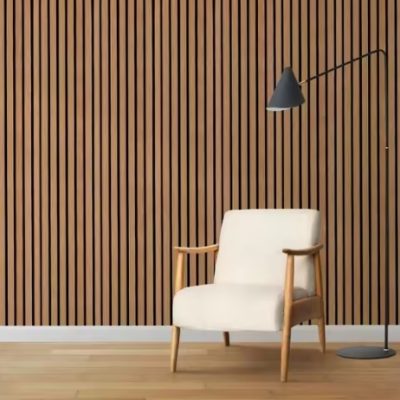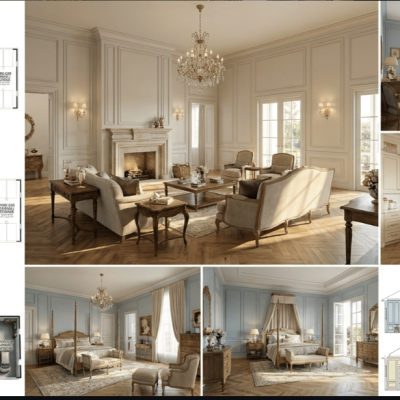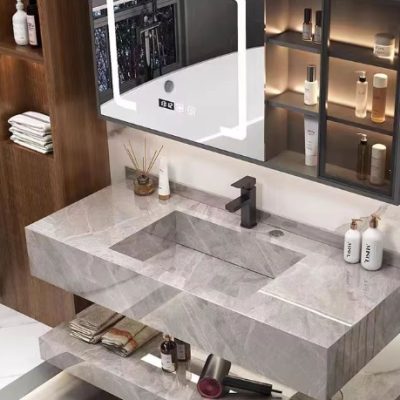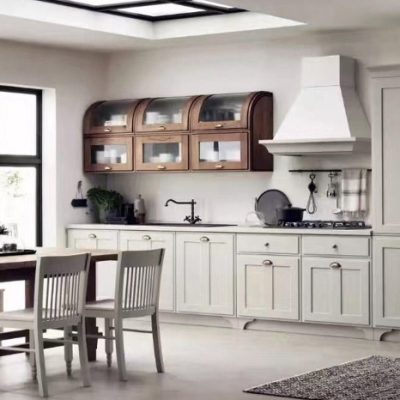

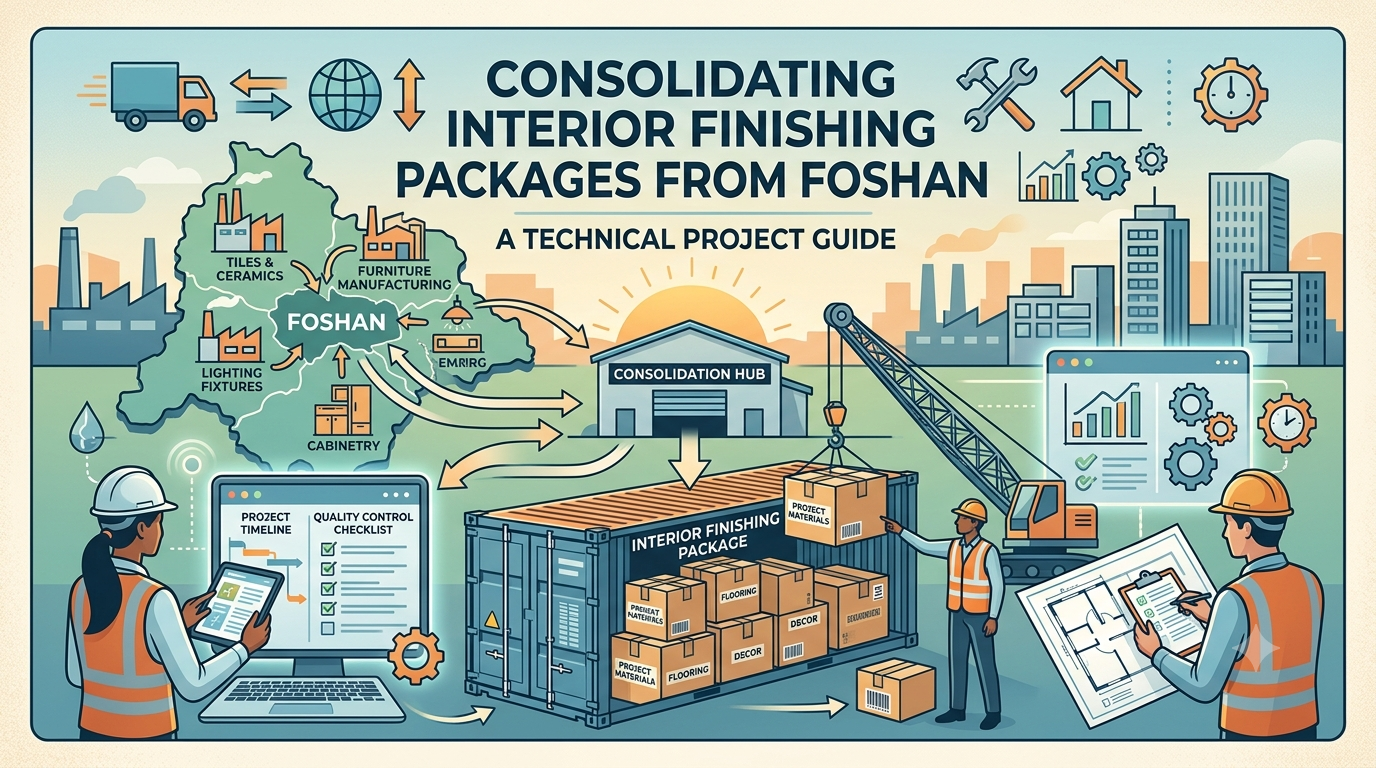
Outfitting a high-end villa or residential project requires sourcing across multiple distinct manufacturing categories: built-in joinery, loose furniture, hardwood or porcelain flooring, architectural lighting, and sanitary ware.
Foshan, along with its adjacent industrial districts of Shunde, Lecong, and Nanhai, forms the world’s most concentrated manufacturing ecosystem for interior finishing products. Direct factory procurement across these districts yields 30% to 50% cost savings compared to regional importing distributors or domestic retail showrooms.
However, purchasing directly from 5 to 10 specialized factories creates a major logistical challenge. Shipping items separately as Less than Container Load (LCL) freight results in redundant port handling fees, high risk of cargo damage from repeated warehouse transfers, and staggered delivery timelines on site.
Consolidating all interior products into a single dedicated 20ft or 40ft High Cube (40HQ) container streamlines export logistics, lowers ocean freight expenses by 25% to 35%, and ensures all interior packages arrive together for scheduled installation.
Key Takeaways
- Geographic Specialization: Foshan’s interior market is segmented by district: Shunde for custom millwork and cabinetry, Lecong for loose furniture, Nanhai/Chancheng for porcelain and sintered stone, and nearby Guzhen for decorative lighting.
- Lead-Time Buffer Management: Factory production cycles vary significantly (15 days for stock flooring vs. 35 to 45 days for bespoke joinery and loose furniture). A central Foshan staging warehouse with a 10 to 14-day free holding window is essential to collect and audit cargo before container loading.
- Volumetric & Weight Balance: High-density items (porcelain tiles, sintered stone slabs) must be packed flat on the container floor. Lightweight, bulky items (custom cabinetry boxes, sofas, mattress units) sit on the upper tier to avoid crushing damage and axle overload.
- Single Customs Entry: Merging multiple supplier invoices into one Master Commercial Invoice and Packing List reduces customs clearance to a single administrative entry at the destination port.
What Are the Primary Interior Manufacturing Hubs Across Foshan?
Foshan is not a single industrial zone; it is a cluster of specialized manufacturing hubs spread across different towns and districts. Understanding this geography is critical when planning site visits and logistics collection routes.
Foshan Interior Sourcing Geography:
 ├── Shunde District ───> Custom Cabinetry, Kitchens, Wardrobes & Architectural Millwork
 ├── Lecong Town ───────> Loose Furniture (Sofas, Dining Sets, Beds, Outdoor Furniture)
 ├── Chancheng/Nanhai ──> Porcelain Slabs, Ceramic Tiles, Sanitary Ware & Hardware
 └── Guzhen (Adjacent) ─> Decorative Chandeliers, Linear LED Tracks & Villa Lighting
The table below outlines key interior product categories, their manufacturing centers, and typical production lead times:
| Category | Primary Manufacturing Hub | Standard Lead Time | Primary Packaging Method |
| Custom Cabinetry & Joinery | Shunde (Towns of Beijiao / Lunjiao) | 35 – 45 Days | Pre-assembled or KD boxes in 5-ply cartons with foam corners |
| Loose Furniture (Living/Dining) | Lecong Town | 25 – 35 Days | EPE foam wrap, cardboard corner guards, wooden frame bracing |
| Porcelain & Sintered Stone | Chancheng & Nanhai Districts | 15 – 20 Days | Fumigated wooden pallets or enclosed vertical A-frame crates |
| Wood & SPC Flooring | Nanhai & Gaoming Districts | 15 – 20 Days | Palletized corrugated boxes with moisture-proof plastic wrapping |
| Decorative & Architectural Lighting | Guzhen (Zhongshan / Foshan Border) | 20 – 30 Days | High-density molded foam inserts inside heavy outer cartons |
How Do You Calculate Container Volume and Weight for Mixed Interior Cargo?
Consolidating mixed interior packages requires managing two physical constraints: usable volume ($\text{m}^3$) and maximum payload weight ($\text{kg}$).
A standard 40ft High Cube (40HQ) container provides roughly $65\text{m}^3$ to $68\text{m}^3$ of usable volumetric space and a maximum road-weight payload limit of $26,000\text{kg}$ (subject to local destination highway weight regulations).
40HQ Mixed Interior Cargo Loading Strategy:
┌─────────────────────────────────────────────────────────┐
│ Upper Layer: Bulky & Light Cargo                         │
│ (Loose Sofas, Mattresses, Lighting Boxes, Chair Frames)  │  <-- Fills Volumetric Space (CBM)
├─────────────────────────────────────────────────────────┤
│ Middle Layer: Structural Rigid Cargo                    │
│ (Pre-Assembled Cabinet Bodies, Vanity Units, Wardrobes)  │
├─────────────────────────────────────────────────────────┤
│ Base Layer: High-Density Heavy Cargo                    │
│ (Porcelain Tiles, Sintered Stone Crates, SPC Flooring)  │  <-- Fills Payload Weight (KG)
└─────────────────────────────────────────────────────────┘
1. Weight-Critical Items (Base Layer)
Porcelain tiles, sintered stone slabs, and hardwood flooring reach the container’s gross weight limit long before filling its physical volume. A single pallet of $1200\times 2400\text{mm}$ sintered stone can weigh over $1,500\text{kg}$. These items must lay flat across the container floor stringers to maintain a low center of gravity.
2. Volume-Critical Items (Upper Layer)
Custom sofas, dining chairs, mattress units, and decorative light boxes occupy significant volumetric space relative to their weight. Stacking light, boxed furniture over reinforced wooden crates or flat-packed cabinet boxes maximizes space utilization without exceeding highway axle limits.
What Quality Control Checkpoints Are Required Before Consolidation?
Once interior items leave the factory floor and enter an ocean container, correcting errors becomes extremely expensive. A structured inspection protocol at the local staging warehouse catches discrepancies early.
Multi-Stage Quality Control Protocol:
Phase 1: Material & Finish Audit (Wood grain matching, fabric codes, paint sheen)
 └── Phase 2: Dimensional & Fitting Checks (Appliance cutouts, drawer slide function)
      └── Phase 3: Trial Assembly (Testing modular sofas, dining tables, wall panel joints)
           └── Phase 4: Packaging Verification (Corner protectors, carton strength, crate straps)
1. Color Batch and Finish Consistency
In a luxury villa build, adjacent interior elements must match visually. Inspect wood veneers, lacquered door panels, and upholstered fabrics under standardized 6500K daylight lamps to confirm color consistency across different factory shipments.
2. Functional and Trial Assembly Checks
- Joinery & Cabinets: Verify door alignment (1.5mm to 2mm uniform reveals), soft-close hinge dampening, and integrated LED wire channels.
- Loose Furniture: Test structural rigidity, leg leveling, upholstery stitching seam strength, and foam resilience on sofas and dining chairs.
- Stone and Glass Surfaces: Check sintered stone tops for edge chipping, surface scratches, and correct sink/faucet cutout dimensions against approved CAD drawings.
How Do You Manage Export Customs Documentation for Multi-Factory Consolidation?
Importing goods from 6 to 10 independent Chinese suppliers under a single container shipment requires a unified export documentation set.
Unified Export Documentation Flow:
Factory Invoices ──> Local Sourcing Agent ──> Master Packing List & Commercial Invoice ──> Customs Declaration (China) ──> Single Import Entry (Destination)
1. Master Commercial Invoice and Packing List
Individual factory receipts must be compiled into a single Master Packing List and Commercial Invoice. Every box or crate must be labeled with a unique carton number corresponding to the packing list, which specifies:
- Product description and material composition
- Quantity and unit counts
- Net weight, gross weight, and volume ($\text{m}^3$)
- Harmonized System (HS) Code for customs duty calculation
2. ISPM-15 Wood Packaging Compliance
All solid wood pallets, timber bracing, and wooden crates used to secure furniture or stone must bear a legible IPPC stamp certifying heat treatment or methyl bromide fumigation. Using uncertified raw timber can result in customs holds or mandatory container re-export at destination ports.
3. Regional Certification Compliance
Ensure electrical fixtures carry destination-specific safety marks—such as CE/UKCA for Europe, UL/ETL for North America, or SAA for Australia. Upholstered furniture must comply with local fire-retardant fabric regulations (e.g., BS 5852 in the UK or CAL 117 in the US) where required by law.
Why Partner with HSY Sourcing for Your Interior Product Consolidation in Foshan?
Coordinating order fulfillment, quality control, and container packing across multiple specialized factories requires an experienced on-the-ground technical team. HSY Sourcing operates as your dedicated procurement and logistics manager in Foshan.
1. Dedicated Local Staging Warehouse
We provide a secure, centrally located warehouse in Foshan to receive, inspect, and stage deliveries from your various factories free of charge during your consolidation window.
2. Engineering Oversight and CAD Sign-Off
Our technical team audits factory production drawings against your architectural interior plans. We verify scribe panel allowances, appliance cutout dimensions, and hardware load specifications before production begins to prevent on-site fitting errors.
3. Hands-On Quality Inspection
We inspect goods upon arrival at our staging warehouse:
- Visual & Dimensional Inspections: Checking surface finishes, dimensions, and structural joints against approved control samples.
- Pre-Assembly Testing: Supervising trial assemblies of key furniture pieces, custom vanities, and modular joinery.
- Packaging Verification: Ensuring all boxes feature adequate corner protection, foam wrapping, and reinforced wooden crates.
4. 3D Loading Supervision and Unified Documentation
Our logistics team uses 3D container planning software to model the precise layout of your cargo, ensuring optimal weight distribution and space efficiency. We combine all supplier invoices into a single unified export document package, simplifying customs clearance at your destination port.
Frequently Asked Questions About Consolidating Interior Products in Foshan
How long can my products be held at the Foshan staging warehouse?
We offer a complimentary 10 to 14-day staging window at our Foshan warehouse. This allows sufficient time to receive delayed shipments from long-lead factories without incurring storage fees before container loading.
Can fragile lighting fixtures and heavy tiles be shipped safely in the same container?
Yes. By enforcing strict cargo layering—placing palletized tiles and heavy stone flat on the container floor and securing fragile lighting boxes on the top layer with air dunnage bags—different product categories can be transported safely in a single container.
What happens if a factory delivers defective or incorrect items to the warehouse?
Because inspections occur at our Foshan staging warehouse prior to container loading, defective or non-compliant items are identified immediately. The item is returned to the local factory for repair or replacement before the container is packed, avoiding shipping defective goods overseas.
How are leather and fabric furniture protected against moisture during sea freight?
Upholstered furniture items are wrapped in protective PE foil, sealed with desiccant silica gel packs inside, and packed into heavy 5-ply corrugated cartons. We also inspect the ocean container prior to loading to ensure the flooring and walls are clean, dry, and weather-tight.