
Key Takeaways
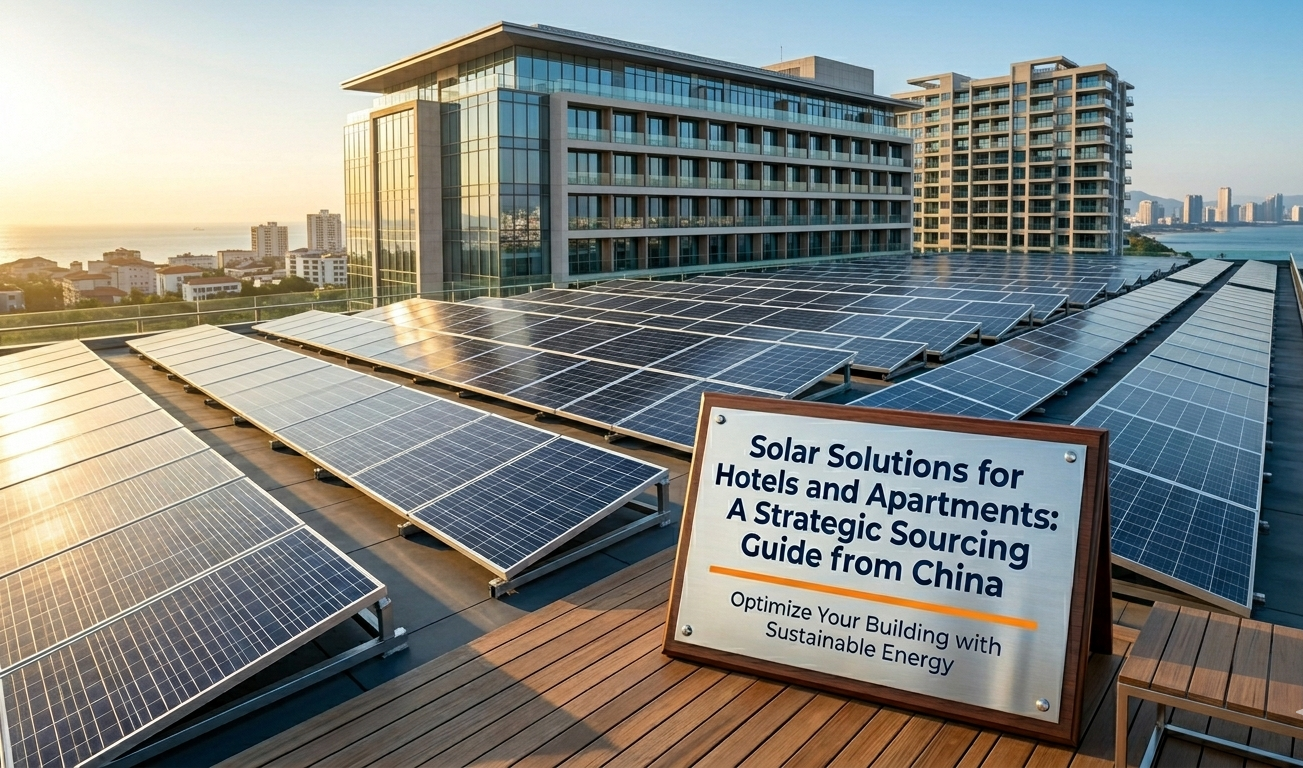
- Hotels and multi-family apartments are ideal for solar due to high daytime energy loads (HVAC) and large roof areas.
- Sourcing from China offers access to the latest N-type TopCon technology and integrated energy storage systems (BESS).
- Vetting for “Tier 1” bankability is essential for securing project financing and 25-year warranties.
- The “System” approach (panels + inverters + racking) is more efficient than sourcing components piecemeal.
For hotel operators and apartment developers, electricity is often the second-largest operating expense (OPEX) after labor. As global energy prices fluctuate, solar photovoltaic (PV) systems have transitioned from a “green luxury” to a financial necessity. With China controlling over 80% of the global solar supply chain, it is the logical source for commercial-grade equipment.
However, sourcing for a commercial project is significantly more complex than buying a residential kit. This guide outlines the technical and logistical framework for successful solar procurement.
Why is China the dominant source for commercial solar projects?
China’s dominance isn’t just about low labor costs; it’s about industrial clustering and rapid R&D. The provinces of Jiangsu, Zhejiang, and Guangdong house the world’s most advanced fully automated production lines.
For a hotel or apartment project, you aren’t just buying panels; you need a synchronized system including inverters, mounting structures, and often Battery Energy Storage Systems (BESS). Chinese manufacturers lead the market in N-type TopCon and HJT (Heterojunction) cell technologies, which offer higher efficiency in limited roof spaces—a common constraint for urban apartments.
How do you calculate the right system capacity for a hotel or apartment?
Commercial buildings have unique load profiles. A hotel’s peak usage often coincides with daytime cooling requirements and evening guest returns.
Before sourcing, you must analyze your “load curve.” A professional sourcing agent helps coordinate with engineers to determine if an On-Grid system (to offset daytime bills) or a Hybrid System with Storage (to avoid peak-hour tariffs and provide backup power) offers the best value. Over-sizing a system without a proper export agreement with your local grid can ruin your ROI, while under-sizing leaves money on the table.
What technical specifications define a high-quality solar module?
Avoid the trap of comparing “Price per Watt” alone. For high-traffic commercial buildings, three technical factors are paramount:
- Tier 1 Bankability: Only source from BloombergNEF Tier 1 listed manufacturers. This ensures the company is financially stable enough to honor its 25-to-30-year linear power warranty.
- Conversion Efficiency: For apartments with limited roof space, every square meter counts. Demand modules with at least 22% efficiency.
- Salt Mist & Ammonia Resistance: If your hotel is located near the coast, the modules and racking must have specific certifications (IEC 61701) to prevent corrosion from sea air.
How do you evaluate the ROI of solar for hospitality businesses?
A well-executed solar project for a hotel typically sees a payback period (ROI) of 4 to 7 years. Given that the systems are designed to last 25+ years, the long-term savings are massive.
When calculating ROI, factor in the “Triple Bottom Line”:
- Direct Savings: Reduced monthly utility bills.
- Tax Incentives: Many regions offer accelerated depreciation or green energy rebates for commercial solar.
- Property Value: Solar-equipped apartments often command higher resale values and lower vacancy rates due to lower utility costs for tenants.
What are the logistical risks when importing solar systems from China?
Solar panels are fragile, high-volume goods. The most common “scams” or failures in this industry aren’t about stolen money, but about Quality Fade—using Grade B cells in Grade A frames—or poor loading practices.
Micro-cracks in cells can occur during improper container loading, which won’t be visible until the system is installed and underperforming. Furthermore, ensuring the inverters meet your local “Grid Code” and safety certifications (UL, CE, TUV) is a mandatory step that, if missed, can result in customs seizures or insurance denials.
Why Choose HSY Sourcing for Your Energy Projects?
Solar procurement requires a bridge between technical engineering and boots-on-the-ground auditing. HSY Sourcing provides that bridge.
- Technical Vetting: We don’t just verify the business license; we verify the Bill of Materials (BOM). We ensure the cells, glass, and backsheets are from the specified high-quality suppliers.
- System Integration: We help you source compatible components. We ensure your Growatt or Deye inverter “talks” perfectly to your battery storage system before it leaves the port.
- Loading Supervision: We provide on-site supervision during container loading to ensure specialized racking and reinforced packaging are used, preventing micro-cracks during transit.
Protect your investment and lower your hotel’s footprint with a verified supply chain. Visit www.hsysourcing.com to start your solar procurement strategy.
FAQ With Solar Sourcing Guide Hotel Apartment
Will installing solar panels damage my hotel’s roof?
Not if the correct mounting system is used. We source specialized non-penetrative racking (ballasted systems) for flat hotel roofs that preserve the integrity of your waterproofing.
How do I handle maintenance from abroad?
Modern solar systems are almost maintenance-free. We prioritize sourcing “Smart Inverters” that allow you or your local technician to monitor every string of panels via a mobile app, identifying issues in real-time.
Can I source solar-powered street lights and water heaters through the same shipment?
Yes. Consolidating solar modules with peripheral green-tech like solar water heaters or EV charging stations for your apartment parking lot is a highly effective way to optimize shipping costs.
Estimated Savings Analysis
| Hotel Size | Estimated System Size | Potential Annual Savings | Estimated Payback |
| Boutique (20-50 rms) | 30 – 50 kWp | $4,500 – $7,500 | 5.5 Years |
| Mid-Scale (100 rms) | 100 – 150 kWp | $15,000 – $22,000 | 4.8 Years |
| Large Resort (300+ rms) | 500+ kWp | $75,000+ | 4.2 Years |
Note: Figures are estimates based on average global commercial electricity rates and standard solar irradiance.