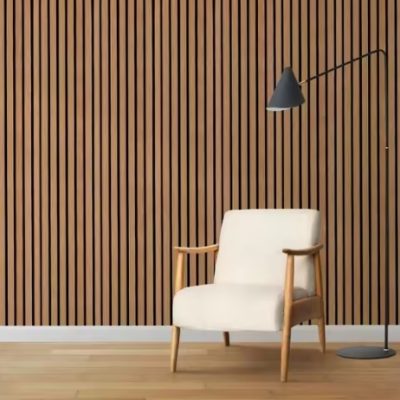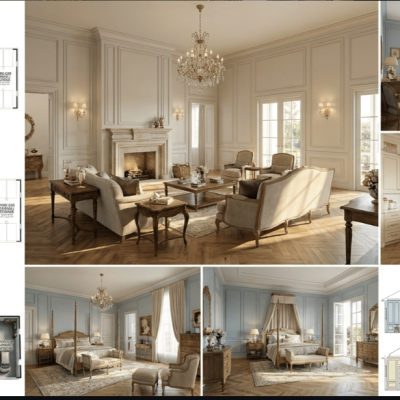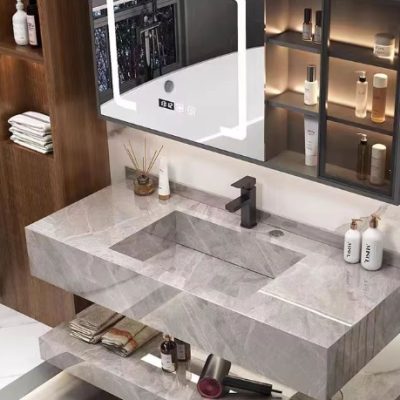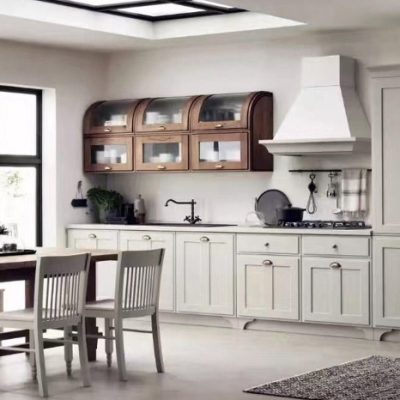

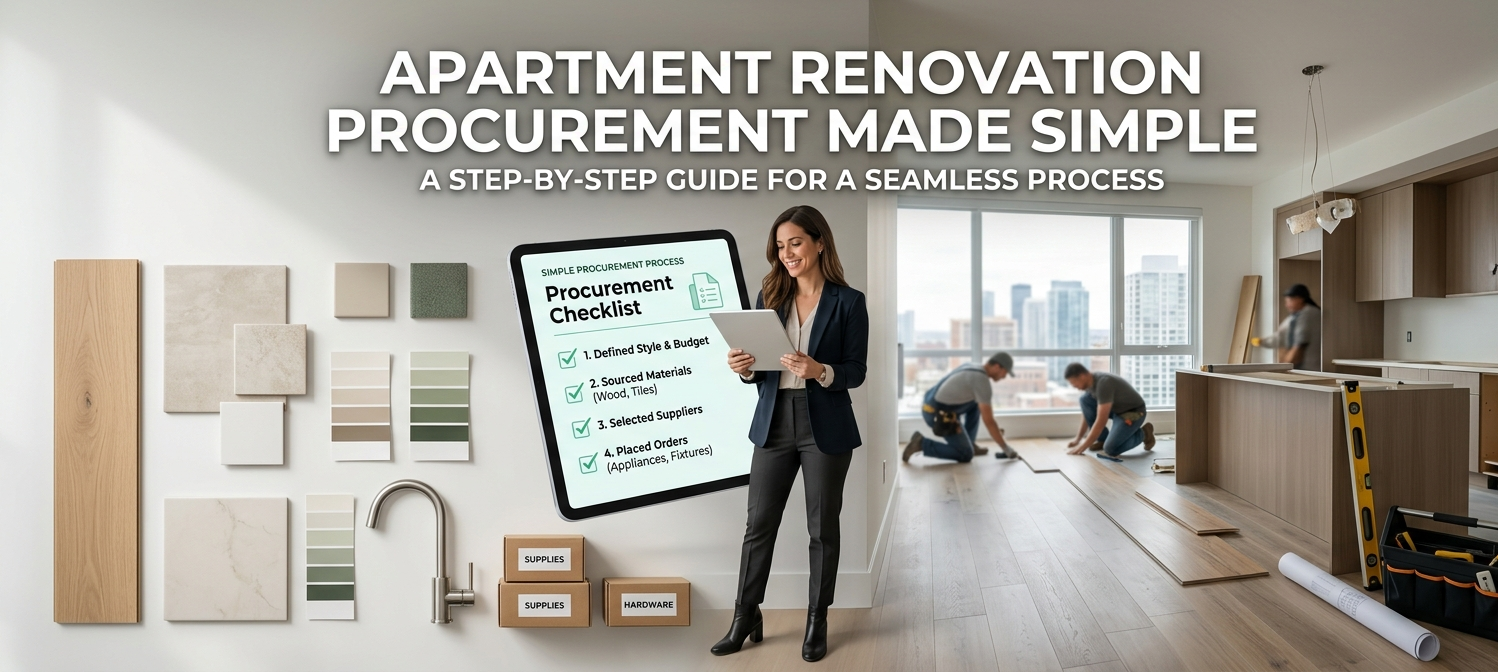
For real estate investors, multi-family asset managers, and commercial developers, executing a multi-unit apartment renovation or fit-out is an exercise in supply chain management. The profitability of the asset depends directly on controlling capital expenditure (CAPEX) per unit while delivering a finish durable enough to withstand high tenant turnover.
When a single renovation project requires custom kitchen cabinets, stone countertops, plumbing fixtures, flooring, and loose furniture, sourcing these components individually creates massive logistical friction. Splitting orders across multiple isolated factories leads to mismatched lead times, high domestic trucking bills, and dimensional discrepancies during on-site installation.
Centralizing your interior package within a single concentrated industrial network offers a structural solution. Sourcing directly from Foshan, China—the global hub for interior finishes and building materials—simplifies the entire workflow by allowing developers to manage specification, quality control, and shipping consolidation through a single localized operations base.
Key Takeaways
- Ecosystem Integration Saves Time: Foshan centralizes custom cabinetry, ceramic tiles, and loose contract furniture within a 50-kilometer radius, drastically reducing the time spent coordinating with separate manufacturers.
- Strategic Mixed-Loading Cuts Freight Costs: Combining heavy structural components (flooring) and lightweight volumetric elements (cabinetry and sofas) into a single 40HQ shipping container maximizes weight and space utilization.
- Pre-Shipment Inspections Minimize On-Site Risk: Validating dimensions, hardware alignment, and moisture content on the factory floor prevents expensive field corrections and project delays during installation.
Why does fragmented material sourcing complicate apartment renovations?
When a project’s Bill of Quantities (BOQ) is distributed among factories located in different regions or provinces, the developer faces a compounding series of hidden costs.
First, tracking multiple production schedules becomes highly complex. A custom cabinetry order might take 45 days, while stock porcelain flooring or bathroom faucets require only 15 days. Without ground coordination, the faster-producing factories will send their goods to a port warehouse early, resulting in expensive storage and demurrage penalties while waiting for the remaining furniture to finish fabrication.
Second, fragmented sourcing eliminates cross-category quality checks. If the kitchen cabinetry manufacturer operates independently from the stone countertop supplier or the built-in appliance vendor, minor dimensional variations or layout changes made on one production line will not be communicated to the others. These structural misalignments are usually discovered only during field installation, forcing expensive, time-consuming on-site modifications that push back tenant move-in dates.
How does Foshan’s ecosystem solve the one-stop procurement challenge?
Foshan functions as a fully integrated, closed-loop industrial cluster designed specifically for commercial interior packages. Rather than spending weeks traveling across provinces to audit suppliers, real estate buyers can source a comprehensive apartment interior package within a compact geographic zone.
The city’s specialized districts provide immediate, direct access to primary manufacturers:
- Shunde District (Lecong & Leliu): The global standard for custom kitchen cabinetry, built-in wardrobes, and loose contract furniture.
- Chancheng District (Shiwan & Nanzhuang): The premier industrial center for porcelain flooring, sintered stone surfaces, and commercial-grade sanitary ware.
- Nanhai District (Dali): A hyper-focused manufacturing zone for architectural aluminum window profiles, interior doors, and shower enclosures.
Because these distinct product clusters exist as immediate neighbors, a local procurement team can easily collect physical finish control samples (such as wood veneers, metal trims, or paint swatches) and distribute them to all participating factories. This guarantees that the kitchen cabinetry, baseboards, and living room furniture maintain absolute color and finish cohesion before anything is loaded onto a truck.
What step-by-step framework ensures zero mismatch during bulk consolidation?
Successfully executing a multi-category interior package requires shifting from a simple transactional purchasing model to a strict, milestone-driven procurement process. The sequence of operations must protect both the project budget and the construction timeline.
1.Technical BOQ and Shop Drawing Audit:Phase 1: Pre-Production.
Before any deposits are released, all architectural drawings, kitchen layouts, and plumbing rough-in specifications are cross-checked. We verify that cut-outs for undermount sinks, built-in appliances, and hardware positions align perfectly across separate factory files.
2.Staggered Timeline Execution:Phase 2: Scheduling.
We reverse-engineer the project delivery deadline based on the longest manufacturing lead time. Production contracts for custom wardrobes and kitchen cabinets (45-day cycle) are released first, followed by staggered releases for tiles, doors, and plumbing fixtures (15 to 20-day cycles) so that all goods finish assembly simultaneously.
3.In-Line and Pre-Shipment Inspections:Phase 3: Quality Control.
Our inspectors visit the factory lines during assembly to physically test technical baselines: checking timber core moisture levels (mandated between 8% and 12%), checking click-lock tolerances on flooring, and conducting mock-assembly tests on cabinetry frames.
4.Engineered Mixed-Container Consolidation:Phase 4: Logistics.
Goods are brought into our centralized Foshan warehouse. Heavy, dense cargo (porcelain tiles and sanitary ceramics) is palletized and loaded flat on the container floor. Lightweight, high-volume cartons (cabinets and upholstered seating) are blocked and braced securely on top, maximizing container CBM without exceeding legal weight limits.
Why choose HSY Sourcing as your apartment material agent in Foshan?
Navigating thousands of specialized contract factories across Foshan requires localized oversight, technical competence, and completely independent representation. HSY Sourcing works strictly as your dedicated procurement and engineering office on the ground, protecting the commercial interests of real estate developers and buyers.
- Direct OEM Manufacturer Access: We cut out local trading brokers, trading companies, and speculative showrooms, placing your multi-family project directly with primary factories scaled for institutional commercial volume.
- Enforcement of Regional Compliance Codes: We review your local construction and building regulations before production. We ensure your items meet necessary certification metrics, including CARB Phase 2/E0 for low-formaldehyde cabinetry emissions, CE/UL for lighting, and fire-retardant standards for fabrics and flooring.
- Ground-Level Timeline Management: We manage the staggered deposit tracking and daily production tracking required to synchronize multiple factory outputs, completely eliminating warehouse storage penalties.
- Turnkey Logistical Engineering: Operating from our centralized Foshan consolidation facility, we manage incoming receipts, enforce export-grade pallet packaging standards, and execute dense, secure container loading plans to minimize ocean freight costs and eliminate transit damage.
Frequently Asked Questions (FAQ)
How can we ensure that custom kitchen cabinets match the plumbing layouts perfectly?
We eliminate layout risks during the pre-production shop drawing phase. We collect the exact technical data sheets and rough-in blueprints from your chosen plumbing fixture and appliance manufacturers. These dimensions are structurally embedded directly into the cabinetry factory’s production drawings. Our QC team then physically measures the raw carcass cut-outs on the factory floor before the units proceed to final painting or laminate wrapping.
What is the minimum project size that benefits from Foshan consolidation?
One-stop consolidation provides the highest return on investment when your total project volume fills at least one 40-foot High Cube (40HQ) shipping container (approximately 68 CBM). This volume typically equates to a complete multi-unit apartment fit-out, a boutique hospitality wing, or a premium private villa project. At this scale, the material savings and container optimization easily offset the localized sourcing and inspection overhead.
How do you handle compliance certifications for multi-family apartment developments?
During the initial RFQ stage, we filter out factories that lack validated export credentials. We require our partner mills to provide active, verifiable test reports from international laboratories (such as SGS or Intertek). We match these files against your destination country’s mandates, ensuring your imported materials will pass local municipal building and safety inspections without issue.
How are fragile items like glass shower doors protected inside a mixed container?
We enforce strict load-segregation rules at our warehouse. Heavy masonry and tile pallets are loaded flat on the container floor and secured with structural timber bracing. Fragile goods, such as tempered glass shower enclosures or mirrored vanity cabinets, are packed in reinforced, custom wooden crates and vertically lashed along the side walls of the container using high-tensile strapping to eliminate any shifting or crushing during ocean transit.