
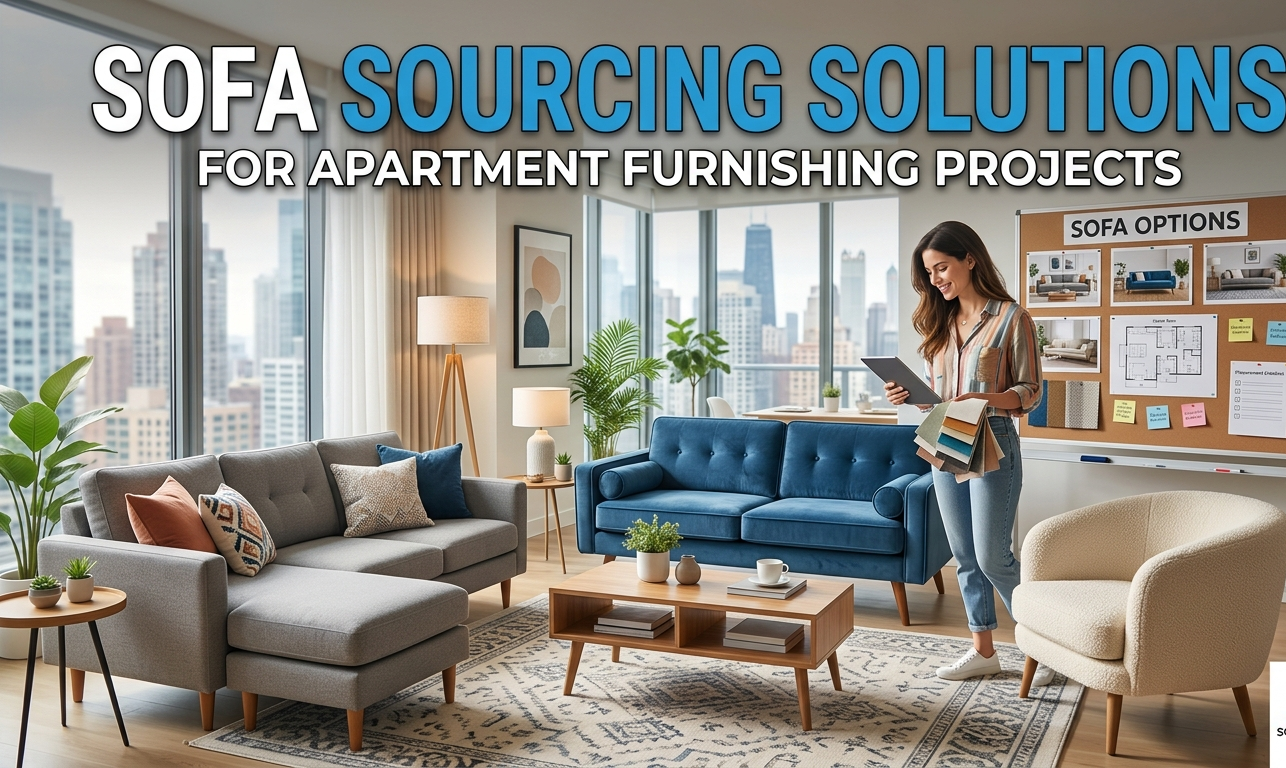
Furnishing a multi-family housing development, student housing block, or serviced apartment portfolio introduces unique procurement challenges. Unlike single residential purchases, a project manager handling an apartment roll-out must secure dozens—or hundreds—of identical upholstered units. These sofas must hit tight budget constraints, maximize restricted floor space, and survive years of high tenant turnover.
Foshan, specifically the Longjiang and Lecong districts, represents the highest concentration of upholstered furniture manufacturers in the world. Sourcing directly from this cluster gives developers an undeniable cost advantage and deep customization options.
However, navigating hundreds of factories requires more than comparing catalog prices. To secure a reliable return on investment, you need a firm grasp of the engineering behind commercial seating production.
What Makes Apartment Project Sofas Different From Retail Residential Furniture?
The core difference lies in the predictability of wear and tear. While a standard household sofa accommodates a single family, a rental apartment sofa experiences unpredictable usage from varying tenants, pets, and moving crews.
Retail furniture often cuts corners on internal structural components to keep prices low, masking a weak frame with plush, soft outer batting. In a commercial project, that approach leads to rapid failure—cushions sag, seams split, and frames warp within the first 12 months, destroying your asset’s interior appeal and forcing costly early replacements.
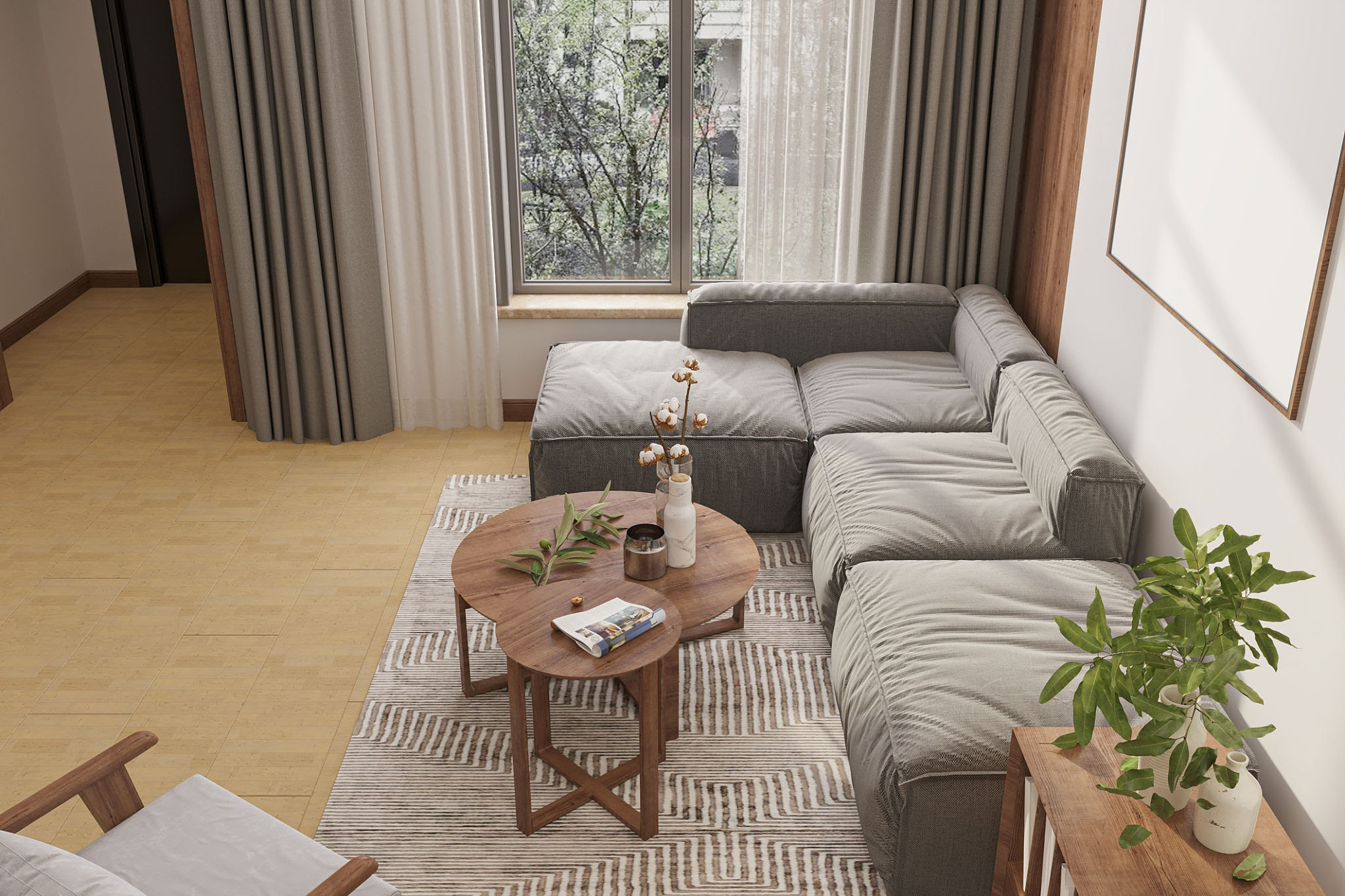
Space-Optimized Modular Sofa Layouts for Modern Apartments. Source: Saiful Islam / Getty Images
Furthermore, apartment layouts are typically compact and fixed. Standard retail dimensions often conflict with localized architectural boundaries, such as narrow entryways, specific radiator placement, or balcony door clearances. Project-tier sourcing allows you to adjust configurations down to the millimeter to perfectly fit your architectural CAD floor plans.
How Do You Verify Frame and Spring Specifications on a Foshan Factory Floor?
When you place a bulk order with a factory, you cannot judge the build quality by a finished showroom sample. You or your ground representative must audit the raw internal components during the mid-production phase before the upholstery fabric hides the workmanship.
Enforce these structural baselines in your purchasing agreements:
- Timber Seasoning: The internal skeleton must use solid, kiln-dried hardwood (such as larch or birch) with a moisture content verified below 12%. Cheap, unseasoned green wood contains moisture that will warp and crack as the building’s central HVAC dry-airs the rooms, loosening joints and causing the frame to squeak.
- Joint Reinforcement: Reject frames held together entirely by standard wood screws or staples. High-use frames require corner blocks that are glued, stapled, and reinforced with heavy-duty steel corner brackets to handle dynamic weight drops.
- Foundation Mechanics: Demand a dual-support system. A reliable commercial foundation utilizes thick, heat-tempered steel zig-zag (Sinuous) springs tied together with cross-stabilizing wires, supplemented by high-tension elastic webbing bands. This layout prevents the uneven weight distribution that causes individual seats to bottom out over time.
Why Should Multi-Family Housing Projects Opt for Knock-Down (KD) Sofa Designs?
Logistics costs can easily break a project budget if your furniture choices are structurally inefficient. Traditional sofas are shipped as fully assembled, rigid boxes. Because they contain mostly trapped air inside their arm and back profiles, they consume massive cubic volume (CBM) inside shipping containers.
Assembled vs. Knock-Down (KD) Shipping Footprint:
┌───────────────────────────────┐     ┌───────────────────────────────┐
│  Traditional Assembled Sofa   │     │      Flat-Packed KD Sofa      │
│  [=========================]  │     │  [=======] [=======] [======] │
│  Consumes: 1.5 - 1.8 CBM      │     │  Consumes: 0.4 - 0.5 CBM      │
│  High Freight Cost Per Unit   │     │  Saves Up to 70% Container CBM│
└───────────────────────────────┘     └───────────────────────────────┘
Knock-Down (KD) engineering solves this volumetric problem. By designing the sofa so that the armrests, backrest, and seating platform ship flat and bolt together mechanically on-site, the individual shipping volume drops from roughly 1.6 CBM to under 0.5 CBM.
This footprint optimization lets you load three times as many units into a single 40ft High Cube container, immediately lowering your per-door shipping cost.
On-site, boxed KD components fit easily into standard apartment elevators and tight corridors, eliminating the common problem of wall scuffs and stuck furniture during the final building fit-out.
How Can Procurement Managers Ensure Fabric Compliance for International Rental Markets?
The choice of upholstery fabric dictates the long-term maintenance schedule of your rental property. For multi-family projects, you must specify technical performance metrics rather than relying on visual textures:
| Fabric Metric | Minimum Project Standard | Testing Method | Maintenance Purpose |
| Abrasion Resistance | 30,000+ Double Rubs | Martindale / Wyzenbeek | Prevents surface thinning and pilling at friction points |
| Color Fastness | Grade 4 minimum | ISO 105-B02 (UV Light Exposure) | Stops fading from direct sunlight near large apartment windows |
| Surface Treatment | Hydrophobic Coating | Teflon / Nanotech Treatment | Resists liquid stains, oil spills, and deep dirt penetration |
More importantly, look out for local fire safety compliance. Rental properties in regions like the UK mandate BS 5852 Crib 5 flame-retardant standards, while US developments require CAL 117 compliance.
Foshan’s tier-one factories can easily source certified flame-retardant foam and treated fabrics, but you must write these requirements explicitly into the production contract and verify the batch test certificates independently before production line scheduling.
Why Choose HSY Sourcing for Your Furniture Procurement?
Located directly inside the Foshan furniture manufacturing cluster, HSY Sourcing operates as your independent, technical quality control and logistics management office on the ground in China.
- Pre-Production Blueprint Auditing: We review your interior design drawings and furniture schedules to identify potential issues, checking that the factory’s structural shop drawings incorporate precise assembly tolerances and correct KD bracket specifications.
- On-Floor Material Testing: Our quality control engineers conduct unannounced visits to the production line. We physically test timber moisture levels using digital meters, verify foam density via weight-displacement tests, and ensure structural frames match your exact specifications before upholstery begins.
- Regulatory Compliance Tracking: We manage the collection and third-party verification of required safety documentation (such as CAL 117 or Crib 5 test reports), making sure the factory uses compliant materials for your specific target market.
- Volumetric Cargo Consolidation: We utilize our local staging warehouse to aggregate your sofas alongside tiles, sanitary ware, windows, and cabinetry. We supervise the container loading layout directly, ensuring heavy construction materials form a solid base while lightweight, boxed furniture is packed securely on top to maximize container space and eliminate transit damage.
Visit www.hsysourcing.com to submit your project specification sheets and layout designs. Let our local engineers build a secure, cost-optimized furniture supply chain for your next real estate development.
Key Takeaways
- Enforce 35kg/m³ Cushion Density: Insist on high-resilience (HR) polyurethane foam for all seating cores to maintain shape recovery and prevent fabric sagging under continuous tenant use.
- Adopt KD Framing to Save Freight: Utilize knock-down, bolt-together structural frames to lower individual unit CBM, allowing you to triple your container payload and save up to 70% on ocean freight fees.
- Verify Regional Fire Certifications: Ensure your target market’s specific fire safety standards (e.g., CAL 117 or BS 5852) are added directly to the raw material purchasing agreements before factory deposits are paid.
- Consolidate to Balance Shipments: Group lightweight upholstery packages with high-weight building materials at a local warehouse to balance container payload capacity and maximize your logistics spend.
Frequently Asked Questions (FAQ)
Q: What is the standard manufacturing lead time for an order of 100 apartment sofas in Foshan?
A: For standard configurations using available contract fabrics, the production window typically runs 25 to 30 days from final shop drawing approval. If your project requires custom-dyed fabrics, specialized fire-retardant chemical treatment, or custom frame adjustments, the timeline generally shifts to 35 to 45 days.
Q: How do we verify that the factory is actually using high-resilience foam rather than cheap scrap foam?
A: We perform physical weight and compression audits directly on the production floor. Cheap recycled or low-density foam feels heavy due to added mineral fillers but lacks rebound velocity. We pull random cushion cores directly from the assembly line, compress them to 50% thickness, and measure the recovery time and cell uniformity under a magnifying tool to ensure structural compliance.
Q: Can we request custom sofa dimensions for small apartment floor plans without a massive price penalty?
A: Yes. Because Foshan’s contract factories utilize computerized CNC wood routers and automated fabric cutting tables, altering the length or depth of a sofa frame does not require expensive new tooling. As long as you meet the factory’s minimum order quantity (MOQ) for the project batch, physical size adjustments carry a minimal surcharge based strictly on raw material consumption.