
Key Takeaways:
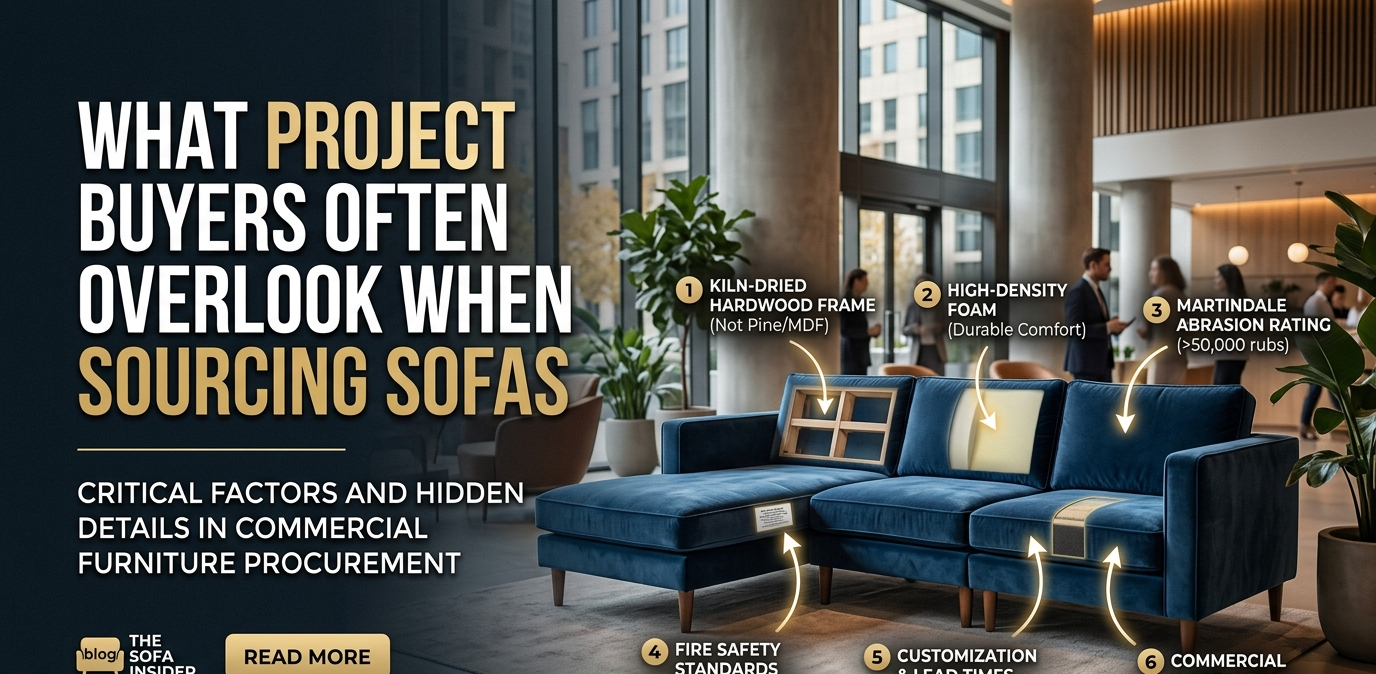
- Wood Moisture Content is Critical: Frames built with wood exceeding 12% moisture will warp or crack during ocean transit or upon arriving in different climates. Kiln-dried solid wood is mandatory for commercial use.
- Visuals Don’t Equal Durability: A sofa designed for a residential living room will fail within months in a hotel lobby. Structural engineering and foam density (minimum 40kg/m³ for seats) dictate lifespan.
- Fabric Compliance Cannot be Retrofitted: Commercial fire ratings (CAL 117, BS 5852) and abrasion limits (Wyzenbeek test) must be integrated at the factory level before upholstery begins.
- Localized QC is Your Only Barrier: Relying on standard pre-shipment photos is insufficient. You need on-the-ground agents inside Foshan factories checking internal frame construction before the fabric is stapled shut.
Sourcing sofas for a multi-unit apartment, a boutique hotel, or a luxury villa project is fundamentally different from buying residential furniture. In a commercial setting, seating is subjected to constant, heavy use.
Because Foshan (specifically the Lecong and Longjiang districts) is the world’s largest furniture manufacturing hub, project buyers naturally look here to optimize their procurement budgets. However, many buyers focus entirely on the exterior design and the unit price, overlooking the internal structural metrics that determine whether a sofa will last five years or five months.
Here are the critical technical elements procurement teams frequently miss when sourcing bulk sofas.
Are You Specifying Commercial-Grade Frame Engineering?
The most common failure point of a project sofa is its internal skeleton. When factories try to hit a low target price, they substitute solid hardwood frames with cheap plywood, MDF (Medium Density Fiberboard), or unseasoned wood.
For high-traffic environments like hotel lobbies or rental apartments, an MDF frame will quickly loosen at the joints, resulting in squeaking or structural collapse.
Furthermore, buyers often forget to specify moisture content. If a factory uses raw wood with high moisture levels, the frame will shrink, warp, or even develop mold while sitting in a shipping container for 30 days on the ocean. You must explicitly demand kiln-dried solid wood (such as larch or eucalyptus) with a moisture content strictly controlled below 12%.
Why Is Foam Density the Primary Factor in Project Lifespan?
If a guest sits on a hotel sofa and sinks into a hard wooden frame, the product has failed. Foam degradation is the primary reason commercial seating needs premature replacement.
Standard residential sofas often use polyurethane foam with a density around 25kg/m³ to 28kg/m³. This is completely unacceptable for commercial procurement. Under constant daily use, low-density foam cells permanently crush, leaving the sofa looking deflated and the fabric loose and wrinkled.
For any hospitality or real estate project, your technical specification must dictate High-Resilience (HR) foam:
- Seat Cushions: Minimum 40kg/m³ to 45kg/m³ density.
- Backrests: Minimum 30kg/m³ to 35kg/m³ density.
Do not accept a factory’s word on this. Your sourcing agent must physically inspect the foam blocks and verify the density rating before the upholstery phase begins.
Do Your Upholstery Specifications Meet Local Commercial Codes?
Choosing a fabric from a swatch book based only on color is a major procurement risk. Commercial spaces are heavily regulated, and if your imported furniture fails a local building inspection, it cannot be used.
Project buyers often overlook two crucial fabric metrics:
- Abrasion Resistance: Commercial fabrics are tested using the Wyzenbeek or Martindale methods. For a hotel lobby or serviced apartment, you should specify fabrics that exceed 50,000 double-rubs. Standard residential fabric (often around 15,000 double-rubs) will quickly pill or tear.
- Fire Retardancy: Different markets have strict legal requirements for commercial furniture flammability. If your project is in the US, the fabric and foam must pass CAL 117. For the UK, it must pass the stringent BS 5852 (Crib 5) test. You must require the factory to use fire-treated materials and provide legitimate certification documents for customs and local inspectors.
Are You Checking the Internal Structure Before It Gets Covered?
A common mistake is approving production based solely on a finished “golden sample.” Once a sofa is upholstered, you cannot see if the factory used the agreed-upon kiln-dried wood, the correct heavy-duty serpentine springs, or the specified high-density foam.
By the time the finished goods are packed in cardboard and loaded into a container, it is too late to fix structural shortcuts. QC (Quality Control) cannot happen only at the end of the line. It must occur midway through production, examining the raw frame and suspension system before the fabric is applied.
Why Choose HSY Sourcing for Your Furniture Procurement?
As a dedicated sourcing agent located directly in Foshan, HSY Sourcing acts as your technical eyes and ears on the factory floor. We do not just pass along digital renders; we manage the physical realities of manufacturing.
- Mid-Production Inspections: We visit the factories in Longjiang and Lecong while your frames are still exposed. We use moisture meters on the wood, verify the gauge of the steel springs, and check foam density metrics before upholstery.
- Real Factory Transparency: We reject AI-generated factory images or polished showroom photos. We provide you with real-life, physical photos of your exact products on the assembly line so you know exactly what is being built.
- Cross-Factory Consolidation: A typical project requires sofas, beds, case goods, and building materials. We coordinate production across multiple specialized Foshan factories, storing finished goods in our warehouse until they can be securely consolidated into one optimized shipping container.
- Specification Enforcement: We ensure your specific requirements for fire ratings, foam density, and commercial fabric durability are written into legally binding local contracts with the manufacturers.
Visit www.hsysourcing.com to send us your project’s FF&E schedule. Let our local team secure your supply chain and ensure your furniture meets strict commercial standards.
Frequently Asked Questions (FAQ)
Q: Can we manufacture custom sofas based on our interior designer’s CAD drawings?
A: Yes. Foshan’s manufacturing base is built for OEM/ODM production. We can take your architect’s 3D renderings and technical drawings, work with the factory’s engineering team to create a physical prototype, and adjust the seating pitch, foam layers, and fabric before mass production.
Q: What is the typical Minimum Order Quantity (MOQ) for custom project sofas?
A: For customized designs requiring specific structural dimensions and commercial fabrics, factories typically require an MOQ of 10 to 20 pieces per design. However, if you are sourcing standard designs and changing only the upholstery, we can often negotiate lower MOQs by leveraging our established factory relationships.
Q: How do you protect leather or fabric sofas from moisture damage during ocean freight?
A: Ocean transit exposes cargo to high humidity and temperature fluctuations, which can cause mold. We mandate that factories place industrial desiccant packets inside the packaging and use heavy-duty, sealed plastic wrapping around the sofa before placing it in the export carton to block external moisture.