
Procuring building materials and FF&E (Furniture, Fixture, and Equipment) from Foshan, China offers substantial cost advantages for commercial real estate projects. However, a typical project—whether a boutique hotel, multi-family apartment complex, or luxury villa—requires sourcing from multiple specialized factories across different districts.
Sourcing ceramic tiles from Chancheng, aluminum fenestration from Nanhai, custom millwork from Shunde, and sanitaryware from Gaoming means managing disparate production schedules. Shipping these items piecemeal as Less-than-Container Load (LCL) freight dramatically increases sea freight costs, exposes delicate finishes to multiple port handling stages, and risks site installation halts due to staggered deliveries.
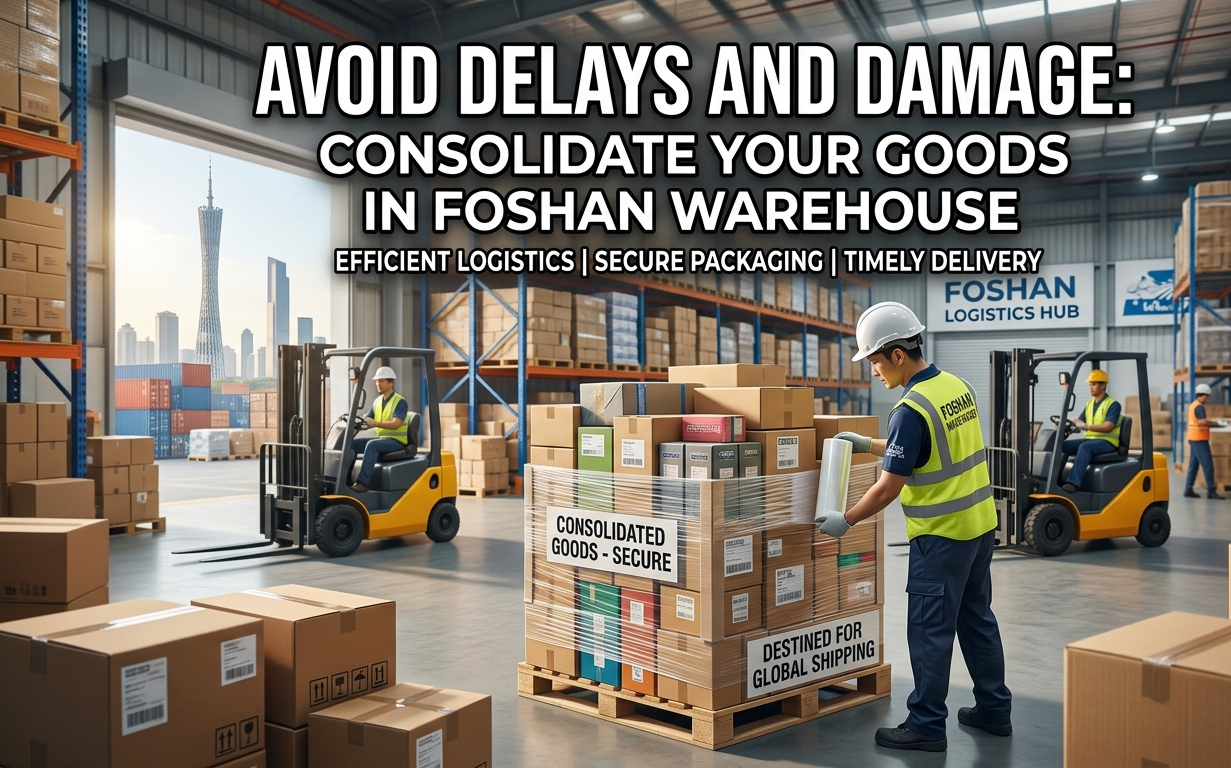
Centralizing cargo in a local Foshan staging warehouse resolves these vulnerabilities before goods are loaded into ocean containers.
What Are the Key Takeaways for Building Material Consolidation in Foshan?
- Freight Cost Reduction: Combining small factory orders into full container loads (FCL 20GP, 40GP, or 40HQ) eliminates individual LCL handling fees, destination terminal charges, and unnecessary documentation surcharges, lowering overall shipping spend by 25% to 35%.
- Zero-Tolerance Defect Gatekeeping: Inspecting incoming goods at the warehouse allows technical teams to identify non-conforming dimensions, glaze color variations, or timber moisture defects while factories are still locally reachable for immediate replacement.
- Risk Mitigation for Fragile Cargo: Re-packing loose factory cartons into export-grade, ISPM 15 compliant plywood crates prevents structural crushing, surface scratching, and corner impact damage during transit.
- Site-Sequenced Container Stuffing: Cargo is staged and loaded in reverse order of site installation (e.g., structural framework loaded first, vanity mirrors loaded last), allowing site contractors to unload materials directly into active build zones.
- Streamlined Customs Compliance: Consolidating goods under a unified Bill of Lading (B/L) and standardized export declaration reduces customs hold risk both at Chinese export ports and destination border clearances.
How Does Fragmented Shipping Cause Construction Delays and Cargo Damage?
Shipping directly from multiple factories without centralized consolidation introduces systemic supply chain hazards for international buyers.
                        FRAGMENTED LCL SHIPPING RISK
┌──────────────────┐    ┌──────────────────┐    ┌──────────────────┐
│ Multiple Factory │ ─> │ Staggered Port   │ ─> │ High Ocean Freight│
│ Lead Times       │    │ Deliveries (LCL) │    │ & Destination Fees│
└──────────────────┘    └──────────────────┘    └──────────────────┘
                                                          │
                                                          ▼
┌──────────────────┐    ┌──────────────────┐    ┌──────────────────┐
│ On-Site Build    │ ◄─ │ Multiple Port    │ ◄─ │ High Damage Risk │
│ Delays           │    │ Customs Inquiries│    │ (Frequent Shifts)│
└──────────────────┘    └──────────────────┘    └──────────────────┘
When building materials travel through standard LCL consolidation hubs, they are handled by third-party forklift operators up to 6 to 8 times before reaching the final destination. This repeated handling is a primary cause of chipped tile edges, shattered glass, and crushed cabinet corners.
| Operational Risk Factor | Fragmented Direct Shipping (LCL) | Centralized Foshan Warehouse Consolidation (FCL) |
| Ocean Freight & Local Fees | High per-CBM rates with multiple port documentation and destination fees. | Optimized full-container rates with single-bill clearance fees. |
| Cargo Handling Frequency | Handled 6–8 times across public freight consolidation hubs. | Handled 2 times: loaded directly at staging facility and unloaded at job site. |
| Quality Control Timing | Defect discovery occurs on-site post-import, making returns impossible. | Defect discovery occurs locally in Foshan prior to balance payment release. |
| Unloading & Installation Sequence | Goods arrive in random shipments; workers must store cargo on active build sites. | Containers are packed according to floor-by-floor site assembly sequence. |
| Customs Inspection Clearance | Multiple customs filings increase the probability of port hold-ups. | Single consolidated export filing under verified Harmonized System (HS) codes. |
How Does the Foshan Warehouse Consolidation Workflow Operate?
A structured warehouse consolidation strategy converts fragmented factory outputs into a single, organized logistics execution plan.
1.1. Inbound Receiving & Package Audit:Milestone 1.
Cargo arriving from various Foshan factories is unloaded at the staging warehouse. Warehouse staff verify carton counts, inspect outer packaging for transit damage, and log incoming batch numbers against the master Project Bill of Quantities (BOQ).
2.2. Open-Box Quality & Specification Testing:Milestone 2.
Technical QC engineers unbox random samples using ISO 2859-1 (AQL 2.5) sampling standards. Material dimensions, glaze consistency, hardware counts, and timber moisture content (maintained between 8% and 12%) are tested against approved shop drawings.
3.3. Export Re-Packing & Custom ISPM 15 Crating:Milestone 3.
Fragile architectural items—such as sintered stone slabs, custom vanity mirrors, glass shower enclosures, and high-gloss millwork—are reinforced in solid plywood crates with internal EPE foam corner protection.
4.4. Unit-Coded Staging & Inventory Indexing:Milestone 4.
Goods are tagged with site-specific labels (e.g., “Building A – Floor 3 – Unit 302”) and stored in dedicated rack zones until all project components pass final inspection sign-off.
5.5. Density-Stratified Container Stuffing:Milestone 5.
Load masters construct a 3D container packing plan. Heavy ceramic tiles and sanitaryware form the bottom base; flat-packed joinery sits in the middle layer; lightweight lighting and soft furnishings are secured on top. Desiccant packs are installed to prevent container condensation.
6.6. Unified Customs Filing & Ocean Dispatch:Milestone 6.
The logistics team consolidates all commercial invoices, packing lists, and certificates of origin (CO) into a single export declaration, authorizing container sealing and transfer to the port.
How Do You Prevent Material Damage During Container Loading and Sea Transit?
Protecting heavy, fragile building materials requires strict structural load engineering inside the ocean container.
┌────────────────────────────────────────────────────────────────────────┐
│                   CONTAINER PACKING & DENSITY STRATIFICATION            │
├────────────────────────────────────────────────────────────────────────┤
│ 1. TOP LAYER: Lightweight FF&E, lighting, and soft furnishings         │
│ 2. MIDDLE LAYER: Flat-packed cabinetry, doors, & aluminum profiles     │
│ 3. BOTTOM LAYER: Heavy ceramic tiles, stone crates, & sanitaryware     │
├────────────────────────────────────────────────────────────────────────┤
│ SECURING PROTOCOL: Ratchet strapping, dunnage bags, calcium chloride    │
└────────────────────────────────────────────────────────────────────────┘
Essential Container Loading Controls:
- Weight Distribution Management: Heavy stone crates and porcelain tile pallets are positioned directly over the container’s floor structural runners to prevent floor board warping and axle weight limit violations during road transit.
- Void Filling & Inflatable Dunnage: Air gaps between cargo rows are filled with industrial kraft paper dunnage bags. This stops cargo shifting during vessel roll and pitch maneuvers at sea.
- Moisture Containment (“Container Rain”): Ocean voyage temperature fluctuations cause internal air condensation. Installing high-absorption calcium chloride desiccant bags maintains container relative humidity below the dew point, preventing wood warping and carton collapse.
Why Choose HSY Sourcing for Your Foshan Warehousing and Procurement?
Navigating the complexities of Foshan’s manufacturing landscape requires an experienced, on-the-ground partner who protects your project timeline and budget. HSY Sourcing serves as your dedicated China Sourcing Agent and Quality Control representative in Foshan.
What Sets HSY Sourcing Apart:
- Strategic Local Staging Warehouse: Located directly in the heart of Foshan’s industrial cluster, our warehouse facility provides easy access to key manufacturing districts in Chancheng, Shunde, Nanhai, and Gaoming.
- In-House Quality Assurance Engineers: We do not rely on warehouse box-checkers. Our technical QC team inspects incoming building materials, verifies CAD shop drawing compliance, and performs trial assemblies before goods leave China.
- Project-Based Unit Tagging & Sequencing: We organize and label cargo according to your build schedule—enabling room-by-room or floor-by-floor unloading at your job site to keep construction crews moving efficiently.
- Custom Export Packaging & Fumigation: We operate an in-house crating service that builds custom ISPM 15 compliant plywood crates designed specifically for international sea freight transit.
- End-to-End Export & Logistics Execution: From factory floor audits to ocean freight booking and customs documentation, we manage the entire supply chain under one accountable team.
What Are the Most Common Questions About Foshan Warehouse Consolidation? (FAQ)
Q1: How long can our goods be stored in the HSY Sourcing Foshan warehouse?
We offer up to 30 days of free warehouse storage for active procurement and consolidation projects. This buffer allows sufficient time to receive goods from various factories, perform quality control inspections, complete custom crating, and schedule ocean container loading without accruing extra holding costs.
Q2: What happens if an item arrives damaged or non-compliant from a factory?
Because the factory is located locally in Foshan or surrounding Guangdong province, our technical team immediately issues a non-conformance report (NCR) to the manufacturer. The factory must repair or replace the defective item within days—well before container stuffing—eliminating the risk of importing defective materials to your job site.
Q3: How do you handle shipments from factories with different production lead times?
We establish a consolidated production tracking schedule across all suppliers at the contract stage. Factories with longer lead times (such as custom joinery) begin production first, while short lead-time items (such as stock ceramic tiles) are scheduled to arrive at our warehouse closer to the target container packing date.
Q4: Can HSY Sourcing consolidate building materials purchased from our own suppliers?
Yes. In addition to sourcing directly through our audited vendor network, we offer standalone Warehouse Consolidation and Quality Control Services for materials you have already purchased from your own China suppliers.
Q5: How does warehouse consolidation simplify customs clearance in the destination country?
Shipping multiple LCL orders results in separate Bills of Lading, entries, and administrative broker fees for each factory shipment. Consolidating all goods at our Foshan facility allows us to issue a single master Bill of Lading (B/L) with a unified, itemized Packing List and Commercial Invoice, reducing customs processing complexity and port inspection risk.