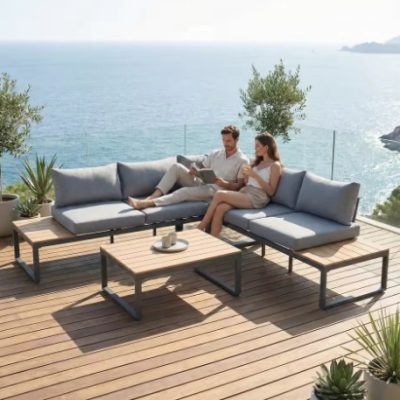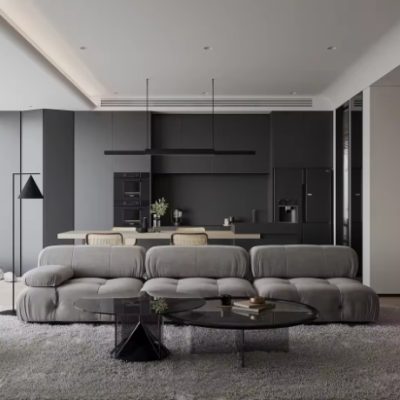

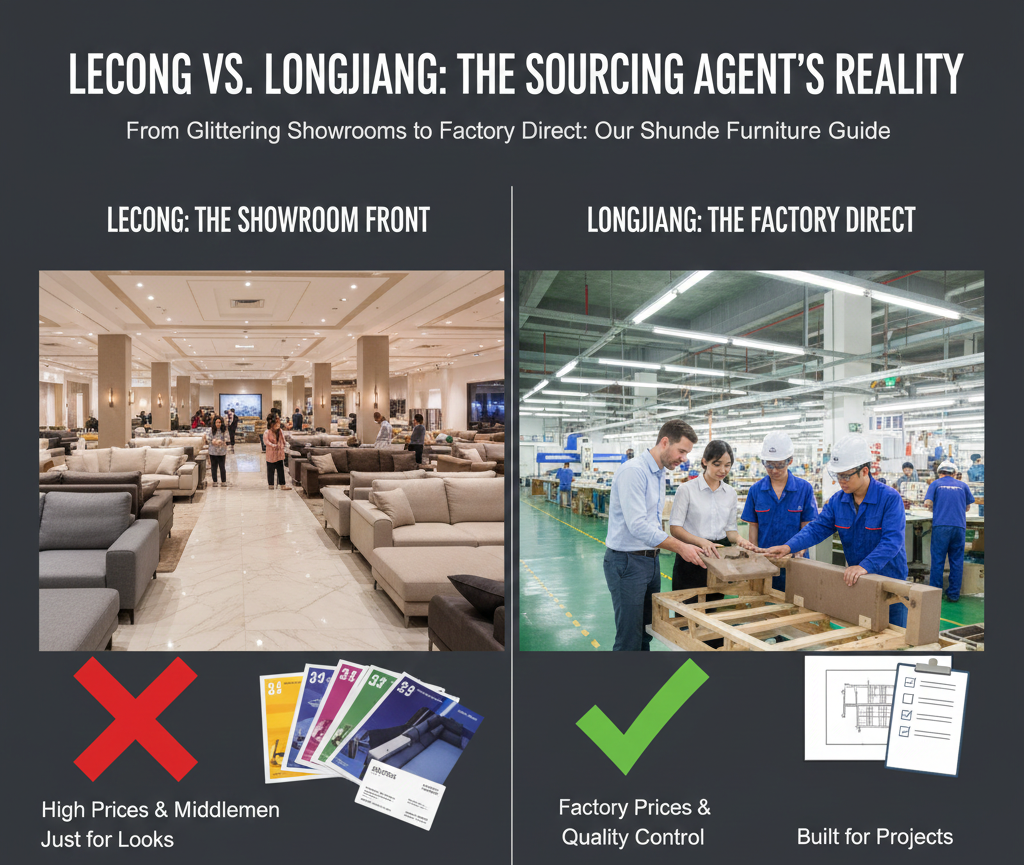
If you search for “Furniture in China,” the first thing you’ll see is Lecong. It’s home to the Louvre, Sunlink, and Empire Furniture—massive, glittering malls that stretch for miles. It’s a furniture paradise.
But if you are a professional—someone furnishing a 100-unit apartment, a boutique hotel, or stocking an Amazon warehouse—you need to know the reality: Lecong is the “Face,” but Longjiang is the “Muscle.”
As a Foshan-based agent, we spend our lives navigating the road between these two towns. Here is the honest truth about where you should spend your money and how to avoid the “Retail Trap.”
1. Lecong: The World’s Biggest Showroom (The “Face”)
Lecong is incredible for selection. You can see 10,000 sofas in a single afternoon.
- The Pro: It’s great for “inspiration.” You can touch the fabrics, test the comfort, and see the latest trends in Italian-style or Modern-Luxury design.
- The Reality: These showrooms have massive overhead. The rent in a place like the Louvre is astronomical. If you walk in as a foreigner and place a large order, you are often paying a 30% to 50% markup just to cover the showroom’s rent and the sales staff’s commission.
When to use Lecong: If you only need furniture for one private villa or a small office, buy it in Lecong. It’s easy. But if you have a project, Lecong is only your “catalog.” You go there to pick the style, but you don’t necessarily want to sign the contract there.
2. Longjiang: The Manufacturing Heart (The “Muscle”)
Just 15 minutes away from the fancy malls of Lecong lies Longjiang. There are no marble floors here. It’s dusty, it’s loud, and it’s filled with thousands of specialized factories.
Longjiang is the world’s capital for upholstery (sofas, beds, office chairs) and raw materials.
- The Pro: You are buying from the source. When we take a client to a Longjiang factory, we aren’t talking to a showroom girl; we are talking to the production manager. We see the wood frames, the density of the foam, and the stitching machines.
- The Reality: It’s chaotic. Most factories in Longjiang don’t have English-speaking staff. They don’t have fancy catalogs. They focus on production, not marketing.
When to use Longjiang: This is for the Project Buyer. If you need 200 sofas for an apartment block or a specific KD (Knock-Down) sofa structure for Amazon FBA, you go to Longjiang. You get the factory price, and you get to control the “hidden” quality (the stuff inside the sofa).
The Agent’s Strategy: “Select in Lecong, Produce in Longjiang”
This is how we provide value to our clients. We don’t just walk you around a mall. We execute a two-step strategy:
Step 1: The Selection (Lecong)
We take you to the high-end showrooms to see what’s possible. You point at a sofa and say, “I want this design, but I need it to be 10cm shorter, and I need the fabric to be fire-retardant (BS5852) for my UK project.”
Step 2: The Production (Longjiang)
We then take that requirement to our audited factories in Longjiang. We show them the design and negotiate the “Project Price.” Because we are local, the factory knows they can’t overcharge us. We ensure that the internal construction—the stuff you can’t see at the showroom—is built to last.
Why “Local Knowledge” Saves Your Project
If you buy directly from a showroom, you take a massive risk. Here is what we see happen to unrepresented buyers:
- The “Sample vs. Big Cargo” Gap: The sofa in the showroom looks perfect. But when your 100 sofas arrive at your project site, the foam is softer, the legs are slightly crooked, and the fabric color is “off.”
- Compliance Failures: For hotels and apartments in the US (CAL117) or UK (BS5852), fire safety is non-negotiable. Many showrooms will say their foam is fire-retardant, but they don’t have the test reports. We physically go to the factory in Longjiang and verify the foam source.
- The Logistics Nightmare: You might buy beds from Factory A, sofas from Factory B, and outdoor sets from Factory C. Who is going to coordinate the trucks? Who is going to check if the bed frames are packed with enough protection to survive 30 days on a ship?
That is our job. We manage the “Lecong-Longjiang” loop. We consolidate the orders at our warehouse, we check the SKU of every single chair, and we make sure your container is packed to the roof with zero wasted space.
FAQ: Real Talk for Furniture Buyers
Q: Can I just buy from Alibaba and skip the trip?
A: You can, but furniture is “tactile.” You can’t feel the density of a sofa or the “jerkiness” of a recliner mechanism through a screen. For projects, one bad batch of 50 sofas can ruin your reputation. You need eyes on the ground.
Q: Is Longjiang furniture cheaper?
A: Yes, usually 20-40% cheaper than the Lecong showroom price for the same quality. But the real saving is in the customization. Factories in Longjiang can change the internal specs to meet your specific budget.
Q: What about Outdoor Furniture?
A: That’s usually in Beijiao or the surrounding Shunde area. The same logic applies: don’t buy the “retail” version if you need “commercial grade.”
Conclusion
Foshan is a goldmine for furniture, but you have to know where to dig. Don’t get stuck in the malls of Lecong. Use them for ideas, then let us take you into the heart of Longjiang to find the real value.
Whether you are an Amazon seller looking for the next “sofa-in-a-box” or a developer furnishing a luxury apartment tower, you need a partner who knows the backstreets of Shunde.
Planning a trip to Foshan? Don’t just book a hotel in Guangzhou. Talk to us first. We’ll help you plan a route that takes you from the glittering showrooms to the factory floor, ensuring you get exactly what you pay for.