
Key Takeaways:
- Eliminate Domestic Transit Lag: Sourcing flooring, sanitary ware, and furniture from scattered provinces causes disjointed delivery schedules. Consolidating procurement within Foshan’s adjacent manufacturing clusters ensures all categories are completed and shipped simultaneously.
- Achieve Exact Material Matching: Centralized sourcing allows your agent to physically carry material samples (e.g., a wood veneer from the furniture factory) directly to the bathroom vanity factory, guaranteeing that finishes match perfectly under the hotel’s interior lighting.
- Optimize Container Freight: Heavy structural materials (like ceramic flooring) and high-volume items (like upholstered seating) have opposite shipping profiles. Combining them locally in Foshan allows you to balance container weight and CBM, lowering your per-unit ocean freight costs.
- Centralize Quality Control: Managing a single Bill of Quantities (BOQ) through one local engineering team prevents the common interface errors that occur when isolated factories work without communicating.
Executing the interior fit-out of a commercial hotel or apartment building is fundamentally a logistics exercise. A typical property requires high-traffic commercial flooring, standardized bathroom fixtures, custom cabinetry, and loose guestroom furniture.
When a procurement team treats these categories as separate siloes—ordering tiles from one region, toilets from another, and beds from a third—they introduce massive supply chain friction. Deliveries arrive weeks apart, blocking on-site construction crews, and design elements often clash upon installation.
Foshan provides a structural solution to this fragmentation. By acting as a central hub for interior building materials, the city allows developers to manage the entire fit-out package from a single geographic point.
Why Does Fragmented Sourcing Cause Hotel Fit-Out Delays?
Traditional procurement often prioritizes finding the absolute lowest unit price for every individual item on a BOQ. A purchasing manager might source ceramic tiles from Fujian, sanitary ware from Zhejiang, and furniture from Guangdong.
While the factory invoices might look cheaper, the logistical reality quickly erodes those savings. Factories in different provinces operate on entirely different production schedules and are subject to different local power grid restrictions, weather events, and domestic trucking availability.
If your flooring arrives on-site but the bathroom plumbing fixtures are delayed at a port three provinces away, your entire plumbing and tiling contractor crew must halt work. You are forced to pay daily labor stand-by rates or risk losing your contractors to other jobs. Furthermore, organizing separate less-than-container-load (LCL) shipments or partially empty full containers from scattered ports drastically inflates your international freight bill.
How Do Foshan’s Industrial Clusters Support One-Stop Procurement?
Foshan removes the geographical distance between your product categories. The city is engineered as a mega-cluster of specialized industrial zones located within a short drive of one another:
- Chancheng District: The undisputed global center for ceramic tiles, porcelain slabs, and commercial sanitary ware (toilets, basins, and shower enclosures).
- Shunde District: The world’s largest concentration of contract furniture manufacturing, handling everything from custom lobby millwork to guestroom beds and compression sofas.
- Nanhai District: The primary hub for architectural aluminum, including structural window frames, shower hardware, and decorative metal trims.
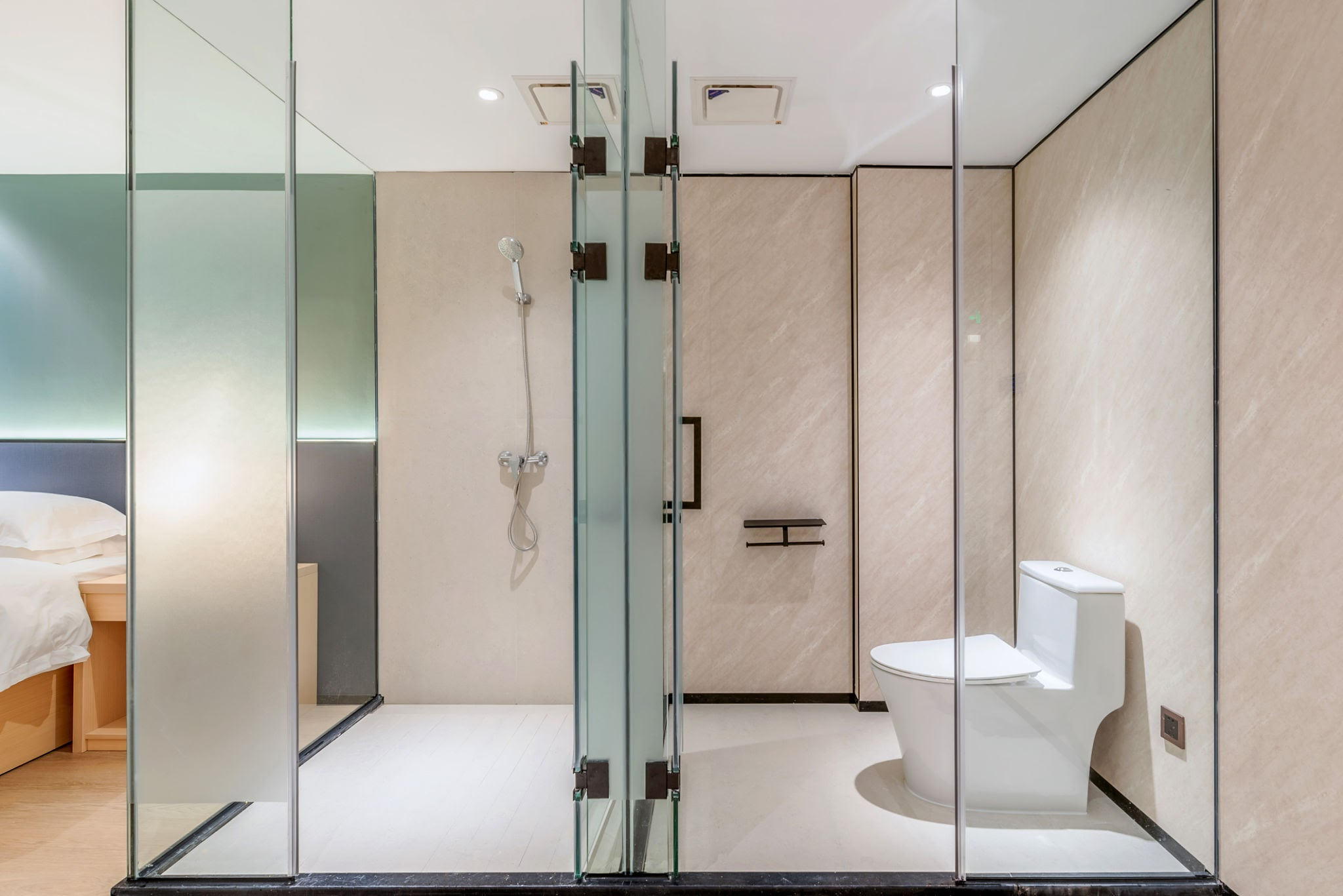
Seamless Integration of Sanitary Ware, Flooring, and Furniture in a Hotel Room. Source: mingxing chen / Getty Images
Because these facilities are geographically adjacent, a project manager does not need to rely on isolated email chains. If an engineering issue arises regarding how a custom glass shower screen interfaces with the ceramic floor drain, representatives from both factories can physically meet to review the architectural CAD drawings and resolve the tolerance issue before mass production starts.
How Can You Ensure Design Consistency Across Different Material Categories?
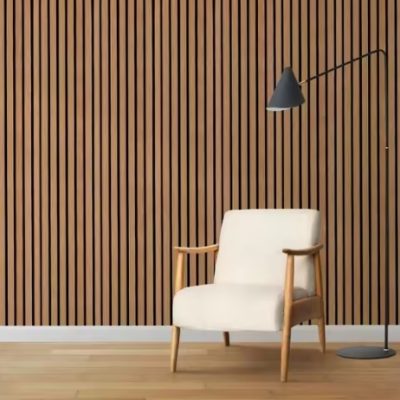
In hospitality design, aesthetic continuity is critical. An interior architect might specify a “smoked oak” finish to run continuously across the entry door, the wardrobe, the bathroom vanity base, and the bedside tables.
If you use isolated suppliers, you will inevitably receive three different shades of “smoked oak” because factories use different veneer suppliers and lacquer curing processes. Relying on digital photos or PDF color codes is insufficient; digital screens alter color perception, and factory lighting differs from your hotel’s final LED layout.
A one-stop procurement model solves this through physical master sample circulation. A local agent on the ground in Foshan takes the approved physical control sample and hand-carries it to the cabinetry factory, the door manufacturer, and the furniture workshop. By calibrating the stains and gloss levels against a single physical baseline across all adjacent factories, you eliminate the risk of mismatched textures upon final installation.
What is the Most Efficient Way to Ship Heavy Flooring with Bulky Furniture?
Shipping commercial interior goods involves managing two strict constraints: total weight and total physical volume (Cubic Meters, or CBM). Sourcing categories in isolation leads to severe container inefficiency.
Isolated Shipping (High Freight Cost):
Container 1 (Flooring): Hits max weight limit rapidly. Top 60% of container is empty air.
Container 2 (Furniture): Fills physical volume rapidly. Only uses 30% of allowable weight.

Consolidated Foshan Shipping (Optimized Cost):
Container 1 (Mixed):
[Top Half]    Boxed Sofas, Mattresses, Cabinetry (High Volume, Low Weight)
[Bottom Half] Porcelain Tiles, Stone Basins, Toilets (High Weight, Low Volume)
Result: Maximized CBM and Weight = Fewer Total Containers Required.
By staging all your fit-out materials at a centralized warehouse in Foshan, logistics engineers can manually balance the payload. Heavy assets like floor tiles and ceramic toilets are loaded first, forming a dense, stable base layer. Lightweight, bulky items like flat-packed case goods and vacuum-compressed seating are stacked securely on top. This consolidation strategy frequently reduces the total number of containers required for a hotel project by 15% to 20%.
Why Choose HSY Sourcing for Your Fit-Out Project?
Operating directly from the center of Foshan’s manufacturing districts, HSY Sourcing serves as your dedicated procurement, engineering, and logistics office on the ground.
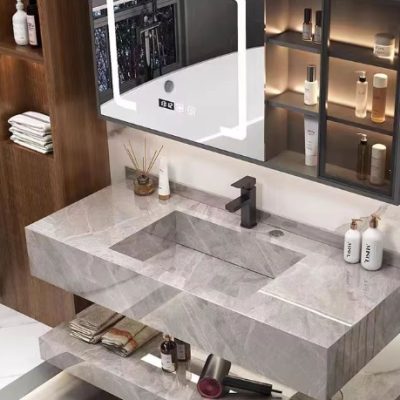
- Comprehensive BOQ Management: We review your entire material schedule holistically. We ensure that your vanity plumbing cutouts match your selected basin dimensions and that the structural clearances for your furniture align with your final wall panel depths.
- Active Factory Floor Inspections: We do not rely on factory self-reporting. Our inspectors are on the ground in Chancheng and Shunde verifying tile water absorption rates, testing the flush mechanisms on sanitary ware, and checking the structural joints on guestroom furniture prior to packing.
- Centralized Cargo Consolidation: We operate a local staging facility to receive, inspect, and aggregate your multi-category goods. We directly supervise the container loading process, ensuring heavy ceramics are physically isolated from fragile mirrors and furniture veneers to prevent transit damage.
- Unified Documentation: Instead of chasing commercial invoices and packing lists from a dozen different domestic suppliers, we provide a single, clean set of export documentation tailored to your local customs requirements.
Visit www.hsysourcing.com to submit your hotel layout plans and material specifications. Let our local engineers build a synchronized, cost-effective supply chain for your next property development.
Frequently Asked Questions (FAQ)
Q: Do factories in Foshan require massive Minimum Order Quantities (MOQs) if we are only furnishing a 30-room boutique hotel?
A: Because Foshan’s ecosystem is highly developed, many contract factories are accustomed to project-based production rather than strict retail wholesale. For standard designs, the MOQ can be quite flexible. If you require highly customized molds for sanitary ware or custom-printed flooring films, the MOQ will be higher to cover the factory’s tooling costs, but standard commercial catalogs easily accommodate boutique-scale developments.
Q: How do you handle the different production lead times between flooring and custom furniture?
A: Ceramic flooring and standard sanitary ware typically have shorter lead times (15 to 25 days) compared to custom guestroom furniture (35 to 45 days). We reverse-engineer the purchasing timeline, issuing production deposits on the furniture and custom cabinetry first. The flooring and bathroom fixtures are released later so that all categories arrive at our Foshan consolidation warehouse simultaneously, avoiding unnecessary domestic storage fees.
Q: What happens if a ceramic toilet or basin breaks during ocean transit alongside furniture?
A: This is entirely preventable through proper loading engineering. We mandate that sanitary ware and heavy ceramics are packed in reinforced, export-grade wooden crates or rigid honeycomb cartons. During the container loading process at our warehouse, these heavy, rigid items are placed securely on the floor and strapped down, while lighter, softer furniture items are positioned above or physically separated by plywood dunnage walls to prevent crushing during rough seas.