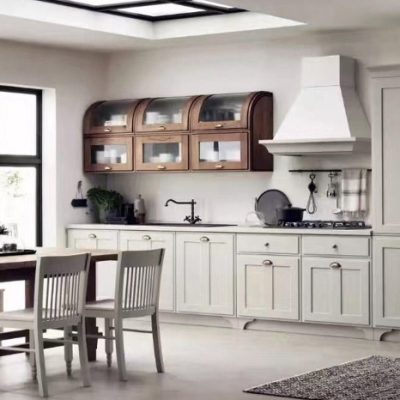


Sourcing kitchen cabinets directly from Foshan, China—the epicenter of global cabinetry manufacturing—allows real estate developers, hotel owners, and villa buyers to capture 30% to 45% in direct cost savings compared to Western distributors.
However, custom kitchen cabinetry is one of the most complex architectural categories to import. Unlike standardized off-the-shelf items, custom millwork involves strict dimensional tolerances, integrated plumbing cutouts, appliance clearances, and material crossovers (timber, quartz, sintered stone, LED extrusions, and hardware). A missed appliance dimension or unverified moisture content specification can derail on-site installation schedules and escalate field labor costs.
This guide outlines how commercial procurement directors, architects, and project managers can source custom kitchen cabinets for villas, multi-family apartments, and hotel developments from Foshan with complete quality control and predictable execution.
What Are the Key Takeaways for Sourcing Kitchen Cabinets in Foshan?
- Shunde Cluster Advantage: Foshan’s Shunde District houses the world’s densest supply chain for kitchen cabinetry, providing direct factory access to high-precision CNC panel processing, automated PUR edge-banding, and custom door manufacturing.
- Mandate PUR Edge-Banding: Require Polyurethane (PUR) hot-melt edge-banding over standard EVA glue for all cabinet carcasses and door panels. PUR creates a seamless, water-impermeable bond that prevents swelling in high-humidity kitchen environments.
- Distinguish Villa vs. Apartment Specs: Luxury villas require fully custom carcasses, solid wood or PET/lacquer fronts, and integrated Blum/Hettich hardware. Multi-family real estate projects prioritize modular knock-down (KD) construction, durable melamine (LPM) finishes, and unit-coded packaging.
- Enforce a 2-Stage Drawing Sign-Off: Never authorize mass production based on architectural concept renders alone. Production must rely on audited 2D/3D factory CAD shop drawings with 20mm–30mm adjustable filler panels to absorb on-site wall variations.
- Require Pre-Shipment Trial Assembly: Demand 100% trial assembly of sample kitchen runs on the factory floor to verify drawer alignment, soft-close dampening, quartz countertop cutouts, and hardware counts prior to container loading.
Why Is Foshan the Primary Hub for Commercial Kitchen Cabinet Manufacturing?
Foshan—specifically Shunde District (including towns like Beijiao and Leliu)—is home to thousands of cabinetry manufacturers ranging from boutique high-end OEM shops to massive automated factories equipped with German HOMAG CNC lines.
┌─────────────────────────────────────────────────────────────────────────────────┐
│                      FOSHAN CABINETRY SUPPLY CHAIN ECOSYSTEM                    │
├─────────────────────────────────────────────────────────────────────────────────┤
│ • Panel Substrates : CARB P2 Plywood, Moisture-Resistant Particleboard (HMR)    │
│ • Surface Finishes : Natural Wood Veneer, German PET Foil, 2K Lacquer, Melamine │
│ • Hardware Hubs    : Leliu Town (Global center for slides, hinges, and pull-outs)│
│ • Stone Processing : Nanzhuang (Quartz and Sintered Stone countertop fabrication)│
└─────────────────────────────────────────────────────────────────────────────────┘
Because panel suppliers, hardware manufacturers, and countertop fabricators operate within a 20-kilometer radius, Foshan factories can execute complex multi-material millwork faster and more cost-effectively than isolated overseas facilities.
What Technical Specifications Differ Between Villa and Multi-Family Cabinet Orders?
Procurement strategies must align with the operational demands of the property type. Over-specifying a multi-family rental project inflates costs, while under-specifying a luxury villa compromises brand positioning.
| Specification Category | Luxury Villa Projects | Multi-Family Apartments & Hotels |
| Carcass Substrate | 18mm E0/CARB P2 Multi-layer Marine Plywood or High-Density Birch Plywood. | 18mm Moisture-Resistant Particleboard (HMR/MFC) or E0 Plywood sink bases. |
| Door Panel Finish | PET foil, 2K matte lacquer, natural timber veneer, or anodized aluminum glass frames. | Durable Melamine (LPM), Thermofoil (PVC vacuum-pressed), or PET laminate. |
| Edge-Banding | Seamless PUR hot-melt or Laser edge-banding (zero glue line). | Heavy-duty PUR edge-banding (1.0mm–1.5mm ABS/PVC edges). |
| Hardware Systems | Electric push-to-open, Blum Legrabox / Servo-Drive, concealed 3D hinges. | Heavy-duty soft-close DTC/Blum undermount slides and 110° clip-on hinges. |
| Structure & Assembly | Pre-assembled (Rigid) construction with factory-doweled joints for fast installation. | Flat-pack (KD – Knock Down) with cam-lock fasteners to optimize container volume. |
| Countertop Material | 12mm/20mm Sintered Stone (Neolith style) or Natural Calacatta Marble. | 15mm/20mm Engineered Quartz Stone with polished bevel edges and sink cutouts. |
How Does the Cabinet Procurement Process Work from Drawing to Job Site?
A disciplined, 5-step engineering and production workflow prevents dimensional errors and field rework.
┌─────────────────────────┐     ┌─────────────────────────┐     ┌─────────────────────────┐
│  1. Design & Appliance  │ ───>│   2. CAD Shop Drawing   │ ───>│   3. Physical Sample    │
│   Specification Freeze  │     │   & Tolerance Audit     │     │    & Finish Sign-Off    │
└─────────────────────────┘     └─────────────────────────┘     └─────────────────────────┘
                                                                             │
┌─────────────────────────┐     ┌─────────────────────────┐                  │
│  5. Unit-Coded Packing  │ <───│  4. Factory Workshop    │ <─────────────────┘
│   & Staged Consolidation│     │   Trial Assembly & QC   │
└─────────────────────────┘     └─────────────────────────┘
Step 1: Appliance Specification Freeze
Before shop drawings begin, all kitchen appliance spec sheets (refrigerators, cooktops, ovens, range hoods, dishwashers, and undermount sinks) must be frozen. Cutout dimensions and power/plumbing outlet locations must be transferred directly into the cabinet CAD files.
Step 2: CAD Shop Drawing & Tolerance Audit
Factory engineers generate itemized production drawings. These plans define carcass thickness, shelf adjustability, toe-kick heights (typically 100mm–150mm), and filler panel allowances. A 20mm–30mm adjustable scribing filler is added along walls to allow installers to trim edges on site for out-of-plumb walls.
Step 3: Physical Sample Sign-Off
Master control samples (150x200mm door swatches, countertop cutouts, edge-banding strips, and handle finishes) are produced and signed by the developer or architect. Mass production cannot begin until these physical references are locked.
Step 4: Factory Workshop Trial Assembly
Once panels are cut on CNC routers and edge-banded, a sample kitchen run (or 100% of custom villa cabinets) is assembled on the workshop floor. QC inspectors verify drawer slide smoothness, soft-close dampening, gap consistency (2mm standard between doors), and hardware alignment.
Step 5: Unit-Coded Packaging & Loading
For multi-unit developments, packages are labeled by unit (e.g., Building A – Floor 04 – Unit 402 – Box 1/3: Sink Base). Flat-packed cartons are reinforced with edge guards, wrapped in EPE foam, and loaded onto pallets for rapid site distribution.
How Do You Prevent Water Damage, Delamination, and Installation Failures?
Kitchen cabinets endure heat, moisture, and heavy daily use. Implementing strict technical checks during production prevents premature material failure.
                               ┌─────────────────────────────────────────┐
                               │   Kitchen Cabinetry Quality Checks      │
                               └────────────────────┬────────────────────┘
                                                    │
         ┌──────────────────────────────────────────┼──────────────────────────────────────────┐
         ▼                                          ▼                                          ▼
┌──────────────────┐                       ┌──────────────────┐                       ┌──────────────────┐
│ Moisture Content │                       │ Edge-Banding     │                       │ Hardware &       │
│ Testing          │                       │ Integrity        │                       │ Load Capacity    │
├──────────────────┤                       ├──────────────────┤                       ├──────────────────┤
│ • Pin-meter test │                       │ • PUR glue temp  │                       │ • 48-hr salt     │
│   on raw timber  │                       │   verification   │                       │   spray test     │
│ • Target: 8%-12% │                       │ • Water immersion│                       │ • 30kg slide load│
│   EMC limit      │                       │   test on seams  │                       │   rating test    │
└──────────────────┘                       └──────────────────┘                       └──────────────────┘
The PUR Edge-Banding Rule: Traditional EVA glue re-melts under high temperatures and breaks down when exposed to standing water, causing cabinet edges to peel. PUR (Polyurethane) adhesive forms a chemical cross-link that is fully waterproof and heat-resistant up to 150°C. Always mandate PUR edge-banding for sink base cabinets and vanity units.
Mandatory Quality Protocols:
- Under-Sink Protection: Sink base cabinets must feature a fully wrapped aluminum foil bottom panel or a molded waterproof PVC liner to protect plywood/particleboard carcasses from plumbing leaks.
- Moisture Content (MC) Auditing: Core boards and solid timber doors must be tested with digital moisture meters before machining, maintaining an 8% to 12% moisture range to prevent warping in dry destination climates.
- Formaldehyde Emission Compliance: Panel products must carry certified laboratory test reports conforming to CARB Phase 2 / EPA Title VI (North America) or European E0 / Super E0 standards to guarantee healthy indoor air quality.
Why Choose HSY Sourcing as Your Cabinet Procurement Partner in Foshan?
Navigating custom cabinetry production across multiple specialized Foshan factories requires technical expertise and on-ground management. HSY Sourcing operates as your independent procurement, engineering, and quality control team in Foshan.
What Sets HSY Sourcing Apart:
- Engineering & Shop Drawing Audits: Our in-house engineering team reviews architectural drawings, verifies appliance cutouts, and audits factory CAD files before production starts—eliminating costly field installation errors.
- Direct Access to Top-Tier Shunde OEM Factories: We connect developers directly with export-certified cabinet manufacturers, bypassing trading markups to secure transparent, factory-direct pricing.
- Strict On-Site Quality Assurance: Our QC engineers conduct 3-stage inspections (raw material verification, mid-production inline checks, and mandatory workshop trial assemblies) to ensure exact finish matching and dimension accuracy.
- Centralized Staging & Warehousing: We operate a local Foshan warehouse facility where we consolidate cabinets, countertops, appliances, and sinks from different factories. We verify unit-coded labeling, re-crate fragile stone tops in ISPM 15 wooden boxes, and optimize container stuffing.
- Turnkey Logistics & Delivery: We manage complete export customs clearance, ocean freight booking, destination port customs processing, and site delivery (DDP/DAP) for seamless project execution.
What Are the Most Frequently Asked Questions About Sourcing Kitchen Cabinets from China? (FAQ)
Q1: What is the typical lead time for custom kitchen cabinet orders from Foshan?
Standard production lead time for custom kitchen cabinetry is 30 to 45 days following final CAD shop drawing approval and master sample sign-off. Ocean transit and customs clearance take an additional 20 to 40 days, depending on the destination port.
Q2: Is it better to order flat-pack (KD) or pre-assembled (rigid) kitchen cabinets?
For multi-family developments and apartments, flat-pack (KD) construction is recommended because it increases container volume capacity by up to 300%, significantly lowering shipping costs per unit. For high-end luxury villas, pre-assembled (rigid) cabinets are preferred to minimize site assembly labor and ensure factory-doweled joinery precision.
Q3: How do you handle countertop fabrication when cabinets and stone come from different suppliers?
HSY Sourcing manages the physical interface between cabinet factories and stone fabricators. We route verified cabinet CAD shop drawings directly to the stone factory for CNC sink and cooktop cutouts. For complex villa kitchens, we arrange dry-fit testing at our staging warehouse before final packing.
Q4: How do you guarantee formaldehyde emission compliance for international projects?
We source raw board stock exclusively from certified tier-1 mills holding verifiable CARB Phase 2, EPA Title VI, or European E0 test certificates. Additionally, we conduct random raw material sampling and third-party laboratory verification upon request.
Q5: What spare parts allowance should be included with commercial cabinet shipments?
We recommend including a 1% to 2% spare parts allowance with all bulk commercial shipments. This includes extra hardware packs, drawer slides, spare cabinet hinges, filler panels, and un-drilled door panels to cover potential job-site damage during installation.