
For real estate developers and hotel contractors, the procurement of custom aluminum windows and doors is the primary bottleneck in the construction schedule. If the framing is complete but the windows are delayed, the interior fit-out cannot begin.
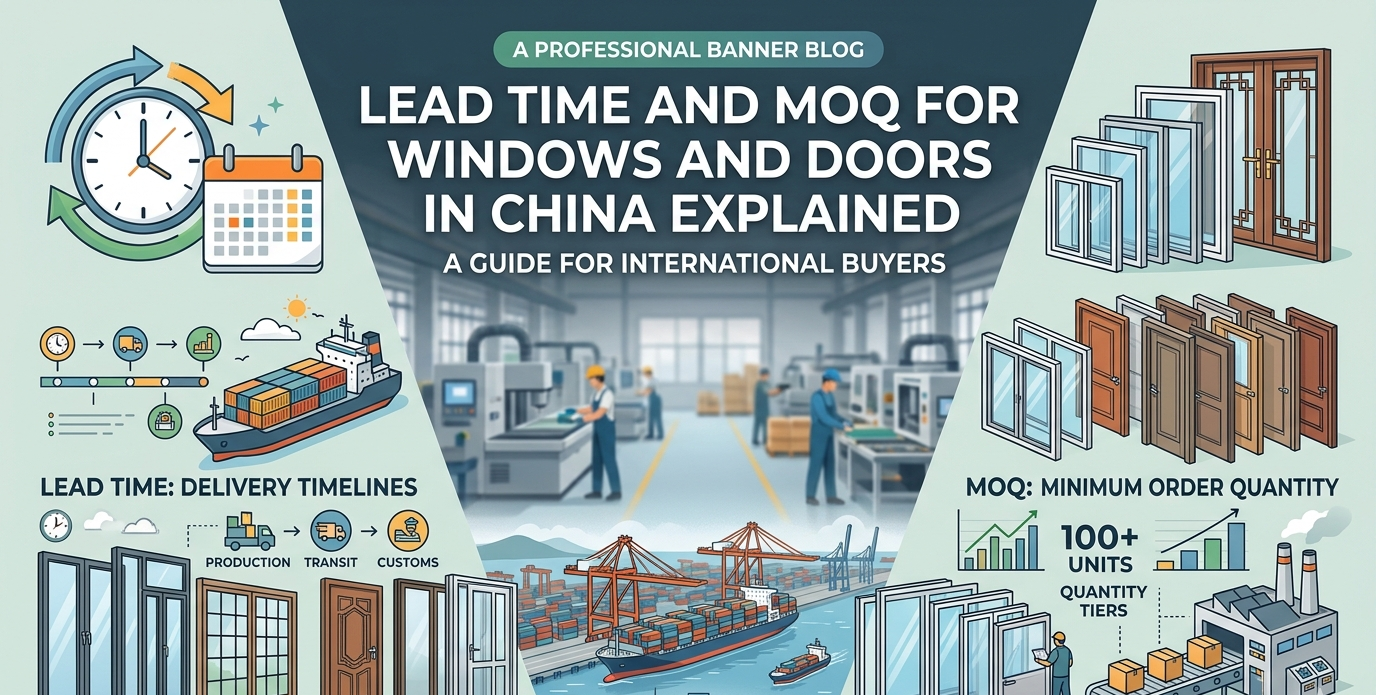
When sourcing from China, project buyers often experience frustration with two variables: Minimum Order Quantity (MOQ) and Lead Time. Factories do not set these numbers arbitrarily to frustrate buyers; they are dictated by the physical realities of aluminum extrusion, powder-coating calibration, and glass tempering.
Understanding the “factory logic” behind these metrics—and utilizing the geographical advantages of the Foshan manufacturing cluster—is the only way to keep your project on schedule and on budget.
Why do Chinese window factories enforce strict MOQs?
In the commercial glazing sector, you cannot simply buy “five windows” of a custom design. The MOQ is strictly tied to the setup costs of heavy industrial machinery.
- Aluminum Extrusion Limits: Commercial projects require specific profiles (e.g., 6063-T5 aluminum with 1.8mm+ wall thickness). To produce a specific frame, the factory pushes heated aluminum billets through a steel die. Factories will not fire up the extrusion press for less than 300 to 500 kilograms of raw aluminum.
- Powder Coating Calibration: If you require a custom RAL color for your hotel facade, the factory must halt the coating line, clean the spray guns, and load the new color. To justify this downtime, they require volume.
- The Standard MOQ: For commercial architectural windows, expect a realistic MOQ of 50 to 100 square meters per profile system and color. If your order is smaller, you will be forced to choose from pre-extruded stock colors (usually matte black or standard white) where the MOQ can be lowered to 20 or 30 square meters.
What is the realistic lead time for a commercial window project?
Do not trust factories that promise 15-day turnarounds for custom commercial projects. True manufacturing requires a strict sequential process. A realistic timeline for a 200-room hotel or apartment complex is 35 to 45 days, broken down as follows:
- Shop Drawings (7 to 10 days): Production cannot begin until your local engineers approve the factory’s CAD shop drawings, detailing rough openings, thermal breaks (PA66), and drainage systems.
- Extrusion and Coating (15 days): The aluminum is extruded, aged for hardness, and sent to the surface treatment line (fluorocarbon coating or powder coating).
- Glass Fabrication (10 to 15 days): This happens concurrently. Glass is cut, tempered, filled with Argon gas, and sealed. If you require laminated acoustic glass (e.g., 5mm + 0.76PVB + 5mm), add 5 days.
- Assembly and Curing (7 days): The frames are joined, hardware (e.g., Hopo or Kinlong) is installed, and structural silicone is applied. The silicone must cure fully before the windows can be handled and packed into plywood crates.
How does the Foshan industrial cluster reduce production delays?
When you buy windows from a factory in an isolated province, a broken piece of glass during tempering or a missing batch of friction stays can delay your order by two weeks as they wait for sub-suppliers to ship replacements.
This is why professional project buyers centralize their window procurement in Foshan.
Foshan is a hyper-dense ecosystem. The aluminum extrusion plants (Dali Town), the glass tempering facilities (Shunde), and the hardware manufacturers are all located within a 30-kilometer radius. If a factory runs short on custom EPDM rubber gaskets, the sub-supplier delivers the replacement by truck on the exact same day. This geographical density acts as a buffer against supply chain shocks, ensuring that the 45-day lead time remains a hard deadline, not a rough estimate.
How can project buyers negotiate better MOQs?
If your villa or boutique hotel project falls slightly below the factory’s MOQ, you have two engineering workarounds:
- Standardize the Finish: Limit your entire project to a single surface treatment. Combining the sliding doors, awning windows, and fixed glass panels into one master powder-coating batch often satisfies the factory’s minimum weight requirement.
- Consolidate with Interior FF&E: Work with a local Foshan agent who has leverage. Factories are more likely to waive strict MOQs if the agent is bundling the window order with a massive interior furniture package for the same project.
Key Takeaways
- MOQ is Machine-Driven: Expect a baseline MOQ of 50-100 sqm for custom profiles, dictated by aluminum extrusion and powder-coating minimums.
- Respect the Timeline: Budget 35 to 45 days for custom production, allowing adequate time for CAD shop drawing approval and silicone curing.
- Location Matters: Sourcing from Foshan minimizes delays because all raw material sub-suppliers are located within a 30km radius of the assembly line.
- Consolidate to Negotiate: Standardizing your color profiles across the entire project is the most effective way to meet factory volume requirements.
Why Choose HSY Sourcing?
Managing custom window lead times from halfway across the world is a high-risk operation. HSY Sourcing operates directly on the ground in Foshan, acting as your localized project management and engineering team.
- Timeline Enforcement: We do not wait for the factory to email us updates. We deploy our team to the extrusion lines and glass plants weekly to physically verify that production is matching the contractual timeline.
- Technical Audits: Led by our inspection team uses digital calipers to measure aluminum wall thickness and verify that the factory is using genuine PA66 thermal breaks, not cheap PVC substitutes.
- Foshan Consolidation: We leverage our local presence to consolidate your structural building materials. We combine your heavy custom windows with high-volume, lightweight items (like Foshan compression sofas) in our warehouses, drastically lowering your total freight costs.
- Plywood Packaging Mandate: We supervise the final packing process to ensure every window is secured in fully enclosed, fumigated plywood crates to survive ocean transit.
FAQ
Q1: How does the Chinese New Year (CNY) affect window lead times?
A: Drastically. CNY (usually late January or early February) shuts down the entire supply chain for nearly a month. To receive windows in March, your CAD drawings must be signed off, and the deposit paid, by early December.
Q2: Can I order a 1×1 meter sample window before placing the bulk project order?
A: Yes. We highly recommend ordering a corner sample or a full 1×1 meter mockup. This bypasses the bulk MOQ and allows your local installation engineers to physically inspect the hardware, weather stripping, and thermal break quality before committing to the mass order.
Q3: Does the 45-day lead time include shipping?
A: No. The 35-45 days represent the manufacturing time (from deposit and CAD approval to the goods being crated in Foshan). You must add ocean freight time (e.g., 20-30 days to the US West Coast or Australia) and customs clearance to calculate your final on-site delivery date.
Q4: Will factories lower the MOQ if I pay a higher price per square meter?
A: Sometimes. For very specialized extrusion profiles, factories may agree to a “machine setup fee” (usually a few hundred dollars) to cover the cost of halting their line for a small batch. We negotiate these terms directly on your behalf to find the most mathematically logical solution for your budget.