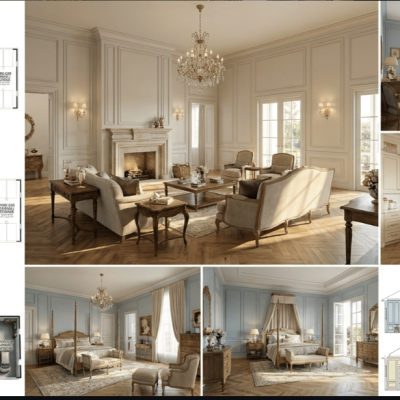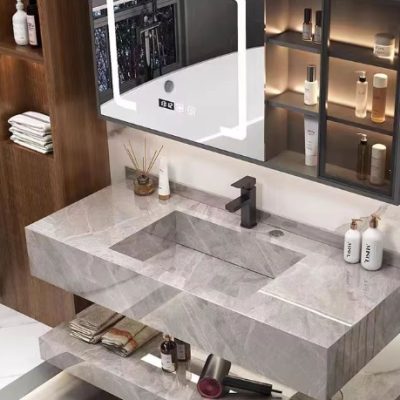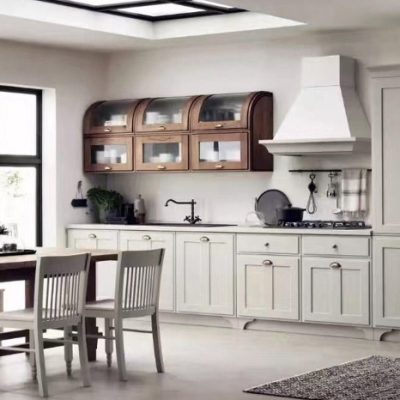


Executing a luxury residential build or multi-unit custom villa project in the United States requires managing strict material schedules and high finishing standards. Custom millwork, large-format sintered stone, floor-to-ceiling aluminum door assemblies, and architectural plumbing fixtures quickly become the largest line items in a construction budget.
Foshan, Guangdong, serves as the central manufacturing engine for high-end architectural finishes. However, managing multi-category procurement remotely presents real operational friction: misaligned CAD shop drawings, non-compliant glass or wood certifications, fragmented factory timelines, and shipping damage risks.
Working with an on-ground Foshan residential building material sourcing partner bridges the gap between US architectural requirements and Chinese factory floor execution. This guide breaks down how a structured sourcing partnership works, how quality control is enforced on-site, and how to safely consolidate custom materials for direct jobsite delivery.
Key Takeaways
- Specialized Local Supply Chain: Foshan’s industrial districts offer distinct technical capabilities—Shunde for custom millwork, Nanzhuang for porcelain and sintered stone, and Nanhai for structural aluminum fenestration.
- On-Ground Technical Oversight: A dedicated sourcing partner reconciles US architectural plans with factory CAD drawings, enforcing rough opening deductions, frame setbacks, and hardware specifications before manufacturing starts.
- Strict US Code Compliance: Materials must be verified for US building codes prior to shipment, including SGCC safety glass stamps, EPA TSCA Title VI formaldehyde limits, and PA66 thermal break standards.
- Pre-Shipment Dry-Fit QC: On-site pre-assembly checks (dry-fits for kitchens, stone slabs, and window mock-ups) catch dimensional errors in Foshan rather than on a US construction site.
- Single-Container Consolidation: Staging completed goods at a central Foshan warehouse allows 10+ factory orders to be packed into unified 40ft HQ containers, balancing weight and volume to lower ocean freight overhead.
What Makes Foshan the Global Hub for Custom Villa Building Materials?
Foshan is not a single industrial zone; it is a dense network of specialized manufacturing districts located within a 30-mile radius. Each district operates its own supply chain ecosystem, allowing custom villa packages to be built to tight specifications:
- Shunde District: Renowned for high-end custom cabinetry, architectural joinery, loose furniture, and integrated LED wardrobes.
- Nanzhuang & Shiwan Districts: The world center for ceramic tile production, producing large-format porcelain slabs (up to 120″ x 60″) and engineered sintered stone.
- Nanhai District: Specialized in architectural aluminum extrusion, structural curtain walls, and narrow-sightline thermal break window systems.
For a custom villa requiring $150,000 to $500,000+ in finishing materials, sourcing directly from Foshan factories provides direct access to advanced custom manufacturing capabilities—such as continuous book-matched slab layouts and concealed door frames—without multi-tiered distributor markups.
Why Do US Luxury Builders Need an On-Ground Sourcing Partner in Foshan?
Procuring building materials across international borders without local representation creates clear operational risks for general contractors and project owners:
| Sourcing Challenge | Remote Direct Sourcing Risk | On-Ground Sourcing Partner Execution |
| Drawing Interpretation | Imperial-to-metric conversion errors; missed rough opening (R.O.) deductions. | On-site CAD reconciliation matching factory production drawings to US architectural plans. |
| Quality Consistency | Production quality differs from initial hand samples sent by sales reps. | Multi-stage physical audits during raw material cutting, mid-production, and pre-shipment. |
| Code & Compliance | Unmarked glass or non-compliant composite wood rejected by US building inspectors. | Pre-production verification of physical SGCC glass stamps and EPA TSCA Title VI documentation. |
| Logistics & Warehousing | Fragmented LCL shipments leading to staggered site arrivals and high port fees. | Central staging warehouse holding goods free of charge until full FCL container loading. |
An on-ground sourcing partner acts as the owner’s technical representative on the factory floor, ensuring suppliers build to specification rather than standard local conventions.
How Does a Professional Foshan Sourcing Partner Manage the Procurement Workflow?
A structured sourcing process follows a systematic phase-by-phase execution plan to keep custom orders on schedule and within budget:
[1. BOQ & Plan Review] ➔ [2. Factory Matching & Samples] ➔ [3. CAD Shop Drawing Approval]
                                                                     │
[6. FCL Container Loading] ◄── [5. Pre-Shipment Dry-Fit QC] ◄───────[4. Production Supervision]
1. Bill of Quantities (BOQ) and Plan Reconciliation
The sourcing partner converts the architect’s elevation drawings and finish schedules into a detailed BOQ, specifying exact material cores, surface finishes, hardware models (e.g., Blum, Hettich, HOPO), and structural tolerances.
2. Sample Verification & Sign-Off
Physical control samples—wood veneer swatches, lacquer chips, aluminum profile cross-sections, and stone cutouts—are sent via express courier to the US builder or designer for physical review and approval under jobsite lighting.
3. Millimeter-Precise CAD Shop Drawings
Factories generate detailed production shop drawings showing internal partitions, drawer slide allowances, frame mounting flanges, and weep hole locations. Production begins only after formal sign-off from the US architect or general contractor.
4. Mid-Production Audits and Pre-Shipment Dry-Fit Setup
During fabrication, inspectors visit the facilities in Shunde or Nanhai. For custom kitchen packages, vanity runs, or complex sliding doors, the factory sets up a full physical dry-fit assembly on the workshop floor to verify joinery tolerances, soft-close operations, and grain matching before packing.
5. Warehouse Consolidation and Supervised Loading
Completed orders are moved to a local staging facility. Materials are packed using ISPM 15 heat-treated wooden crates, weight-balanced across container axles, and secured with structural ratchet straps and inflatable dunnage bags.
What Technical Standards and Quality Checks Prevent Jobsite Delays in the US?
To pass US building inspections and handle jobsite installation smoothly, imported materials must comply with specific technical parameters:
+-------------------------------------------------------------------------+
|                    TECHNICAL COMPLIANCE CHECKLIST                       |
|                                                                         |
|  [Glass Safety]   ◄── SGCC / ANSI Z97.1 Permanent Etched Corner Logo    |
|  [Thermal Frames] ◄── PA66 GF25 Polyamide Structural Insulation Strips  |
|  [Wood Products]  ◄── EPA TSCA Title VI Formaldehyde Emission Certs     |
|  [Plumbing]       ◄── cUPC / NSF Compliance for Faucets & Valves        |
|  [Crats & Skids]  ◄── ISPM 15 HT Stamp on all Solid Wood Packaging      |
+-------------------------------------------------------------------------+
- Tempered Glass Marking: Every safety glass unit installed near doors, wet areas, or low window sills must feature a permanent, etched SGCC (Safety Glazing Certification Council) mark referencing ANSI Z97.1 compliance.
- Aluminum Thermal Integrity: Window and door frames bound for cold or mixed climate zones must feature PA66 GF25 polyamide thermal break strips to reach required target U-Factors and prevent frame condensation.
- Composite Wood Emissions: Cabinetry carcases constructed from plywood or MDF must meet EPA TSCA Title VI formaldehyde standards, with compliance documentation attached to export commercial manifests.
- Packaging Integrity: All exterior wooden crates and pallets must bear legible ISPM 15 heat-treatment (HT) stamps to clear US Customs and Border Protection (CBP) without port rejection.
Why Choose HSY Sourcing as Your On-Ground Partner in Foshan?
Navigating Foshan’s vast manufacturing network remotely can introduce unnecessary project risks. HSY Sourcing operates as your dedicated local procurement office, quality control team, and logistics manager in Foshan.
- Technical Engineering Mindset: We do not rely on standard factory promises. Our team reviews factory CAD shop drawings against your US architectural plans to identify dimensional conflicts, flange setback issues, or hardware misalignments before production starts.
- Multi-Stage Physical QC Inspections: We conduct hands-on inspections at every critical milestone. From checking aluminum wall thickness with digital calipers to auditing dry-fit kitchen setups under high-bay workshop lights, we send comprehensive video and photo reports for your sign-off.
- Central Foshan Staging Warehouse: We operate a clean, secured staging warehouse in Foshan. We receive, inspect, and hold goods from your various specialized suppliers free of charge during the project consolidation window, avoiding premature port storage fees.
- Professional FCL Loading & Weight Optimization: Our logistics team creates 3D container loading blueprints to maximize spatial volume while remaining strictly within US Department of Transportation (DOT) highway weight limits.
- Transparent Direct Agency Model: We work on a clear, transparent agency fee structure. You receive genuine factory-direct pricing without hidden markups or unapproved component substitutions, paired with complete export documentation coordination.
Frequently Asked Questions (FAQ)
How does working with a Foshan sourcing partner affect overall procurement costs?
Working with an on-ground sourcing partner like HSY Sourcing eliminates multi-tiered importer and dealer markups, typically lowering overall finishing material costs by 30% to 50% compared to US domestic retail channels. Our service fee is offset by securing direct factory pricing, preventing jobsite rework through strict QC, and optimizing container loading volume.
Can HSY Sourcing work directly with my US architect, interior designer, or general contractor?
Yes. We routinely collaborate directly with US project teams. We translate architectural elevation sheets, review technical CAD shop drawings, coordinate material sample selections, and provide detailed packing lists so your general contractor knows exactly how items are packed and labeled for jobsite unloading.
What happens if a material fails inspection during pre-shipment checks in Foshan?
Because we inspect goods at the factory or in our local staging warehouse prior to container loading, defective items (such as scratched lacquer doors, misaligned hinges, or non-matching stone veining) are caught while still in Foshan. The factory is required to rework or remake the item locally before the container is sealed, protecting your project from receiving damaged or incorrect materials.
How do you handle custom orders across multiple specialized factories with different lead times?
We establish a master production schedule based on individual factory timelines (e.g., 6 weeks for custom aluminum windows, 5 weeks for cabinetry, 2 weeks for sanitary ware). Completed items are received and held safely in our Foshan staging warehouse until the final factory run is finished, allowing the entire villa package to be loaded into a single, organized container shipment.