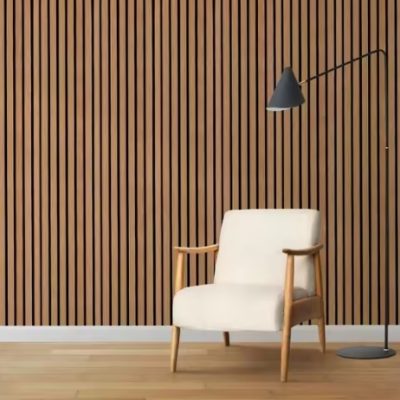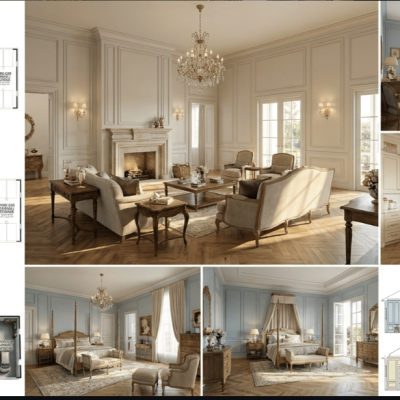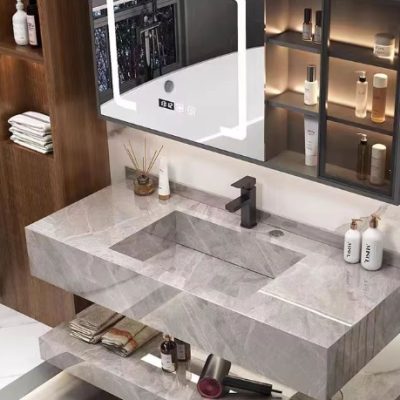

Managing the interior procurement for a large-scale real estate development—whether a 100-room boutique hotel, a multi-family apartment complex, or a portfolio of luxury villas—involves a massive Bill of Quantities (BOQ). A typical fit-out requires coordinating completely different material categories: vitrified flooring, sanitary ware, aluminum window systems, custom cabinetry, architectural wall panels, and loose furniture.
When procurement teams source these items independently across fragmented regions, project timelines frequently slip, and overhead costs rise.
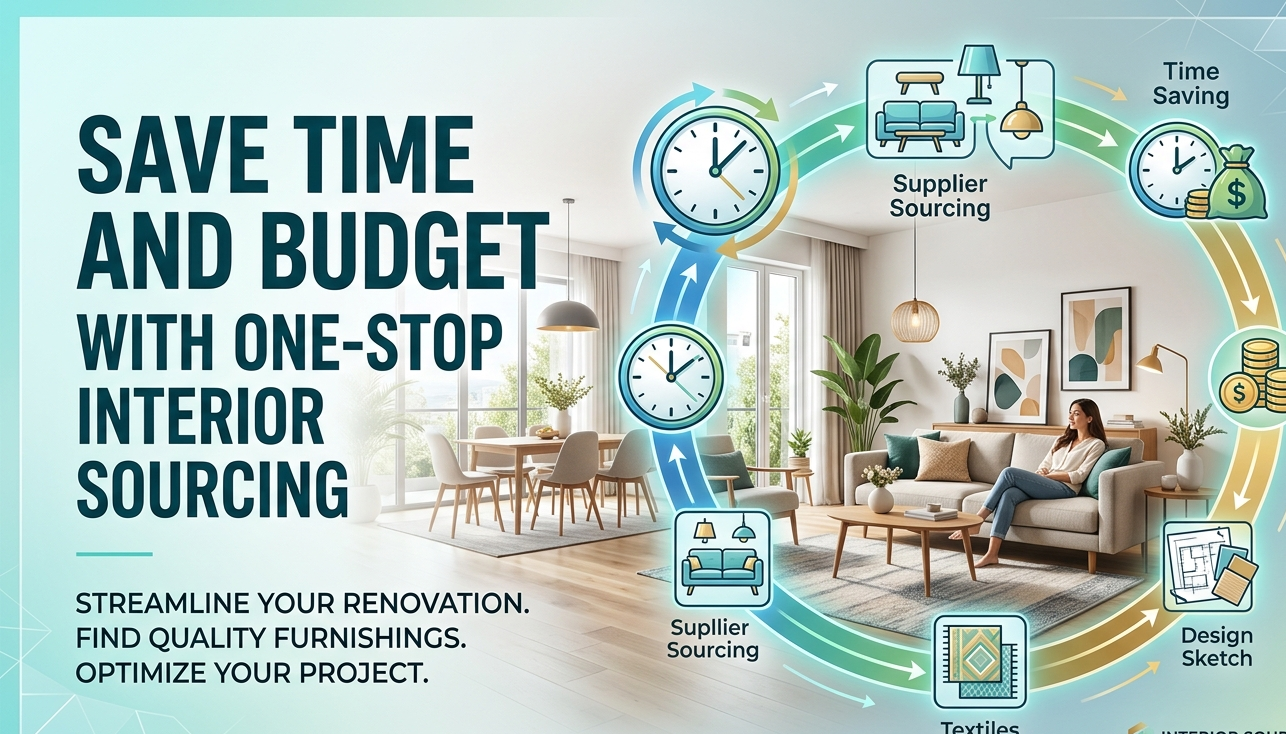
Centralizing your procurement through a one-stop model in Foshan, China, offers a structural solution to these inefficiencies. By utilizing a localized ecosystem, project buyers can compress production schedules and optimize their capital allocation.
Why Does Fragmented Sourcing Drain Your Project Budget?
Fragmented sourcing occurs when a procurement team buys tiles from one province, windows from another, and guestroom furniture from a third. On paper, choosing the absolute cheapest factory for each individual item looks like a saving. In reality, it introduces significant hidden costs.
First, your administrative and communication overhead increases. Your team must manage separate contracts, track distinct production timelines, and coordinate with multiple factory export departments.
Second, domestic logistics costs multiply. Shipping half-empty trucks from isolated inland factories to a departure port quickly eats into your purchasing margins.
Most importantly, fragmented sourcing increases the risk of project delays. If your windows are delayed by three weeks due to an isolated supply chain issue in a distant province, your entire on-site installation schedule stalls, while your local labor costs accumulate daily.
How Does Foshan’s Local Supply Chain Save Weeks of Production Time?
The city of Foshan in Guangdong province addresses the problem of fragmentation through extreme industrial density. It is a hyper-concentrated ecosystem where distinct manufacturing sectors operate in specialized, adjacent districts:
- Chancheng District: The global hub for ceramic tiles, sanitary ware, and bathroom fixtures.
- Dali Town: A primary center for aluminum extrusion, architectural window frames, and commercial door systems.
- Shunde District (Lecong & Longjiang): The world’s largest concentration of contract furniture and upholstery manufacturers.
Because these specialized industrial clusters are located within a 30-to-45-minute driving radius of each other, the physical distance between your suppliers is practically eliminated. Technical samples can be modified and moved between factories in a single day.
If a custom bathroom vanity manufactured in Shunde needs to perfectly accommodate a specific brass faucet from Chancheng, the two factories can physically cross-verify the hardware tolerances immediately. This local connectivity eliminates the weeks of back-and-forth shipping usually required to resolve design mismatches.
What is the Financial Advantage of Cross-Category Container Consolidation?
International ocean freight is billed per container, governed by maximum limits for both weight and physical volume (Cubic Meters or CBM).
When you source categories individually, you face structural shipping inefficiencies:
- Heavy Materials: Ceramic tiles, stone flooring, and thick glazed windows hit the legal container weight limit while utilizing only half of the physical space. You pay full freight rates for empty volume.
- Light Materials: Mattresses, sofas, and decorative wall panels fill the container’s physical volume while utilizing less than 30% of the allowable weight capacity. You pay full freight rates to ship air.
A one-stop sourcing strategy in Foshan solves this imbalance through mechanical consolidation at a single local hub. By gathering all materials into one centralized staging warehouse, your logistics team can execute a balanced container load.
Heavy structural components like vitrified tiles are loaded flat at the base of the container. Lightweight, high-volume furniture and wall panel cartons are then packed securely on top. This approach ensures that every container departs fully utilized by both weight and volume, reducing the total number of ocean shipments required for your project by up to 20%.
How Do You Maintain Technical and Aesthetic Consistency Across Categories?
A major challenge in multi-category interior procurement is ensuring that materials from different factories match visually and structurally when installed on-site.
For example, if your guestroom design specifies a specific walnut wood grain for the entry doors, the wall panels, and the loose furniture, relying on digital photos or independent factory approvals will result in noticeable color and texture variations under architectural lighting. Factories use different veneer suppliers, different stain brands, and different gloss levels.
Under a unified, one-stop sourcing framework, an independent on-the-ground team enforces a strict master-sample circulation protocol. A physical, approved swatch of the specified wood veneer or anodized aluminum finish is secured from your designer.
Our team then carries this exact master sample to the door factory in Dali, the wall panel line, and the furniture workshop in Shunde, physically calibrating the production runs against the same baseline. This ensures visual continuity across your entire project.
Key Takeaways
- Eliminate Distance Overhead: Sourcing within Foshan’s concentrated districts cuts down on domestic transit fees and eliminates communication delays between separate category suppliers.
- Stagger Timelines Accurately: Staging your procurement based on manufacturing leads ensures that windows, doors, flooring, and furniture finish production simultaneously, preventing port storage penalties.
- Balance Container Payloads: Consolidate heavy architectural materials with light FF&E in a local warehouse to maximize container volume and weight, lowering your per-unit freight cost.
- Enforce Surface Continuity: Use a physical master-sample protocol across different factories to guarantee color and texture consistency under on-site lighting.
Why Choose HSY Sourcing for Your Project?
Operating directly from the industrial center of Foshan, HSY Sourcing serves as your independent, on-the-ground procurement, engineering, and quality control team. We manage the technical and logistical realities of importing complex interior fit-out packages.
- True Local Integration: We do not work as distant brokers. Our team is physically present in Foshan’s manufacturing zones daily, monitoring production lines from Chancheng to Shunde.
- Cross-Category Technical Reviews: We cross-audit your project shop drawings. We ensure that the dimensional tolerances of your Dali window frames match the architectural wall panel clearances, preventing field errors on-site.
- Centralized Staging Facility: We utilize our own local warehouse to collect, store, and thoroughly inspect your materials from different factories. We do not allow goods to depart until the entire consolidated shipment passes our quality criteria.
- Factual, Unedited Field Reports: We do not provide vague status updates. You receive detailed mid-production and pre-shipment reports containing actual measurements, wood moisture readouts, and clear, unedited photography of your goods.
Visit www.hsysourcing.com to share your project’s BOQ and architectural drawings. Let our local engineers build a streamlined, risk-free supply chain for your next development.
Frequently Asked Questions (FAQ)
Q: Is a one-stop sourcing agent more expensive than dealing directly with factories?
A: No. When you source directly via online platforms, you typically deal with trading companies or the external sales departments of isolated factories, which include high marketing margins. A local agent works directly with tier-one manufacturing lines at factory-gate pricing. The savings achieved through optimized container loading, eliminated domestic freight duplication, and prevented on-site installation errors heavily outweigh the service fee.
Q: How do you handle manufacturing defects if different items come from different factories?
A: This is why local pre-shipment inspection is mandatory. If our team identifies a defect—such as an inconsistent dye-lot on a wall panel or a misaligned locking joint on a door—we halt the packing process immediately on the factory floor. Because the factory has not received their final balance payment, they are financially incentivized to remake or correct the components before the cargo leaves Foshan.
Q: How can we ensure that all these different interior products pass our country’s building codes?
A: Compliance is established before the first deposit is paid. We review your local market requirements (such as fire retardancy codes like CAL 117 or BS 5852, and environmental standards like E0 or EN 717-1) and write these technical specifications directly into the factory purchase contracts. We then verify that the factories provide valid, independent testing certifications (SGS/Intertek) for the exact materials used in your production run.