
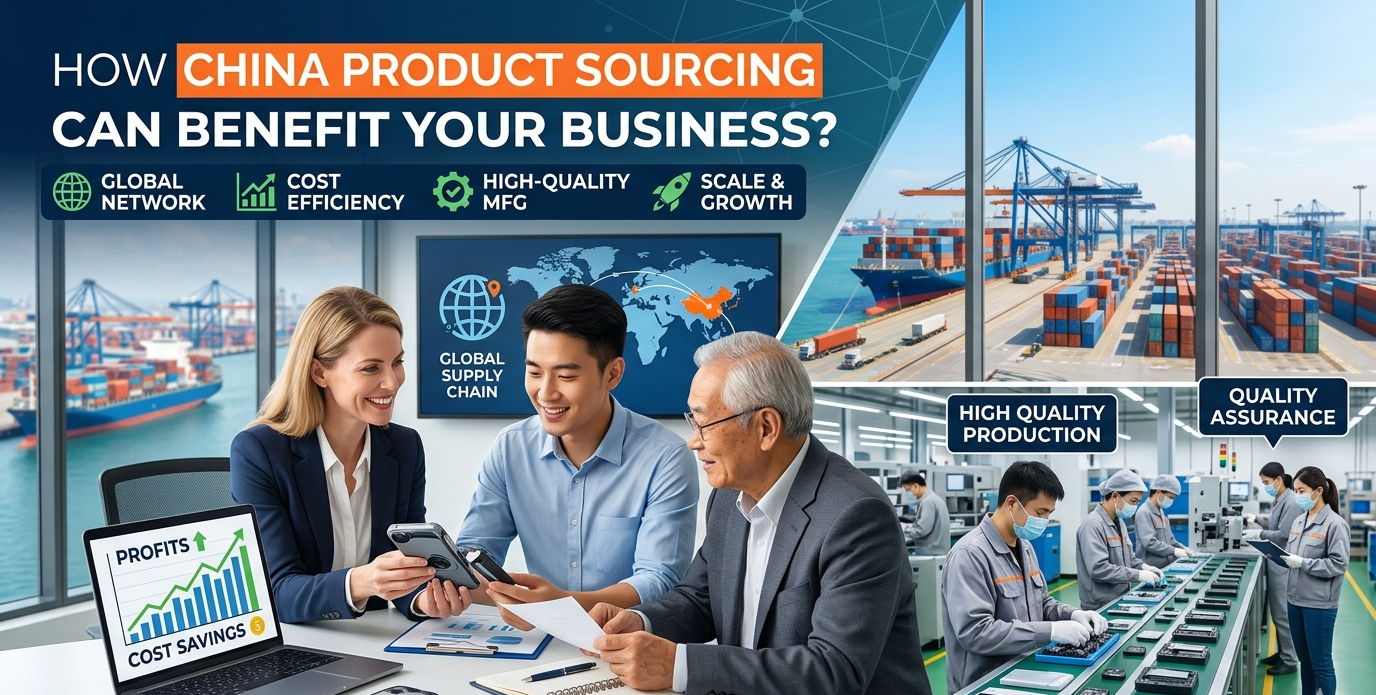
In 2026, sourcing from China is no longer just a search for the lowest hourly wage—that model moved to Southeast Asia years ago. Today, businesses that source from China do so to leverage industrial maturity. For a brand or a wholesaler, the benefit lies in the ability to move a product from a CAD drawing to a shipping container with a speed and technical precision that is difficult to replicate elsewhere.
If your business is struggling with thin margins or slow product iterations, understanding the mechanical advantages of the Chinese supply chain is the first step toward optimization.
Why is China still the primary choice for global sourcing?
The core advantage of China in 2026 is its Cluster Economy. In manufacturing hubs like Foshan or the wider Guangdong region, supply chains are not spread across a country; they are concentrated in specific towns.
When you source a product like Home Appliances or consumer goods, the galvanizing plant, and the packing facility are often within a 30-minute drive of each other. This proximity reduces internal logistics costs and, more importantly, slashes the “feedback loop” time for samples. While a factory in another country might take weeks to source a specific component, a China-based factory can often secure it the same afternoon.
How does a professional sourcing strategy impact your bottom line?
A common mistake is looking only at the unit price. A professional sourcing strategy focuses on the Landed Cost and the Quality-to-Price ratio.
- Scale and Customization: Whether you are an Amazon FBA seller needing 500 units or a project buyer needing enough tiles for a hotel, the Chinese manufacturing base is designed to scale up or down without the massive “setup costs” common in Western manufacturing.
- Tooling and R&D: China’s investment in mold-making and prototyping means that creating a “Private Label” product is significantly cheaper. You can iterate on designs for building materials, furniture, or outdoor gear with minimal financial risk.
- Process Integration: Many factories now offer integrated services—from raw material procurement to final assembly and FBA labeling—reducing the number of “middlemen” who each take a percentage of your margin.
What are the hidden risks of DIY sourcing without local support?
Many businesses try to manage their China procurement entirely via email. This “DIY” approach often works for the first order but fails during the repeat order phase.
- Quality Fade: Without a physical presence, factories may slowly swap high-grade materials for cheaper alternatives over time to save on their own margins.
- Communication Gaps: Misunderstandings regarding technical tolerances (likeabsorption rates in porcelain tiles) can result in an entire container of unsellable goods.
- Logistics Blind Spots: Navigating export documents, container consolidation, and the 2026 shipping landscape requires local expertise to avoid expensive port delays and demurrage fees.
How does sourcing in China support product innovation?
If you aren’t innovating, you are competing on price alone. Sourcing from China gives you access to the latest manufacturing techniques. For example, in the Consumer Goods, Chinese factories are leading the way in sustainable technologies. In the building materials sector in Foshan, new techniques in porcelain slab production allow for thinner, stronger materials that reduce shipping weight.
By partnering with the right suppliers, you aren’t just buying a product; you are gaining access to their R&D departments.
Key Takeaways
- Industrial Clusters: Locations like Foshan offer unparalleled supply chain density that reduces lead times and costs.
- Innovation Access: Sourcing provides more than just “units”; it provides access to the latest manufacturing tech and materials.
- Risk Management: Successful sourcing requires shifting focus from the “factory price” to the “inspected landed cost.”
- Scalability: The ability to move from small test batches to mass production is a unique strength of the Chinese manufacturing ecosystem.
Why Choose HSY Sourcing?
Successful procurement in China requires a team that understands the factory floor, not just the office. HSY Sourcing acts as your “boots on the ground” in the world’s most productive industrial clusters.
- Deep Vertical Expertise: We aren’t generalists. We have a technical background in Consumer Goods manufacturing, International sourcing, and the Foshan building materials market.
- On-Site Quality Control: Led by the HSY Sourcing Team, we physically visit factories to perform inspections. We don’t rely on factory-sent photos; we check the material and package, production process,quality checking ourselves.
- Project-Based Solutions: From luxury “One stop Wholehouse Customized” to commercial-grade furniture and tiles, we manage the technical details so you can focus on sales.
- Transparent Communication: Our professional team, we bridge the gap between your brand’s requirements and the factory’s production reality.
FAQ
Q1: Is sourcing from China still viable for small businesses in 2026?
A: Yes. The infrastructure for “Low MOQ” (Minimum Order Quantity) production has improved significantly. Many factories now cater specifically to startups and Amazon sellers who need to test the market with smaller volumes.
Q2: How do you verify a factory’s true capability?
A: We perform on-site audits. We check their business licenses, their machinery maintenance records, and their past export history to ensure they are the actual manufacturer and not just a trading company.
Q3: Can HSY Sourcing help with consolidation from multiple suppliers?
A: Absolutely. This is a core part of our service. We can collect goods from different factories in Foshan or the surrounding region, inspect them, and consolidate them into a single shipment to save you significant freight costs.
Q4: How do you handle intellectual property (IP) protection?
A: We recommend a “layered” sourcing strategy and the use of NNN (Non-use, Non-disclosure, Non-circumvention) agreements tailored for the Chinese legal system. We work with factories that value long-term partnerships over short-term gains.