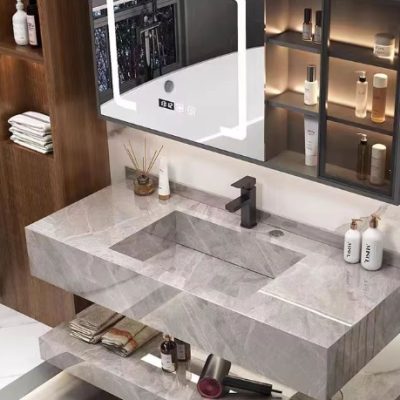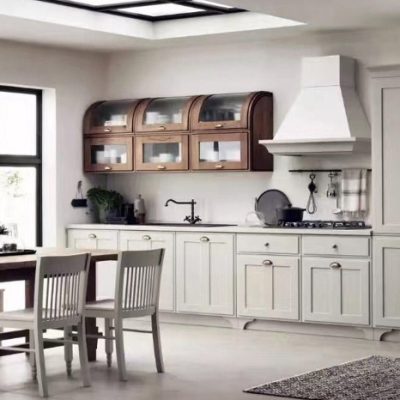

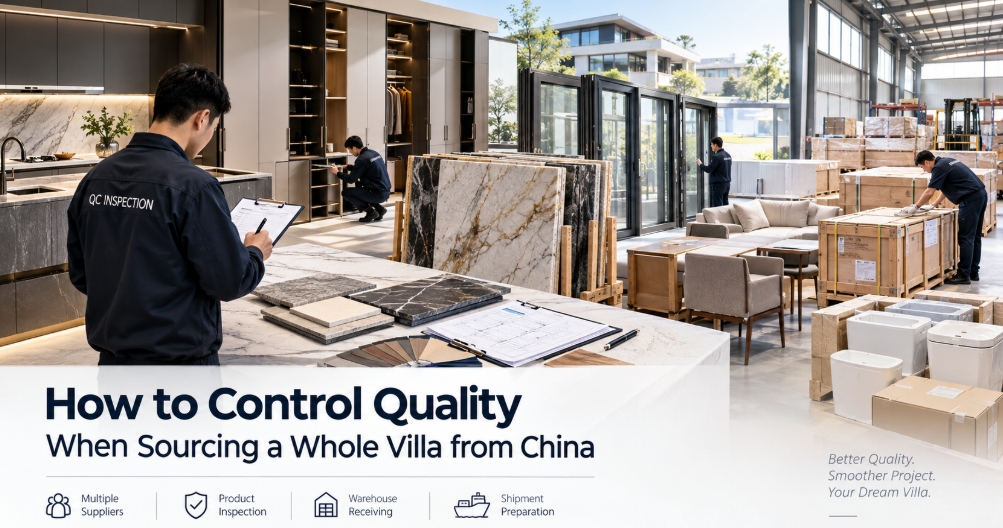
Sourcing building materials and interior products from China can give villa owners access to a wide range of manufacturers, custom products and finishes. But when a project involves kitchen cabinets, wardrobes, aluminum windows and doors, stone, furniture, flooring and sanitary ware, quality control becomes more complicated than inspecting a single order.
Each product category may come from a different factory. Each supplier may work with different drawings, production schedules, materials and inspection procedures. A product can look acceptable in a factory photo yet still fail to meet the approved specifications or create problems during installation.
For overseas homeowners, the challenge is knowing what to check, when to check it and how to coordinate quality across multiple suppliers without personally visiting every factory in China.
The most effective way to control quality when sourcing a whole villa from China is to establish clear specifications before production, verify critical requirements at appropriate stages, inspect finished products before shipment and connect inspection findings with corrective action, packing and logistics.
Why Is Quality Control More Complicated for a Whole Villa?
A single product order usually has a relatively clear scope. A whole-villa project is different because it involves multiple product categories, suppliers and sets of requirements.
Consider a homeowner sourcing the following products from China:
- Aluminum windows and sliding glass doors
- Custom kitchen cabinets and an island
- Wardrobes and built-in cabinets
- Marble, luxury stone and sintered stone
- Loose furniture and upholstered pieces
- Flooring and sanitary ware
These products are unlikely to be manufactured by one supplier. Each factory may have its own production process, documentation and understanding of quality.
The risks also differ by category.
A kitchen cabinet may be manufactured with the wrong dimensions or hardware. A stone order may contain slabs whose veining does not match the approved selection. A window may have the wrong opening configuration or accessories. Furniture may meet the appearance requirements but have inadequate protection for international transportation.
There is another complication: the products must work within the same residential project.
A cabinet can pass an appearance inspection but still fail to fit the available space. Individual stone slabs may have acceptable surfaces but not create the intended visual sequence. A furniture order may contain the correct number of pieces while missing accessories needed for assembly.
This is why whole-villa QC needs to consider three separate questions:
- Is the product itself acceptable?
- Does it match the agreed drawings, specifications and approved samples?
- Can it be delivered, installed and used as intended in the villa project?
A satisfactory answer to the first question does not automatically answer the other two.
1. Start Quality Control Before Production
One of the most important QC decisions happens before the factory starts manufacturing.
An inspection can identify a mismatch, but it cannot reliably determine whether something is correct if the acceptance requirements were never clearly agreed.
For example, a homeowner may request custom kitchen cabinets based on an interior design rendering. The rendering communicates the intended appearance, but it may not fully define cabinet dimensions, internal construction, board materials, hardware models, edge details or installation requirements.
If the factory interprets an unclear detail differently from the designer, the finished cabinets may look reasonable while failing to meet the homeowner’s expectations.
The same issue applies to wardrobes, windows, doors and other custom products.
Before production begins, establish the relevant requirements for each order.
| Information to confirm | Why it matters |
|---|---|
| Approved drawings and dimensions | Reduces the risk of incorrect sizes and configurations |
| Material specifications | Clarifies what the factory is expected to use |
| Finish and color | Establishes the agreed appearance |
| Hardware and accessories | Helps prevent substitutions or missing components |
| Quantities and item references | Makes production and delivery verification easier |
| Approved samples, where applicable | Provides a physical reference for comparison |
| Packaging requirements | Establishes how products should be protected for transport |
Not every product requires the same level of documentation. A standard sanitary ware item may be controlled through its model number, technical specifications and approved finish. A bespoke kitchen or complex window system may require more detailed drawings and component schedules.
The objective is to make the acceptance criteria clear enough that the buyer, supplier and person responsible for QC are working from the same information.
For projects where factory drawings are required, homeowners should also distinguish between drawings used for initial quotation and drawings approved for manufacturing.
See also: What Should a Villa Owner Do Before Approving Factory Shop Drawings? and What Drawings Does a Chinese Factory Need to Manufacture Custom Villa Cabinets? — link to the relevant published HSY articles after verifying their URLs.
2. Decide Which Products Need the Most Attention
A whole-villa project does not necessarily require identical inspection procedures for every product.
QC resources should be allocated according to the consequences of a potential problem, the complexity of the product, the difficulty of correcting an error and the reliability of the available evidence.
For example, a missing decorative accessory may be relatively straightforward to replace. An incorrectly manufactured custom kitchen, a window with the wrong configuration or a stone order with unsuitable slab selection can be considerably more disruptive.
A useful way to prioritize is to ask four questions:
- Would a mistake affect installation or the intended function?
- Would replacement or rework be difficult after the goods leave China?
- Is the product highly customized or dependent on precise dimensions?
- Is there a critical material, finish or performance requirement that cannot be confirmed by appearance alone?
Products with more consequential risks deserve closer attention.
This does not mean that every expensive item automatically needs a full inspection, or that inexpensive products can be ignored. A relatively inexpensive component may still prevent installation if it is missing or incompatible with the main product.
The inspection plan should reflect the actual project requirements rather than simply assigning the same checklist to every supplier.
3. Use Different QC Methods for Different Villa Products
A whole-villa QC plan should not treat every product as if it were a standard manufactured item.
The following examples illustrate how the inspection priorities change by category.
Kitchen Cabinets and Wardrobes
For custom cabinetry, checking surface scratches and general workmanship is only part of the job.
The more important checks may include:
- Dimensions and configuration against the approved drawings
- Board and surface material against the agreed specification
- Door finish, color and edge banding
- Hinges, drawer systems and other specified hardware
- Internal layout, shelves and storage components
- Required accessories and installation components
- Quantity, labeling and packing protection
A cabinet can have a flawless finish and still be unsuitable if the internal layout is wrong or a critical dimension differs from the approved drawing.
Where the design includes an island, tall cabinets or integrated appliances, the relevant interfaces and dimensions should be checked against the latest approved project information. QC at the factory does not replace final site measurement or installation coordination.
Aluminum Windows and Doors
For windows and doors, the inspection criteria should follow the agreed product specifications and applicable project requirements.
Relevant checks may include:
- Profile and finish specifications
- Overall dimensions and opening configuration
- Glass type and specification
- Hardware and operating components
- Opening direction
- Accessories and required components
- Visible workmanship and surface condition
- Packaging and protection of glass and frames
A visual inspection alone cannot establish every aspect of a window’s performance. Depending on the system and project requirements, performance claims may require test reports, technical documentation or specialist testing.
Installation openings, structural interfaces and site conditions must also be coordinated with the responsible designer, contractor or installer.
Marble, Luxury Stone and Sintered Stone
Stone requires a different approach because natural variation and visual selection can be central to the design.
Checks may include:
- Slab dimensions and thickness
- Surface finish and edge condition
- Visible cracks, chips or repairs
- Color and veining against the approved selection
- Slab identification and sequence, where applicable
- Consistency with the agreed fabrication drawings
- Protection during handling and shipment
A stone slab should not automatically be rejected because its veining differs from another slab. Natural stone varies, and the acceptable range depends on the material, approved selection and design intent.
For bookmatched marble or feature walls, checking individual slabs in isolation may not be sufficient. The intended arrangement should be reviewed against the agreed slab sequence or layout before fabrication and shipment.
For more detail, link to How to Source Bookmatched Marble from China for a Luxury Villa and How to Choose Marble for a Luxury Villa Without Relying on Photos, if these pages are published.
Furniture
Furniture QC should reflect the construction and intended use of each item.
Relevant checks include:
- Dimensions and design details
- Specified materials and finish
- Joinery and visible workmanship
- Upholstery, stitching and agreed fabric or leather
- Hardware and moving components
- Quantity and consistency between matching pieces
- Packaging and protection of vulnerable surfaces
For a dining set or coordinated bedroom furniture order, consistency across matching items may matter as much as the condition of an individual piece.
Flooring and Sanitary Ware
For flooring, the focus may include material, dimensions, thickness, finish, batch consistency, visible defects and packaging.
For sanitary ware, checks may include model identification, dimensions, glaze and surface condition, specified fittings, accessories and packaging.
Some functional or performance requirements cannot be established through a visual inspection alone. Where these matter, the appropriate technical documents or tests should be confirmed separately.
The key principle is simple: the inspection checklist should be based on the product specification and the consequences of failure, not copied from a generic factory inspection template.
4. Understand the Difference Between Factory QC and Independent Inspection
Overseas homeowners often assume that if a factory has its own quality control team, no additional inspection is necessary. Others assume that hiring an independent inspection company automatically resolves every quality risk.
Neither assumption is sufficient on its own.
| QC approach | Main role | Important limitation |
|---|---|---|
| Factory self-inspection | Checks products through the manufacturer’s own production and quality procedures | The scope and acceptance criteria may not fully reflect the buyer’s project requirements |
| Third-party inspection | Provides an independent inspection against an agreed scope and criteria | Usually focuses on the assigned inspection and does not automatically manage all procurement coordination |
| Sourcing-side QC | Connects product checks with agreed specifications, supplier communication and procurement follow-up | Its effectiveness depends on the agreed scope, technical competence and access to the relevant information |
These approaches can complement one another.
For example, a buyer may use factory QC for routine production checks and arrange an independent inspection before shipment for a critical order. A sourcing partner may coordinate the approved specifications, communicate inspection findings to the supplier and follow up on agreed corrective actions.
Where regulated performance, structural safety or specialist testing is involved, qualified professionals or accredited testing bodies may also be necessary.
The right arrangement depends on the product, the risks and the level of independence required.
5. Why Final Inspection Alone Can Be Too Late
Pre-shipment inspection is valuable, but it cannot replace decisions that should have been made earlier.
Suppose a factory finishes a batch of custom wardrobes. During inspection, the buyer discovers that the interior finish differs from the approved specification.
The inspection has identified a problem, but the next steps depend on the situation. The supplier may need to replace components, rework the finish or manufacture affected parts again. Each option has implications for cost, timing and shipment planning.
If the discrepancy had been identified when the materials or finish were first confirmed, the correction might have been easier.
The same principle applies to other products:
- Incorrect cabinet dimensions may require changes to the drawings or new production.
- A stone selection issue may require reviewing available slabs before cutting.
- A window hardware discrepancy may need to be resolved before the units are packed.
- Missing furniture accessories may be easier to obtain while the supplier is still preparing the order.
A practical QC process therefore uses several checkpoints where appropriate.
Before production: confirm specifications, drawings, samples and important components.
During production: follow up on critical requirements when an error would be expensive or difficult to correct later.
Before shipment: verify the finished products against the agreed acceptance criteria.
Not every order requires the same level of monitoring. The purpose is to identify the points where a check can meaningfully reduce the risk of an avoidable problem.
6. A Product Can Pass Inspection and Still Create a Project Problem
This is one of the most important distinctions in whole-villa procurement.
An inspection usually evaluates a defined product against defined criteria. A villa project, however, also depends on how different products fit together and how they will be used.
Consider three situations.
Scenario 1: The kitchen matches its own drawings but not the latest project information.
The factory may have manufactured the cabinets according to the drawing it received. If a revised drawing was not communicated and formally confirmed, the product may still be incompatible with the intended installation.
The issue is not simply workmanship. It is document control and coordination.
Scenario 2: Stone slabs are acceptable individually but do not create the intended visual arrangement.
Each slab may be within the agreed range of natural variation. However, if the project requires bookmatching or a particular sequence, the arrangement needs to be considered as a group rather than as unrelated pieces.
Scenario 3: Several products are acceptable at the factory but arrive with transport damage.
The products may have passed their initial inspection, yet the packaging may not provide adequate protection for the actual handling and transportation conditions.
These examples show why quality control should connect product inspection with drawings, approved samples, supplier communication and shipment preparation.
They also illustrate an important limitation: a sourcing-side QC process cannot replace the architect’s design responsibility, the installer’s site measurements or the technical verification required for specialized systems.
The roles need to be coordinated, not confused.
7. What Should Happen When QC Finds a Problem?
Finding a defect is only the beginning. The problem needs to be documented, assessed and resolved before the goods are released for shipment, where practical.
A useful corrective-action process includes the following steps.
1. Record the discrepancy.
Identify the affected product, quantity, specification and location. Use clear photographs, measurements or other relevant evidence.
2. Compare the result with the agreed requirements.
Check the approved drawing, material specification, sample or other acceptance criteria. This helps distinguish an actual discrepancy from a characteristic that was never specified.
3. Discuss the proposed correction with the supplier.
Possible actions may include adjustment, repair, replacement, rework or an agreed alternative. The appropriate action depends on the defect and the product.
4. Confirm who approves the solution.
For a material or design change, the homeowner, architect or other authorized project representative may need to approve the proposal. An inspector should not independently authorize an unapproved substitution.
5. Verify the correction where necessary.
If the correction affects a critical requirement, a follow-up inspection or additional evidence may be appropriate.
6. Update shipment arrangements.
Unresolved items may affect packing, warehouse receiving, consolidation or the planned shipping date. These consequences should be communicated rather than left until loading.
Not every minor defect requires the same response. The decision should consider the agreed quality requirements, function, appearance, repairability and the buyer’s acceptance criteria.
8. How QC Connects With Warehouse Receiving and Consolidation
When a villa project involves multiple suppliers, goods may finish production and arrive at the warehouse at different times.
Warehouse receiving provides another opportunity to check the condition and identity of incoming goods. Depending on the agreed scope, receiving checks may cover quantities, labels, visible damage, packaging and correspondence with delivery records.
However, warehouse receiving is not automatically a full product inspection. If goods arrive sealed or fully crated, their internal condition may not be verifiable without opening the packaging or conducting a separate inspection.
This distinction matters when deciding which checks should happen at the factory and which can reasonably take place after delivery to the warehouse.
Before consolidating goods into a container, the buyer or procurement coordinator should establish:
- Which suppliers have completed the required inspections
- Whether critical discrepancies remain unresolved
- Whether the received quantities match the relevant records
- Whether missing components or accessories have been identified
- Whether the packaging is suitable for the planned handling and shipment
- Whether fragile or vulnerable products need additional protection
For example, a marble shipment may require careful protection of edges and surfaces, while finished furniture may need suitable wrapping and corner protection. Windows and glass products may require packaging appropriate to their construction and handling requirements.
The specific requirements depend on the product and shipping arrangement.
For a broader explanation of this stage, link to How to Consolidate Building Materials from China for a Private Villa once its published URL has been verified.
9. How Can an Overseas Homeowner Control Quality Without Visiting Every Factory?
A homeowner does not necessarily need to travel to China to participate meaningfully in QC. However, remote management works best when the requirements and responsibilities are clearly established.
Before production, provide the relevant drawings, specifications, approved samples and written decisions. Make sure the supplier knows which documents are current and who can approve changes.
During production, request updates at agreed milestones where appropriate. Photos and videos can help document visible progress, but they should be treated as evidence of specific observations rather than proof that every requirement has been met.
Before shipment, arrange checks based on the product’s risk and agreed inspection scope. For important dimensions, material identification or other measurable requirements, the report should record the relevant measurements or supporting evidence rather than relying only on general statements such as “quality is good.”
It is also useful to establish who will review findings and authorize corrective actions.
A local sourcing or QC partner can help coordinate these tasks across different suppliers, particularly when the homeowner is managing several categories simultaneously.
Nevertheless, remote oversight has limits. Photos cannot reliably verify every hidden component, material property or technical performance requirement. Some checks require physical access, measurements, specialist equipment or qualified testing.
The goal is not to eliminate every possible risk from a distance. It is to make important requirements verifiable and to identify problems early enough for meaningful action.
10. What Should You Prepare Before Arranging QC in China?
Before asking a sourcing partner or inspection provider to check products, prepare the information needed to determine what should be inspected and how acceptance should be assessed.
A practical starting package includes:
- Product list: categories, suppliers, quantities and order references.
- Drawings: the latest approved drawings relevant to each product.
- Specifications: materials, dimensions, finishes, hardware and other critical requirements.
- Approved samples or references: where the project relies on an agreed sample, color or finish.
- Production status: whether the order is still in production, finished or ready for packing.
- Shipment plan: expected completion dates and the planned warehouse or loading arrangements.
- Known concerns: any deviations, unresolved questions or components requiring special attention.
If you have a BOQ, product schedule or architect’s specification package, it can provide a useful starting point. It may still need to be supplemented with supplier-specific details and confirmed acceptance criteria.
The more clearly these requirements are documented, the easier it is to determine what can be checked, what evidence is needed and which issues require approval from the project team.
11. When Does It Make Sense to Use a Local Sourcing and QC Partner?
For a homeowner purchasing one standard product from one supplier, a dedicated local procurement partner may not always be necessary.
The case becomes different when a villa project involves several custom categories, separate production schedules and a shipment that must be coordinated across suppliers.
Local sourcing and QC support may be useful when:
- You cannot visit every factory in person.
- Several products require drawing or specification checks.
- Custom products need follow-up during production.
- You need inspection findings communicated to different suppliers.
- Goods must be received, checked and consolidated in China.
- You want to identify problems before committing the affected products to shipment.
The value lies in coordinating the process, not merely in having someone take photographs at a factory.
For a multi-category villa project, QC can be linked to supplier follow-up, corrective action, warehouse receiving and shipment preparation. This provides a clearer view of what has been checked, what remains unresolved and which decisions still require the homeowner’s approval.
HSY Sourcing provides local sourcing and QC support for building materials, furniture and interior products as part of its broader procurement services. The appropriate inspection scope depends on the products, project requirements and agreed service arrangement.
If you are preparing a villa or substantial private residential project, you can share your product list, drawings or BOQ to discuss which categories need closer inspection and what should be confirmed before production begins.
Frequently Asked Questions
When should QC start for a villa sourcing project?
QC should start before production, when the buyer and supplier confirm the drawings, specifications, materials, finishes and other acceptance requirements. Checks during production and before shipment can then focus on verifying those agreed requirements.
Is pre-shipment inspection enough for custom villa products?
Not always. Pre-shipment inspection can identify problems with finished products, but it may be too late to correct some issues easily. Custom products with critical dimensions, complex specifications or expensive rework may benefit from earlier checks.
Can photos and videos replace physical inspection?
Photos and videos are useful for documenting visible conditions and production progress. They cannot reliably verify every dimension, hidden component, material property or technical performance requirement. The appropriate verification method depends on the risk being assessed.
Should every product category be inspected in the same way?
No. Kitchen cabinets, windows, stone, furniture, flooring and sanitary ware have different materials, manufacturing processes and potential failure points. Inspection criteria should reflect the approved specifications and the consequences of a defect.
What happens if a product does not match the approved specification?
The discrepancy should be documented and compared with the agreed requirements. The supplier and authorized project representative can then determine whether repair, rework, replacement or another approved solution is appropriate. Critical unresolved issues should be addressed before shipment where practical.
Does warehouse receiving replace factory inspection?
No. Warehouse receiving can help verify delivered quantities, labels, visible damage and packaging condition, depending on the agreed scope. It may not reveal hidden manufacturing defects or confirm requirements that need to be checked during production.
Can a sourcing agent guarantee that all villa products will be defect-free?
No inspection or sourcing arrangement can eliminate every possible defect or risk. A well-defined QC process can help identify discrepancies, improve communication and reduce avoidable problems, but its effectiveness depends on clear specifications, appropriate inspection methods, supplier cooperation and timely corrective action.
Key Takeaway
Controlling quality when sourcing a whole villa from China requires more than a final factory inspection. The process starts with clear specifications, continues through appropriate production and finished-product checks, and extends to packing, warehouse receiving and shipment coordination.
The priority is not to inspect every product in exactly the same way. It is to identify which requirements matter most, establish how they will be verified and resolve important discrepancies before they become expensive problems overseas.
Why HSY Sourcing for Villa QC?
HSY Sourcing helps overseas homeowners coordinate building materials, furniture and interior products from multiple suppliers in China. Its local QC support can be integrated with supplier communication, production follow-up, inspection reporting, warehouse receiving and shipment consolidation, according to the agreed project scope.
For a villa project involving several product categories, this approach helps connect product checks with the broader procurement process.
If you are planning to source products for a private villa from China, send us your product list, drawings or BOQ. We can discuss the categories involved, the specifications that need to be confirmed and the QC steps that may be appropriate before shipment.