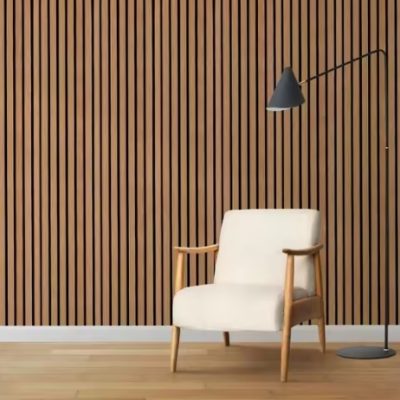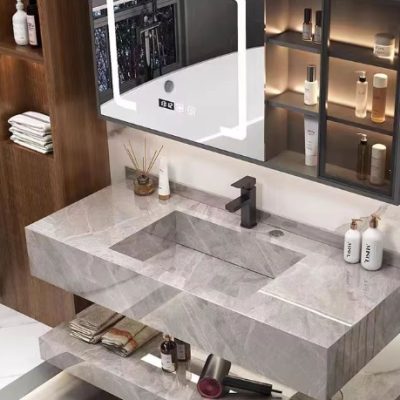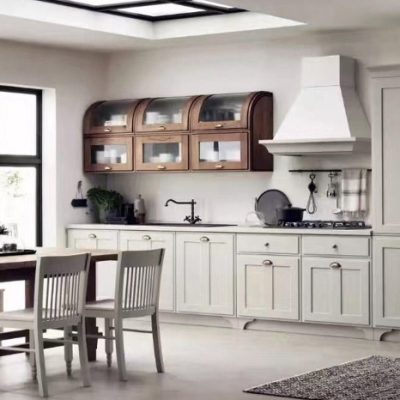

For international real estate developers and procurement managers coordinating fit-outs for hotels, apartment complexes, or luxury villas, sourcing from China offers clear financial advantages. However, execution risks increase significantly when a single project’s Bill of Quantities (BOQ) is split across multiple highly specialized manufacturers.
Purchasing floor tiles from one factory, custom kitchen cabinets from another, bathroom vanities from a third, and aluminum windows from a fourth turns you into an accidental logistics manager. If these orders are shipped individually via Less than Container Load (LCL) freight, compounding port fees, custom clearance costs, and destination container freight station (CFS) charges will quickly erode your profit margins.
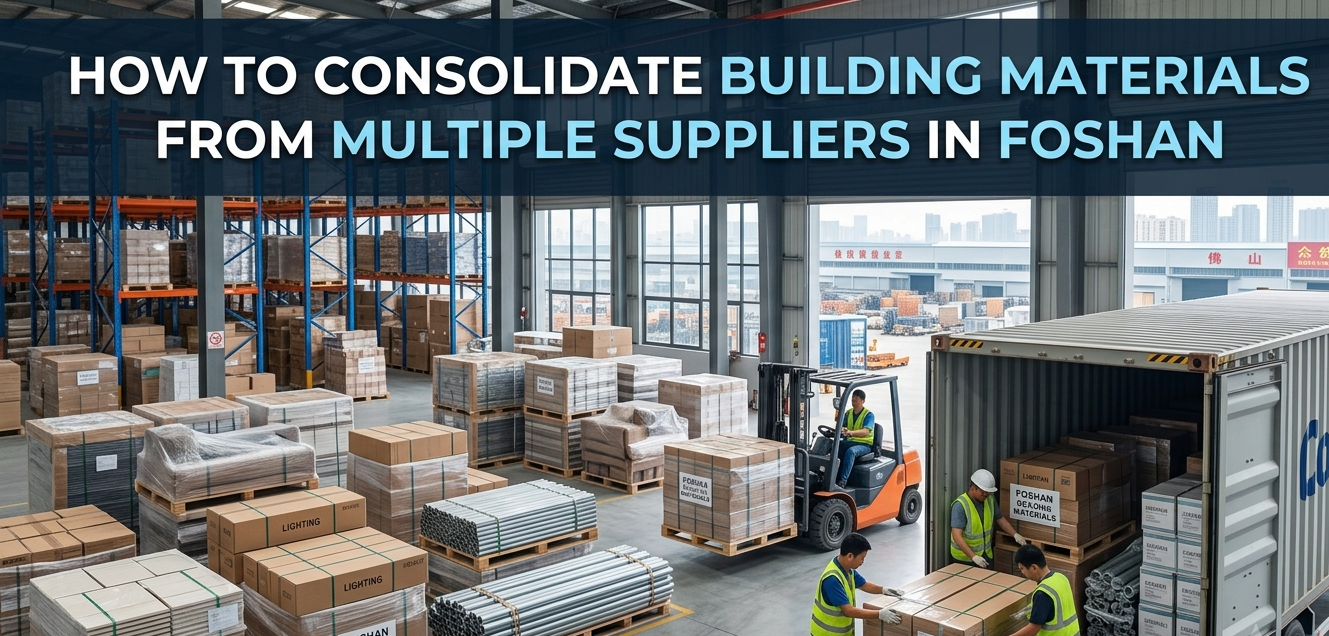
The structural solution is cargo consolidation executed directly within the regional manufacturing cluster of Foshan. By centralizing incoming goods into a single operational hub, buyers can convert fragmented shipments into optimized Full Container Loads (FCL), drastically lowering both landed costs and transit damage risks.
Key Takeaways
- Synchronize Purchase Timelines: Avoid warehouse storage fees by staggering factory deposit releases based on each material’s true production lead time.
- Balance Weight and Volume: Structural load-planning must distribute heavy masonry on the bottom of the container and volumetric wood or upholstered products on top.
- Enforce Centralized Documentation: Consolidate multiple factory lists into a single commercial invoice and packing list under unified HS codes to ensure seamless customs clearance.
Why is multi-supplier timeline coordination the biggest bottleneck in project sourcing?
The primary point of failure in multi-supplier procurement occurs weeks before a container ever arrives at the loading dock. It is driven by the fundamental variance in manufacturing timelines across different product categories.
For instance, a standard run of porcelain floor tiles might require only 15 to 20 days of factory processing time. Conversely, custom kitchen cabinets, built-in wardrobes, or bespoke hotel bedroom casegoods require 40 to 45 days due to technical shop drawing approvals, raw lumber conditioning, and detailed assembly.
[Simultaneous Deposit Release - Incorrect Method]
Tiles Completed: Day 20 ──> Sits in Warehouse for 25 Days (Incurring Storage Fees & Damage Risk)
Cabinets Completed: Day 45 ─────────────────────────────> Both Finally Ready to Load
If a buyer releases deposits to all factories simultaneously, the fast-producing tile and sanitary ware orders will finish early. They will sit on a warehouse floor accumulating daily storage fees and exposing the packaging to moisture and forklift handling hazards while waiting for the cabinetry to finish fabrication.
Effective consolidation requires reverse-engineering your shipping deadline. You must map out the exact lead times of all suppliers, then stagger your down-payments so that disparate production runs converge at the warehouse within a tight 72-hour window.
How does Foshan’s industrial geography simplify material consolidation?
Executing a mixed-container strategy requires a narrow geographic spread between the target factories and your consolidation hub. If you attempt to consolidate goods from manufacturers located in different provinces, the domestic long-haul trucking costs will quickly erase the savings gained on ocean freight.
Foshan provides a distinct structural advantage because it functions as an aggregated, multi-category industrial ecosystem. Within an hour’s drive of a central local warehouse, you have direct access to global supply chain epicenters:
- Chancheng and Nanzhuang Districts: The global center for commercial porcelain tiles, sintered slabs, and sanitary ceramics.
- Shunde District (Lecong and Leliu): The largest contract furniture, seating, and custom cabinetry cluster in the world.
- Nanhai District (Dali): A major industrial zone for structural aluminum window profiles, architectural glazing, and interior doors.
Because these distinct product ecosystems share physical borders, local transport costs are minimized. A local sourcing team can dispatch regional flatbed trucks to collect cargo from five different factories in a single day, making staging highly efficient and completely visible.
What is the step-by-step process for executing a secure container load?
Once materials from your suppliers arrive at the central staging ground, the physical assembly of the container must follow a strict engineering protocol. Building materials cannot simply be stacked in the order they arrive; they must be arranged by density, weight tolerances, and geometric packaging structure.
To execute this without issues on-site, a structured operational framework must be maintained throughout the loading cycle:
1.Receiving Inspection and Volumetric Audit:Phase 1: Dock Gate Control.
As trucks arrive from individual factories, every pallet is unloaded, photographed, and measured. The incoming quantities are verified against the master project Bill of Quantities (BOQ), and wood core moisture levels are checked to ensure they match target standards before storage.
2.3D Volumetric Container Load Planning:Phase 2: Spatial Engineering.
Before the physical container arrives, the actual packaging dimensions (CBM) and total gross weights are entered into load-planning software. This calculates the precise layout needed to utilize nearly 100% of a 40HQ container’s 68 CBM volume while remaining safely within legal port weight boundaries.
3.Density-Stratified Container Loading:Phase 3: Structural Placement.
Heavy, rigid items (tiles, stone slabs, cast-iron plumbing) are loaded flat across the container floor to build a low, stable center of gravity. Reinforced plywood decking and industrial dunnage airbags are installed to establish a secondary structural floor before stacking lightweight, volumetric items (cabinets, sofas, mattresses) on top.
4.Unified Customs Documentation Assembly:Phase 4: Compliance Mapping.
The unique packing lists, commodity descriptions, and factory invoices from all suppliers are compiled into a single clean export declaration file. Every product is matched to its precise Harmonized System (HS) code to avoid structural inspection holds at both the shipping port and destination customs.
How do you balance physical material risks inside a mixed container?
Mixing heavy building materials with delicate interior furnishings requires strict adherence to physical load segregation rules. The table below outlines how a professional sourcing team categorizes and pairs conflicting materials to eliminate crushing and shifting during ocean transit.
| Material Category | Primary Logistics Risk | Mandatory Packaging Standard | Container Positioning Rule |
| Porcelain Tiles & Quartz | High weight; susceptible to edge cracking under lateral g-forces. | Face-to-face vertical packing on heavy ISPM-15 fumigated wooden pallets with rigid corner protectors. | Must be anchored directly to the container floor; blocked with structural timber bracing. |
| Custom Kitchen Cabinets | Carcass deformation; moisture damage to lacquer or veneer finishes. | Flat-pack format in double-wall corrugated cartons wrapped in water-resistant plastic shrink film. | Placed mid-level above masonry; must be packed tightly to prevent lateral movement. |
| Sanitary Ware & Toilets | Fragile vitreous china; high risk of shattering if impacted. | Individual reinforced drop-tested cartons featuring molded EPS foam internal cradles. | Stacked above floor tiles; completely isolated from un-palletized metal frameworks. |
| Loose Project Furniture | Fabric tearing; frame snapping under top-heavy pressure. | Heavy-duty non-woven fabric wrapping inside multi-layer cardboard boxes with internal corner braces. | Absolute top tier of loading; zero heavy items can be placed above upholstered cargo. |
Why Choose HSY Sourcing for Your Project Consolidation in Foshan?
Managing the logistics, quality control, and timing of multiple distinct factories cannot be reliably executed through basic emails and factory-provided snapshots. HSY Sourcing operates as your independent, on-the-ground purchasing and engineering team in Foshan, representing the explicit commercial interests of real estate developers.
- Dedicated Consolidation Facilities: We operate secure warehouse space in the heart of the Foshan industrial zone. We handle the physical staging, sorting, and long-term tracking of your project’s complete BOQ.
- Cross-Category Technical Inspections: Our team doesn’t just count boxes. We inspect product specifications at the factory line—checking tile shade variations, custom cabinet dimensions, and click-lock profiling before approving transfer to the warehouse.
- Comprehensive Custom Brokerage: Combining products from multiple vendors means navigating complex export legal profiles. We compile individual factory inputs into a single, clean customs declaration pack, managing local tax compliance structures and ensuring straightforward clearance.
- Optimized Container Engineering: We calculate weight-to-volume ratios for every shipment, combining heavy finishes with volumetric items to ensure you maximize your container space without paying for empty air.
Frequently Asked Questions (FAQ)
What happens if one factory suffers a production delay and misses the loading window?
If a supplier reports a production delay, we immediately adjust the staging plan at our warehouse. The completed goods from the other factories are safely stored in our secure holding zone. Concurrently, we deploy our local sourcing team directly to the delayed factory floor to expedite production, or we adjust the container schedule to minimize port demurrage fees.
How do you legally declare a container filled with products from ten different factories?
Different factories in China operate under different export tax profiles. Some possess independent export licenses, while others require domestic invoicing. HSY Sourcing resolves this by legally merging the diverse packing lists, classifying each item under its correct HS code, and generating a single, consolidated export declaration that complies with maritime transport rules.
Can we include specialized materials sourced from cities outside of Foshan?
Yes. While Foshan houses the core furniture, ceramic, and window ecosystems, custom lighting packages often come from Zhongshan, and architectural hardware may arrive from Wenzhou. We coordinate the regional domestic logistics to bring these external materials safely into our Foshan warehouse, seamlessly integrating them into your primary project containers.
How are custom stone slabs or large sintered panels protected in a mixed container?
Large format sintered stone and natural marble slabs are highly vulnerable to cracking from structural flexing during ocean transport. We mandate that factories secure these products in heavy-duty, enclosed wooden A-frame crates. Inside the shipping container, these frames are loaded vertically along the steel sidewalls and lashed down with high-tensile structural strapping to prevent any shifting during rough sea transit.