
Key Takeaways:
- Look Beyond the Film Layer: The aesthetic surface film is easily customizable, but the core density determines the structural lifespan. High-traffic commercial projects require solid co-extrusion composites or high-density bamboo charcoal fibers, not low-grade hollow PVC.
- Mandate Zero-Formaldehyde and Fire Classifications: Commercial interiors face strict regulatory handovers. Ensure the purchasing agreement specifies certified E0 or EN 717-1 emission levels and B1 fire retardancy backed by independent laboratory test reports.
- Include Accessory Trims in the Initial Tooling: Missing edge covers, corner joints, or starter clips will halt an entire installation team. Treat trims as part of the core engineering specification rather than a post-production afterthought.
- Consolidate Cargo Mechanically: Wall panels are exceptionally long and prone to bending during transport. Staging them alongside heavy building materials in a centralized local hub eliminates container volumetric wastage and prevents structural warping.
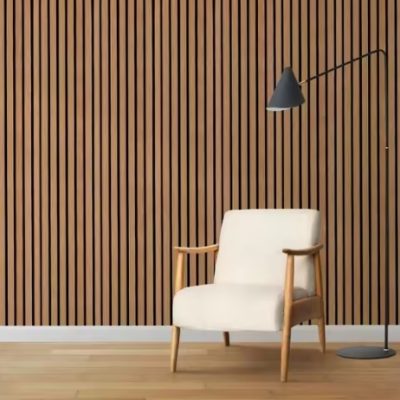
Interior decorative wall panels—ranging from fluted WPC profiles to large-format bamboo charcoal fiber sheets—have systematically replaced traditional drywall finishes in commercial projects. For developments like high-rise apartments, boutique hotels, and luxury villas, they offer rapid installation speeds and immediate, predictable aesthetics.
Foshan stands as the primary geographic cluster for these architectural components. Sourcing directly from this ecosystem grants developers immediate cost and customization benefits. However, a lapse in technical checking before sending a factory deposit can easily lead to non-compliant materials, warped edges, or field assembly failures.
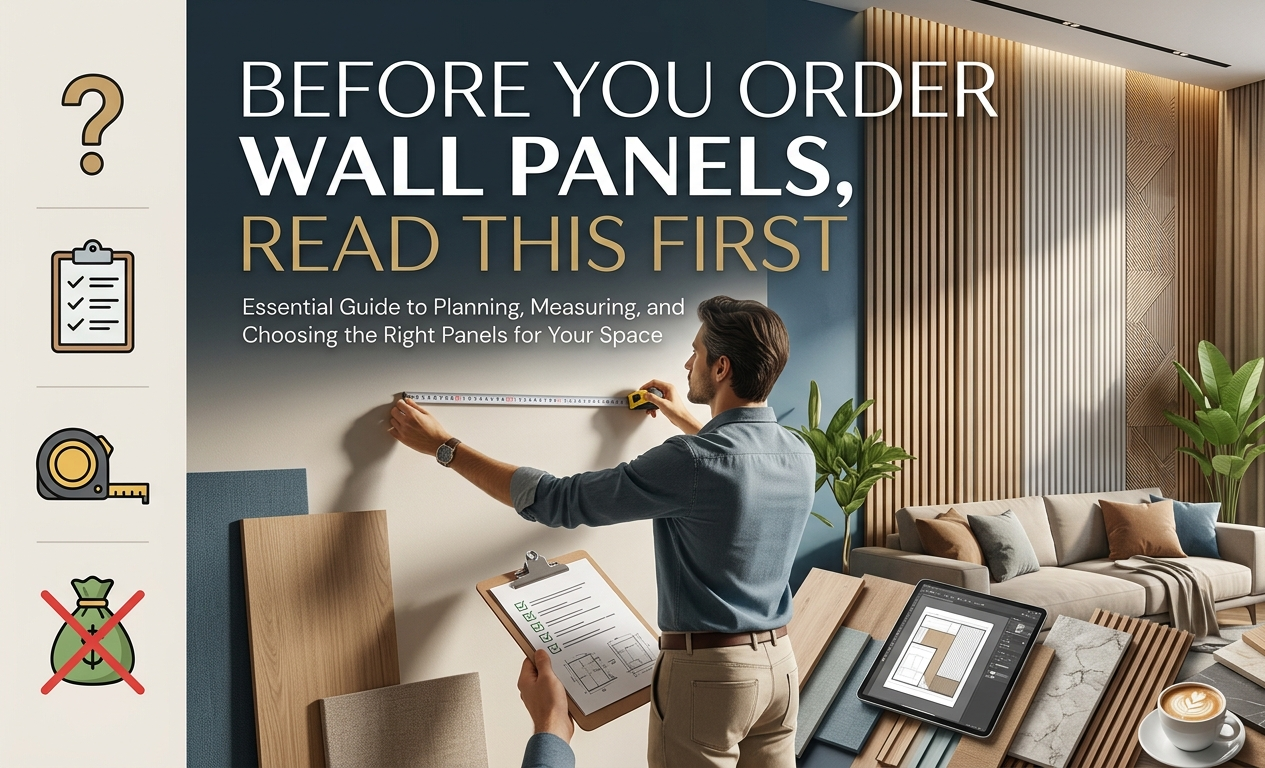
Below are the practical engineering and logistics checks procurement teams must execute prior to confirming a bulk order.
What is the True Density and Material Composition of Your Panel Core?
A frequent mistake in overseas procurement is selecting wall panels based entirely on a small visual swatch or a PDF catalog. The surface film dictates the pattern, but the core formulation determines structural integrity.
+--------------------------------------------------------+
|  Surface Finishing: PVC Film / Wood Veneer Layer      |
+--------------------------------------------------------+
|  Core Base: Solid Bamboo Charcoal / Rigid WPC         |  <-- Must specify density here
+--------------------------------------------------------+
Cheap panels often save production costs by inflating the ratio of low-grade recycled plastics or calcium carbonate filler while reducing the base polymer binder. This results in brittle panels that crack under impact from hotel cleaning carts or baggage.
For commercial real estate projects, always specify high-density, solid-core profiles. If your project includes high-humidity coastal zones or luxury villa basements, standard MDF or un-laminated fiberboards will swell and warp. Demand solid co-extrusion polymers or specialized waterproof bamboo charcoal bases to ensure long-term dimensional stability.
Does Your Ordered Batch Meet Local Commercial Fire and Health Compliance Standards?
You cannot legally hand over a commercial hospitality asset or a multi-family residential building if the interior wall linings fail local building codes.
Many independent workshops use cheap, high-formaldehyde bonding adhesives to laminate the decorative film to the core material. When exposed to internal ambient heat, these panels outgas volatile organic compounds (VOCs), which can cause the building to fail indoor air quality inspections.
- Environmental Requirements: Ensure your production contracts explicitly mandate E0 or EN 717-1 emission ratings.
- Fire Retardancy: Public corridors and guestrooms typically require a minimum of Class B1 (Flame Retardant) or equivalent localized certifications. Do not take a factory manager’s verbal assurance; request verifiable, recent test documentation from recognized international test labs like SGS or Intertek for the exact panel thickness you intend to buy.
Have You Accounted for Edge Trims and Corner Profiles in Your Master Bill of Quantities?
A wall panel system is only as good as its finishing joints. A major bottleneck on active construction sites occurs when the main panels arrive, but the specialized edge finishes are missing.
| Accessory Type | Primary Engineering Function | Sourcing Checklist |
| Starting Tracks | Anchors the base row flat to the sub-frame | Must match the panel thickness slot |
| Internal/External Corners | Masks raw core exposures at wall intersections | Requires exact dye-lot color matching |
| T-Trims & End Caps | Handles structural expansion joints between long spans | Must match panel depth perfectly |
Wall panels cannot simply be cut and left exposed at corners; the raw composite core will show. When organizing your master Bill of Quantities (BOQ), ensure the engineering drawings account for matching aluminum or matching-surface PVC corner profiles. Sourcing these from a different supplier later almost always results in visible color mismatches under architectural lighting.
How Does Sourcing From Foshan’s Material Cluster Reduce Your Inter-Category Freight Risk?
Wall panels are logistically challenging to transport. They are typically produced in lengths of 2.8 meters to 3 meters to match standard commercial ceiling heights. This makes them long, flat, and structurally vulnerable to bending or corner-chipping if handled loosely.
If you purchase wall panels from an isolated factory in a distant province, you face two distinct financial risks: high domestic trucking fees for over-length cargo, and the cost of shipping a partially empty ocean container, because panels alone will consume the volume (CBM) long before meeting the container’s weight allowance.
Foshan addresses this through structural cross-category integration. Because the city concentrates door, window, ceramic, and panel manufacturing within a single logistical radius, you can execute safe container balancing. Heavy building materials—such as architectural windows from Dali or vitrified tiles from Chancheng—are loaded securely at the base of the container. The long, lightweight wall panels are then staged flat across the top layers. This eliminates volumetric waste and saves substantial freight capital per project key.
Why Choose HSY Sourcing for Your Wall Panel Procurement?
Based directly within the Foshan building materials industrial ecosystem, HSY Sourcing works as your independent project management and on-the-ground technical quality control unit.
- Direct Mill Accountability: We bypass trading desks, connecting your procurement team directly to Foshan’s tier-one extrusion lines. This eliminates unnecessary middleman margins and gives you direct control over custom production runs.
- On-Floor Quality Inspections: We do not accept polished digital samples. Our technical inspectors go directly to the factory floor mid-production with digital calipers, moisture meters, and cross-hatch testers to verify core density, lamination adhesion, and tongue-and-groove milling precision before any packing occurs.
- Comprehensive BOQ Review: We audit your architectural plans to ensure that every necessary starter clip, hidden fastener, and matched corner profile is accurately accounted for in the production run, preventing site delays.
- Engineered Container Loading: We manage the consolidation of your entire fit-out at our local staging warehouse. We build custom, reinforced honeycomb crates for over-length panel assets and supervise the loading process to guarantee that fragile decorative surfaces are completely protected from transit damage.
Visit www.hsysourcing.com to submit your project’s architectural specifications and material schedules. Let our local engineers build a compliant, tightly managed supply chain for your development.
Frequently Asked Questions (FAQ)
Q: Can Foshan wall panel factories manufacture custom lengths to match our specific project ceiling heights?
A: Yes. While standard lengths are 2.8m and 3.0m, factories can adjust their extrusion cutting lines to produce custom lengths (e.g., 2.95m or 3.2m) for large-scale hotel or apartment orders. This reduces material wastage and installation cutting time on-site, provided the volume meets the factory’s basic production run threshold.
Q: How do we prevent the decorative film from peeling off over time in high-traffic commercial environments?
A: Film peeling is caused by low-quality hot-melt glues used during lamination. For commercial projects, always specify PUR (Polyurethane Reactive) hot-melt adhesive lamination. PUR glue creates a permanent, moisture-resistant chemical bond that will not delaminate under extreme temperature changes or high humidity.
Q: Is it safe to glue composite wall panels directly onto raw concrete blocks or brick walls?
A: We highly advise against it. Raw structural walls are rarely perfectly flat and can retain hidden moisture. For a flat commercial finish, panels should be mounted using structural aluminum clips attached to a lightweight metal or treated wood batten sub-frame. This creates a small ventilated cavity behind the paneling that protects the interior from moisture ingress and structural shifting.