
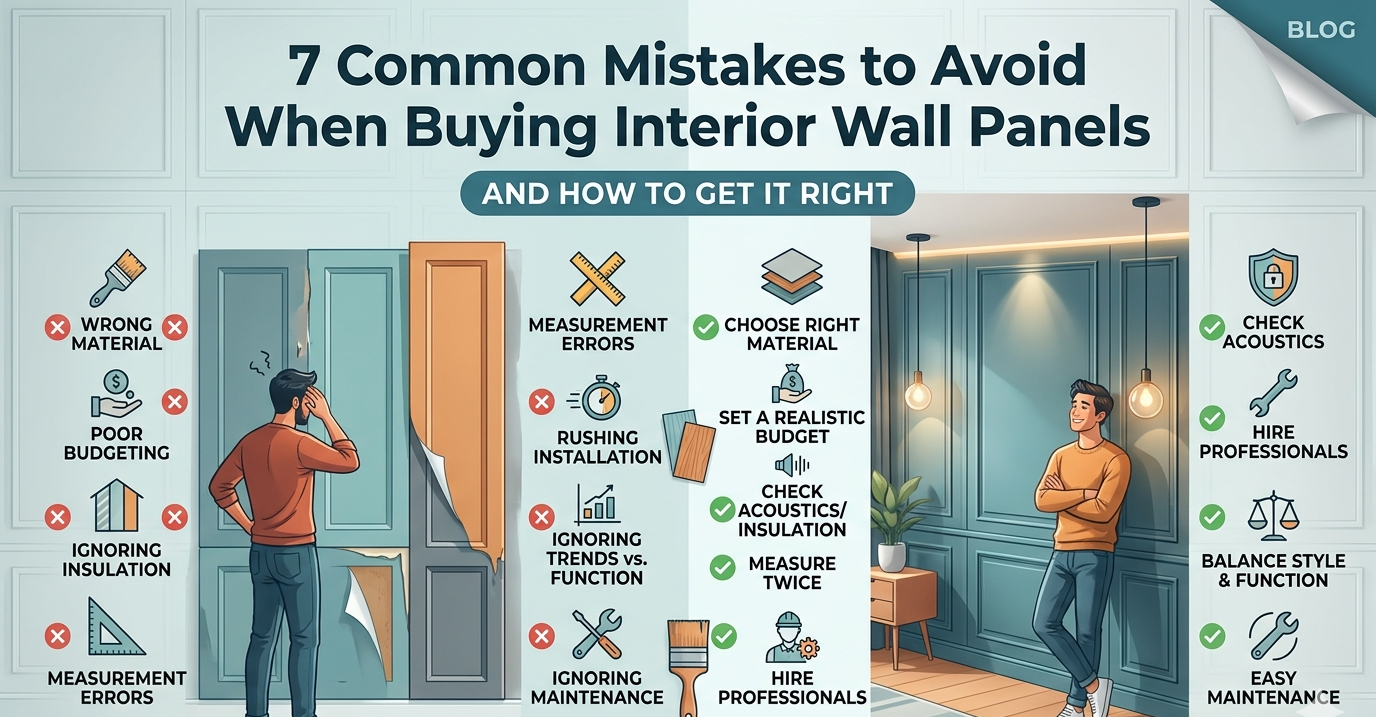
Key Takeaways:
- Core Material Dictates Performance: Choosing residential-grade MDF or low-density PVC for high-traffic hotels or commercial apartments guarantees warping, denting, and rapid wear.
- Compliance Cannot Be Assumed: Commercial interior projects require strict adherence to fire retardancy (e.g., Class A/Class B1) and eco-emission standards (E0/EN 717-1). Uncertified panels will fail on-site inspections.
- Moisture Exposure Risks: Standard interior panels used in humid areas like hotel bathrooms or coastal villas swell and delaminate without moisture-resistant backing or core engineering.
- Logistical Damage is Costly: Fluted panels, tongue-and-groove joints, and pre-finished veneers chip easily during transit. Custom structural palletizing and local staging are mandatory to avoid on-site installation delays.
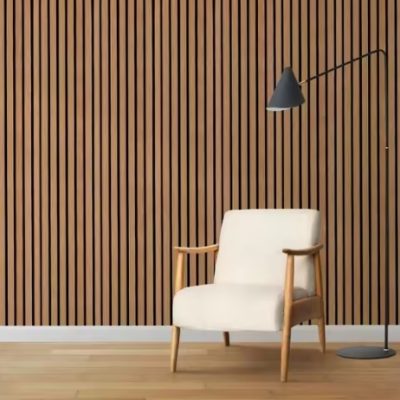
Interior wall cladding—whether it is WPC (Wood Plastic Composite), bamboo fiber, fluted timber, or pre-finished wood veneer—plays a major role in the visual identity and durability of modern commercial interiors.
Foshan is a globally recognized manufacturing cluster for building and fit-out materials. Project buyers can achieve significant cost savings by sourcing directly from this ecosystem. However, interior wall panels are highly technical building components. Focusing solely on a surface finish sample while ignoring core specifications and regulatory compliance leads to expensive on-site failures.
If you are managing procurement for a hotel, serviced apartment, or luxury villa development, here are seven common mistakes you must avoid.
Why Does Choosing the Wrong Core Material Lead to Premature Replacement?
The first and most costly mistake is selecting a wall panel based purely on a surface aesthetic. The core material determines how the panel handles impact, structural load, and temperature fluctuations.
- Standard MDF vs. High-Density Fiberboard (HDF): Standard MDF is highly susceptible to denting from luggage in hotel corridors and warping in seasonal humidity. High-traffic commercial walls require HDF or specialized solid-core composite options.
- Low-Quality PVC vs. Bamboo Fiber/WPC Cores: Cheap PVC panels are thin, brittle, and crack easily upon impact. For commercial apartments and hospitality spaces, specifying co-extrusion WPC or heavy bamboo fiber cores provides the necessary structural density to withstand daily tenant use.
Are You Verifying Fire Retardancy and Building Code Compliance?
Commercial interior developments operate under strict legal liability framework. If your imported wall panels do not meet local fire codes, your project will fail its building inspection, and you will be forced to rip them out.
Buyers frequently forget to demand certified test reports:
- Fire Ratings: For hotels and multi-family residential projects, panels used in public corridors and rooms generally must achieve Class B1 (flame retardant) or higher, depending on local standards (such as ASTM E84 for the US or EN 13501-1 for Europe).
- Formaldehyde Emissions: Interior panels utilize resins and glues. For indoor air safety, you must strictly specify E0 or EN 717-1 compliant materials to avoid toxic off-gassing.
Never accept a factory’s verbal assurance. You must require physical, verifiable test reports from independent testing bodies (like SGS or Intertek).
How Does Ignoring Moisture and Thermal Expansion Ruin Your Installation?
All wood-composite and fiber-based wall panels expand and contract with changes in temperature and humidity. Failing to engineer the product for its specific environment causes buckling, warping, and joint separation after installation.
- Wet Area Mistakes: Installing standard interior panels in hotel bathrooms, apartment kitchens, or coastal villa basements leads to rapid delamination. These spaces require specialized moisture-resistant backing materials or water-proof polymer cores.
- Expansion Joint Oversight: Factories cut panels precisely, but if the material formulation lacks high-quality stabilizers, the panels will warp when exposed to HVAC systems or direct sunlight. Your procurement specifications must account for the local climate of the project site.
Why Are Corner Profiles and Edge-Banding Often Overlooked?
A wall paneling installation is only as good as its trim details. Buyers frequently order thousands of square meters of main panels but forget to source the matching installation hardware and edge finishes.
Without factory-matched external corners, internal corners, top trims, and starting tracks, your installation crew will have to improvise on-site. This leads to exposed, unsealed panel edges that look unprofessional and absorb moisture over time. When finalizing your Bill of Quantities (BOQ), ensure every matching aluminum or composite trim profile is accounted for down to the exact linear meter.
Have You Checked the Structural Integrity of the Tongue-and-Groove Joints?
Most interlocking wall panel systems rely on a tongue-and-groove or click-lock mechanism. If the extrusion or CNC milling machinery at the factory is uncalibrated or uses low-grade material, the locking joints will be too thin or brittle.
During shipping or manual handling on-site, these delicate edges chip and break easily. If the tongue is damaged, the panels cannot snap together tightly, creating uneven gaps along the wall surface. This defect is impossible to fix with glue or filler and destroys the clean finish required by high-end boutique hotels and luxury villas.
Why Is Post-Production Inspection Imperative for Pre-Finished Panels?
Pre-finished panels (such as real wood veneers or high-pressure laminates) must arrive on-site with zero surface flaws. Unlike raw drywall, they cannot be patched, sanded, or repainted after they are mounted.
Relying on a factory’s internal quality control is a major risk. A local agent must physically inspect the production run to check for:
- Color Consistency: Wood grains and dye lots vary across different production batches. An inspector must cross-reference separate batches under consistent lighting to ensure uniform color matching.
- Bonding Strength: Checking that the decorative film or wood veneer is perfectly bonded to the core without surface bubbling, peeling, or rough edges.
Are You Allowing Inadequate Packaging for Long-Distance Ocean Freight?
Wall panels are long, flat, and heavy, making them highly vulnerable to bending and corner damage during maritime transit. If a factory packs them loosely in standard cardboard boxes, the weight of the stacked cargo will crush the bottom layers, ruining the interlocking joints.
Before shipping, your packaging protocols must be strictly enforced. Long interior panels should be packed into reinforced, heavy-duty honeycomb boxes, wrapped with protective foam corners, and securely stacked on structural wooden pallets or steel crates that can be safely loaded and unloaded via forklift without shifting.
Why Choose HSY Sourcing for Your Interior Panel Procurement?
Based directly in Foshan, HSY Sourcing bridges the gap between international development standards and localized manufacturing execution. We understand that wall paneling requires deep technical oversight.
- Strict Specification Control: We do not allow factories to take shortcuts. We write your required core densities, fire ratings, and emission standards directly into the local manufacturing contracts.
- Physical, Real-Life Verification: We reject AI-rendered product displays and stock images. Our team goes directly to the production floor to provide you with real, unedited photos and videos of the core material measurements, moisture levels, and locking-joint stability before anything is boxed.
- BOQ & Trim Coordination: We review your architectural drawings to ensure all matching corner profiles, starting tracks, and edge trims are included in the production run, eliminating missing hardware risks.
- Warehouse Staging & Container Optimization: We consolidate your wall panels, aluminum doors, windows, and flooring at our local Foshan warehouse. We engineer the container loading sequence—placing heavy building materials securely at the base and lighter FF&E items on top—to maximize your shipping budget and prevent transit damage.
Visit www.hsysourcing.com to share your interior design BOQ and wall finishes schedule. Let our local team secure a compliant, risk-free supply chain for your project.
Frequently Asked Questions (FAQ)
Q: Can Foshan factories custom-match wall panel colors to our interior designer’s specified wood veneer or laminate samples?
A: Yes. You can send us a physical material swatch or provide an international color code (such as Pantone or RAL). We will coordinate with the manufacturer to produce a physical counter-sample for your team to inspect and sign off on before bulk production begins.
Q: What is the standard production lead time for a commercial wall panel order?
A: Standard WPC or bamboo fiber panels usually take 15 to 20 days to manufacture. Specialized, custom pre-finished wood veneers or fire-rated architectural panels can require 25 to 35 days depending on the volume and customization. You should factor an additional 3 to 4 weeks for ocean freight and customs clearance.
Q: How do we calculate the necessary waste margin when ordering wall panels for a hotel or apartment layout?
A: For standard vertical layouts, we recommend factoring a 5% to 8% waste margin to account for corner cuts, window framing, and installation trimming. For complex geometric patterns, diagonal layouts, or herringbone styles, the waste margin should be increased to 10% or 12% to prevent running out of materials mid-installation.