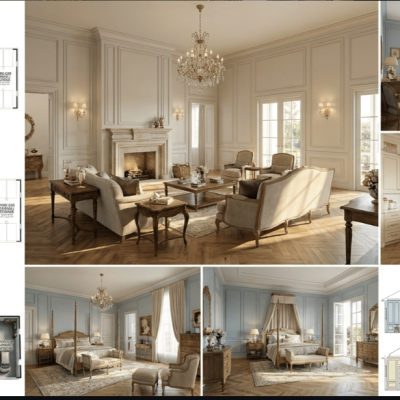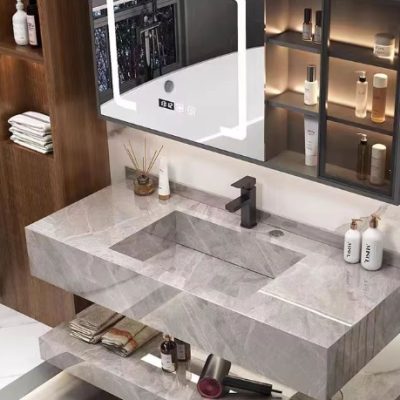


Fenestration—windows, sliding glass doors, and curtain walls—frequently represents one of the single largest line items in custom residential construction. For US home builders working on high-end luxury villas, achieving expansive glass elevations with narrow sightlines has become a standard architectural expectation.
However, sourcing high-performance aluminum window systems domestically in North America presents persistent operational challenges: escalating material costs, multi-tiered distributor markups, and lead times that often stretch from 20 to 30+ weeks for custom opening sizes.
To maintain project margins and keep construction schedules on track, an increasing number of US custom builders, general contractors, and developers are procuring window and door packages directly from Foshan, Guangdong.
This article examines the underlying supply chain mechanics, technical engineering standards, customization advantages, and risk-management strategies that make direct sourcing from China a pragmatic decision for US residential builds.
Key Takeaways
- Direct Supply Chain Economics: Eliminating multi-tier regional distributor markups gives builders access to commercial-grade extrusion and multi-pane Low-E glazing packages at 30% to 50% lower material costs.
- Customization Without Surcharges: Foshan window factories operate on a job-order basis. Non-standard dimensions, 10-to-12-foot sliding panels, and ultra-slim sightlines do not carry the extreme custom engineering surcharges common with US domestic brands.
- Code Compliance is Manageable: Success depends on setting strict technical specifications upfront: SGCC/ANSI Z97.1 safety glass etching, PA66 polyamide thermal breaks, and integrated nailing fins configured for US wood-stud framing.
- Local Oversight Eliminates Rework: Working with an on-ground partner like HSY Sourcing mitigates key risks through CAD shop drawing reconciliation, caliper profile checks, pre-shipment water spray testing, and consolidated FCL ocean freight.
What Is Driving the Price Gap Between Domestic and Imported Aluminum Windows?
The cost differential between US domestic window brands and direct Foshan manufacturing is not primarily a matter of cheap labor or inferior materials. Instead, it stems from structural differences in supply chain efficiency and distribution models.
In the United States, architectural aluminum windows pass through multiple pricing layers before arriving at a jobsite: raw material extruders, national brand fabricators, regional distributors, local dealers, and independent sales reps. Each entity adds margin, overhead, and transit handling fees. Furthermore, standard domestic catalogs are optimized for high-volume residential developments; custom architectural sizes trigger heavy custom tooling or special-order fees.
Foshan—specifically the Nanhai district—hosts the highest concentration of architectural aluminum extruders, glass processors, and hardware manufacturers in the world. Within a 20-mile radius, raw 6063-T6 aluminum billets are extruded, anodized or powder-coated, fitted with thermal breaks, paired with local or imported German hardware (e.g., Siegenia, Sobinco, HOPO), and assembled into finished units.
| Cost & Supply Chain Attribute | US Domestic Premium Brands | Direct Foshan Manufacturing |
| Supply Chain Structure | Extruder ➔ Brand ➔ Distributor ➔ Dealer ➔ Jobsite | Factory ➔ On-Ground Sourcing Agent ➔ Ocean Freight ➔ Jobsite |
| Custom Size Pricing | High custom surcharges for non-catalog R.O. sizes | Standard per-square-meter rate based on material volume |
| Lead Times | 20 to 30+ weeks for high-end custom sliding doors | 6 to 8 weeks production + 4 to 5 weeks transit |
| Profile & Glass Options | Limited base options; upgrades are costly | Fully modular (glass thickness, tint, Low-E layers, frame finishes) |
By sourcing directly from Foshan, custom builders pay for raw materials, precision fabrication, and ocean freight—bypassing several layers of middleman markup.
How Do Chinese Aluminum Windows Perform Against US Climate and Energy Standards?
A primary concern for US general contractors when importing windows is passing inspection by local building officials. Overseas window units must satisfy the same structural, thermal, and safety requirements as domestic products.
+-------------------------------------------------------------------------+
|                  HIGH-PERFORMANCE IGU & FRAME SPEC                      |
|                                                                         |
|  [Exterior Frame] ◄── 6063-T6 Aluminum (2.0mm–3.0mm Wall Thickness)      |
|         │                                                               |
|  [Thermal Barrier] ◄── PA66 GF25 Polyamide Structural Strip             |
|         │                                                               |
|  [Interior Frame] ◄── 6063-T6 Aluminum with Durable Powder Coating      |
|                                                                         |
|  [Glass Build-up] ◄── 6mm Tempered + 12A/16A Argon + 6mm Low-E Tempered  |
|                       (Corner Etched with SGCC / ANSI Z97.1 Logo)       |
+-------------------------------------------------------------------------+
When correctly specified, Chinese aluminum windows match or exceed US performance benchmarks across three key areas:
1. Thermal Insulation (PA66 Polyamide Breaks)
Non-thermal aluminum transfers heat rapidly, leading to condensation and failed energy audits. High-performance Foshan windows utilize PA66 GF25 (Polyamide 66 reinforced with 25% glass fiber) thermal break strips structurally crimped between the inner and outer aluminum extrusions. Combined with double-pane or triple-pane Low-E Insulated Glass Units (IGUs) filled with 90%+ Argon gas, these systems achieve target U-Factors (0.24 to 0.30 BTU/h·ft²·°F) suitable for cold US climate zones.
2. Safety Glazing Certifications (SGCC)
US building codes mandate that glass installed near doors, in bathrooms, or within 18 inches of the floor must be safety glass. Foshan’s top glass processors (such as Xinyi or CSG) operate automated tempering lines certified by the Safety Glazing Certification Council (SGCC). Every pane is permanently laser-etched or ceramic-stamped with the SGCC license number and ANSI Z97.1 compliance mark prior to assembly.
3. Surface Finishes (AAMA Compliance)
To withstand intense UV radiation in Southern states or coastal salt air in Florida and California, exterior aluminum profiles must be coated using high-performance finishes. Builders can specify coatings meeting AAMA 2604 or AAMA 2605 standards (PVDF/Fluoropolymer coatings using AkzoNobel or PPG paints), which provide a 10-to-20-year warranty against chalking, cracking, and color fading.
Why Is Custom Engineering Easier to Execute in Foshan?
In luxury residential design, architectural drawings frequently call for non-standard opening configurations that standard domestic window catalogs cannot accommodate without expensive custom engineering:
- Massive Motorized Pocket Doors: Panels measuring 10 to 12 feet tall that slide seamlessly into wall cavities.
- Slim-Sightline Systems: Minimalist frame profiles with visible sightlines as thin as 20mm to 35mm to maximize natural light.
- Corner Glass-to-Glass Units: 90-degree open corner sliding systems without a fixed structural post.
Because Foshan manufacturers specialize in bespoke architectural production, their machinery and assembly lines are built for custom fabrication. Rather than forcing an architect to modify wall openings to fit off-the-shelf unit dimensions, the factory extrudes, cuts, and builds frames to match the precise millimeter dimensions of the architect’s CAD drawings.
What Are the Common Pitfalls Builders Experience When Sourcing Windows from China?
Importing windows without local technical oversight can lead to jobsite friction during installation. The four most common failure points include:
- Incorrect Installation Detail (Missing Nailing Fins): Chinese domestic construction relies on concrete/masonry structures where windows are anchored through the frame core. US residential construction relies heavily on wood-stud framing, which requires perimeter nailing fins (flanges) and specific flashing setbacks. If fins are omitted during ordering, sealing the window against water intrusion becomes difficult.
- Ignoring Rough Opening (R.O.) Deductions: Factories build to the exact overall unit size specified on the shop drawing. If a builder submits the raw rough opening size without deducting 1/2″ to 3/4″ for shims and sealant clearance, the window units will not fit into the wall cavity.
- Inadequate Sill Drainage Channels: Flush-track sliding doors look sleek, but without engineered sub-sill drainage, weep holes, and check valves, wind-driven rain will back up into interior wood flooring.
- Uncoordinated Hardware Specifications: Failing to specify heavy-duty stainless steel roller carriages for 400-lb glass panels can lead to hardware wear and binding within months of installation.
Why Choose HSY Sourcing as Your On-Ground Partner in Foshan?
Navigating Foshan’s vast manufacturing network remotely can introduce unnecessary risk to a multi-million-dollar custom build. HSY Sourcing serves as your dedicated procurement and technical quality manager on the ground in Foshan.
- Architectural Drawing Reconciliation: We review Chinese factory CAD shop drawings against your US architectural plan sets. We verify rough opening deductions, nailing fin positions, wall section details, and sill drainage channels before production begins.
- Physical On-Site Inspections: Our team visits the production line during key assembly phases. We use digital calipers to measure profile wall thickness, check coating depth with mil gauges, and physically verify that every tempered glass pane carries a valid SGCC stamp.
- Factory Operational Testing: Before packing, we perform mock-up assembly tests on large sliding doors and casement windows—checking lock alignment, roller smoothness, and water spray resistance on the factory floor.
- Single-Container Material Consolidation: We store completed window packages in our local Foshan staging warehouse. We can consolidate your window order alongside custom cabinetry, tiles, natural stone, and sanitary ware into a single Full Container Load (FCL) shipment.
- Transparent Execution: We operate on a direct agency model. You receive true factory-direct pricing without hidden markup, along with photo and video documentation at every stage of production and container loading.
Frequently Asked Questions (FAQ)
How do US building inspectors verify that glass imported from China meets safety codes?
Building inspectors look for a permanent, physical mark etched or ceramic-stamped into the corner of each tempered or laminated glass pane. This stamp displays the SGCC logo, ANSI Z97.1 certification reference, and CPSC 16 CFR 1201 standards. HSY Sourcing verifies that factories apply these stamps before glass units are sealed into window frames.
Can Chinese window factories provide integrated perimeter nailing fins for US wood-stud construction?
Yes. Leading export-focused factories in Foshan manufacture profiles with integrated perimeter nailing fins or snap-on aluminum flanges designed for standard US 2×4 and 2×6 stud wall framing. The fin setback distance (typically 1″ to 1-3/8″ from the front frame face) must be confirmed during the shop drawing sign-off phase.
What is the typical lead time from initial order to delivery at a US jobsite?
A typical window procurement timeline spans 11 to 15 weeks total:
- 2 to 3 weeks: CAD shop drawing translation, engineering review, and sample sign-off.
- 5 to 6 weeks: Factory extruding, thermal break assembly, glass tempering, and pre-shipment QC.
- 4 to 6 weeks: Ocean transit, US customs clearance, and flatbed delivery directly to your jobsite.
How are large glass frames and window units protected against damage during ocean freight?
Windows and sliding door frames are wrapped in multi-layer protective film and EPE foam edge protectors. Glass panels and complete window assemblies are secured vertically on custom ISPM 15 heat-treated wooden crates or heavy-duty steel A-frame skids equipped with internal strapping and rubber cushioning blocks to absorb ocean vibration.