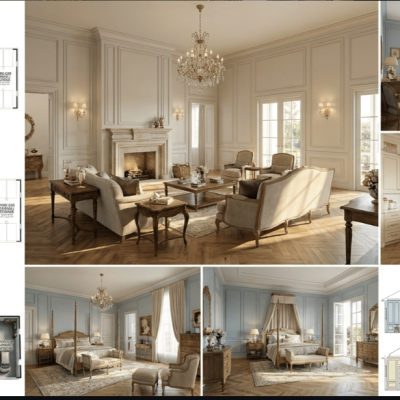

Sourcing a full villa renovation package from Foshan, Guangdong allows US homeowners, custom builders, and architects to access top-tier materials—from custom millwork and large-format sintered stone to thermally broken aluminum window walls—at direct factory pricing.
However, buying the materials is only half the execution. A typical high-end residential renovation requires procurement across 8 to 15 separate specialized factories located across Shunde, Nanhai, and Nanzhuang. If each supplier ships its products independently via Less than Container Load (LCL) ocean freight, international logistics costs balloon, cargo handling damage risks multiply, and US customs clearance becomes a chaotic multi-entry paperwork burden.
To retain the financial and technical advantages of sourcing from Foshan, you need a disciplined shipping strategy. This guide breaks down the operational realities of consolidating, packing, and shipping mixed renovation products from Foshan to a US jobsite.
Key Takeaways
- Consolidation Beats LCL: Consolidating goods into a dedicated Full Container Load (FCL) reduces total ocean freight costs by 30% to 50% compared to multiple individual LCL shipments, while drastically cutting port handling damage.
- Weight vs. Volume Balance is Critical: Heavy items (stone slabs, ceramic tiles) hit US highway weight limits before filling container space. Pairing heavy materials with light, high-volume products (custom cabinetry, loose furniture) optimizes container utilization.
- Packaging Compliance is Mandatory: All wooden pallets, crates, and skids must carry certified ISPM 15 heat-treatment stamps (IPPC mark) to prevent automatic rejection by US Customs and Border Protection (CBP).
- Staging Warehousing Prevents Line-Item Delays: Different factories operate on different lead times. A local Foshan staging warehouse is necessary to hold completed items safely until the entire villa order is ready for single-container loading.
Why Is Shipping Renovation Products from Foshan More Complex Than Standard Freight?
Shipping building finishes for a custom villa is fundamentally different from shipping uniform commercial freight (like 1,000 identical cartons of footwear). Renovation projects involve heterogeneous goods with vastly different physical characteristics, lead times, and protective requirements:
- Varied Material Densities: Sintered stone slabs weigh roughly 15 to 20 lbs per square foot, while custom vanity units are light but take up significant cubic volume.
- Mismatched Factory Lead Times: Aluminum windows may take 6 weeks to extrude and assemble, custom kitchen cabinets take 5 weeks, and off-the-shelf sanitary ware is ready in 1 week.
- Fragility Differentials: Tempered glass units and delicate marble edges require rigid wooden skeletal protection, while stainless steel hardware or extruded trim can be bundled in heavy cardboard cartons.
Without central oversight in Foshan, factories ship goods the moment production finishes. Uncoordinated ocean shipments result in staggered arrivals at the US jobsite, leaving expensive cabinetry sitting on an open construction site exposed to weather while waiting for windows or hardware to arrive.
FCL vs. LCL: Which Shipping Strategy Prevents Damage and Controls Costs?
When importing multi-category materials, choosing between Full Container Load (FCL) and Less than Container Load (LCL) directly impacts your budget and material integrity.
| Feature / Metric | Less than Container Load (LCL) | Full Container Load (FCL) Consolidation |
| Handling Operations | High (5–7 touchpoints at origin and destination CFS hubs) | Low (Loaded once in Foshan, opened at your US jobsite) |
| Damage Risk | High (Goods stacked with third-party commercial cargo) | Low (Protected by custom internal strapping and load blocks) |
| Freight Pricing | High per cubic meter (due to origin/destination CFS fees) | Low per unit volume (flat rate per 20ft or 40ft HQ container) |
| Customs Clearance | Multi-entry filing (separate paperwork per shipment) | Single entry filing (one Bill of Lading, unified commercial invoice) |
| Lead Time Predictability | Unpredictable (subject to port consolidation delays) | Direct transit schedules (port-to-port ocean carriage) |
For a full villa project with a procurement budget exceeding $50,000, FCL consolidation is almost always the correct strategic choice. Under an FCL setup, your products are held in a local Foshan warehouse until all factory runs are finished. They are then loaded into a single 20-foot or 40-foot High Cube (HQ) container dedicated exclusively to your project.
How Do You Correctly Pack and Load Mixed Building Materials into a Single Container?
Improperly packed ocean containers can result in cargo shifting during transit, causing severe structural damage before the ship reaches North America. Successful mixed-material container loading follows a precise engineering sequence:
+-------------------------------------------------------------------------+
|                      40ft HQ CONTAINER LOADING MAP                      |
|                                                                         |
|  [NOSE / FRONT]                                         [DOOR / REAR]   |
|  +-------------------+  +--------------------+  +--------------------+  |
|  | Heavy Stone Slabs |  | Custom Cabinetry   |  | Sanitary Ware &    |  |
|  | & Ceramic Tiles   |  | & Millwork Boxes   |  | Lighter Lighting   |  |
|  | (Floor Level)     |  | (Mid Section)      |  | (Door Section)     |  |
|  +-------------------+  +--------------------+  +--------------------+  |
|  | Glass & Windows Secured Vertically along Side Walls with Straps |     |
+-------------------------------------------------------------------------+
1. Weight Balancing & Axle Limits
The total gross weight limit for a standard 40ft HQ container is roughly 26,000 kg (57,300 lbs). However, US Department of Transportation (DOT) highway weight limits restrict gross vehicle weight on US roads (container + truck chassis + tractor).
To avoid expensive heavy-weight road surcharges or rejected port chassis, the total cargo weight of a 40ft container destined for US inland road transit should generally be capped around 17,500 to 19,500 kg (38,500 to 43,000 lbs) unless specialized tri-axle chassis are arranged.
- Strategic Pairing: Place heavy ceramic tiles or natural stone slabs on the container floor near the front (nose) and middle axle points. Fill the remaining vertical volume above the stone with light, bulky items like custom wardrobes, foam-wrapped sofas, or office cabinetry.
2. Structural Layering & Load Blocking
- Bottom Layer: Dense, rigid wooden crates containing tiles, stone, or heavy hardware.
- Middle Layer: Flat-packed or modular cabinet carcases packaged in 5-ply corrugated cartons with EPE foam edge protectors.
- Top Layer & In-fill: Lightweight items like LED light fixtures, curtains, hardware boxes, or soft furnishings. Void space must be filled using inflatable dunnage bags to stop lateral movement during ocean roll.
3. Glass and Window Securing
Window frame assemblies and glass panels must never be laid flat, as vertical sea swell forces will shatter horizontal glass panes. Windows and glass panels are loaded on heavy-duty wooden A-frames or vertical steel-reinforced skids, positioned along the container walls, and anchored directly to internal container D-rings using heavy-duty ratchet straps.
What Customs and Trade Compliance Rules Apply to Renovation Freight Entering the US?
Customs clearance delays in US ports (such as Los Angeles/Long Beach, Newark, or Savannah) incur daily demurrage and storage fees that quickly erase sourcing savings. Ensure these four regulatory areas are addressed before the vessel departs Shenzhen or Guangzhou:
Timber Packaging Material (ISPM 15)
Every piece of solid wood packaging—pallets, crates, blocking timber, and dunnage—must be heat-treated (HT) in accordance with ISPM 15 international standards and carry a legible IPPC stamp. If non-compliant raw timber is discovered inside a container, US Customs will order the entire container returned to China at the importer’s expense.
EPA TSCA Title VI (Formaldehyde Standards)
Custom kitchens, vanities, or wall paneling constructed using composite wood products (hardwood plywood, medium-density fiberboard / MDF, particleboard) must comply with EPA TSCA Title VI emissions limits. Your commercial invoice and packing list must include an explicit TSCA Title VI certification statement from the manufacturer.
Tariff Classifications (HTS Codes)
A single villa container contains items spanning multiple Harmonized Tariff Schedule (HTS) categories:
- Ceramic Tiles: HTS Chapter 69
- Custom Wooden Millwork: HTS Chapter 44
- Aluminum Windows/Doors: HTS Chapter 76
- Plumbing Fixtures: HTS Chapter 39 / 74 / 69
Your sourcing agent must construct a unified, itemized Packing List and Commercial Invoice mapping each product line to its exact 10-digit HTS code, declaration value, and country-of-origin mark.
Why Choose HSY Sourcing to Handle Your Foshan Consolidation and Logistics?
Managing logistics across multiple Foshan factories while based in the United States creates operational blind spots. HSY Sourcing serves as your on-ground procurement and logistics manager in Foshan, protecting your investment from factory floor to jobsite delivery.
- Local Foshan Staging Warehouse: We maintain clean, dry, secured warehousing in Foshan. We receive, inspect, and store shipments from your various factories as they finish production, holding goods free of charge until your full container package is ready.
- Pre-Loading Packaging Inspections: When goods arrive at our warehouse, we inspect every crate for structural strength, moisture control, and compliant ISPM 15 wood stamps before it touches the container floor.
- Professional Container Space & Weight Optimization: Our logistics team designs precise 3D loading plans for your container. We calculate weight-to-volume ratios to maximize payload capacity while remaining strictly within US highway axle limits.
- Supervised Container Loading: We do not leave loading to factory laborers. HSY staff supervise the loading process on-site, managing weight distribution, applying dunnage bags, ratcheting fragile glass skids, and documenting every layer with photo and video records.
- Complete Export Documentation: We consolidate invoices from 10+ factories into one clean, compliant export package, coordinating directly with your US customs broker to ensure smooth customs clearance and flatbed delivery directly to your villa build site.
Frequently Asked Questions (FAQ)
How long can HSY Sourcing hold my materials in Foshan if one factory suffers a production delay?
We provide flexible staging warehouse windows for active villa projects. If one specialized factory (e.g., custom glass doors) experiences a two-week delay, your previously completed goods (tiles, cabinetry, sanitary ware) remain safely stored in our staging facility without incurring expensive port storage fees.
Can a 40-foot container chassis drive directly to a residential residential construction site in the US?
That depends on local municipal zoning, road width, and overhead tree branches or power lines. If your residential villa site cannot accommodate a standard 53-foot tractor-trailer combination, HSY Sourcing can coordinate with your local freight forwarder to transfer the container goods onto flatbed trucks or smaller box trucks equipped with liftgates at an off-site regional warehouse near your city.
How do you prevent moisture damage and rust during 30 days of ocean transit?
Ocean transit exposes cargo to high humidity and temperature fluctuations (“container rain”). We protect sensitive goods by using vacuum-sealed plastic wraps on millwork boxes, placing industrial-grade silica gel desiccant bags inside crates, and applying protective film to exposed metallic finishes and window frames.
What insurance coverage is required for a consolidated building material container?
We strongly advise securing an All-Risk Marine Cargo Insurance policy (Institute Cargo Clauses A) covering the shipment from the moment cargo leaves our Foshan warehouse until it arrives at your US jobsite. This policy covers transit loss, severe weather damage, vessel incidents, and rough handling during port inspections.