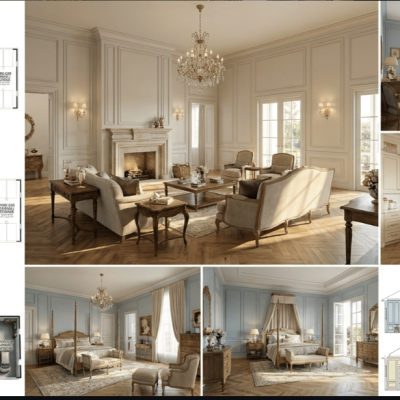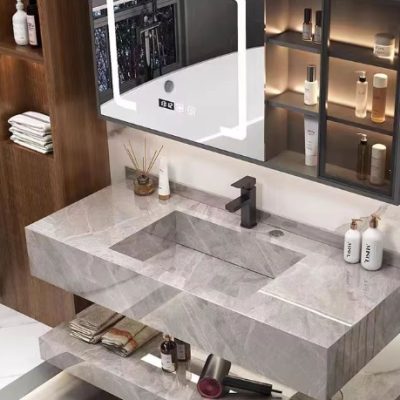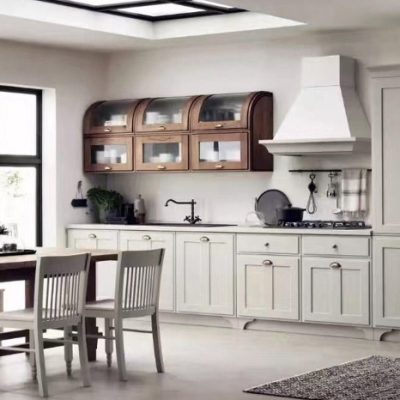

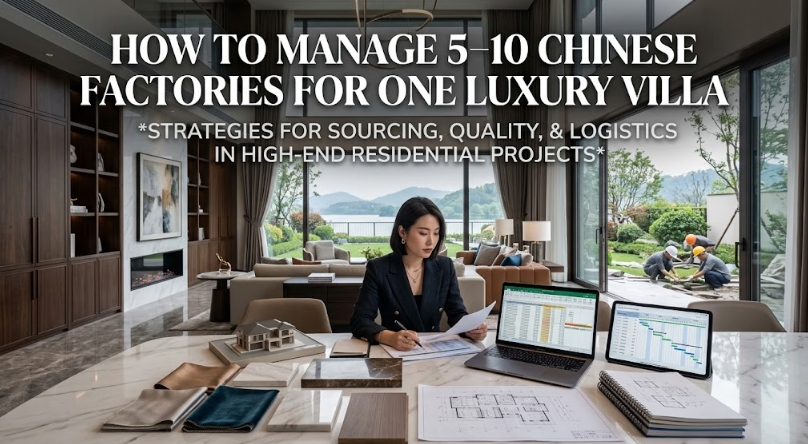
Sourcing customized building materials, joinery, and loose furnishings directly from Chinese manufacturers is an effective way to achieve bespoke architectural details for a private residential project. However, private homeowners building or renovating a high-end villa often find that the technical challenge lies less in selecting products than in managing the supply chain.
When a single villa project involves a custom kitchen manufacturer in Foshan, an aluminum window systems factory in Nanhai, a natural stone processor in Yunfu, a sanitary ware supplier, a architectural lighting factory in Zhongshan, and loose furniture workshops, the homeowner is no longer simply buying products. They are managing an international supply chain with 5 to 10 independent factories.
Each factory operates under its own production schedules, payment structures, drawing standards, and packaging methods. Without a centralized procurement framework, managing multiple suppliers can quickly become overwhelming, leading to mismatched finishes, misaligned site installation schedules, and delayed container shipments.
Successfully executing a multi-factory villa build requires shifting from treated transactions as individual purchases to managing a unified procurement project.
Why Does One Villa Need So Many Chinese Factories?
Homeowners often ask whether it is possible to buy everything from a single, large manufacturer. While some trading groups market themselves as “whole-house solution providers,” genuine manufacturing specialization in China is highly localized and segmented.
A high-end villa requires distinct manufacturing capabilities that rarely exist under one roof:
- Custom Kitchens & Millwork: Requires precision panel cutting, dust-free lacquer spray booths, specialized edge-banding, and hardware assembly lines.
- Architectural Aluminium Windows & Doors: Requires heavy extrusion processing, corner crimping machinery, thermal-break assembly, and specialized glass-glazing rigs.
- Natural Stone & Sintered Slabs: Requires heavy-bridge saws, CNC waterjet cutters, edge-polishing lines, and specialized slab-handling equipment.
- Loose Furniture: Requires solid-wood joinery, upholstery workshops, metal framing, and custom finishing departments.
- Architectural & Decorative Lighting: Requires electrical safety testing facilities, metal plating, glass-blowing or casting setups, and specialized LED driver integration.
+-------------------------------------------------------------------------+
|                  VILLA MANUFACTURING ECOSYSTEM IN CHINA                 |
+--------------------------+----------------------------------------------+
| CATEGORY                 | PRIMARY REGIONAL CLUSTER (GUANGDONG)         |
+--------------------------+----------------------------------------------+
| Custom Joinery & Kitchens| Shunde / Foshan                              |
| Windows & Door Systems   | Nanhai / Foshan                              |
| Porcelain & Sanitaryware | Shiwan / Foshan                              |
| Architectural Lighting   | Guzhen / Zhongshan                           |
| Loose Furniture          | Longjiang / Foshan                           |
| Natural Stone Processing | Yunfu (Adjacent to Foshan)                   |
+--------------------------+----------------------------------------------+
Working directly with specialized factories ensures superior material quality, precise engineering, and direct pricing. However, it naturally increases the number of independent suppliers involved in your project. A multi-factory setup is standard for a bespoke villa build; the key is knowing how to organize it.
What Makes Managing 5–10 Suppliers Difficult?
The main challenge of working with multiple factories is not language—it is the operational friction that occurs when independent companies execute different parts of the same design without central coordination.
               [ ARCHITECT / INTERIOR DESIGNER ]
                               │
               [ MASTER PROCUREMENT SCHEDULE ]
                               │
 ┌──────────────┬──────────────┼──────────────┬──────────────┐
 │              │              │              │              │
▼              ▼              ▼              ▼              ▼
Factory 1      Factory 2      Factory 3      Factory 4      Factory 5
(Kitchen)      (Windows)       (Stone)       (Sanitary)    (Furniture)
 │              │              │              │              │
 └──────────────┴──────────────┼──────────────┴──────────────┘
                               │
                    [ CONSOLIDATION WAREHOUSE ]
                               │
                   [ SITE DELIVERY & INSTALL ]
1. Incompatible Quotation Structures
One manufacturer quotes kitchen cabinets by the linear meter, another quotes wardrobes by the square meter of front elevation, and a stone factory quotes by raw slab area plus itemized processing fees for edge polishes and cutouts. Normalizing these quotes to understand your true scope requires translating every proposal into an itemized bill of quantities (BOQ).
2. Uncoordinated Lead Times
Production timelines vary significantly across product categories:
- Aluminum Architectural Windows: 35–45 days (requires glass tempering and custom extrusion powder coating).
- Bespoke Lacquered Kitchens: 40–50 days (requires multi-stage paint drying and cure cycles).
- Sanitary Ware & Taps: 15–25 days (standard production or stock assembly).
- Loose Upholstered Furniture: 25–35 days.
If orders are placed simultaneously without considering lead times, sanitary ware may sit in a warehouse for two months deteriorating while waiting for the kitchen cabinets and windows to finish production.
3. Disconnected Technical Drawings
A window factory will draw frame dimensions based on raw masonry openings. A kitchen manufacturer will draw tall cabinets based on finished floor-to-ceiling heights. If the two factories do not cross-reference their structural tolerances, cabinets may block window frames or prevent sliding doors from opening fully.
4. Fragmented Payment Schedules
Managing five to ten factories means tracking up to twenty separate bank transfers across deposits, mid-production milestones, and final balance releases. Missing a milestone payment to one small hardware supplier can pause an entire room’s production, delaying the entire container shipment.
How Should You Organize Your Chinese Suppliers?
To maintain control over multiple suppliers, avoid tracking project details across scattered email threads, WeChat messages, and PDF quotes. Establish a centralized Master Procurement Schedule to maintain a single source of truth for the project.
This master document tracks every category from initial design intent through to final container loading:
+----------------------------------------------------------------------------------------------------------------------+
|                                            MASTER PROCUREMENT SCHEDULE                                               |
+----+------------+------------------+---------------+---------------+------------------+----------------+-------------+
| ID | CATEGORY   | SUPPLIER         | DRAWING STATUS| SAMPLE STATUS | PRODUCTION DATES | QC STATUS      | WAREHOUSE   |
+----+------------+------------------+---------------+---------------+------------------+----------------+-------------+
| 01 | Windows    | Nanhai Factory A | Rev C Approved| Approved      | Oct 10 - Nov 20  | Scheduled      | Pending     |
| 02 | Kitchen    | Shunde Factory B | Rev B Pending | Express Sent  | Oct 15 - Dec 01  | Pending        | Pending     |
| 03 | Stone      | Yunfu Factory C  | Rev A Approved| Approved      | Nov 01 - Nov 25  | Pending        | Pending     |
| 04 | Sanitary   | Foshan Factory D | N/A (Standard)| N/A           | Oct 05 - Oct 25  | Passed (10/26) | Stored      |
+----+------------+------------------+---------------+---------------+------------------+----------------+-------------+
A well-maintained spreadsheet is often sufficient for a private residential project. The key is ensuring that every item is assigned a clear category ID, a designated contact, an approved drawing reference, and a tracked production status.
How Do You Keep Factories Working From the Same Specifications?
Factories focus exclusively on their specific scope of work. A wardrobe manufacturer will not proactively check whether their interior veneer matches the timber panelling produced by a wall panel workshop across town. The homeowner and design team must establish project-wide specification standards before production begins.
+------------------------------------------------------------------------------------+
|                         CROSS-CATEGORY SPECIFICATION MATRIX                        |
+-------------------+----------------------------+-----------------------------------+
| INTERIOR FINISH   | APPLIED CATEGORIES         | SPECIFIED CONTROL CODE            |
+-------------------+----------------------------+-----------------------------------+
| Walnut Veneer     | Wardrobes, Doors, Paneling | Master Sample Ref: WN-2026-A      |
| Champagne Anodize | Windows, Shower Frames, Trim| Master Sample Ref: AL-CH-03       |
| Calacatta Quartz  | Kitchen Tops, Vanities     | Slab Batch Ref: CQ-9021-Lot2      |
| Warm White Paint  | Baseboards, Ceilings, Doors| RAL 9010 Matte (15% Sheen)        |
+-------------------+----------------------------+-----------------------------------+
1. Standardize Metal and Anodizing Finishes
If your design specifies brushed brass or anodized black aluminum accents across windows, shower screens, kitchen handles, and door hardware, request physical finish swatches from the primary supplier. Send these control samples to the other factories to match before mass production.
2. Lock Appliance and Plumbing Rough-In Specifications
Before approving kitchen or vanity shop drawings, release the exact technical spec sheets for all built-in appliances, undermount sinks, and concealed shower valves. The kitchen factory must engineer cabinet cutouts around the physical dimensions and ventilation requirements of your specific appliance models.
How Should Samples and Shop Drawings Be Controlled?
Production errors in custom manufacturing usually trace back to ambiguous sample approvals or outdated drawing revisions. Managing multiple factories requires strict version control for both physical and digital assets.
Sample Control Protocol
Never rely solely on digital photos or screen renders to approve critical finishes. Color balance, sheen levels, and tactile textures cannot be accurately verified on a monitor.
[Factory Prepares Sample] ──► [Sign & Date Physical Swatch] ──► [Split Swatch in Half]
                                                                        │
┌───────────────────────────────────────────────────────────────────────┴───────────────────────────────────────┐
│                                                                                                               │
▼                                                                                                               ▼
[Retain Control Half On-Site / Agent]                                           [Return Signed Half to Factory]
- Sign and Date Physical Swatches: When a factory produces a wood finish, paint swatch, or stone cut, sign and date the physical sample.
- Retain a Control Sample: Split or produce duplicate samples for every approved finish. One stays with the factory as a production control standard; the other is kept by the homeowner or local sourcing agent to verify against the finished product during final quality control (QC) inspection.
- Link Samples to Purchase Orders: Specify the approved sample code directly on the signed contract and purchase order (e.g., “Finish must match physical control sample #WS-04 approved on Oct 12, 2026”).
Shop Drawing Approval Process
A common mistake in direct sourcing is approving 3D design renders instead of technical shop drawings. 3D renders illustrate design intent, whereas factory shop drawings define actual production details—including structural panel thicknesses, joinery connections, edge details, and internal clearances.
Architectural Concept Render ──► Factory CAD Shop Drawing ──► Redline Review ──► Final Approved (Rev Stamp) ──► Production
- Establish Version Control: Label every drawing iteration clearly (e.g.,
Kitchen_Layout_RevA.pdf,Kitchen_Layout_RevB.pdf). - Cross-Check Field Dimensions: Ensure site dimensions, floor finishes, and ceiling drops are verified before stamping a drawing as “Approved for Production.”
- Maintain an Approval Log: Keep a central record of who approved each drawing revision and the exact date it was signed off. Never allow a factory to begin cutting materials based on unapproved draft revisions.
How Do You Build One Production Schedule for Multiple Factories?
To keep your villa project on track, build a master schedule worked backward from your target site installation date, factoring in lead times, quality inspections, warehouse staging, ocean shipping, and customs clearance.
Target Site Delivery (e.g., April 15)
 └── Ocean Freight & Customs Clearance (30–45 Days)
      └── Cargo Consolidation & Container Loading (7–10 Days)
           └── Factory Quality Control & Pre-Shipment Adjustments (7–10 Days)
                └── Manufacturing Lead Time (30–50 Days)
                     └── Final Shop Drawing & Sample Sign-Off
Categorize Products by Schedule Priority
Organize your procurement schedule around the building’s physical installation sequence:
+--------------------------------------------------------------------------------------+
|                           INSTALLATION PRIORITY MATRIX                               |
+------------------+-----------------------------------+-------------------------------+
| PRIORITY TIER    | PRODUCT CATEGORIES                | LOGISTICAL IMPACT             |
+------------------+-----------------------------------+-------------------------------+
| Tier 1: First-In | Windows, Concealed Plumbing, Tile | Closes building envelope      |
| Tier 2: Built-In | Kitchens, Doors, Vanities, Stone  | Requires finished walls/floors|
| Tier 3: Loose    | Loose Furniture, Curtains, Lamps  | Installed after painting/clean|
+------------------+-----------------------------------+-------------------------------+
- Tier 1 (First-In Items): Aluminum window systems, concealed shower valves, floor tiles, and primary drainage fittings. These must arrive early to enclose the building structure and allow wet construction trades to finish on-site.
- Tier 2 (Fixed Joinery & Built-Ins): Kitchen cabinets, internal doors, wardrobes, and wall paneling. These require completed, dry indoor environments for installation.
- Tier 3 (Loose Furnishings & Decorative Fittings): Loose sofas, dining tables, decorative chandeliers, and window treatments. These items should arrive last to prevent damage during ongoing site construction.
How Should Quality Control Work Across Different Factories?
Quality control (QC) cannot be an afterthought handled at the destination port. Once a container arrives at your site overseas, returning incorrect or damaged custom joinery to China is economically and logistically impractical. Inspections must take place at the factory before final balance payments are released and before goods are packed.
+------------------------------------------------------------------------------------+
|                         CATEGORY-SPECIFIC QC CHECKLISTS                            |
+-------------------+----------------------------------------------------------------+
| PRODUCT CATEGORY  | MANDATORY INSPECTION CRITERIA                                  |
+-------------------+----------------------------------------------------------------+
| Custom Kitchens   | Pre-assemble cabinets; check drawer slides, door gaps, paint  |
|                   | sheen consistency, and appliance cutouts against spec sheets.  |
| Windows & Doors   | Verify frame dimensions, glass thickness, corner welds, color  |
|                   | uniformity, water drainage paths, and handle operations.       |
| Natural Stone     | Dry-lay slabs to check grain continuity, edge profiles, stone  |
|                   | fissures, and precise cutout dimensions.                       |
| Loose Furniture   | Check frame stability, upholstery stitching, cushion density,  |
|                   | fabric color-match, and wood finish quality.                   |
+-------------------+----------------------------------------------------------------+
Inspectors should use dedicated checklists tailored to each product type rather than generic inspection forms.
What Happens When Some Factories Finish Earlier Than Others?
Because different product categories have varying manufacturing timelines, goods will not finish at the same time.
Factory A (Sanitary): Ready Week 4 ──┐
Factory B (Furniture): Ready Week 6 ──┼──► [Consolidation Warehouse Staging] ──► Container Loading
Factory C (Kitchen):   Ready Week 8 ──┘
When managing multiple completion dates, you have two main options:
- Staggered Shipments (Multiple Containers): Ship completed Tier 1 items (like windows and tiles) immediately in a initial container, then follow with a second container carrying Tier 2 and 3 items (kitchens, wardrobes, and furniture) later in the build.
- Centralized Warehouse Storage: Hold early-finishing items in a secure staging warehouse near the port in China until the long-lead custom joinery finishes production. Once all items pass quality control, load everything together into consolidated containers.
While warehouse holding fees add a modest operational cost, consolidating shipments reduces total sea freight charges, import customs declaration fees, and destination port clearance expenses compared to shipping partially filled containers.
How Do You Consolidate Products From Multiple Chinese Factories?
Consolidating cargo from 5 to 10 factories into a single shipment requires active logistics management. A freight forwarder or logistics agent cannot simply receive unlabelled boxes; goods must be systematically checked, organized, and packed for safe transport and efficient site offloading.
[Factory Delivery] ──► [Inspect Outer Packaging & Crating] ──► [Verify Packing List]
                                                                        │
┌───────────────────────────────────────────────────────────────────────┴───────────────────────────────────────┐
│                                                                                                               │
▼                                                                                                               ▼
[Apply Project Room / Zone Labeling]                            [Record Itemized CBM & Weight Profile]
                                                                        │
                                                                        ▼
                                                        [Plan Container Loading Manifest]
1. Enforce Export Packaging Standards
Domestic packaging used within China is often insufficient for international ocean transit. Ensure all custom joinery panels are wrapped in protective foam, fitted with reinforced corner guards, and packed into heavy-duty corrugated cartons. Fragile items like stone slabs, glass panels, and lacquered cabinet doors require fumigated, fully enclosed wooden crates.
+---------------------------------------------------------------------------------+
|                         EXPORT PACKAGING REQUIREMENTS                           |
+----------------------+----------------------------------------------------------+
| MATERIAL CATEGORY    | REQUIRED PACKAGING SPECIFICATION                         |
+----------------------+----------------------------------------------------------+
| Stone Slabs & Tops   | Reinforced, fully enclosed, fumigated wooden crates.     |
| Lacquered Cabinetry  | PE foam wrapping, corner guards, heavy corrugated cartons.|
| Glass & Windows      | A-frame wooden racks with rubber isolation padding.      |
| Upholstered Sofa     | Multi-layer bubble wrap, edge guards, woven outer bag.   |
+---------------------------------------------------------------------------------+
2. Implement Room-by-Room Shipping Labels
Instruct every factory to print and apply standardized, bilingual project labels to every box before dispatching goods to the staging warehouse.
+-------------------------------------------------------------------+
|                        PROJECT SHIPPING LABEL                     |
+-------------------------------------------------------------------+
| PROJECT: Villa Horizon - Residence 02                            |
| DESTINATION: Sydney, Australia                                    |
| CATEGORY: Custom Joinery (Kitchen)                                |
| ITEM: Base Unit Cabinet #K-B-04                                   |
| TARGET ROOM: Main Floor - Chef's Kitchen                          |
| BOX COUNT: Box 03 of 12                                           |
| WEIGHT / CBM: 32 kg / 0.18 CBM                                    |
+-------------------------------------------------------------------+
Organizing packages by room and zone makes offloading at your building site vastly more efficient, allowing local installation teams to place boxes directly into their designated spaces without sorting through a mixed pile of crates.
Can You Manage 5–10 Chinese Factories Without Travelling to China?
It is entirely possible to manage custom sourcing remotely if you establish clear documentation, physical sample verification, and on-the-ground project oversight before committing to production.
+----------------------------------------------------------------------------------+
|                    REMOTE VS. ON-SITE PROCUREMENT MANAGEMENT                     |
+------------------------+---------------------------+-----------------------------+
| PROCUREMENT TASK       | REMOTE MANAGEMENT MODE    | ON-SITE MANAGEMENT MODE     |
+------------------------+---------------------------+-----------------------------+
| Material Selection     | Air-couriered swatches    | Direct showroom visits      |
| Factory Qualification  | Audit reports & video     | In-person facility tours    |
| Drawing Approvals      | Digital CAD reviews       | In-person engineering review|
| Quality Control        | Third-party QC reports    | Personal bench inspection   |
| Staging & Loading      | Photo/video reports & BOQ | Direct warehouse walk-through|
+------------------------+---------------------------+-----------------------------+
While an initial sourcing trip to manufacturing hubs like Foshan allows you to view factory showrooms and compare material options in person, remote management is effective during the active production phase if you have reliable, local representation in China to perform physical bench inspections and manage warehouse consolidation.
Communication and Change Management
A common point of failure in custom residential sourcing is unmanaged design changes. Altering a single detail mid-project often creates ripple effects across multiple factories.
                    [ Homeowner Modifies Kitchen Island Layout ]
                                         │
 ┌───────────────────────────────────────┼───────────────────────────────────────┐
 │                                       │                                       │
▼                                       ▼                                       ▼
Factory 1 (Kitchen)                     Factory 2 (Stone)                       Factory 3 (Electrical)
Adjusts cabinet base footprint.         Re-evaluates slab cuts & seam layout.   Relocates floor pop-up outlets.
The Change Order Protocol
When a design change occurs, process it through a formal written change order rather than informal chat messages:
- Identify Affected Categories: Determine which suppliers are impacted by the revision.
- Pause Related Shop Drawings: Hold production on affected sub-assemblies until revised drawings are re-issued.
- Re-Confirm Dimensions and Costs: Obtain written confirmation from every affected factory detailing any changes to cost, manufacturing lead time, or structural clearances before approving the change.
Project Responsibilities: Who Does What?
To avoid misunderstandings during procurement, establish clear operational responsibilities among your project team, the factories, and your local sourcing coordinator.
+-----------------------------------------------------------------------------------+
|                           PROJECT RESPONSIBILITY MATRIX                           |
+-----------------------+------------------+-----------------+----------------------+
| TASK / STAGE          | HOMEOWNER / INT  | CHINESE FACTORY | LOCAL SOURCING AGENT |
+-----------------------+------------------+-----------------+----------------------+
| Architectural Design  | Responsible      | Excluded        | Excluded             |
| Site Measurement      | Responsible      | Excluded        | Review / Verify      |
| CAD Shop Drawings     | Review / Approve | Produces        | Coordinates / Checks |
| Physical Samples      | Review / Approve | Produces        | Collects / Expresses |
| Manufacturing          | Excluded         | Responsible     | Follow-Up Audits     |
| Pre-Shipment QC       | Excluded         | Internal Checks | Independent QC Inspection|
| Warehouse Staging     | Excluded         | Excluded        | Receives / Consolidates|
| Ocean Shipping        | Destination Pay  | Ex-Works / FOB  | Coordinates Freight  |
| On-Site Installation  | Local Contractor | Excluded        | Excluded             |
+-----------------------+------------------+-----------------+----------------------+
Note: This matrix illustrates typical operational boundaries for private residential sourcing. Exact roles depend on individual service contracts.
Why Foshan Is Central to Custom Villa Sourcing
When sourcing multiple interior categories from China, geography matters. Operating across factories scattered hundreds of kilometers apart introduces high logistics costs and coordination delays.
The city of Foshan in Guangdong Province serves as a global hub for custom residential building materials. Within a 45-minute drive of downtown Foshan, you can access specialized industrial zones dedicated to custom millwork, aluminum systems, porcelain ceramics, lighting, and loose furniture.
+-------------------------------------------------------------------------+
|                  FOSHAN REGIONAL MANUFACTURING HUBS                     |
+--------------------------+----------------------------------------------+
| INDUSTRIAL ZONE          | MANUFACTURING SPECIALTY                      |
+--------------------------+----------------------------------------------+
| Shunde District          | High-end custom cabinetry, furniture & joinery|
| Nanhai District          | Architectural aluminum window systems & trims|
| Shiwan Town              | Ceramics, tiles, & sanitary ware products    |
| Longjiang Town           | Upholstered furniture & bespoke seating      |
| Guzhen Town (Adjacent)   | Architectural & decorative lighting fixtures |
| Yunfu City (Adjacent)    | Natural marble & granite processing          |
+--------------------------+----------------------------------------------+
Concentrating your sourcing within the Foshan manufacturing cluster simplifies logistics, allows for efficient pre-shipment quality inspections, and streamlines warehouse consolidation prior to ocean export.
Realistic Villa Sourcing Example: Step-by-Step Workflow
Here is how a multi-factory villa procurement project flows from initial design to container loading over a typical 16-week timeline:
+-----------------------------------------------------------------------------------+
|                        16-WEEK VILLA PROCUREMENT TIMELINE                         |
+-------------+---------------------------------------------------------------------+
| TIMELINE    | KEY PROCUREMENT MILESTONES                                          |
+-------------+---------------------------------------------------------------------+
| Weeks 01-02 | Finalize Architectural Drawings, BOQ, and Supplier Shortlist        |
| Weeks 03-04 | Normalize Factory Quotations & Air-Express Control Samples          |
| Weeks 05-06 | Finalize & Sign CAD Shop Drawings; Issue Production Deposits        |
| Weeks 07-11 | Active Manufacturing Phase; Receive Bi-Weekly Factory Photo Updates |
| Weeks 12-13 | Conduct On-Site Factory Quality Inspections & Pre-Assembly Checks   |
| Week 14     | Transfer Balance Payments; Deliver Goods to Staging Warehouse       |
| Week 15     | Verify Packing Lists, Room Labels, and Load Consolidated Containers|
| Week 16     | Container Vessel Departs Chinese Port (e.g., Shenzhen / Nansha)     |
+-------------+---------------------------------------------------------------------+
Why Choose HSY Sourcing to Coordinate a Multi-Factory Villa Project?
HSY Sourcing is a dedicated procurement agency based in Foshan, China. We help overseas homeowners, architects, and design teams organize, manage, and execute complex custom building material purchases across multiple Chinese manufacturers.
How HSY Sourcing Supports Your Project:
- Supplier Selection & Quote Normalization: We source and vet specialized, project-appropriate factories across Guangdong, converting disparate quotes into an itemized, side-by-side comparison matrix.
- Specification & Sample Control: We coordinate physical finish samples, manage drawing revisions, and ensure all suppliers manufacture to your project’s technical requirements.
- Production Tracking: Our local team conducts regular on-site factory visits to verify production progress against your project schedule.
- Independent Quality Control: We inspect finished products at the factory—verifying dimensions, finishes, assembly gaps, and hardware operation—before balance payments are released.
- Warehouse Consolidation & Exporting: We operate a local staging facility in Foshan where we collect, inspect, label, and consolidate cargo from all your suppliers into organized, room-by-room container loads.
HSY Sourcing is a procurement service provider, not a manufacturer. The individual factories remain responsible for producing their respective products. Our role is to act as your independent eyes and ears on the ground in China, keeping your multi-supplier procurement organized, transparent, and on schedule.
Learn more about how we work by reading our guide on What Does a China Sourcing Agent Actually Do for a Villa Owner? or explore Why Foshan Is One of the Best Places to Source Custom Materials for a Luxury Home.
Key Takeaways
- Focus on Coordination: Managing 5 to 10 factories is primarily a project management challenge, not a communication issue.
- Centralize Information: Maintain one Master Procurement Schedule to track specifications, drawings, payments, and timelines across all suppliers.
- Maintain Specification Control: Establish project-wide finish standards and physical control samples rather than allowing individual factories to define details independently.
- Approve Shop Drawings, Not Just Renders: Always sign off on technical CAD shop drawings that define structural dimensions, joinery connections, and cutouts before production begins.
- Categorize by Installation Priority: Schedule long-lead, early-installation items (like windows and concealed plumbing) ahead of decorative and loose interior furnishings.
- Inspect Before Release: Conduct independent factory quality control checks before paying final balances and packing goods.
- Consolidate Systematically: Use a central warehouse to inspect packaging, apply room-by-room labels, and plan container loading for efficient site offloading.
- Separate Project Roles: A sourcing agent coordinates logistics, quality control, and communication, but does not replace the design team, local site contractor, or installation crew.
Frequently Asked Questions
Can one sourcing agent manage multiple Chinese factories for my villa project?
Yes. A sourcing agent acts as your local procurement coordinator in China—managing communications, tracking timelines, inspecting quality at different factories, and consolidating finished goods into unified container shipments. However, the factories remain independently responsible for manufacturing their products.
How many Chinese factories are typically needed to source a complete villa?
A customized high-end villa project usually involves between 5 and 10 specialized factories across categories such as custom kitchen cabinetry, interior joinery, aluminum window systems, sanitary ware, decorative lighting, natural stone, and loose furniture.
How do I keep different Chinese suppliers on the same schedule?
Maintain a centralized Master Procurement Schedule worked backward from your target site installation date. Categorize products into installation priority tiers (e.g., Tier 1 windows first, Tier 3 loose furniture last) and issue production deposits based on lead times rather than placing all orders at once.
How do I control material and finish quality across multiple suppliers?
Establish project-wide specification standards and create physical control samples for wood veneers, paint colors, and metal trims. Sign and date duplicate sample swatches—keep one set with your team and provide the matching control samples to the factories to sign off on as their production standard.
Can I consolidate products from several Chinese factories into one container shipment?
Yes. Staging finished goods at a central warehouse in Foshan or Shenzhen allows you to inspect packaging, apply room-by-room destination labels, and load products from multiple suppliers into a single, organized container shipment.
Can I manage Chinese factories remotely without travelling to China?
Yes, provided you have clear technical drawings, complete BOQs, approved physical samples sent via express courier, and reliable local representation in China to perform pre-shipment quality control checks and oversee container loading.
What happens if one factory experiences a production delay?
A centralized procurement system allows you to adapt quickly. If a non-critical item (like loose furniture) is delayed, early-finishing structural materials (like windows and tiles) can still be shipped on schedule, while delayed items are held in secure local warehouse staging for a subsequent shipment.
Does a sourcing agent replace my interior designer or local building contractor?
No. A sourcing agent manages supply chain logistics, factory coordination, quality control inspections, and export shipping in China. They do not provide architectural design, site measurement, engineering certifications, or local trade installation services.