
Key Takeaways:
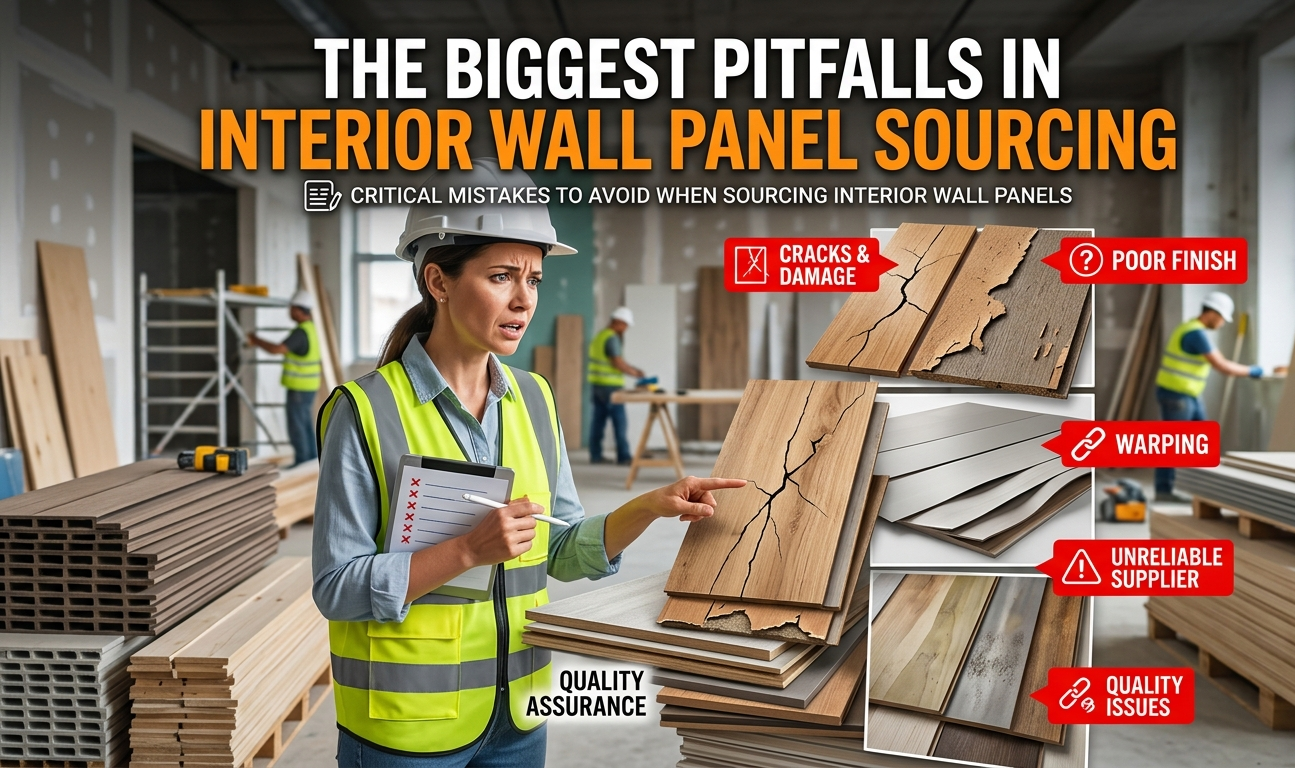
- Core Material Density Trumps Film Aesthetics: A high-quality surface film cannot salvage a brittle, low-density composite core. Panels with excessive calcium carbonate filler or unrefined recycled plastics will crack easily under minor on-site impacts.
- Insist on PUR Hot-Melt Lamination: Budget workshops often utilize cheap cold glue that breaks down when exposed to ambient moisture or temperature fluctuations, causing the decorative film to peel or bubble over time.
- Validate Tongue-and-Groove Calibration Real-Time: A deviation of even 0.3mm across a tongue-and-groove joint profile will compounds over a 50-meter hotel corridor, resulting in visible seams and halting the installation team.
- Mandate Rigid Horizontal Pallet Packaging: Because wall panels are commonly extruded to lengths of 2.8 meters to 3 meters, vertical or unsupported loading will cause the profiles to bow permanently during ocean transit.
For commercial real estate projects—such as high-density apartments, hospitality venues, and premium villa developments—engineered interior wall panels (WPC, SPC, and bamboo charcoal composites) have become the default choice to replace slow, multi-stage drywall finishing. They eliminate the need for plastering, sanding, and painting, significantly compressing the hand-over timeline.
Foshan is the primary industrial sourcing hub for these architectural products, housing advanced co-extrusion facilities and film-lamination plants. However, because the market is filled with varying production tiers, overseas buyers often encounter severe material defects that are only discovered when installation begins on-site.
Understanding the specific technical pitfalls in wall panel procurement allows you to mitigate structural and financial risks before paying a factory deposit.
Why Does Selecting Panels Solely by Catalog Swatches Cause On-Site Structural Failure?
The most frequent mistake in bulk procurement is signing off on a panel order based entirely on a small 10cm hand sample or a digital color catalog. The surface film dictates the visual pattern, but the underlying engineering of the core determines the product’s lifespan.
As shown in the engineering cross-section above, a high-performance panel relies on a stable balance between the core composite and structural backing layers. To cut production costs, low-tier factories increase the ratio of cheap calcium carbonate (chalk filler) and reduce the concentration of high-grade polymer binders. This makes the panel core heavy but highly brittle.
When these low-grade panels are cut on-site, the edges chip easily. Furthermore, if the internal cell walls of hollow fluted profiles are extruded too thin (less than 1.5mm for commercial settings), the face of the panel will puncture easily under everyday impacts from hotel luggage or cleaning carts.
How Do Incompatible Film Adhesives Create Severe Delamination Risks in High-Traffic Spaces?
Delamination occurs when the decorative surface film or wood veneer layer peels away from the composite core base. This failure typically appears several weeks after installation, driven by on-site climate changes or HVAC air conditioning use.
The root cause lies directly in the type of adhesive machinery used by the factory:
- The Pitfall (Water-Based Cold Glue): Many small workshops use basic cold-pressing laminators with water-based glues. These adhesives remain highly sensitive to temperature changes and environmental humidity. When the air conditioning is turned on inside a newly sealed building, the moisture shifts, causing the glue to fail and the film to bubble and lift at the joints.
- The Standard (PUR Hot-Melt Adhesive): High-traffic commercial projects require Polyurethane Reactive (PUR) hot-melt lamination. PUR glue undergoes a permanent chemical moisture-curing process that creates an irreversible bond between the film and the core. Once cured, it will not re-soften or release, even when exposed to high moisture levels or direct sunlight near large villa windows.
Why Are Incorrect Tongue-and-Groove Tolerances the Ultimate Killer of Fast Installation Schedules?
The main selling point of composite wall paneling is rapid, hidden-clip installation. The panels should slide together smoothly, hiding the fasteners and creating a flush, continuous surface.
| Joint Quality Tier | Joint Tolerance | On-Site Installation Impact | Visible Seam Results |
| Sub-Standard Workshop | Greater than ±0.4 mm | Panels must be manually forced together; clips bend | Heavy, uneven vertical lines; gaps collect dirt |
| Standard Commercial | ±0.15 mm to ±0.2 mm | Smooth sliding engagement; standard clip seating | Level, uniform surfaces across long wall runs |
When a factory runs their extrusion lines too fast, or uses worn-out calibration dies, the tongue-and-groove profiles warp slightly along their 3-meter span. If the gap is too tight, your installation crew will waste time manually shaving down the joints with utility knives on-site. If the gap is too loose, the panels will rock slightly within their clips, leaving a visible shadow line at every single junction.
What Shipping and Packing Protocols Are Frequently Ignored Until Panels Arrive Warped?
Wall panels are logistically unique due to their long, flat proportions. Because standard commercial ceilings range from 2.8 meters to 3 meters, the panels are manufactured to these precise lengths. This makes them highly susceptible to bending under their own weight if they are not stored correctly.
A common oversight occurs when a buyer leaves packaging decisions entirely up to the factory’s standard export team. To pack a container tightly, workers may stack loose cartons vertically or allow long panels to overhang unevenly across smaller pallets.
During 30 days of ocean transit through hot tropical shipping lanes, the plastic composites soften slightly. If they are stored under uneven pressure, they will take on a permanent bend or “banana warp.” Once a long panel develops a structural bow, it is almost impossible to force it completely flat against a wall grid during installation.
Why Choose HSY Sourcing for Your Wall Panel Procurement?
Based directly within Foshan’s major building materials and architectural manufacturing cluster, HSY Sourcing operates as your independent, on-the-ground project management and technical quality control division.
- Raw Material Verification: We do not rely on signed paper data sheets. Our quality control team goes directly to the raw mixing lines to check the ratio of polymer to filler, ensuring your panels possess the impact resistance required for commercial projects.
- Lamination Process Audits: We inspect the actual production machinery being used for your batch. We verify that the factory is running active PUR hot-melt lines at the correct operational temperatures, ensuring a permanent bond that prevents delamination.
- Millimeter Joint Calibration Checks: During the production run, our inspectors pull random panels directly from the cooling racks to test-fit the tongue-and-groove alignment with digital calipers. We ensure the interlocking tolerances stay within strict commercial limits before any packing is authorized.
- Heavy-Duty Logistics Supervision: We manage the consolidation of your panel assets at our local staging warehouse. We mandate and inspect the construction of heavy, fully enclosed horizontal wooden crates that support the entire 3-meter length of the cargo, preventing any bowing or edge-crushing during container loading.
Visit www.hsysourcing.com to submit your project’s architectural drawings and material schedules. Let our local engineers protect your interior investment from common manufacturing failures.
Frequently Asked Questions (FAQ)
Q: Why do some bamboo charcoal fiber panels smell bad when the shipping cartons are opened?
A: A strong, chemical smell indicates that the factory used low-grade solvent glues during lamination instead of compliant hot-melts. These VOCs outgas inside the sealed container during transit. For commercial projects, always specify certified E0 formaldehyde emission levels and PUR lamination to ensure your interior passes environmental safety handovers.
Q: Can we use standard wood-cutting saws to cut co-extrusion wall panels on the job site?
A: Yes, but you must use high-tooth-count carbide saw blades (typically 80 to 120 teeth). Low-tooth blades spin too coarsely and will tear or melt the composite core edges and chip the decorative face film, creating ragged joints that cannot be masked by standard corner trims.
Q: How do we determine the correct panel thickness for a high-density apartment project?
A: For standard flat walls over a flat sub-frame, a minimum thickness of 5mm to 8mm for solid bamboo charcoal fiber sheets is standard. For fluted or slatted profiles, ensure the outer wall face is at least 1.5mm to 2mm thick to prevent flexing or cracking when furniture or equipment is bumped against the wall.