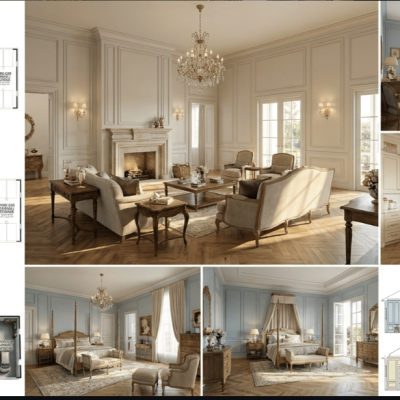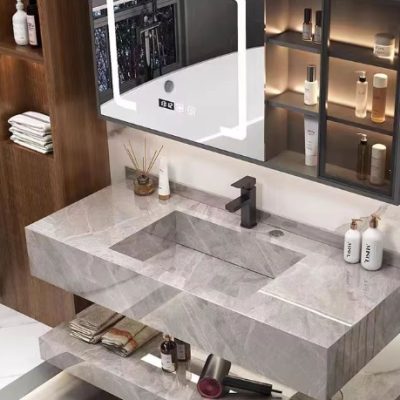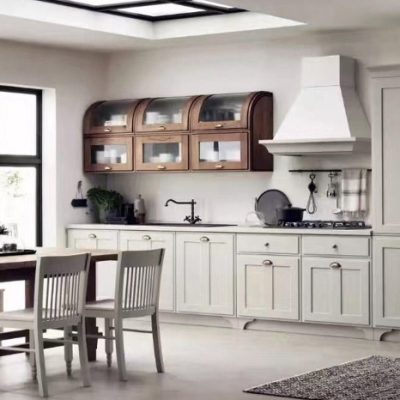


Building or renovating a high-end villa in the United States has become an increasingly complex financial equation. Custom millwork, large-format sintered stone, curtain wall systems, and high-performance aluminum doors frequently command premium prices in North America, with long supplier lead times.
Foshan, Guangdong—widely recognized as the global capital for building materials—offers an alternative: access to tier-one custom manufacturing, advanced material finishes, and direct factory pricing. However, importing materials across the Pacific for a single residential project carries operational risks. Without on-ground technical management, misaligned architectural drawings, non-compliant glazing, or freight damage can delay a build and erode cost savings.
This guide outlines how US homeowners, custom builders, and architects can systematically source luxury finishing materials from Foshan while maintaining quality control and meeting local building codes.
Key Takeaways
- High-End Customization: Foshan specializes in fully custom architectural packages—from 10-foot porcelain slabs to integrated whole-house millwork and thermally broken window systems.
- Compliance is Non-Negotiable: Wood products must meet EPA TSCA Title VI standards, glass requires SGCC certification, and window assemblies must match local NFRC thermal performance mandates.
- Shop Drawings Control Quality: Never approve a custom order based on a rendering. Every item requires millimeter-precise CAD/3D shop drawing sign-offs before production.
- Consolidation Saves Logistics Costs: Working with a local Foshan sourcing agent allows you to consolidate materials from 10+ specialized factories into unified 40ft HQ ocean containers.
Why Are American Homeowners Turning to Foshan for Villa Construction?
Foshan is not simply a high-volume manufacturing center; it is an integrated supply chain ecosystem for high-end architectural finishes. Within a 30-mile radius, specialized industrial districts produce distinct product lines:
- Shunde: High-end custom millwork, kitchens, wardrobes, and loose furniture.
- Nanzhuang & Shiwan: Large-format porcelain tiles, sintered stone, and sanitary ware.
- Nanhai: Custom structural aluminum, thermally broken sliding doors, and curtain walls.
For a custom US villa requiring $200,000 to $500,000+ in interior and exterior finishing materials, direct factory sourcing in Foshan typically delivers significant cost advantages over US retail or distributor channels. More importantly, it grants access to customization capabilities—such as book-matched slab layouts, concealed door frames, and integrated LED joinery—that standard US suppliers often treat as costly special orders.
What Are the Biggest Risks when Importing Building Materials to the United States?
Importing directly from overseas factories without intermediary oversight introduces specific technical and trade challenges:
- Dimensional Misalignment: A 5mm discrepancy in custom cabinet runs or rough window openings can cause significant jobsite rework in the US, where labor rates are high.
- Code Non-Compliance: Building inspectors in states like California, Florida, or Texas will reject imported glass, plumbing fixtures, or composite wood products if they lack required certification markings.
- Freight & Humidity Damage: Ocean transit exposes goods to sea air, moisture, and port handling. Poor crating or improper container packing leads to shattered stone slabs or warped cabinetry.
- Communication Friction: Subcontractors in Foshan and general contractors in the US operate under different technical conventions, units of measurement, and shop drawing standards.
How Do You Ensure Materials Meet US Building Codes and Performance Standards?
Before issuing production deposits, verify that your selected manufacturers comply with US structural, environmental, and safety standards:
- Wood & Millwork (Formaldehyde Compliance): All composite wood products (plywood, MDF, particleboard) must comply with EPA TSCA Title VI regulations and carry clear compliance labeling.
- Windows & Exterior Doors (Thermal & Safety): Tempered glass must hold SGCC (Safety Glazing Certification Council) marks. Frame assemblies should offer thermal breaks and match local U-factor and Solar Heat Gain Coefficient (SHGC) requirements defined by NFRC guidelines.
- Plumbing Fixtures: Faucets, shower valves, and drains must meet cUPC standards to satisfy local plumbing codes and backflow prevention rules.
- Porcelain & Marble Flooring: Floor tiles must meet ANSI A137.1 requirements for Dynamic Coefficient of Friction (DCOF ≥ 0.42 for wet areas) to avoid slip hazards.
A structured sourcing process requires factories to provide testing documentation upfront and burn required certification logos directly into glass panes or cabinet back panels.
How Does the Sourcing Process Work Step-by-Step for a Custom Villa?
Sourcing a full villa package requires a disciplined, multi-phase execution plan:
[Design & CAD Review] ➔ [Factory Selection & Samples] ➔ [Shop Drawing Approval]
                                                                │
[Dry-Lay & Pre-Assembly QC] ◄ [Production & Mid-Check] ◄──────┘
            │
            ▼
[Export Packaging] ➔ [Warehouse Consolidation] ➔ [Ocean Freight & Delivery]
1. Architectural Plan Translation & Bill of Quantities (BOQ)
Your architect’s interior plan sets are converted into a detailed material schedule specifying exact dimensions, core materials, hardware brands (e.g., Blum, Hettich, Sugatsune), and surface finishes.
2. Sample Sign-Off & Hardware Selection
Physical material swatches—wood veneers, lacquer chips, stone finishes, aluminum frame cross-sections—are shipped via express courier to the US homeowner or designer for tactile approval under natural jobsite lighting.
3. Factory Shop Drawing Approval
The factory generates millimetric CAD shop drawings for every item (kitchen islands, vanity units, door frames). Manufacturing begins only after the US architect or general contractor signs off on these detailed specs.
4. Mid-Production & Pre-Shipment Inspections
During manufacturing, inspectors perform on-site checks in Foshan. For custom cabinetry and natural stone, factories execute a dry-lay assembly—setting up the entire kitchen or laying out slab patterns on the workshop floor—to verify joinery tolerances, grain matching, and soft-close mechanisms prior to packing.
5. Export Packaging & Container Loading
Products are packed using ISPM 15 heat-treated solid wood crates, corner protectors, and vacuum moisture barriers. Heavy items (tiles/slabs) are weight-balanced at the bottom of the container, while millwork and lighting are secured above using industrial strapping to prevent shifting during ocean transit.
Why Choose HSY Sourcing as Your On-Ground Partner in Foshan?
Navigating Foshan’s vast manufacturing network remotely can be challenging. HSY Sourcing operates as your dedicated owner’s representative on the ground in Foshan, bridging the gap between US architectural vision and Chinese production line execution.
- Technical Engineering Oversight: We do not rely on standard factory promises. Our team reviews CAD shop drawings alongside your US construction plans to spot dimensional conflicts before production starts.
- Rigorous Quality Control (QC): We perform multi-stage physical inspections—raw material checks, mid-point audits, pre-shipment dry-fit testing, and container loading supervision. Detailed digital reports with high-resolution imagery and video are sent to you for final sign-off.
- Factory Negotiation & Clear Pricing: Based directly in Foshan, we leverage local market knowledge to secure genuine factory-direct pricing, clear payment terms, and strict lead-time commitments without hidden agent markups.
- Single-Point Warehouse Consolidation: We operate local warehousing to consolidate goods from multiple specialized manufacturers—tiles, millwork, aluminum doors, sanitary ware—into organized, fully loaded FCL (Full Container Load) shipments destined directly for your US port or jobsite.
- End-to-End Customs & Logistics Coordination: We manage the entire export chain, ensuring ISPM 15 timber certification, proper commercial invoices, HTS code classifications, and coordination with your US customs broker.
Frequently Asked Questions (FAQ)
Can I import materials for a single residential villa project, or do factories require commercial bulk orders?
Most high-end finishing factories in Foshan accept custom residential orders for a single villa, provided the overall project volume makes CAD drafting and custom setup viable. Working with a local sourcing agent like HSY Sourcing allows you to group smaller custom orders across multiple factories under one managed consolidation workflow.
How long does the process take from initial design to delivery at a US jobsite?
On average, allow 12 to 16 weeks total:
- 3–4 weeks: Technical translation, sample approval, and CAD shop drawing sign-offs.
- 4–6 weeks: Factory manufacturing and pre-shipment dry-lay inspection.
- 4–5 weeks: Ocean freight, port clearance, and final truck delivery to your US site.
Who handles customs clearance, import duties, and trucking in the United States?
You can work with your local US customs broker or utilize an all-inclusive shipping arrangement arranged through HSY Sourcing. Goods are cleared through US Customs and Border Protection (CBP) under appropriate Harmonized Tariff Schedule (HTS) codes, with all duties, tariffs, and harbor maintenance fees settled before final flatbed delivery to your jobsite.
What happens if an item arrives damaged or with incorrect dimensions?
By conducting mandatory pre-shipment inspections and dry-fit checks in Foshan, dimensional errors are caught and corrected while the product is still in the workshop. For transit protection, items are fully insured under ocean cargo policies, and critical spare parts (such as extra tiles, touch-up finish kits, or spare hardware) are included in the container shipment.