
Sourcing products from China has become common for many businesses. Importers, e-commerce sellers, and wholesalers often rely on Chinese factories because of the large manufacturing base and competitive pricing.
However, sourcing from another country also comes with risks. Buyers sometimes worry about supplier reliability, product quality, communication problems, or payment safety.
The good news is that many companies successfully import from China every year. The key is to follow a clear process and avoid rushing into orders.
This guide explains how overseas buyers source products from China safely, step by step.
Why Do Many Businesses Still Source Products from China?
Despite changes in global supply chains, China remains one of the largest manufacturing hubs in the world.
Many buyers source from regions such as:
- Shenzhen
- Dongguan
- Foshan
- Zhongshan
These areas have strong supply chains for electronics, home products, furniture, lighting, and many other categories.
For overseas companies, sourcing from China often means:
- Access to large production capacity
- Flexible manufacturing options
- Competitive pricing for bulk orders
But safe sourcing requires preparation.
What Should You Prepare Before Contacting Suppliers?
Many sourcing problems start before production even begins.
Before reaching out to suppliers, it helps to prepare clear information about the product you want.
For example:
- Product specifications
- Size or dimensions
- Materials
- Packaging requirements
- Quantity estimates
- Target price range
Providing clear information makes communication easier and helps suppliers give more accurate quotations.
This is an important step for buyers sourcing products from China for the first time.
Where Can You Find Reliable Suppliers in China?
There are several ways to find suppliers.
Common methods include:
Online B2B platforms
Many buyers search on platforms such as Alibaba or Made-in-China.
Trade shows
Large exhibitions such as the Canton Fair allow buyers to meet suppliers directly.
Local sourcing agents
Some buyers work with a China sourcing agent who helps find factories, communicate with suppliers, and manage orders.
Each method has advantages. The important part is to compare several suppliers instead of choosing the first one you find.
How Can You Verify a Chinese Supplier?
Supplier verification is one of the most important steps in safe sourcing from China.
Basic checks may include:
- Confirming the company registration
- Checking business licenses
- Reviewing product samples
- Asking about production capability
- Looking at previous export experience
Some buyers also request a factory visit or factory audit in China before placing large orders.
Verification does not eliminate all risks, but it helps avoid obvious problems.
Why Is Ordering Samples Important?
Before placing a bulk order, most experienced buyers request product samples.
Samples help you check:
- Product quality
- Materials
- Size accuracy
- Packaging
- Logo printing
Sometimes the first sample may need adjustments. This is normal in manufacturing.
Approving a clear sample helps ensure the factory understands the expected quality standard.
What Should Be Confirmed Before Production Starts?
Once a supplier is selected, it is important to confirm production details in writing.
Typical details include:
- Product specifications
- Packaging design
- Label requirements
- Production timeline
- Payment terms
Clear documentation helps avoid misunderstandings during production.
This step is often overlooked by new buyers, but it plays a big role in safe importing from China.
How Do Buyers Control Quality During Production?
Quality control is a key part of sourcing.
Many overseas buyers schedule pre-shipment inspection in China before the goods leave the factory.
Inspection usually checks:
- Product appearance
- Quantity
- Packaging
- Carton condition
- Label accuracy
The goal is to confirm that the goods match the agreed specifications before final payment is released.
Some buyers also use quality inspection services in China to reduce risk when they cannot visit the factory themselves.
Why Is Container Loading Supervision Sometimes Necessary?
Even if products pass inspection, mistakes can still happen during shipment.
Container loading supervision helps confirm:
- Correct cartons are loaded
- Quantity matches the packing list
- Cartons are stacked safely
- The container is clean and dry
This step is more common for larger orders or fragile products.
It adds another layer of control to the China sourcing process.
Should You Work with a China Sourcing Agent?
Some companies manage suppliers directly, while others work with a sourcing agent in China.
A sourcing agent may help with:
- Finding suppliers
- Visiting factories
- Negotiating with suppliers
- Arranging quality inspections
- Managing shipping coordination
For overseas buyers who cannot travel to China, having someone on the ground can make communication and problem-solving easier.
However, it is still important to stay involved and review decisions carefully.
What Is the Most Practical Way to Reduce Risk When Sourcing from China?
There is no completely risk-free sourcing method.
But most successful buyers follow a simple process:
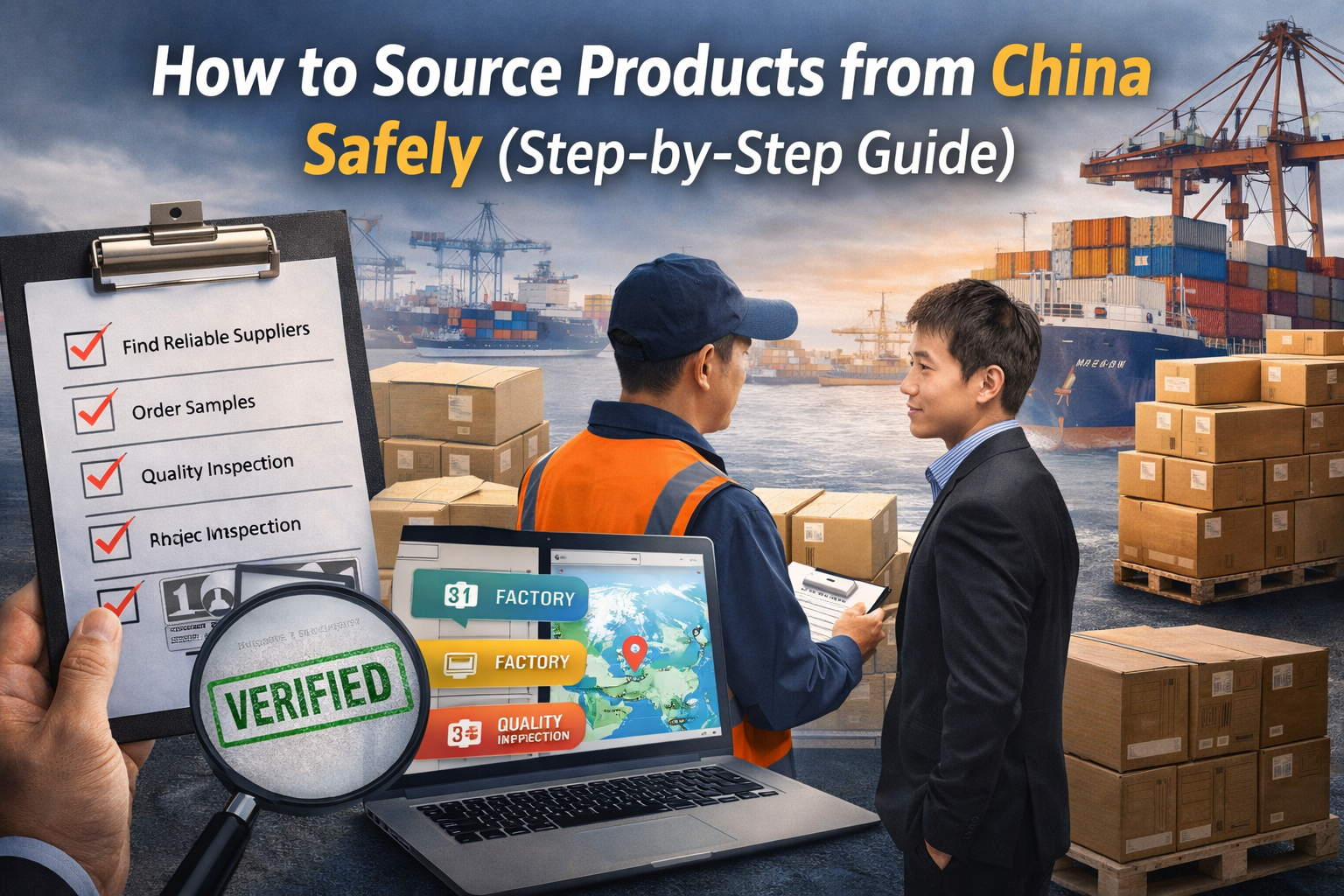
- Prepare clear product specifications
- Compare several suppliers
- Verify supplier information
- Approve product samples
- Confirm production details in writing
- Arrange quality inspection before shipment
This step-by-step approach helps buyers source products from China more safely and consistently.
Final Thoughts
Sourcing products from China can be very effective for many businesses, but it works best when the process is managed carefully.
The goal is not to eliminate every risk.
The goal is to reduce mistakes and improve communication.
By verifying suppliers, approving samples, and using proper quality control, overseas buyers can build stable sourcing relationships and manage imports from China with greater confidence.