
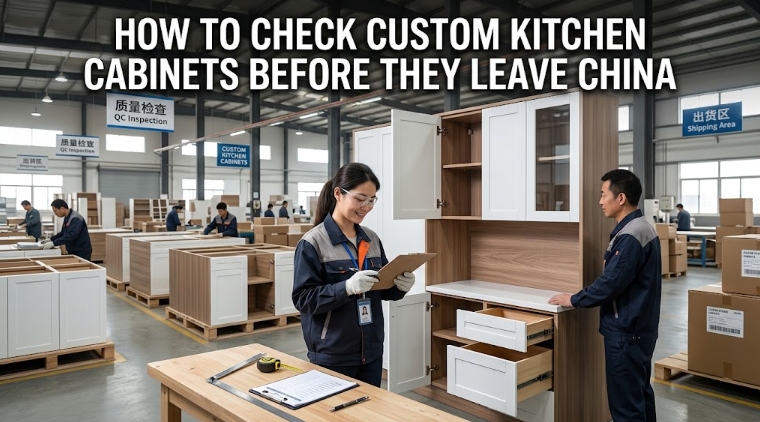
When you order a custom kitchen from China for a private villa or high-end home, the manufacturing phase feels like a black box. You have approved renders, signed off on elevations, and selected material swatches. But as the target dispatch date approaches, a very practical concern takes over: how do you verify that what the factory built actually matches what you ordered before it gets packed into a shipping container?
A custom kitchen is not a set of off-the-shelf furniture. It is a precise architectural system comprising carcass units, door panels, specialized hardware, integrated appliance cutouts, filler pieces, and stone countertops.
If a mistake is identified while the cabinets are still on the factory floor in China, it is an operational inconvenience that takes a few days to fix. If that same mistake is discovered after the container arrives at your job site thousands of miles away, it can derail your entire interior fit-out schedule, stall your local trades, and incur massive re-production and air-freight expenses.
This guide outlines how to execute a thorough pre-shipment inspection for custom kitchen cabinetry, ensuring that every dimension, finish, and hardware component is verified against approved documentation before departure.
Why Should You Check Custom Kitchen Cabinets Before They Leave China?
Inspecting custom cabinetry before it leaves the factory floor is fundamentally different from checking mass-produced furniture. In a high-end villa project, a kitchen layout relies on zero-tolerance spatial coordination.
A standard pre-shipment inspection for retail goods often involves pulling 5% of the boxes at random to check for surface scratches or gross shipping damage. For a custom kitchen, this approach is insufficient. A custom kitchen requires a systematic check against the master shop drawings to ensure the entire system fits together as designed.
Custom residential kitchens carry distinct risk factors:
- Interdependent Spatial Systems: A 10mm dimensional variance on an end filler panel can push an entire run of tall units out of alignment with your ceiling bulkheads or plumbing rough-ins.
- Component Complexity: A single villa kitchen often contains dozens of distinct cabinet boxes, custom decorative end panels, matching toe kicks, floating open shelves, internal pull-out accessories, and integrated appliance housings.
- Finish Continuity: Premium kitchens frequently utilize delicate lacquers, sequence-matched natural wood veneers, or specialized metallic PET finishes. A color mismatch or incorrect sheen level across adjacent door panels destroys the visual continuity of the design.
- Hardware Integration: High-end kitchens utilize concealed hinges, electronic push-to-open runners, heavy-duty pantry pull-outs, and pocket door systems. If mounting holes are misdrilled or hardware models are substituted, on-site adjustments can be exceptionally difficult.
Fixing a structural or finish discrepancy on a factory assembly floor in Foshan is straightforward. Once those panels are packed, crated, and shipped overseas, your leverage and your timelines evaporate.
What Should Be Confirmed Before the Factory Starts Production?
A thorough pre-shipment inspection is only as good as the baseline data used to evaluate the product. You cannot perform a meaningful inspection at the end of the manufacturing cycle if the project lacked rigorous specification control at the beginning.
Before a factory cuts a single sheet of board, four critical control elements must be finalized and signed off:
[1. Approved Shop Drawings] ──> [2. Physical Material Samples] ──> [3. Hardware Schedule] ──> [4. Appliance Specs]
                                                                                                    │
                                                                                                    ▼
                                                                                   [Production & Pre-Shipment Inspection]
1. Version-Controlled Shop Drawings
Never rely on initial interior design renders or conceptual floor plans for inspection. The factory must produce detailed technical shop drawings that show top views, front elevations, section cuts, panel thicknesses, carcass joinery details, and exact millimeter dimensions. The homeowner, interior designer, or project manager must explicitly sign off on the final drawing revision (e.g., Revision C). This exact drawing set becomes the legally binding reference during physical inspection.
2. Retained Control Samples
Digital images on a computer screen cannot establish color or texture accuracy. Prior to mass production, the factory must send physical sample swatches of the door panels (lacquer, veneer, laminate, or PET) and countertop materials for sign-off. The factory keeps one half of the signed sample swatch, and the homeowner or sourcing representative keeps the other. During pre-shipment inspection, the finished doors are visually compared against this physical control sample under neutral lighting.
3. Detailed Hardware Schedule
The quotation and contract must explicitly list the exact brand, series, and finish of all functional hardware. For instance, instead of writing “soft-close hinges,” the specification should state “Blum Clip Top Blumotion 110-degree hinges in Onyx Black.”
4. Verified Appliance Specification Sheets
Custom kitchens built around integrated appliances—such as panel-ready Miele refrigerators, Gaggenau ovens, or flush-mounted induction cooktops—require the exact appliance specification sheets provided by the manufacturers. Factories must build cutouts according to the manufacturer’s official technical cut sheets, not estimated dimensions.
How Do You Check the Cabinets Against the Approved Drawings?
During the pre-shipment inspection, every manufactured cabinet box and loose panel must be cross-referenced with the approved shop drawings.
                                  SHOP DRAWING CHECKLIST
┌─────────────────────────┬───────────────────────────────┬─────────────────────────────┐
│ Category                │ Practical Check Point         │ Common Deviation Risk       │
├─────────────────────────┼───────────────────────────────┼─────────────────────────────┤
│ External Dimensions     │ Total Width, Height, Depth    │ Miscalculating back-gaps    │
├─────────────────────────┼───────────────────────────────┼─────────────────────────────┤
│ Appliance Cutouts       │ Clear opening inner dimensions│ Missing ventilation gaps    │
├─────────────────────────┼───────────────────────────────┼─────────────────────────────┤
│ Fillers & End Panels    │ Oversize allowances           │ Cut too short at factory    │
├─────────────────────────┼───────────────────────────────┼─────────────────────────────┤
│ Door & Drawer Configs   │ Swing direction, drawer count │ Reversed door hinge sides   │
└─────────────────────────┴───────────────────────────────┴─────────────────────────────┘
When verifying cabinets against shop drawings, inspectors focus on several core areas:
- Carcass Dimensions: Measure the outer width, depth, and height of individual cabinet carcasses. Verify that wall unit depths account for back-mounting rails and door panel thicknesses.
- Door Swing and Opening Orientations: Verify whether doors are hinged on the left or right as specified on the elevation sheets. Reversing a hinge orientation on site often leaves pre-drilled holes exposed or interferes with adjacent walls.
- Drawer Bank Layouts: Ensure drawer box heights match the front panel divisions shown on the shop drawings, especially for internal hidden drawers (inner drawers behind a single deep drawer front).
- Fillers and Scribe Panels: In custom villa installations, filler panels are usually supplied slightly oversized to allow the local installer to scribe the panel to uneven site walls or ceilings. Confirm that fillers have been supplied with the agreed-upon trimming allowance rather than cut to net dimensions.
- Toe Kick Heights and Recesses: Check the height of the cabinet leg levellers and the recess depth of the toe kick rail to ensure continuity for under-cabinet lighting or continuous plinth runs.
How Should You Check Cabinet Materials and Finishes?
Evaluating finishes requires a systematic review of material integrity, color consistency, and edge execution.
                          FINISH & MATERIAL EVALUATION PROTOCOL
  ┌───────────────────────────────────────────────────────────────────────────────────┐
  │ 1. MATCH AGAINST CONTROL SAMPLE                                                   │
  │    Place the physical approved swatch directly onto finished door panels under    │
  │    5000K (neutral daylight) lighting. Check color, sheen level, and texture.      │
  └────────────────────────┬──────────────────────────────────────────────────────────┘
                           │
                           ▼
  ┌───────────────────────────────────────────────────────────────────────────────────┐
  │ 2. GRAIN & PATTERN CONTINUITY                                                     │
  │    Lay out adjacent veneer or patterned panels sequentially. Ensure wood grain    │
  │    or stone veining flows smoothly across adjacent doors and drawer fronts.        │
  └────────────────────────┬──────────────────────────────────────────────────────────┘
                           │
                           ▼
  ┌───────────────────────────────────────────────────────────────────────────────────┐
  │ 3. EDGE BANDING & SUBSTRATE INSPECTION                                            │
  │    Check panel borders for visible glue lines, sharp micro-chips, or peeling.     │
  │    Inspect unexposed cutouts to confirm correct substrate (e.g., PUR edge, MFMDF).│
  └───────────────────────────────────────────────────────────────────────────────────┘
Carcass and Door Substrates
Verify that the underlying board matches the contract specification. High-humidity areas (such as sink cabinets or tropical villa environments) often specify moisture-resistant plywood or high-density green-core MDF, whereas standard dry wall units may use melamine-faced particleboard (MFC). Inspect unexposed board edges or sink cutouts to confirm the correct substrate was used throughout.
Paint and Lacquer Sheen
If you ordered a 10% ultra-matt polyurethane lacquer finish, confirm that the doors do not exhibit a semi-gloss sheen. Look across the door surface at an angle under directional light to detect “orange peel” texture, dust inclusions, sagging, or uneven coat coverage along the panel edges.
Veneer Grain Matching
For high-end villa kitchens featuring natural wood veneer (such as smoked oak or American walnut), check whether the factory executed the agreed grain-matching style (e.g., book-matched, slip-matched, or continuous horizontal grain across adjacent drawer fronts). Natural wood exhibits inherent color variations, but adjacent doors on a single cabinet run should share harmonious tone and grain structure.
Edge Banding Quality
Examine the perimeter of all doors and carcass panels. Premium manufacturing utilizes PUR (Polyurethane) adhesive or Laser/Zero-Joint edge banding. Inspect for visible glue lines, glue squeeze-out, sharp or un-trimmed edge tape, or micro-chipping along the board edges.
How Do You Check Cabinet Doors, Drawers, and Hardware?
Functional hardware dictates the daily operational feel of a luxury kitchen. A visual inspection alone will not reveal whether a concealed guide or lift mechanism is functioning properly.
                 HARDWARE INSPECTION STEPS

   [1. Brand & Model Check]
       └── Verify physical laser-etched logos against specs (e.g., Blum, Grass, Salice).

   [2. Cycle & Alignment Test]
       └── Open/close doors and drawers 3–5 times. Check soft-close dampening response.

   [3. Gap & Reveal Measurement]
       └── Ensure uniform 2mm–3mm reveals between doors using a feeler gauge/spacer.

   [4. Internal Weight Capacity]
       └── Inspect mounting brackets, drawer base panel thickness, and shelf support pegs.
1. Hardware Brand and Model Verification
Check the physical hardware stamps on hinge arms, drawer runners, and lift systems. Ensure the factory installed the exact brand specified in your contract (such as Blum, Grass, Salice, or Kesseböhmer) rather than unbranded local alternatives.
2. Door Alignment and Reveal Consistency
Inspect the gaps (revealed lines) between adjacent cabinet doors and drawer fronts. On a well-manufactured kitchen, reveals should be consistent (typically 2mm to 3mm) across the entire run. Check that hinges have been preliminary adjusted on the factory testing floor so doors hang plumb and flat without rubbing against adjacent panels.
3. Drawer Runner Operation
Extend each drawer box fully. Check for smooth, silent glides without side-to-side racking or binding. Push the drawer gently to test the soft-close dampening mechanism. The drawer should retract smoothly and seal quietly against the carcass frame without bouncing back.
4. Special Mechanisms and Pull-Outs
Test all dynamic components, such as tall pantry pull-out towers, corner LeMans units, electronic servo-drive systems, or bi-fold overhead lift doors. Ensure all mechanical tension settings are properly calibrated and that internal baskets or trays clear the door frame when pulled forward.
How Do You Check the Kitchen for Missing or Incorrect Parts?
The most common failure in custom kitchen exporting is not broken doors; it is missing hardware, un-cut filler panels, or forgotten internal shelves. Because a custom kitchen is shipped as a complete kit, a single missing specialized bracket can hold up your local installation team for weeks.
To prevent this, the inspection must audit the shipment against a comprehensive master packing list itemized by cabinet box number:
                            MASTER COMPONENT AUDIT
┌─────────────────────────────┬──────────────────────────────────────────────────────────┐
│ Component Group             │ Items to Verify Before Packing                           │
├─────────────────────────────┼──────────────────────────────────────────────────────────┤
│ Structural Boxes            │ Carcasses, fixed shelves, adjustable shelf panels        │
├─────────────────────────────┼──────────────────────────────────────────────────────────┤
│ External Panels             │ Door fronts, drawer fronts, end panels, island backings  │
├─────────────────────────────┼──────────────────────────────────────────────────────────┤
│ Architectural Trim          │ Toe kicks, plinths, top pelmets, wall fillers, corner trims│
├─────────────────────────────┼──────────────────────────────────────────────────────────┤
│ Loose Hardware & Fixings    │ Shelf support pins, legs, connector bolts, handles/knobs  │
├─────────────────────────────┼──────────────────────────────────────────────────────────┤
│ Specialized Accessories     │ Cutlery trays, spice racks, waste bins, under-sink mats │
└─────────────────────────────┴──────────────────────────────────────────────────────────┘
The inspection team should mark off each item physically as it is checked and staged for packaging. Never rely on the factory’s verbal assurance that “everything inside the boxes is complete.”
How Should Appliance Openings and Built-In Areas Be Checked?
An ill-fitting appliance cutout can cause significant problems on a job site. If a high-end integrated refrigerator or steam oven does not slide cleanly into its housing, modifying finished cabinet panels in a private home creates dust, noise, and potential cosmetic damage.
1. Verification of Internal Clear Dimensions
Measure the internal width, clear depth, and clear height of all appliance housings using a digital tape measure. Compare these physical measurements against the appliance manufacturer’s clearance drawings. For built-in ovens and microwave combinations, ensure the internal shelf cutouts accommodate rear power cable routing and plug head clearances.
2. Ventilation Provisions
High-end built-in appliances—particularly integrated refrigeration units and induction hobs—require specific airflow channels to function safely and preserve manufacturer warranties. Verify that the factory has pre-milled ventilation cutouts in the toe kicks, base carcass platforms, and rear ventilation chimneys according to the appliance specifications.
3. Integrated Door-on-Door / Sliding Hinge Alignment
For panel-ready integrated appliances, check the factory-supplied custom door panel dimensions. Verify that the front panel matches the surrounding cabinet door heights and that mounting holes or fixing brackets line up with the appliance front panel templates.
What Should You Check for Physical Damage or Production Defects?
Visual quality control requires systematic inspection of every panel under proper lighting before the items are wrapped in protective film.
                          VISUAL & DEFECT CHECK

         [SURFACES] ─────────> Check for scratches, dents, or sheen unevenness.
         [EDGES]    ─────────> Inspect corner joints for chipping or loose edge tape.
         [DRILLING] ─────────> Check for blow-outs around pre-drilled hinge/shelf holes.
         [CLEANLINESS] ──────> Ensure surfaces are free of excess glue or shop dirt.
Inspect for common defects, including:
- Surface Scratches and Dents: Scrutatize high-gloss lacquers, veneers, and dark PET panels for handling scratches or impact marks caused during factory movement.
- Edge Chipping: Check the rear edges of panels where industrial CNC routing or saw blades enter and exit board material.
- Drilling Blow-outs: Examine pre-drilled shelf support holes and hinge cup pockets. Ensure the drill bits did not chip or blow out the surrounding laminate face.
- Adhesive Residue: Check panel faces near edge-banded boundaries for excess hot-melt or PUR adhesive residue, which can attract dirt and prove difficult to remove after installation.
How Should You Check Packaging Before the Cabinets Leave China?
Poor packaging can ruin a well-manufactured kitchen during ocean freight transit. Overseas container shipping subjects freight to vibration, ambient humidity changes, and multiple handling stages.
                         PROTECTIVE PACKAGING STANDARDS
┌───────────────────────────────┬──────────────────────────────────────────────────────────┐
│ Packaging Element             │ Requirement for High-End Export                          │
├───────────────────────────────┼──────────────────────────────────────────────────────────┤
│ Surface Protection            │ PE foam or protective film on all painted/lacquered faces│
├───────────────────────────────┼──────────────────────────────────────────────────────────┤
│ Corner Protection             │ Heavy-duty plastic or reinforced honeycomb corner caps   │
├───────────────────────────────┼──────────────────────────────────────────────────────────┤
│ External Outer Box            │ Minimum 5-ply corrugated cardboard (7-ply preferred)     │
├───────────────────────────────┼──────────────────────────────────────────────────────────┤
│ Delicate Items (Glass/Stone)  │ Fully enclosed Fumigated Wooden Crates / Plywood Boxes   │
├───────────────────────────────┼──────────────────────────────────────────────────────────┤
│ Marking & Identification      │ Clear label with Cabinet ID, Room Name, and Drawing Ref  │
└───────────────────────────────┴──────────────────────────────────────────────────────────┘
When checking packaging:
- Verify Corner Protection: Cabinet box corners are vulnerable to drops. Ensure hard plastic edge protectors or thick honeycomb paper corner caps are fitted under outer cartons.
- Moisture Barriers: For solid wood, veneer, or painted kitchens, ensure components are wrapped in plastic sheeting with silica gel desiccant packs inside boxes to absorb humidity changes during sea transit.
- Carton Labeling and Room Mapping: Every carton must bear a clear label printed in English detailing the project name, room destination (e.g., Main Kitchen vs. Prep Kitchen), Cabinet Box ID Number (matching the floor plan), and component description. This allows your local installation team to unpack items logically without opening every box at once.
What Photos and Inspection Records Should You Request Before Shipment?
If you are an overseas homeowner managing a villa build remotely, you need clear documentation before authorizing final factory payments and container loading.
Request a structured digital inspection report that includes:
                            INSPECTION DOCUMENTATION DOSSIER
┌──────────────────────────────┬───────────────────────────────────────────────────────────┐
│ Document / Photo Requirement │ Purpose / What It Proves                                  │
├──────────────────────────────┼───────────────────────────────────────────────────────────┤
│ Overview Dry-Fit Photos      │ Shows full kitchen or key island runs assembled in shop  │
├──────────────────────────────┼───────────────────────────────────────────────────────────┤
│ Dimensional Measurement Shots │ Tape measure overlay showing width/depth/height of boxes  │
├──────────────────────────────┼───────────────────────────────────────────────────────────┤
│ Material & Finish Close-Ups  │ High-res photos comparing door faces to signed samples    │
├──────────────────────────────┼───────────────────────────────────────────────────────────┤
│ Hardware & Accessory Shots   │ Clear views of installed hinge brands, drawer guides, bins│
├──────────────────────────────┼───────────────────────────────────────────────────────────┤
│ Crate & Carton Label Shots   │ Legible photos of package markings, warnings, box numbers │
├──────────────────────────────┼───────────────────────────────────────────────────────────┤
│ Signed Defect & Action Log   │ List of minor issues found and photos proving rework done │
└──────────────────────────────┴───────────────────────────────────────────────────────────┘
What If You Find a Problem During the Pre-Shipment Inspection?
Discovering an error during inspection is not a failure of the process; it is proof that the quality control system worked. When a discrepancy is identified, follow a structured resolution protocol:
[Issue Identified] ──> [Record & Photo] ──> [Compare to Contract Specs]
                                                      │
                                                      ▼
[Authorize Shipment] <── [Re-Inspect Rework] <── [Factory Reworks Item]
- Document and Categorize: Take photos, log the exact cabinet ID, and record the precise deviation from the approved drawing or sample.
- Determine Severity:
- Minor Cosmetic Issue: A small scratch on an unexposed carcass back-panel (may require simple touch-up).
- Correctable Dimensional Issue: An adjustable shelf cut slightly too wide (can be re-trimmed in minutes at the factory).
- Major Specification Deviation: Incorrect door finish color, wrong wood species, or misdrilled integrated refrigerator housing (requires panel re-manufacture).
- Issue a Corrective Action Request: Communicate the issue to the factory in writing. Request a clear re-manufacture timeline before the shipment is cleared.
- Re-Inspection: Do not allow the container to be loaded until photographic or physical proof shows that the affected panels have been correctly re-manufactured and verified.
Should the Kitchen Be Fully Assembled During Inspection?
Homeowners often ask if the factory can fully assemble the entire kitchen before shipping. The answer depends on production methodologies and transit packaging constraints.
                           ASSEMBLY & CHECKING METHODS
┌──────────────────────────────────────┬──────────────────────────────────────────────────┐
│ Method A: Full Dry-Fit Assembly      │ Method B: Flat-Pack / Component Inspection       │
├──────────────────────────────────────┼──────────────────────────────────────────────────┤
│ • Cabinets fully set up in factory   │ • Components inspected individually on tables    │
│ • Island & tall runs aligned         │ • Carcasses left knocked-down (KD) or pre-boxed  │
│ • Highest accuracy, catches reveals  │ • Faster inspection; space-efficient             │
│ • Requires large factory floor space │ • Harder to check multi-cabinet alignment gaps   │
└──────────────────────────────────────┴──────────────────────────────────────────────────┘
For high-end custom villa kitchens, a Dry-Fit Assembly of major cabinetry runs—especially complex island units, integrated appliance walls, or custom joinery features—is highly recommended. In a dry-fit assembly, the factory temporarily sets up the carcasses and hangs the doors on the factory floor. This provides the ultimate check for door alignment, reveal consistency, continuous grain matching, and countertop support levels before items are disassembled and packed.
Can a Homeowner Inspect Custom Kitchen Cabinets Remotely?
While a homeowner can review high-resolution photos, dimensional measurement videos, and live video walkthroughs, remote inspection has inherent limitations.
- Color Perception: Camera sensors, lighting conditions, and computer screens distort color tones and sheen levels.
- Tactile Quality: You cannot judge the feel of a soft-close runner, the smooth edge of a lacquer finish, or the solid heft of a carcass panel through a video screen.
- Spatial Scale: Subtle alignment errors or small bowing across long door panels can be hard to spot on a mobile camera screen.
If you cannot travel to China personally, having a trusted, local third-party representative or professional sourcing consultant perform an in-person physical inspection on the factory floor provides a level of verification that video calls cannot replicate.
Practical Pre-Shipment Inspection Checklist
Use this practical checklist prior to authorizing container loading for your custom kitchen cabinetry:
1. Drawings & Dimensions
- [ ] Final approved shop drawing set (signed revision) on hand.
- [ ] Carcass overall width, depth, and height measured against drawings.
- [ ] Wall unit mounting rail depths and heights verified.
- [ ] Filler panels and scribe pieces confirmed with trimming allowances.
2. Materials & Finishes
- [ ] Door panel color and sheen checked against signed physical control sample.
- [ ] Veneer grain direction and matching style confirmed across adjacent runs.
- [ ] Carcass substrate checked (e.g., moisture-resistant core for sink units).
- [ ] Edge banding quality inspected for clean joint lines and zero glue bleed.
3. Hardware & Accessories
- [ ] Hinge and runner brand/model logos checked against hardware schedule.
- [ ] Soft-close mechanism function tested on all drawers and doors.
- [ ] Door reveals and gaps measured for uniform 2mm–3mm spacing.
- [ ] Internal accessories (pull-outs, bins, cutlery trays) installed and tested.
4. Appliance Integration
- [ ] Cutout inner dimensions verified against appliance technical specification sheets.
- [ ] Ventilation channels milled into toe kicks and rear platforms.
- [ ] Panel-ready integrated door panel dimensions checked against appliance jigs.
5. Packaging & Identification
- [ ] Corner protection caps installed on all boxed units.
- [ ] Heavy-duty 5-ply or 7-ply cardboard outer cartons used throughout.
- [ ] Glass/stone items packed in solid, fumigated wooden crates.
- [ ] Every carton clearly labeled with Project Name, Room, Cabinet ID, and Item Description.
Common Risks Found During Inspection
| What to Check | Common Problem Found | Why It Matters | Corrective Action |
| Dimensions | Cabinet width off by 10mm–15mm | Will not fit between structural walls on site | Factory re-cuts or re-builds carcass unit before packing |
| Finish & Color | Sheen level too glossy vs sample | Kitchen faces will look mismatched in natural light | Factory re-sprays door fronts to match approved swatch |
| Hardware | Unbranded runners substituted | Poor glide action, premature failure, no warranty | Factory replaces runners with specified brand |
| Appliance Cutout | Refrigerator depth clearance too shallow | Integrated fridge protrudes past front cabinet doors | Factory adjusts rear panel position or rebuilds housing |
| Quantities | Missing toe kicks or end filler panels | Installation halts on site while waiting for air freight | Audit packing list and pack missing items before sealing |
| Surface | Micro-chipping on lacquer door edges | Cosmetic flaw that deteriorates over time | Factory touches up or re-lacquers affected panel |
| Packaging | Thin, single-wall cardboard boxes | High risk of crushed corners during ocean shipping | Upgrade to 5-ply/7-ply cartons with hard corner covers |
The Difference Between Factory Inspection and Site Installation
A comprehensive pre-shipment inspection verifies that the factory manufactured the kitchen correctly according to the approved shop drawings and specifications. However, factory quality control does not replace on-site installation management.
Pre-shipment inspection confirms:
- What was built matches the signed specifications.
- All components, doors, panels, and hardware are accounted for and packed.
- Surface finishes and mechanical hardware operate correctly at the factory.
Pre-shipment inspection cannot account for:
- Unforeseen job site variances (e.g., walls that are out of plumb, floors that are not level, or rough-ins moved after drawings were signed).
- Incorrect assembly techniques executed by local trades.
- Local plumbing or electrical building code compliance in your home country.
Maintaining clear boundaries between factory manufacturing verification and site installation management ensures realistic project management and smooth execution on site.
Realistic Villa Case Example
Consider an overseas homeowner building a custom private villa who sourced their kitchen cabinetry from a manufacturer in Foshan. The design specified a 4-meter central island, a run of tall units with integrated refrigeration, a hidden pantry, and custom-stained smoked oak veneer doors paired with matt lacquer wall cabinets.
During the pre-shipment inspection at the factory, the inspection team conducted a dry-fit setup of the tall cabinet run and island. Two issues were identified:
                            PRE-SHIPMENT DEFECT DISCOVERY
┌──────────────────────────────────────┬──────────────────────────────────────────────────┐
│ Issue Found During Factory Inspection│ Resulting Action Taken Before Shipment           │
├──────────────────────────────────────┼──────────────────────────────────────────────────┤
│ 1. Refrigerator Housing Depth Short  │ Factory adjusted rear backing panel on site,     │
│    Internal depth was 560mm instead   │ restoring the required 600mm clear depth for     │
│    of the required 600mm spec.       │ flush appliance integration within 48 hours.     │
├──────────────────────────────────────┼──────────────────────────────────────────────────┤
│ 2. End Filler Panels Mismatched      │ Factory re-stained the filler panels to match   │
│    Tall end fillers were stained in   │ the smoked oak control sample before packing.    │
│    a noticeably lighter oak tone.    │                                                  │
└──────────────────────────────────────┴──────────────────────────────────────────────────┘
Because these issues were discovered on the factory floor in Foshan, both fixes were completed within three days at zero additional freight cost, without disrupting the overall project timeline. Had the cabinets shipped uninspected, correcting the refrigerator housing and re-staining the filler panels on the job site overseas would have caused weeks of installation delays and expensive local carpentry modifications.
The Foshan Advantage for Villa Procurement
Foshan, located in Guangdong Province, is one of the world’s premier manufacturing hubs for custom residential interiors, housing vast clusters of specialized cabinetry, architectural joinery, stone, ceramic, and hardware suppliers.
                      FOSHAN BUILDING MATERIAL CLUSTER

      ┌────────────────────────────────────────────────────────┐
      │               FOSHAN PROCUREMENT HUB                   │
      ├───────────────┬────────────────────────┬───────────────┤
      │  Custom       │  Natural & Sintered    │ Architectural │
      │  Cabinetry    │  Stone Countertops     │  Hardware     │
      └───────┬───────┴───────────┬────────────┴───────┬───────┘
              │                   │                    │
              └───────────────────┼────────────────────┘
                                  ▼
                [Warehouse Receiving & Consolidation]
                                  │
                                  ▼
                [Single Villa Container Ocean Freight]
For an overseas private villa owner, the value of sourcing from Foshan extends beyond individual factory capabilities. The core advantage lies in cluster coordination. A custom kitchen often requires pairing cabinetry from one factory with custom sintered stone countertops from another, specialized architectural hardware from a third, and matching interior door finishes from a fourth.
Working within a centralized manufacturing cluster allows for efficient sample coordination, cross-factory material matching, centralized warehouse receiving, pre-shipment quality control, and consolidated container shipping—ensuring all interior elements for a high-end villa arrive together.
Key Takeaway
A successful pre-shipment inspection for custom kitchen cabinetry goes beyond a surface-level check for scratches. It is a systematic verification process confirming that every manufactured box, panel, hardware component, and cutout matches your approved shop drawings, signed material swatches, and appliance specifications before leaving China. Identifying and correcting dimensional or finish deviations on the factory floor is simple; doing so after the container arrives overseas is costly and time-consuming.
Frequently Asked Questions
What should I check before shipping kitchen cabinets from China?
You should verify that overall cabinet dimensions, door swing orientations, material finishes, edge banding, hardware brands, appliance cutouts, and total item quantities match your signed shop drawings and control samples. Additionally, check that cartons are labeled clearly and packaged with adequate corner protection.
Can I inspect custom kitchen cabinets remotely?
You can review high-resolution photo dossiers, dimensional measurement videos, and live video walkthroughs provided by an inspection team. However, remote inspection cannot fully replace a physical, in-person check for subtle color variations, lacquer sheen uniformity, and tactile hardware performance.
Should kitchen cabinets be checked against shop drawings before shipment?
Yes. Shop drawings (Revision signed by the designer/owner) are the primary reference for factory inspection. Every cabinet box width, depth, height, reveal line, and filler size should be verified directly against these technical drawings.
What documents should I request before the cabinets leave China?
Request a complete pre-shipment inspection dossier containing overall dry-fit assembly photos, high-resolution finish close-ups, hardware brand verification photos, dimensional measurement shots, a fully audited packing list, and carton labeling photos.
How do I check whether the cabinet finish matches my approved sample?
The physical signed control sample retained during the pre-production phase must be placed directly against the manufactured door panels under neutral lighting (5000K daylight equivalent) to compare color tone, grain pattern, and sheen level.
What happens if I find a problem during pre-shipment inspection?
Document the discrepancy with photos and reference it against the signed specifications. Issue a formal Corrective Action Request to the factory. The factory must re-manufacture, adjust, or refinish the affected parts and provide photographic or physical proof of correction prior to container loading.
Should I inspect kitchen cabinets before they are packed?
Yes. Cabinets and loose panels must be inspected before they are wrapped in protective film and sealed in cardboard boxes. Inspecting unpacked items allows you to examine panel faces, edge banding, and carcass joinery directly.
Can a China sourcing agent inspect my kitchen cabinets?
Yes. A local sourcing agent based in China can act as your on-site representative. They visit the factory, cross-reference manufactured goods against your approved drawings and samples, document findings, coordinate necessary factory re-work, and oversee warehouse receiving and container loading.
Is pre-shipment inspection enough to guarantee the kitchen will fit?
Pre-shipment inspection guarantees that the factory built the kitchen accurately according to the approved shop drawings. It does not guarantee a fit if the initial site measurements were inaccurate or if on-site walls, floors, or plumbing points deviate from the architectural plans.
What is the difference between factory inspection and installation inspection?
Factory inspection verifies that manufactured products match approved technical drawings, specifications, and quality standards before leaving China. Installation inspection happens on the job site to check how local trades assemble, level, scribe, and mount those cabinets onto the physical building structure.
Why Choose HSY Sourcing for Custom Villa Kitchen Procurement?
HSY Sourcing is a Foshan-based sourcing and procurement partner specializing in customized building materials and interior products for overseas private homeowners, villa builds, and high-end residential projects. We are not a cabinet manufacturer. Instead, we act as your independent, on-the-ground project coordinator in China.
For an overseas homeowner building a custom villa, managing factory communication, technical drawing sign-offs, material sample matching, and quality control across multiple Chinese suppliers can be challenging. HSY Sourcing bridges that gap by providing dedicated local execution:
- Supplier Evaluation & Matching: Identifying established Foshan cabinetry and building material factories capable of meeting high-end residential specifications.
- Specification & Sample Coordination: Ensuring physical control samples, hardware schedules, and appliance specification sheets are signed off and retained prior to manufacturing.
- Shop Drawing Communication: Reviewing technical CAD/3D shop drawings with factory engineering teams to prevent spatial or dimensional misunderstandings.
- On-Site Pre-Shipment Inspection: Conducting physical inspections on the factory floor in Foshan to check dimensions, finishes, hardware operation, cutouts, and packaging against approved project documents.
- Warehouse Consolidation & Export Coordination: Receiving inspected cabinetry at our Foshan warehouse, consolidating items with your other villa building materials (such as stone, sanitary ware, or windows), and managing export loading.
We do not replace your interior designer, architect, or local installation team. Instead, we ensure that what you approved on paper is what actually gets loaded into the shipping container—protecting your investment and reducing procurement risk before goods leave China.
Related Guides & Resources
- How to Compare Custom Kitchen Quotes from China for a Luxury Home
- From Kitchen Design to Production: How Chinese Factories Manufacture Custom Villa Kitchens
- Can Chinese Factories Work Directly From Your Villa Floor Plans and 3D Designs?
- What Should You Specify When Ordering Custom Kitchen Cabinets from China?
- How to Manage 5–10 Chinese Factories for One Luxury Villa
- What Does a China Sourcing Agent Actually Do for a Villa Owner?