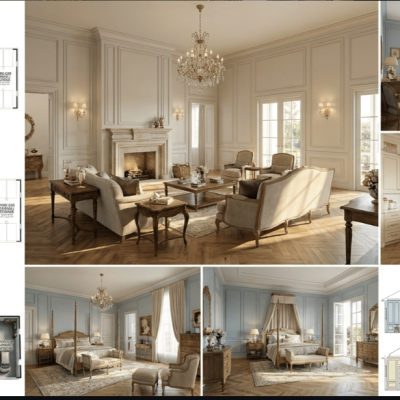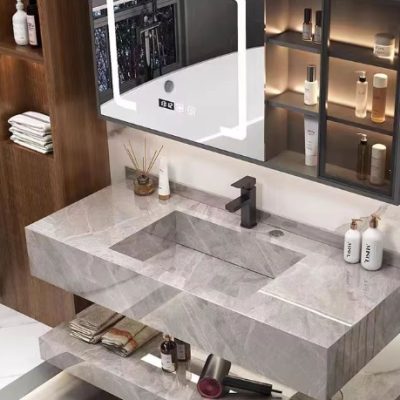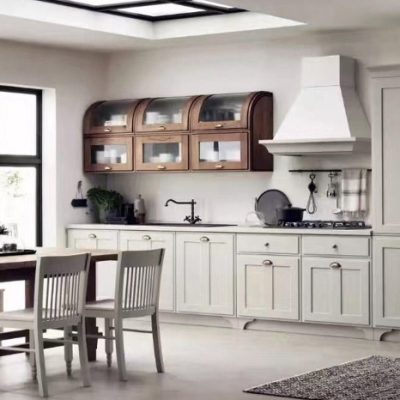


A villa owner sourcing kitchen cabinets, doors, windows, and stone from China should manage them as one coordinated procurement plan, even though they are manufactured by different suppliers. In a typical project, this coordination normally involves design information, technical specifications, dimensions, samples and finishes, shop drawings, production schedules, inspection, China-side receiving, consolidation, and shipment. Managing multiple factories requires technical alignment so that products engineered in different workshops fit together on site without modification.
Why Is It Difficult to Coordinate Kitchen, Doors, Windows and Stone From Different Chinese Suppliers?
Four distinct suppliers may each manufacture strictly according to their own approved shop drawings, yet installation problems can still occur if the underlying information across those drawings is inconsistent.
Each factory can produce its own product correctly while the overall procurement process can still have coordination problems. The difficulty lies in controlling information flow and timing across independent entities.
Common coordination problems include:
- Kitchen cabinets and appliances: Cabinet cut-outs manufactured to general appliance specifications that do not match the exact physical dimensions of the models purchased locally.
- Countertops and cabinets: Stone overhangs and slab dimensions fabricated from early architectural renderings rather than final approved cabinet shop drawings.
- Windows and walls: Window frame dimensions produced based on early structural wall openings before plaster, tile, or stone cladding thicknesses were confirmed.
- Finishes: Door wood veneers or anodized window frames failing to match approved interior samples because factories referenced different color batches.
- Design revisions: Stone quantities calculated prior to a final room layout revision, leaving the job site short on material.
- Schedules: One supplier finishing weeks ahead of the rest, causing storage problems and sequence issues at the consolidation warehouse.
What Information Should Be Fixed Before Chinese Factories Start Production?
Before signing off on production, distinguish between information that must be locked down globally across all categories and parameters that remain specific to an individual factory. Establishing strict version control across all drawing packages prevents suppliers from manufacturing off outdated revisions.
| Information | Kitchen | Doors | Windows | Stone |
| Final dimensions | ✓ | ✓ | ✓ | ✓ |
| Finish | ✓ | ✓ | ✓ | ✓ |
| Material | ✓ | ✓ | ✓ | ✓ |
| Opening information | ✓ | ✓ | ✓ | ✓ |
| Installation requirements | ✓ | ✓ | ✓ | ✓ |
| Approved drawings | ✓ | ✓ | ✓ | ✓ |
Locking in architectural dimensions, structural openings, finished floor levels (FFL), ceiling heights, exact appliance models, door/window schedules, slab thicknesses, hardware selections, and final quantities prevents mid-production factory re-work.
Which Villa Dimensions Need to Be Controlled Across Suppliers?
Certain master dimensions cross category boundaries and must be centrally controlled to ensure accurate interfaces on site:
- Structural Opening vs. Finished Opening: Windows and doors require exact knowledge of the gap between raw masonry or concrete (structural opening) and the final plastered or tiled edge (finished opening).
- Finished Floor Level (FFL): FFL dictates door clear openings, window sill heights, stone skirting reveals, and kitchen cabinet base-level alignment.
- Ceiling Levels: Full-height door frames, tall kitchen utility units, and floor-to-ceiling window systems all depend on verified ceiling heights.
- Cabinet and Countertop Heights: Base cabinet heights combined with stone slab thickness must align correctly with integrated window sill heights or adjacent wall cladding reveals.
The China-side procurement process relies on receiving these final, verified parameters from the local design team before factory shop drawings are locked for production.
How Should Kitchen Cabinets and Stone Be Coordinated?
Stone fabrication should never proceed based solely on early kitchen renderings. Kitchen island layouts, countertop overhangs, backsplash heights, side waterfall edges, and sink or cooktop cut-outs require absolute alignment with the final cabinet shop drawings.
Depending on the project design, installation method, and shipping risk, stone procurement generally falls into two approaches:
- Factory-Fabricated Stone: Cut-outs, edge profiling, and sizing are completed entirely in the China factory. This requires fully frozen cabinet drawings, precise appliance templates, and low site tolerances.
- Site-Measured / Site-Fabricated Stone: Slabs are supplied in full or rough sizes and cut on site by local tradespeople. This reduces fitment risk on complex layouts but increases local labor demands.
If stone is factory-fabricated in China, the stone supplier must review and sign off on the cabinet manufacturer’s final production drawings—not just the architect’s preliminary layout. For more details on this process, read our guide on coordinating kitchen cabinet factory production and shop drawings.
How Do Kitchen Cabinets Need to Be Coordinated With Windows and Doors?
Physical intersections between cabinetry and joinery require careful spatial verification:
- Window Sill to Countertop: Countertop heights and window sill reveals must meet cleanly, especially if the countertop extends into the window jamb as a single stone surface.
- Tall Cabinets Near Windows: High wall units or refrigerator columns placed adjacent to window frames can block natural light or prevent window handles from operating fully.
- Door Swing Interference: Door swings into the kitchen must clear island corners, lower cabinet handles, and open appliance doors.
The local architectural plans and site conditions remain the primary reference points. The China sourcing team ensures factories build to these approved clearances rather than altering standard cabinet dimensions independently.
What Should You Confirm Before Ordering Custom Windows and Doors From China?
Custom aluminum windows and doors vary significantly in profile systems, glass configurations, thermal performance, and hardware integrations. Focus procurement verification on:
- Opening Dimensions: Structural tolerances, frame depth, and sub-frame requirements.
- Profile & Glass Specs: Thermal break design, aluminum wall thickness, glass build (e.g., double/triple glazing, Low-E coatings, argon gas fill), and powder-coating or anodizing specs.
- Hardware & Accessories: Lock points, handle styles, concealed hinges, sliding track configurations, and integrated flyscreens.
- Regulatory Compliance: Verification that glass and window profile systems match the structural, wind-load, and safety requirements of the destination country.
Aluminum profile systems differ widely; the critical factor is whether the selected system matches the project’s architectural, performance, and local building code requirements.
How Should Kitchen, Windows, Doors and Stone Be Scheduled?
Procurement scheduling is not simply waiting for Factory A to finish, then Factory B, then Factory C. It requires a master project schedule that tracks key operational milestones across all categories:
- Design & Technical Clarification: Architectural freeze, sample sign-offs, quotation comparisons, and technical specification reviews.
- Shop Drawings & Approvals: Factory shop drawing generation, revision rounds, and formal sign-offs by the client or architect.
- Deposit & Production: Deposit payments, raw material allocation, manufacturing, and in-line factory checks.
- Inspection & Warehouse Arrival: Pre-shipment quality control, transit to a central warehouse, and receiving checks.
- Consolidation & Loading: Packaging verification, container loading optimization, export customs, and shipment departure.
Production time varies by factory, customization level, material availability, and order quantity. Windows and doors often require longer lead times due to custom extrusions or glass tempering, whereas stone fabrication may move faster once slab selection is completed.
Should All Villa Products Be Ordered at the Same Time?
No. Ordering everything at exactly the same time is not necessarily the best approach. Procurement should follow a logic-driven sequence based on technical dependencies and site installation needs:
- First Tier (Building Envelope): Windows and doors need to be finalized early to allow time for production, shipping, and closing the building envelope on site.
- Second Tier (Interior Joinery): Kitchen cabinet layouts, interior doors, and built-in wardrobes are locked in once interior wall positions and electrical/plumbing rough-ins are confirmed.
- Third Tier (Dependent Fabrication): Detailed stone countertop fabrication, backsplashes, and custom cut-outs, which rely on finalized cabinet specs.
Establishing a clear procurement sequence prevents factories from holding completed goods unnecessarily while waiting for dependent product categories to finish design stages.
What Happens When One Supplier Finishes Earlier Than the Others?
It is common for windows or doors to finish production while kitchen cabinets or custom stone remain in process. Managing this time gap requires a systematic warehouse staging approach:
- Central Warehouse Receiving: Completed goods are transferred from individual factories to a centralized export warehouse in the Guangdong logistics hub.
- Product Identification & Check: Crates are inspected upon arrival to verify packaging condition, piece counts, and shipping marks against the master packing list.
- Secure Storage: Sensitive items, such as veneered wood doors or lacquered kitchen panels, are stored in dry, covered facilities protected from dust and humidity.
- Consolidation Planning: Goods remain in staging until all project categories pass inspection and are cleared for container loading.
Receiving at a central facility is not simply putting boxes in a room; it involves logging inventory and verifying crate integrity against the master procurement plan.
How Do You Consolidate Kitchen Cabinets, Doors, Windows and Stone Into One Shipment?
Combining heavy, fragile, and bulky items into ocean containers requires cargo planning and structural packaging:
- Stone Slabs: Heavy stone requires heavy-duty A-frames or reinforced wooden crates, positioned strategically over container floor cross-members to distribute weight evenly.
- Windows & Doors: Frame profiles and glazed units require sturdy vertical wooden crates or steel-framed racks with corner protection to absorb transit movement.
- Kitchen Cabinets: Flat-packed or assembled cabinet modules consist of numerous smaller cartons, hardware boxes, and trim pieces that must be grouped systematically.
- Weight & Volume Balance: Heavy commodities (stone) must be balanced with high-volume, lighter commodities (cabinets, joinery) to maximize container space without exceeding maritime weight limits.
Clear package labeling and detailed packing lists ensure that when the container is opened on site, items can be unloaded in the order required for installation. For a broader look at managing complex cargo loads, see our article on whole-villa material consolidation in Guangdong.
Does Everything Need to Go Into One Container?
No. A villa procurement plan does not need to force every product into a single 40HQ container.
The final shipping arrangement depends on total volume, total weight, product dimensions, timing, destination requirements, and factory readiness. If windows are needed on site months before interior stone, splitting the shipment into two sea freight deliveries is often more practical than delaying building closure or paying extended warehouse storage fees in China.
How Should You Compare Suppliers When Different Factories Quote Different Specifications?
Comparing factory proposals requires evaluating identical technical parameters rather than looking only at total price tags.
When reviewing quotations across suppliers, compare:
- Kitchens: Board core materials, surface finishes (lacquer, veneer, melamine), cabinet box thickness, hardware brands (hinges, drawer runners), and integrated accessories.
- Windows/Doors: Aluminum profile wall thickness, alloy grade, thermal break insulation strips, glass build, surface treatment, and locking mechanisms.
- Stone: Exact stone variety, slab thickness (e.g., 18mm vs. 20mm), edge profiling, surface treatment, cut-out preparation, and reinforcement backing.
- Packaging & Logistics: Wooden crate standards, fumigation certificates, factory transport fees, and export packaging quality.
A lower quotation often indicates reduced material specifications, thinner aluminum profiles, or excluded hardware rather than lower manufacturing margins. A comparable quotation requires comparable specifications.
What Can Go Wrong If You Manage Each Supplier Separately?
Managing four Chinese factories independently without central oversight exposes a villa project to preventable coordination errors:
| Problem | Possible Cause | Better Control |
| Cabinet and appliance mismatch | Appliance opening based on unverified spec sheets | Confirm exact appliance dimensions before drawing sign-off |
| Stone does not match cabinet layout | Countertops fabricated from early interior renders | Link stone production approval to final cabinet shop drawings |
| Window dimensions are wrong | Frame produced to raw wall size without finish allowance | Confirm approved opening schedule with local contractor |
| Missing hardware or trim | Accessories and fittings handled as separate minor orders | Use a consolidated master packing list during QC |
| Mismatched interior finishes | Suppliers referenced different color control samples | Distribute physically approved master samples to all factories |
| Project delayed by one supplier | No centralized monitoring of individual factory progress | Track milestones across all suppliers with one master schedule |
| Container space wasted or overloaded | Goods arrive at shipping port without weight/volume planning | Calculate weight and volume limits during the staging phase |
What Should a Villa Procurement File Contain?
To prevent miscommunication across WhatsApp threads and scattered emails, a private villa project should maintain one centralized procurement reference file.
A complete Villa Procurement File should contain:
- Master BOQ (Bill of Quantities): Complete list of every product category, item code, quantity, and assigned supplier.
- Technical Specifications: Confirmed material grades, finishes, hardware codes, and glass configurations.
- Approved Master Samples: Photos, sign-off dates, and tracking numbers for all physical samples sent to the client or architect.
- Latest Shop Drawings: Final, stamped PDF drawings for every category, marked with clear version control numbers.
- Schedule & Payment Log: Payment milestones, target production completion dates, and warehouse receiving dates.
- QC & Receiving Reports: Pre-shipment inspection photos, measurement check sheets, and warehouse receiving logs.
- Shipping & Packing Data: Detailed crate dimensions, weights, master packing lists, and container loading diagrams.
Having this information in one organized location allows the procurement team, architect, and site team to verify details against the same reference data.
Why Can Good Products Still Create Problems on a Villa Project?
A kitchen factory can build cabinets precisely to drawing. A window manufacturer can produce high-performance frames. A stone fabricator can cut marble slabs cleanly. A door factory can finish wood veneers accurately.
Yet, when these products arrive at the job site, countertops may not sit level on island bases, window frames may interfere with tall utility cabinets, or door frames may fail to match stone wall reveals.
The individual products are not defective; the product quality is high. However, the project coordination failed because the technical information shared between the independent factories was incomplete or out of date. Sourcing villa materials from China requires managing both product quality (factory execution) and coordination quality (data alignment).
Hypothetical Example
To see how coordination works in practice, consider a private residential villa project sourcing custom kitchens, aluminum windows and doors, interior wood doors, and sintered stone slabs from separate factories in Guangdong.
- Stage 1 — Design Information & BOQ: The procurement team collects architectural CAD drawings, window schedules, kitchen layouts, and local appliance specifications from the owner’s interior designer.
- Stage 2 — Supplier Selection: Four specialized factories are selected in Foshan and surrounding cities based on product specifications and production capacity.
- Stage 3 — Technical Clarification: Master floor levels, structural vs. finished openings, and stone thicknesses are shared across the four suppliers.
- Stage 4 — Shop Drawings & Samples: Physical finish samples (wood veneer, anodized aluminum, stone) are approved. Factory shop drawings are cross-checked—confirming, for instance, that the kitchen island drawing matches the stone countertop cut-out plan.
- Stage 5 — Production Tracking: The master schedule sets staggered production target dates so windows finish first for early site installation, followed by joinery and stone.
- Stage 6 — Quality Control (QC): Individual factory inspections are conducted as each order finishes, verifying dimensions, finishes, and cut-out placements before items leave the factory floor.
- Stage 7 — China Warehouse Receiving: Goods arrive at a central Foshan staging warehouse where crates are logged, inspected for outer transport damage, and stored securely.
- Stage 8 — Consolidation & Loading: Cargo weight and volume are calculated to organize container loading, placing heavy stone crates on the floor and staging lighter cabinet cartons around them.
This systematic workflow keeps independent manufacturing processes aligned under one project framework.
Why Is Foshan Practical for Sourcing Multiple Villa Building Materials?
Foshan and the surrounding Guangdong industrial region represent a dense manufacturing ecosystem for custom residential building products.
Within a short radius, supply chains exist for:
- Custom kitchen cabinetry and architectural joinery
- Residential aluminum window and door systems
- Natural marble, granite, and sintered stone slabs
- Sanitary ware and bathroom fittings
- Interior doors, wardrobes, and loose furniture
Proximity between suppliers simplifies project coordination. It allows a sourcing team to collect material samples quickly, perform factory audits, inspect finished products across multiple workshops in a single day, and centralize warehouse receiving before final container loading. Sourcing multiple categories becomes more manageable when factories operate within the same regional logistics network.
Why Choose HSY Sourcing for a Villa Project in China?
HSY Sourcing acts as a Foshan-based China sourcing agent and procurement coordination partner for overseas private villa owners. When a residential project involves multiple Chinese factories, HSY manages the China-side operational process to keep suppliers working from aligned project data.
HSY Sourcing assists villa owners with:
- Pre-screening and selecting specialized factories in Guangdong
- Reviewing quotation line items and material specifications
- Distributing master finish samples and controlling drawing versions
- Coordinating technical details between kitchen, joinery, window, and stone suppliers
- Conducting on-site factory quality control inspections before final payment
- Managing warehouse receiving, cargo staging, and container consolidation in Foshan
- Supervising container packing and export shipping documentation
The homeowner’s architect, structural engineer, and local contractor remain responsible for building design, site measurements, building code compliance, and installation. HSY Sourcing manages the China-side execution, ensuring factory output matches the client’s approved drawings and specifications. For projects involving numerous suppliers, learn more about our approach to managing multiple Chinese factories for a single villa project.
Frequently Asked Questions
Can I source kitchen cabinets, windows, doors and stone from different factories in China?
Yes. Sourcing these categories from specialized, independent factories is standard practice. However, because the factories do not communicate directly with one another, their shop drawings, dimensions, and production timelines must be centrally managed through one master procurement plan.
Do all the suppliers need to receive the complete villa drawings?
No. Suppliers only need the drawings and technical data relevant to their specific package. However, shared interface parameters—such as finished floor levels, wall thickness, structural opening sizes, and appliance dimensions—must be cross-checked centrally before releasing drawings to individual factories.
Should I order all villa materials from China at the same time?
No. Ordering should follow a staged procurement sequence based on site construction schedules. Structural items like aluminum windows and doors are usually finalized early to seal the building envelope, whereas interior joinery and stone countertops are confirmed as interior dimensions are finalized.
How do I make sure Chinese suppliers are working from the latest drawings?
Maintain strict drawing version control. Every drawing revision should have a clear date, revision number, and approval stamp. Factories should confirm in writing that earlier drawing versions have been voided before manufacturing begins.
How should kitchen cabinets and countertops be coordinated?
Kitchen cabinet shop drawings must be finalized and signed off before stone countertop fabrication starts. Cut-out dimensions for sinks, cooktops, and pop-up sockets, as well as island overhangs and waterfall edge details, must be verified directly against the cabinet structure.
Can stone be fabricated in China for a villa overseas?
Yes, stone can be fully factory-fabricated in China if cabinet shop drawings are locked and site dimensions are accurate. For complex layouts with variable site conditions, supplying stone in oversized panels for local trimming and finishing on site may be recommended.
Should windows and doors be ordered before the villa is built?
Window and door profiles can be selected and quoted early, but final manufacturing dimensions must be verified against actual structural openings or signed-off architectural drawings provided by the local general contractor.
Can a China sourcing agent coordinate several factories for one villa?
Yes. A local sourcing agent manages factory communication, sample approvals, shop drawing reviews, production tracking, pre-shipment inspections, warehouse receiving, and shipment consolidation across all assigned suppliers.
Does everything need to be shipped in one container?
No. Villa shipments can be split across multiple containers or separate vessel departures depending on cargo volume, total weight, site arrival schedules, and factory completion dates.
What is the biggest risk when sourcing several villa categories from China?
The primary risk is purchasing products from multiple capable factories without controlling information consistency between them. Inconsistent dimensions, unverified appliance specs, or misaligned finish samples lead to installation failures on site, even when individual items are made correctly.
Key Takeaways
When sourcing custom building materials for a private villa from China, kitchen cabinets, doors, windows, and stone should be purchased from specialized suppliers but managed under one centralized procurement plan.
To keep multi-supplier procurement organized:
- Control specification details and maintain strict drawing version numbers.
- Coordinate shared structural dimensions, floor levels, and appliance clearances centrally.
- Approve physical material finish samples and stamped shop drawings before releasing deposits.
- Track production schedules using a master project timeline.
- Inspect finished products at individual factories prior to dispatch.
- Receive, log, and stage goods at a central warehouse in China.
- Plan container loading based on product weight, volume, and fragile packaging requirements.
The goal is not to force independent factories to act as a single company. The goal is to ensure every supplier builds from consistent project data so the finished materials fit together when delivered to the job site.