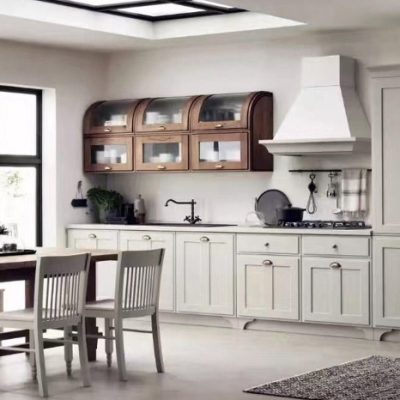


A private villa owner visiting a cabinet factory in Foshan will often come away impressed. High-end showrooms display flawless kitchen islands with integrated LED lighting, ultra-smooth lacquer finishes, and precision hardware from top European brands. The machinery on the factory floor is modern, the workers are busy, and the management appears organized.
Yet, months later, when the cabinets arrive at the job site overseas, critical problems often emerge: filler panels do not match wall conditions, appliances fail to fit their housings, stone countertops are misaligned, and finishing details vary across different rooms.
A good-looking factory does not guarantee a successful villa project. For a private home, factory capability is only half of the equation; project control is the other.
What a Good-Looking Factory Can — and Cannot — Tell You
A factory visit is valuable, but it only tells part of the story. Walking through a production facility allows you to verify physical assets, worker density, machinery quality, material handling, and general production discipline. It proves that the supplier actually manufactures what they sell, rather than operating purely as a trading middleman.
┌────────────────────────────────────────────────────────┐
│                   FACTORY EVALUATION                   │
├────────────────────────────┬───────────────────────────┤
│    WHAT A VISIT PROVES     │   WHAT A VISIT MISSES     │
├────────────────────────────┼───────────────────────────┤
│ • Modern machinery         │ • Drawing interpretation  │
│ • Material handling        │ • Cross-trade coordination│
│ • Sample finish quality    │ • Project-wide consistency│
│ • Production capacity      │ • Packing for transit     │
└────────────────────────────┴───────────────────────────┘
A visit cannot reveal how that factory will perform when handling your specific set of shop drawings. It cannot demonstrate how well their engineering team interprets complex design intent, coordinates with other trade contractors, or maintains consistency across forty distinct cabinet units spread across five different zones of a private house.
Production capability and project capability are two entirely separate skills.
The Showroom Sample Is Not the Same as Your Villa
Showroom displays are static, controlled environments. They are built once, tuned endlessly by head carpenters, and illuminated under optimized lighting to look perfect. They do not face site constraints.
A real villa project presents dynamic site conditions that showroom displays never encounter:
- Variable Site Tolerances: Un-plumb walls, sloping floors, and uneven ceiling soffits require precise filler panels and site-adjustment engineering.
- Trade Interfaces: Cabinetry must interface directly with stone slabs, built-in appliances, concealed plumbing, air conditioning vents, wall paneling, and architectural lighting.
- Environmental Exposure: Materials used in a controlled indoor showroom may perform differently when packed for ocean freight or installed in humid coastal environments.
A factory may easily excel at producing a standard, three-meter kitchen module for their display room, yet struggle when required to manufacture complex, custom millwork engineered specifically for your villa’s physical layout.
The Real Problem Often Starts Before Production
In custom residential procurement, most mistakes occur long before the first panel is cut. They trace back to incomplete documentation and rushed pre-production approvals.
       DOCUMENTATION          PRODUCTION            DELIVERY
   ┌──────────────────┐   ┌────────────────┐   ┌────────────────┐
   │ • Shop Drawings  │──>│ • Panel Cutting│──>│ • Sea Freight  │
   │ • Material Board │   │ • Assembly     │   │ • Site Fit-out │
   │ • Hardware BOQ   │   │ • Quality Check│   │                │
   └──────────────────┘   └────────────────┘   └────────────────┘
            │
   [Critical Failures
    Happen Here]
1. Ambiguous Shop Drawings
A architectural design render shows the aesthetic vision, but it is not a shop drawing. If a factory produces cabinets based on unverified architectural concepts rather than fully detailed, field-measured shop drawings, dimensional errors are guaranteed.
2. Finishes Approved in Isolation
Approving a 10×10 cm veneer or lacquer chip under office light is risky. Large-scale application often reveals variations in grain pattern, sheen level, and color batching that are invisible on small physical samples.
3. Vague Hardware and Core Specifications
Specifying “soft-close hinges” or “plywood carcass” leaves wide room for interpretation. Different grades of moisture-resistant plywood, varying densities of MDF, and lower-tier lines from major hardware brands dramatically alter both the performance and cost of the cabinetry.
A Low Cabinet Quotation May Not Be Comparing the Same Scope
When comparing cabinet quotations from China, the lowest price rarely represents the best value. In complex custom cabinetry, two suppliers can quote identical floor plans while pricing fundamentally different products.
| Feature / Detail | Standard Factory Assumption | High-End Villa Specification |
| Carcass Material | Standard melamine-faced chipboard (Particleboard) | Birch plywood or marine-grade moisture-resistant plywood |
| Back Panels | 3mm or 5mm slide-in MDF backboard | 9mm or 18mm solid-backed construction for heavy loads |
| Finish Application | Single-sided veneer / standard edge banding | Matching veneer on inner surfaces / solid wood edge banding |
| Hardware Series | Entry-level concealed hinges | Heavy-duty, fully adjustable concealed systems (e.g., Blum Legrabox) |
| Internal Fittings | Generic wire baskets & plastic dividers | Custom drawer inserts, integrated LED channels, sensory lighting |
| Packaging | Thin corrugated carton with foam corner guards | Custom wooden crating with edge protection and moisture barriers |
A factory offering a significantly lower initial price is often calculating their quotation based on basic standard assumptions. Once you request proper villa-grade materials, hardware, and structural backing, the price gap usually closes.
Custom Villa Cabinets Need Coordination With Other Trades
Kitchens and custom joinery do not exist in a vacuum. A major point of failure in private projects is the breakdown of cross-trade coordination during the production phase in China.
                    ┌─────────────────────────┐
                    │  Custom Joinery /       │
                    │  Cabinetry              │
                    └────────────┬────────────┘
                                 │
         ┌───────────────────────┼───────────────────────┐
         │                       │                       │
┌────────┴────────┐     ┌────────┴────────┐     ┌────────┴────────┐
│ Stone & Slabs   │     │ Built-in        │     │ MEP & Lighting  │
│ (Cutouts/Weight)│     │ Appliances      │     │ (Power/Vents)   │
└─────────────────┘     └─────────────────┘     └─────────────────┘
- Built-in Appliances: Ovens, wine coolers, and integrated refrigerators require exact cutouts, heat dissipation channels, and weight-bearing support. Sending product model numbers is rarely enough; actual physical specification sheets or local appliance templates must be cross-checked against cabinet drawings.
- Stone Countertops: If stone is sourced separately from cabinetry, the substrate support, overhang tolerances, and seam locations must be aligned between both suppliers before production begins.
- Integrated Lighting: LED channel cutouts, driver placement, wire routing paths, and transformer ventilation must be engineered into the cabinet carcasses at the factory, not cut haphazardly by installers on site.
Checklist: What to Check Before Committing to a Supplier
Before transferring a deposit to a Chinese cabinet manufacturer for a villa project, confirm these fundamental items:
- [ ] Detailed Shop Drawings: Are all millwork details, filler margins, access panels, and appliance clearances fully documented and signed off?
- [ ] Physical Material Board: Have physical samples for carcass, door panels, internal finishes, and edge profiles been signed and retained as quality reference benchmarks?
- [ ] Hardware Line Iteming: Is every runner, hinge, lift system, and slide identified by specific manufacturer, model series, and weight rating?
- [ ] Dry-Assembly Protocol: Will the factory fully pre-assemble complex runs (e.g., kitchen islands, walk-in closets) in their facility for inspection before flat-packing?
- [ ] Crating Specification: Are fragile lacquered or veneered panels specified to be packed in reinforced wooden crates with protective film and corner guards?
When Visiting Foshan Is Worthwhile
Visiting Foshan is often beneficial for private villa owners who wish to touch materials, compare factory scale, and review mockups in person. Seeing raw production lines and finishing booths gives a clear sense of operational discipline.
However, a factory visit is not strictly necessary for every project, nor is it a substitute for active project management. A trip to China verifies capacity, but ongoing communication, shop-drawing review, mock-up checks, in-process inspections, and pre-shipping trial assemblies verify execution.
For overseas owners who cannot spend weeks in China managing production, working with an experienced local partner on the ground ensures that agreed-upon specifications are strictly maintained through every stage of manufacturing.
Key Takeaway
An impressive showroom and modern factory floor prove that a supplier has the potential to build beautiful cabinets. But for a custom private villa, success depends on detail management: rigorous shop drawing review, precise hardware specification, cross-trade coordination, pre-assembly inspection, and secure packaging. Focus less on how the factory looks on day one, and more on how they intend to control your project until the final crate is sealed.
Why Work With a Foshan Sourcing Partner?
Navigating custom joinery production across multiple suppliers requires continuous local supervision. As a Foshan-based sourcing agent and procurement partner specializing in residential and private villa building materials, HSY Sourcing acts as your local representative on the ground.
We assist private homeowners and their design teams by:
- Pre-screening and auditing cabinet factories based on project-specific requirements.
- Comparing detailed, itemized quotations to identify missing specs or scope gaps.
- Coordinating shop drawings, appliance cutouts, and material sample approvals.
- Performing factory visits and inspecting dry-assembled cabinetry prior to packing.
- Managing consolidation, loading, and shipping logistics across all villa building materials.
Frequently Asked Questions
How can I tell if a Chinese cabinet factory is suitable for my villa?
Look beyond their showroom. Evaluate their engineering team’s ability to read detailed design drawings, review their past experience with individual custom villa projects (rather than mass apartment developments), and ask whether they perform full trial assemblies in the factory before shipping.
Is visiting the factory enough to verify a cabinet supplier?
No. A factory visit confirms production capability, machinery quality, and operational scale, but it does not guarantee how accurately the factory will execute your project’s specific drawings, materials, hardware, and site-coordination needs.
What should I compare when reviewing cabinet quotations?
Ensure you are comparing identical scope. Check carcass materials (plywood vs. particleboard), panel thicknesses, finish applications (single vs. double-sided veneer), drawer system series, hardware brand lines, integrated lighting channels, and packaging methods.
Should I approve samples before placing a cabinet order?
Yes. Never rely on digital renders or catalog photos. Always sign off on physical finish samples, including veneer graining, lacquer sheen, and edge-banding details. Retain one signed sample yourself and ensure the factory holds an identical signed sample for quality control reference.
Is it better to source all villa cabinetry from a single factory?
It depends on the scope. While sourcing kitchens, wardrobes, and bathroom vanities from one factory simplifies communication and material consistency, specialized items (such as metal-and-glass display units or complex solid wood carving) may require dedicated niche manufacturers.