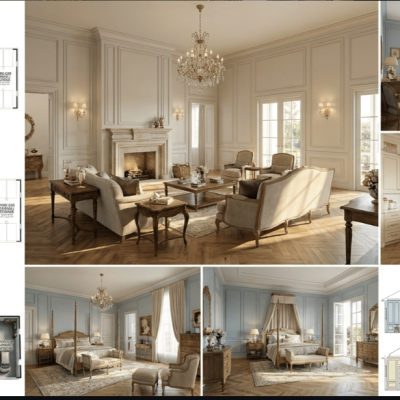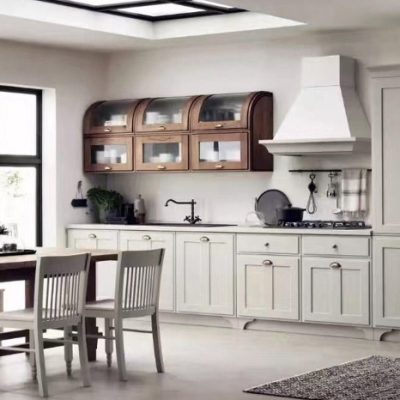

For an overseas homeowner building, renovating, or outfitting a private residential villa, sourcing building materials and interior products from China offers access to vast manufacturing capacity and custom craftsmanship. However, whole-villa procurement is rarely a simple transaction with a single vendor.
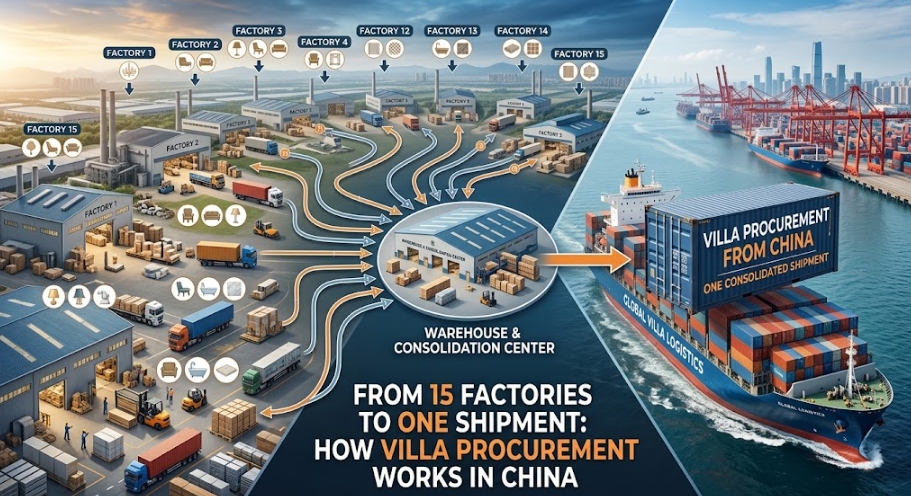
Villa procurement from China is a coordinated collection of distinct product orders, specialized manufacturers, production timelines, quality checks, and logistics arrangements that must be brought together into a single, organized export process.
A single container is simply the physical end result of dozens of earlier technical specifications, drawing approvals, and production checks. When sourcing multiple customized interior and structural categories, success relies on managing these moving parts before the first item arrives at a loading dock.
Why Can One Villa End Up With 10–15 Chinese Suppliers?
A private villa requires diverse manufacturing capabilities, material standards, and custom fabrication techniques. While a single commercial trading company might claim to supply everything, actual manufacturing in China is highly specialized. A factory that excels at extruding thermal-break aluminum window frames is rarely equipped to manufacture custom lacquer kitchen cabinetry or process natural marble slabs.
As a result, a homeowner sourcing a comprehensive villa package often engages different specialist suppliers across key categories:
- Structural & Exterior Openings: Thermal-break aluminum windows, sliding glass doors, entrance doors
- Custom Millwork & Joinery: Kitchen cabinets, vanities, walk-in wardrobes, interior doors, wall paneling
- Hard Finishes: Marble, granite, sintered stone slabs, ceramic tiles, wood flooring
- Fixtures & Lighting: Sanitary ware, custom brassware, architectural and decorative lighting
- Loose Furniture & Furnishings: Sofas, dining sets, beds, custom upholstery, curtains
                             VILLA PROCUREMENT DIVERSITY

     ┌─────────────────────────────────────────────────────────────────┐
     │                       PRIVATE VILLA PROJECT                     │
     └─────────────────────────────────────────────────────────────────┘
           │                 │                 │                 │
           ▼                 ▼                 ▼                 ▼
     ┌───────────┐     ┌───────────┐     ┌───────────┐     ┌───────────┐
     │ Windows & │     │ Custom    │     │ Stone &   │     │ Furniture │
     │ Doors     │     │ Joinery   │     │ Tiles     │     │ & Lighting│
     └───────────┘     └───────────┘     └───────────┘     └───────────┘
           │                 │                 │                 │
           ▼                 ▼                 ▼                 ▼
     ┌───────────┐     ┌───────────┐     ┌───────────┐     ┌───────────┐
     │ Extrusion │     │ Millwork  │     │ Slab Processing │ Custom    │
     │ Plant     │     │ Factory   │     │ Facility  │     │ Workshop  │
     └───────────┘     └───────────┘     └───────────┘     └───────────┘
Working with specialized manufacturers allows homeowners to select the exact material grades, customization levels, and price points suited for each part of the house. However, this approach introduces a clear trade-off: greater product choice increases communication overhead, schedule monitoring, and cross-trade coordination.
The actual number of suppliers involved in a villa project varies widely. A modest interior package might involve 4 to 6 suppliers, whereas a large estate requiring structural glazing, custom millwork, natural stone, and loose furniture can easily reach 10 to 15 independent factories.
What Does a Villa Procurement Plan Look Like Before Factories Are Contacted?
Before issuing inquiries or requesting quotes from Chinese manufacturers, an overseas homeowner’s design package—comprising Bill of Quantities (BOQs), architectural plans, interior renders, and CAD files—must be organized into structured procurement packages.
Attempting to send an unorganized 200-page interior design set to factories leads to incomplete quotes, missed specifications, and confusion. Dividing the project BOQ into distinct product packages streamlines vendor communication.
                          BOQ TO PROCUREMENT PACKAGES

  ┌───────────────────────────┐             ┌───────────────────────────┐
  │   OVERALL VILLA DESIGN    │             │   PROCUREMENT PACKAGES    │
  │   - Architectural CADs    │             │                           │
  │   - Interior Renders      │  ─────────> │   Pkg A: Aluminum Windows │
  │   - Master BOQ            │             │   Pkg B: Kitchen & Joinery│
  │   - Finish Schedules      │             │   Pkg C: Natural Stone    │
  └───────────────────────────┘             └───────────────────────────┘
A standard villa material list translates into dedicated procurement packages:
| Villa Architectural/Interior Scope | Sourcing Procurement Package | Typical Technical Input Needed |
|---|---|---|
| Kitchen & Pantry | Custom Kitchen Cabinetry | Architectural CADs, appliance spec sheets, 3D renders |
| Bedrooms & Dressing Rooms | Wardrobes & Fixed Joinery | Floor plans, section drawings, interior elevation details |
| Exterior Envelope | Windows & Sliding Doors | Window schedules, wind-load specs, glass u-value requirements |
| Living Areas & Bedrooms | Loose Furniture & Upholstery | Dimensioned floor layouts, fabric/leather reference codes |
| Bathrooms & Powder Rooms | Sanitary Ware & Fixtures | Plumbing rough-in plans, finish callouts (e.g., PVD brass) |
| Flooring & Wet Areas | Tiles, Sintered Stone & Marble | Tile layout plans, slab cut-lists, slip-resistance specs |
| Feature Walls & Ceilings | Wall Paneling & Decorative Acoustic Panels | Elevation drawings, framing details, fire-rating requirements |
| Interior Lighting | Architectural & Decorative Lighting | Lighting schedules, dimming protocols (DALI/TRIAC), voltage specs |
Organizing requirements this way ensures that each manufacturer receives only the technical documentation relevant to their trade, leading to clearer responses and accurate preliminary pricing. For a deeper look at this initial step, review our guide on how to turn your villa BOQ into a China sourcing plan.
How Are Chinese Suppliers Selected for Different Villa Categories?
Selecting suppliers for a custom residential project requires evaluating criteria beyond price. A high-capacity factory optimized for mass-producing standard apartment cabinets is often poorly suited for a complex, highly customized private villa.
                            SUPPLIER EVALUATION MATRIX

  ┌─────────────────────────────────────────────────────────────────────────┐
  │                           SUPPLIER SELECTION                            │
  ├───────────────────────┬─────────────────────────┬───────────────────────┤
  │ TECHNICAL CAPACITY    │ PRODUCTION FLEET        │ PROJECT FIT           │
  │ - Shop drawing team   │ - Specialized CNC machinery│ - Custom flexibility │
  │ - Custom tolerances   │ - Quality of materials  │ - Export packaging    │
  └───────────────────────┴─────────────────────────┴───────────────────────┘
When evaluating candidate factories across different categories, consider these technical factors:
- Customization Flexibility: Can the factory modify internal module dimensions, create custom stain colors, or work with non-standard hardware systems?
- Technical Drawing Capabilities: Does the factory have an in-house drafting team capable of producing clear shop drawings from architectural CADs?
- Material & Core Options: Does the supplier offer substrates suitable for your destination climate (e.g., marine-grade plywood vs. moisture-resistant MDF for humid environments)?
- Export & Packaging Standards: Does the factory use reinforced export crates, edge corner protection, and moisture-barrier wrapping?
- Lead Time Reliability: Does the factory’s current production schedule align with your project’s target shipping date?
A manufacturer that excels at producing aluminum curtain walls may struggle with thin-profile residential sliding doors. Selecting the right supplier requires matching the factory’s core capabilities with the specific technical demands of your design.
Why Should Villa Quotes Be Compared by Specification Rather Than Price?
In whole-villa procurement, comparing quotes strictly by the bottom-line number often leads to incorrect conclusions. Two Chinese manufacturers quoting on the exact same kitchen elevation drawing may produce vastly different prices because they are quoting entirely different material specifications.
                           SPECIFICATION VS. PRICE

  FACTORY A QUOTE: $18,000                   FACTORY B QUOTE: $28,000
  ┌─────────────────────────────────┐        ┌─────────────────────────────────┐
  │ - 16mm Particleboard Carcass    │        │ - 18mm Marine Plywood Carcass   │
  │ - Domestic Soft-Close Slides    │   vs   │ - Blum Legrabox Drawer Systems  │
  │ - Standard PET Film Doors       │        │ - Custom Stained Wood Veneer    │
  │ - Basic Knock-Down Export Crate │        │ - Reinforced Solid Wood Crating │
  └─────────────────────────────────┘        └─────────────────────────────────┘
To establish a meaningful comparison, analyze the underlying specifications within each quotation:
Custom Cabinetry
- Substrate Material: Particleboard vs. MDF vs. Multi-layer Plywood vs. Solid Wood
- Finish Application: Melamine vs. PET vs. Direct Paint Lacquer vs. Natural Wood Veneer
- Hardware & Components: Generic domestic hardware vs. branded systems (Blum, Grass, Hettich)
- Backing & Drawer Panels: 5mm thin backing vs. 18mm solid cabinet backing panels
Aluminum Windows & Doors
- Profile System: Non-thermal vs. Thermal-break aluminum profiles; wall thickness (1.4mm vs. 2.0mm+)
- Glass Composition: Standard double glazing vs. Low-E, laminated, or argon-filled insulated units
- Hardware & Locking: Generic multi-point locks vs. German-engineered hardware (Roto, Siegenia, HOPPE)
- Surface Coating: Standard powder coating vs. PVDF coating vs. Anodized finishes
Loose Furniture
- Internal Framing: Kiln-dried solid hardwood vs. soft plywood framing
- Upholstery Fill: Standard polyurethane foam vs. high-resiliency foam with down/feather wraps
- Fabric & Leather: Synthetic PU leather vs. top-grain aniline leather; fabric wear ratings (Martindale abrasion cycles)
First, align the exact technical specifications across all candidate suppliers. Once the specifications match, price comparisons become meaningful and accurate. For further details on analyzing cabinetry proposals, read our guide on how to compare custom kitchen quotes from China.
How Do Drawings and Samples Become Part of the Procurement Process?
For custom villa materials, a purchase order should never be signed based solely on a rendering or a catalog photo. A structured sign-off process using physical samples and factory shop drawings is required before mass production begins.
                         THE PRE-PRODUCTION SIGN-OFF

  ┌─────────────────────────┐      ┌─────────────────────────┐
  │  APPROVED SHOP DRAWINGS │  +   │    APPROVED SAMPLES     │
  │  (Dimensions & Layout)  │      │  (Finish, Color, Grain) │
  └─────────────────────────┘      └─────────────────────────┘
                                │
                                ▼
  ┌──────────────────────────────────────────────────────────┐
  │              FINAL SIGNED PURCHASE ORDER                 │
  └──────────────────────────────────────────────────────────┘
This sign-off phase relies on two primary reference tools:
- Physical Material Samples: Factories should supply physical samples for veneers, lacquers, powder-coat metal finishes, stone slabs, and fabric swatches. Once approved by the homeowner or interior designer, these physical samples become the visual benchmark for quality control.
- Factory Shop Drawings: The factory’s technical team translates the designer’s CAD files into detailed factory shop drawings. These drawings illustrate panel construction, module breakdown, hardware positions, structural reinforcement, and exact millimetric dimensions.
Production should only commence once approved shop drawings, signed physical samples, and written technical specifications are aligned. To avoid common pitfalls at this stage, refer to our checklist on what a villa owner should do before approving factory shop drawings.
How Do You Manage 15 Suppliers When They All Have Different Production Schedules?
Managing multiple independent suppliers requires handling mismatched production timelines. Different manufacturing processes operate on naturally distinct lead times.
                           PRODUCTION TIMELINE VARIANCE

  Supplier Category       Lead Time Range
  ─────────────────────────────────────────────────────────────────────────────
  Sanitary Ware           [15–20 Days] ──► Ready Early
  Ceramic Tiles           [20–25 Days] ────► Ready Early
  Loose Furniture         [30–35 Days] ──────────► Ready Mid-Project
  Custom Cabinetry        [35–45 Days] ───────────────► Ready Late
  Aluminum Windows        [40–50 Days] ──────────────────► Ready Late
If left unmanaged, staggered completion dates lead to premature warehouse storage fees or project delays caused by late-finishing items.
To coordinate multiple timelines, maintain a central procurement tracking schedule:
                            PROCUREMENT CONTROL SCHEDULE

┌────────────┬─────────────┬───────────┬─────────────┬─────────────┬────────────┐
│ Category   │ Supplier    │ PO Status │ Deposit Date│ Target QC   │ Delivery   │
├────────────┼─────────────┼───────────┼─────────────┼─────────────┼────────────┤
│ Windows    │ Factory A   │ Signed    │ May 01      │ June 10     │ June 15    │
│ Kitchen    │ Factory B   │ Signed    │ May 05      │ June 20     │ June 22    │
│ Stone      │ Factory C   │ Pending   │ May 10      │ June 18     │ June 21    │
│ Furniture  │ Factory D   │ Signed    │ May 02      │ June 05     │ June 12    │
└────────────┴─────────────┴───────────┴─────────────┴─────────────┴────────────┘
A central schedule provides visibility into lead times, deposit dates, sample approvals, quality control milestones, and warehouse delivery windows across all vendors. To explore strategies for coordinating multiple suppliers, read our detailed guide on how to manage 5–10 Chinese factories for one luxury villa.
Why Does Receiving the Goods in China Matter Before Consolidation?
When a factory delivers completed goods to a consolidation point in China, the shipment is not automatically ready for export. Factory delivery simply means the cargo has transitioned from the production floor to a receiving dock.
                             THREE-STAGE CHECKING SYSTEM

  ┌─────────────────────────┐      ┌─────────────────────────┐      ┌─────────────────────────┐
  │  1. FACTORY IN-PROCESS  │ ───> │  2. PRE-SHIPMENT QC     │ ───> │  3. WAREHOUSE RECEIVING │
  │  Production monitoring  │      │  Inspection at factory  │      │  Package & label count  │
  └─────────────────────────┘      └─────────────────────────┘      └─────────────────────────┘
To protect the shipment, distinguish between the three separate checking stages:
- In-Process Production Monitoring: Tracking manufacturing progress while materials are being processed at the factory.
- Pre-Shipment Quality Control (QC): Inspecting finished, assembled products at the factory before they are packed into crates.
- Warehouse Receiving Verification: Checking incoming cargo as it arrives at the consolidation facility.
During warehouse receiving, the logistics team verifies package counts against the packing list, inspects outer crates for transit damage, verifies shipping labels, and confirms cargo identification numbers. Warehouse receiving verifies that the correct, undamaged crates have arrived; it does not replace technical product quality inspections at the factory.
What Happens If One Supplier Finishes Earlier Than the Others?
Because production cycles vary, fast-turnaround items (such as standard tiles or off-the-shelf sanitary ware) often finish weeks before complex custom joinery or thermal-break windows.
                         STAGGERED WAREHOUSE HOLDING

  FABRICATED CARGO ARRIVALS                               CONSOL FACILITY
  ┌─────────────────────────┐                             ┌─────────────────────────┐
  │ Tiles (Day 20)          │ ──────────────────────────> │                         │
  │ Sanitary Ware (Day 22)  │ ──────────────────────────> │  Temporary Staging &    │
  │ Loose Furniture (Day 35)│ ──────────────────────────> │  Consolidation Zone     │
  │ Custom Kitchen (Day 45) │ ──────────────────────────> │                         │
  └─────────────────────────┘                             └─────────────────────────┘
                                                                       │
                                                                       ▼
                                                          ┌─────────────────────────┐
                                                          │ Staged Container Loading│
                                                          └─────────────────────────┘
Handling staggered deliveries involves several practical steps:
- Temporary Staging: Early-arriving goods are logged, labeled, and staged in a secure receiving area.
- Crate Protection: Fragile items or moisture-sensitive wood panels are elevated on pallets, covered, and positioned away from high-traffic loading zones.
- Storage Period Management: Storage arrangements should allow sufficient time to collect all project items without incurring excessive holding fees.
- Late-Delivery Alignment: Tracking remaining production items ensures that early goods do not sit in holding indefinitely while waiting on a single delayed order.
Clear schedule planning prevents early-finishing goods from remaining in staging longer than necessary.
How Do You Consolidate Cabinets, Furniture, Stone and Other Villa Materials Into One Shipment?
Consolidating a mixed villa order involves more than arranging crates inside a warehouse. Combining custom cabinetry, heavy natural stone, upholstered furniture, and fragile glass into a shared shipment requires careful cargo planning.
                         CONTAINER WEIGHT & VOLUME BALANCE

  ┌─────────────────────────────────────────────────────────────────────────┐
  │                           40HQ CONTAINER VOLUME                         │
  ├────────────────────────────────────────┬────────────────────────────────┤
  │ HEAVY / DENSE CARGO (Floor Level)      │ LIGHT / BULKY CARGO (Upper)    │
  │ - Natural Stone Slabs                  │ - Upholstered Sofas & Armchairs│
  │ - Ceramic Tiles & Sanitary Ware        │ - Custom Cabinetry Panels      │
  │ - Aluminum Window Frames               │ - Architectural Lighting Crates│
  └────────────────────────────────────────┴────────────────────────────────┘
  ▲                                                                         ▲
  │                                                                         │
  └────────────────── MAX CONTAINER WEIGHT LIMIT (PAYLOAD) ─────────────────┘
A consolidation plan evaluates several key physical variables:
- Weight Distribution vs. Volume Limits: Stone slabs, marble tiles, and ceramic fixtures quickly reach a shipping container’s weight limit long before filling its volumetric capacity. Conversely, custom cabinetry and loose furniture fill space quickly while remaining under weight limits. Balancing dense and light items maximizes container space utilization.
- Crate Stacking & Structural Integrity: Heavy timber crates containing stone or glass must be placed on the container floor and secured. Lightweight furniture crates or cabinet flat-packs can be safely stacked on top only if their packaging is rated for vertical loads.
- Fragility & Edge Protection: Custom millwork panels, lacquered doors, and glass units require edge protection, foam separation, and barrier wrapping to prevent shifting during ocean transport.
- Loading Sequence: Goods needed first on the build site—such as window frames, sub-floor plumbing rough-ins, or stone cladding—should ideally be loaded last so they can be unloaded first upon arrival.
Tailoring the loading plan to the specific cargo mix prevents transit damage and ensures efficient site unloading.
Does Everything Need to Go Into One Container?
A common misconception in whole-villa procurement is that the entire project must fit into a single 40ft High Cube (40HQ) container. Attempting to force every item into one container can create operational bottlenecks.
                           SHIPMENT CONFIGURATION OPTIONS

  OPTION A: SINGLE CONTAINER                OPTION B: STAGGERED SHIPMENTS
  ┌─────────────────────────────┐           ┌─────────────────────────────┐
  │ 1 x 40HQ Container          │           │ Shipment 1: Exterior Shell  │
  │ Holds all project materials │     VS    │ (Windows, Doors, Rough-Ins) │
  │ Waits for slowest factory   │           ├─────────────────────────────┤
  │                             │           │ Shipment 2: Interior Fit-Out│
  └─────────────────────────────┘           │ (Cabinetry, Stone, Furniture│
                                            └─────────────────────────────┘
Depending on your build timeline, total volume, and product mix, alternative shipping configurations may be more practical:
- Multiple Containers: Large estate projects naturally require two or more 40HQ containers to transport the full volume of materials.
- Staggered Phase Shipments: Shipping exterior building envelope items (windows, doors, structural stone) in an initial container allows site installation to begin while interior joinery, cabinetry, and loose furniture are still finishing production.
- Partial Container Loads (LCL): Small, urgent, or delayed replacement items can be shipped as Less-than-Container Load cargo or via air freight rather than holding up an entire container load.
The primary goal of whole-villa procurement is a coordinated, damage-free delivery that matches your site’s construction sequence—not adhering to an arbitrary container count.
What Should Be Checked Before the Container Is Loaded?
Once all goods arrive at the consolidation point, complete a final pre-loading verification before packing the container. Discovering a missing cabinet panel or an uninspected crate during container loading creates costly delays.
┌──────────────────────────────────────────────────────────────────────────┐
│                      PRE-LOADING VERIFICATION CHECKLIST                  │
├───────────────────────┬──────────────────────────────────────────────────┤
│ Checkpoint            │ Operational Verification                         │
├───────────────────────┼──────────────────────────────────────────────────┤
│ Supplier Account      │ All expected factory orders are present in hold  │
│ Order Reconciliation  │ Crates match purchase orders and packing lists   │
│ Quality Control       │ Pre-shipment QC reports approved for all items    │
│ Physical Condition    │ Outer crates inspected for damage or moisture    │
│ Label Verification    │ Crates clearly marked with room IDs and content  │
│ Commercial Docs       │ Invoices, packing lists & certificates prepped   │
│ Weight/Volume Plan    │ Total weight & CBM confirmed within line limits  │
└───────────────────────┴──────────────────────────────────────────────────┘
Systematic pre-loading checks confirm that the complete order is present, verified, and correctly documented before loading begins.
How Is Container Loading Planned for a Mixed Villa Shipment?
Loading a mixed villa container requires active supervision on the warehouse floor. A loading plan guides workers on cargo placement, weight balancing, and protective bracing.
                          CONTAINER LOADING SUPERVISION

  ┌─────────────────────────────────────────────────────────────────────────┐
  │ CONTAINER REAR (Loaded First)           CONTAINER DOOR (Loaded Last)    │
  ├────────────────────────────────────────┬────────────────────────────────┤
  │ Heavy Crates / Stone Slabs / Glass     │ Site-First Items / Light Boxes │
  │ Securely strapped & floor-anchored     │ Wall panels, fillers, hardware │
  └────────────────────────────────────────┴────────────────────────────────┘
  ▲                                                                         ▲
  │                                                                         │
  └───────────── DENSE CARGO ───────────────────► LIGHT / ACCESSIBLE ───────┘
Key physical considerations during loading include:
- Floor Weight Distribution: Spreading heavy stone crates and glass A-frames evenly across the container floor prevents axle overload during road transport.
- Cargo Securing & Dunnage: Using ratchet straps, timber bracing, and dunnage bags fills empty voids, preventing cargo movement during ocean transit.
- Moisture Control: Placing industrial desiccant bags inside the container mitigates condensation (“container rain”) during ocean freight voyages across changing climate zones.
- Photo & Video Documentation: Documenting every layer of the loading process provides a visual record for customs inspection, insurance records, and site unloading crews.
Supervising the loading process ensures that cargo is packed securely according to the loading plan.
What Happens After the Container Leaves China?
The China-side procurement process concludes when the container is sealed, cleared through Chinese export customs, and loaded onto the vessel. However, site preparation continues on the destination side.
                           PROCUREMENT TO SITE TRANSITION

  CHINA-SIDE PROCUREMENT                    DESTINATION SITE EXECUTION
  ┌─────────────────────────────┐           ┌─────────────────────────────┐
  │ - Sourcing & RFQs           │           │ - Import Customs Clearance  │
  │ - Quality Control & QC      │  ───────> │ - Port Offloading & Transit │
  │ - Receiving & Staging       │           │ - Unloading & Site Staging  │
  │ - Loading & Export Customs  │           │ - Installation by Trades    │
  └─────────────────────────────┘           └─────────────────────────────┘
Managing import logistics requires coordination with destination-side service providers:
- Import Customs & Taxes: Local customs brokers manage import filings, duty payments, and tariff classifications upon arrival.
- Destination Port Handling: Port fees, terminal handling charges, and inland trucking must be coordinated to transport the container to the job site.
- Site Unloading & Installation: Local general contractors, trade specialists, or joinery installers handle container offloading, uncrating, and fitting materials into the villa.
A China sourcing partner manages China-side procurement, quality control, receiving, and export coordination. Local installation, structural integration, and code compliance remain the responsibility of your destination-side contractors and design team.
A Hypothetical Villa Procurement Example
To visualize how whole-villa procurement works in practice, consider a representative project workflow for an overseas private residence.
                       HYPOTHETICAL VILLA WORKFLOW

  PHASE 1: PLANNING          PHASE 2: SELECTION         PHASE 3: EXECUTION
  ┌──────────────────┐       ┌──────────────────┐       ┌──────────────────┐
  │ Design CADs      │ ────> │ RFQs Issued      │ ────> │ Shop Drawings    │
  │ BOQ Package      │       │ Sample Approvals │       │ Production Start │
  └──────────────────┘       └──────────────────┘       └──────────────────┘
                                                                 │
                                                                 ▼
  PHASE 6: EXPORT            PHASE 5: LOGISTICS         PHASE 4: CONTROL
  ┌──────────────────┐       ┌──────────────────┐       ┌──────────────────┐
  │ Container Loaded │ <──── │ Warehouse Receive│ <──── │ Factory QC Checks│
  │ Vessel Departs   │       │ Staging & Consol │       │ Defect Resolution│
  └──────────────────┘       └──────────────────┘       └──────────────────┘
Project Scope
A homeowner building a private villa overseas chooses to source multiple finish categories from China, engaging 11 specialist factories across distinct categories:
- Aluminum Windows & Sliding Doors (1 Factory)
- Custom Kitchen Cabinetry & Butler’s Pantry (1 Factory)
- Bedroom Wardrobes & Vanities (1 Factory)
- Natural Marble Slabs & Floor Tiles (2 Facilities)
- Sanitary Ware & Brassware (1 Factory)
- Loose Living & Dining Furniture (2 Workshops)
- Architectural & Decorative Lighting (1 Supplier)
- Custom Wood Wall Paneling (1 Millwork Shop)
- Exterior Pavers & Pool Tiles (1 Supplier)
The Step-by-Step Workflow
- Package Division: The homeowner’s architect provides master CAD files and a BOQ. The procurement team divides the BOQ into 8 distinct procurement packages.
- RFQ & Specification Alignment: RFQs are issued to pre-screened factories. Quotations are normalized to ensure matching substrates, hardware models, and finish standards.
- Drawing & Sample Approvals: The kitchen millwork factory generates 3D CAD shop drawings, while the stone processor submits marble slab cut-sheets. Physical lacquer swatches and wood veneer panels are shipped overseas for homeowner sign-off.
- Order Confirmation: Purchase orders are finalized with agreed technical specifications, payment terms, quality control benchmarks, and lead time milestones.
- Production Monitoring & Factory QC: As factories complete production over a 30 to 45-day window, inspectors visit each facility to perform pre-shipment quality checks on dimensions, finish quality, hardware function, and packaging strength.
- Receiving & Staging: Completed goods are transported to a central warehouse facility in Foshan. Incoming crates are checked against packing lists, logged, and safely staged.
- Consolidation & Loading Plan: A loading plan balances heavy stone crates on the container floor with lighter cabinetry and furniture stacked securely above.
- Container Loading & Shipping: A 40HQ container is loaded under supervision, sealed, and cleared through export customs for ocean transport.
This structured workflow transforms dozens of individual factory orders into a single, organized shipment.
What Needs to Be Controlled From Factory to Shipment?
┌─────────────────────────┬─────────────────────────────────────────────────┐
│ Stage                   │ Primary Control Objective                       │
├─────────────────────────┼─────────────────────────────────────────────────┤
│ Supplier Selection      │ Verify custom capabilities & export standards   │
│ Quotation Comparison    │ Normalize material specifications across quotes │
│ Drawing Sign-Off        │ Approve technical dimensions & panel layouts    │
│ Sample Approval         │ Confirm physical finishes, colors, and textures │
│ Purchase Orders         │ Define specs, QC milestones & lead times        │
│ In-Process Production   │ Monitor timeline progress and raw materials     │
│ Pre-Shipment QC         │ Inspect finished goods at factory before packing│
│ Warehouse Receiving     │ Verify crate counts, labels & visible condition │
│ Staging & Holding       │ Protect staged goods in secure storage          │
│ Cargo Consolidation     │ Plan weight distribution & crate stacking       │
│ Container Loading       │ Supervise loading, bracing & weatherproofing    │
│ Export Logistics        │ Compile shipping docs & export filings          │
└─────────────────────────┴─────────────────────────────────────────────────┘
Why Is Consolidation One of the Hardest Parts of Whole-Villa Procurement?
Securing container space is straightforward; managing the underlying procurement variables across multiple independent factories requires active oversight.
                      CONSOL MULTI-VARIABLE CHALLENGE

      ┌──────────────────┐                    ┌──────────────────┐
      │ FACTORY TIMELINES│                    │ QUALITY CONTROL  │
      │ Varied Lead Times│                    │ Defect Resolution│
      └─────────┬────────┘                    └─────────┬────────┘
                │                                       │
                ▼                                       ▼
    ─────────────────────────────────────────────────────────────────
                     MULTI-SUPPLIER CONSOLIDATION
    ─────────────────────────────────────────────────────────────────
                ▲                                       ▲
                │                                       │
      ┌─────────┴────────┐                    ┌─────────┴────────┐
      │ PACKAGING & SIZE │                    │ CARGO LOGISTICS  │
      │ Weight & Volume  │                    │ Export Docs      │
      └──────────────────┘                    └──────────────────┘
The primary challenges during consolidation include:
- Enforcing Specification Compliance: Ensuring that every factory strictly adheres to approved shop drawings and physical samples without unapproved material substitutions.
- Aligning Production Timelines: Coordinating multiple independent factories so completed cargo arrives at the staging facility within a workable consolidation window.
- Resolving Quality Issues Early: Identifying and correcting manufacturing defects at the factory before items are packed and shipped to the warehouse.
- Managing Shipping Documentation: Consolidating multiple factory invoices, packing lists, and material certificates into a unified export documentation set.
Addressing these variables systematically keeps the consolidation process organized and on schedule.
What Is the Difference Between Supplier Management and Consolidation?
While closely related, supplier management and shipment consolidation are distinct operational tasks:
┌──────────────────────────────────────────────────────────────────────────┐
│                         TWO DISTINCT DISCIPLINE                          │
├──────────────────────────────────────┬───────────────────────────────────┤
│ SUPPLIER MANAGEMENT                  │ SHIPMENT CONSOLIDATION            │
├──────────────────────────────────────┼───────────────────────────────────┤
│ Focus: Product Accuracy & Quality    │ Focus: Logistics & Space          │
│ - Vendor screening & evaluation      │ - Warehouse receiving & logging   │
│ - RFQ normalization & quote comparison│ - Crate protection & staging      │
│ - Shop drawing & sample approvals    │ - Weight/volume load balance      │
│ - Factory pre-shipment inspections   │ - Container loading & bracing     │
└──────────────────────────────────────┴───────────────────────────────────┘
A project can have reliable suppliers but still encounter problems if cargo is packed carelessly into a container. Conversely, a well-managed warehouse cannot fix items that were manufactured to incorrect dimensions. Successful procurement requires executing both disciplines effectively.
Can a Private Homeowner Manage 10–15 Chinese Suppliers Directly?
An overseas homeowner can directly manage a small number of straightforward factory orders. Direct purchasing works well when:
- Sourcing a limited number of standard, non-customized items.
- Working with an established, previously verified supplier.
- Project timelines allow space to manage communication directly across time zones.
However, as project complexity increases—involving custom shop drawings, multi-category factory coordination, staggered production schedules, and local quality inspections—managing multiple vendors remotely becomes time-intensive.
                           MANAGEMENT WORKLOAD COMPARISON

  DIRECT MANAGEMENT (Single Vendor)         MULTI-SUPPLIER PROCUREMENT
  ┌───────────────────────────────┐         ┌───────────────────────────────┐
  │ - 1 Supplier Contact          │         │ - 10-15 Factory Engineers     │
  │ - Standard Product Selection  │   VS    │ - Dozens of CAD Shop Drawings │
  │ - Single Delivery Date        │         │ - Staggered QC Inspections    │
  │ - Simple Freight Arrangement  │         │ - Multi-Crate Consolidation   │
  └───────────────────────────────┘         └───────────────────────────────┘
The main challenge in managing multiple Chinese suppliers directly is not simply navigating language differences. It is maintaining daily, hands-on oversight across independent factories to ensure specifications, timelines, and quality standards are met before goods leave the country.
What Can a China Sourcing Agent Manage in a Villa Shipment?
A local sourcing and procurement partner acts as your operational representative on the ground in China, managing vendor execution while you retain final decision-making authority.
                        CHINA PROCUREMENT COORDINATION

  ┌─────────────────────────────────────────────────────────────────────────┐
  │                      HOMEOWNER & DESIGN TEAM                            │
  │         Final Design Approval, Budget Control & Vendor Selection        │
  └────────────────────────────────────┬────────────────────────────────────┘
                                       │
                                       ▼
  ┌─────────────────────────────────────────────────────────────────────────┐
  │                      CHINA SOURCING PARTNER (HSY)                       │
  │                  China-Side Execution & Coordination                    │
  ├────────────────────────────────────┬────────────────────────────────────┤
  │ - Vendor screening & RFQ setup     │ - Factory QC inspections           │
  │ - Drawing & sample alignment       │ - Warehouse receiving & staging    │
  │ - Production schedule tracking     │ - Load planning & container export │
  └────────────────────────────────────┴────────────────────────────────────┘
A China-based procurement partner supports your project through several key services:
- Supplier Pre-Screening & Inquiry Management: Identifying qualified factories and normalizing quotations across suppliers.
- Drawing & Sample Coordination: Facilitating shop drawing revisions between design teams and factory engineers, and shipping physical finish samples overseas.
- Production Oversight & Factory Inspections: Visiting manufacturing facilities to conduct pre-shipment quality checks before packing.
- Receiving, Staging & Load Planning: Managing warehouse receiving, logging incoming crates, and supervising container loading.
- Export Documentation: Compiling consolidated shipping documents, packing lists, and bill of lading filings.
A sourcing agent manages China-side execution; they do not replace licensed architects, interior designers, or destination-country building contractors. For a comprehensive overview of these services, read our guide on what a China sourcing agent actually does for a villa owner.
Why Is Foshan Practical for Whole-Villa Procurement?
Foshan and the surrounding Guangdong industrial area form one of the world’s most concentrated manufacturing hubs for building materials, custom cabinetry, and interior furnishings.
                          GUANGDONG INDUSTRIAL CLUSTER

  ┌─────────────────────────────────────────────────────────────────────────┐
  │                           FOSHAN & GUANGDONG                            │
  ├───────────────────┬───────────────────┬───────────────────┬─────────────┤
  │ Custom Cabinetry  │ Aluminum Windows  │ Ceramics & Stone  │ Furniture   │
  │ & Millwork Hubs   │ & Sliding Doors   │ Processing Mills  │ Workshops   │
  └───────────────────┴───────────────────┴───────────────────┴─────────────┘
                                        │
                                        ▼
  ┌─────────────────────────────────────────────────────────────────────────┐
  │                    LOCALIZED CONSOL & LOGISTICS                         │
  └─────────────────────────────────────────────────────────────────────────┘
Geographic concentration offers clear operational advantages for multi-supplier projects:
- Proximity of Specialized Clusters: Custom millwork, aluminum windows, ceramic tiles, and natural stone facilities operate within short driving distances of one another across Foshan, Guangzhou, Dongguan, and Zhongshan.
- Streamlined Quality Control: Inspectors can quickly visit multiple supplier facilities to conduct pre-shipment inspections.
- Reduced Internal Transport Costs: Shorter distances between factories and central Foshan warehouse facilities reduce domestic trucking costs during staging.
Geographic density makes managing multi-supplier procurement, quality checks, and cargo consolidation practical and efficient. Learn more about these advantages in our article on why Foshan is one of the best places to source custom materials for a luxury home.
What Happens When One Supplier Is Late or a Product Fails QC?
During complex, multi-supplier procurement projects, schedule adjustments and quality control findings are a normal part of the process.
                          QC EXCEPTION RESOLUTION FLOW

  ┌────────────────────────┐      ┌────────────────────────┐      ┌────────────────────────┐
  │  PRE-SHIPMENT QC       │ ───> │  DEFECT IDENTIFIED     │ ───> │  CORRECTIVE ACTION     │
  │  Inspection at factory │      │  Non-compliance logged │      │  Refinish / Remanufacture│
  └────────────────────────┘      └────────────────────────┘      └────────────────────────┘
                                                                               │
                                                                               ▼
  ┌────────────────────────┐      ┌────────────────────────┐      ┌────────────────────────┐
  │  SHIPMENT RELEASE      │ <─── │  RE-INSPECTION         │ <─── │  SCHEDULE ADJUSTED     │
  │  Cleared for warehouse │      │  Verification of fix   │      │  Staging plan updated  │
  └────────────────────────┘      └────────────────────────┘      └────────────────────────┘
Addressing discrepancies requires a systematic resolution process:
- Identify and Document: Log the exact non-compliance issue (e.g., incorrect lacquer color code, missing hardware component, or incorrect cutout dimension) supported by photos and measurements.
- Determine Corrective Action: Agree on a resolution with the factory—such as refinishing a panel, replacing a cabinet door, or re-machining a cutout.
- Adjust the Procurement Schedule: Update the staging timeline so remaining suppliers can be notified if container loading dates shift.
- Re-Inspect Before Release: Verify that corrective work meets approved standards before releasing goods from the factory to the warehouse.
Catching and resolving discrepancies at the factory prevents non-compliant materials from being loaded into a shipping container. For an in-depth breakdown of common procurement pitfalls, read our guide on what can go wrong when importing custom materials for a villa.
What Does the Homeowner Still Need to Decide?
Working with a China sourcing partner simplifies local execution, but final project authority remains with the homeowner.
┌──────────────────────────────────────┬───────────────────────────────────┐
│ Homeowner Responsibilities           │ Sourcing Partner Execution        │
├──────────────────────────────────────┼───────────────────────────────────┤
│ Design & Layout Approvals            │ Supplier Research & Screening     │
│ Budget Allocation                    │ RFQ Normalization & Comparison    │
│ Final Supplier Selection             │ Drawing & Sample Coordination     │
│ Approval of Shop Drawings & Samples  │ Production Tracking & Monitoring  │
│ Sign-off on Final Quotes             │ Factory QC Inspections            │
│ Local Installation Coordination      │ Warehouse Staging & Load Supervision│
└──────────────────────────────────────┴───────────────────────────────────┘
Clear division of responsibilities keeps the project aligned with your design vision, budget, and construction schedule.
The Difference Between China Procurement and Local Construction
A China sourcing and procurement partner manages the China-side lifecycle—from supplier research and quality control to warehouse consolidation and container export.
  CHINA-SIDE PROCUREMENT                    DESTINATION SITE EXECUTION
  ┌─────────────────────────────┐           ┌─────────────────────────────┐
  │ - Factory Sourcing          │           │ - Local Building Permits    │
  │ - Shop Drawings & Samples   │           │ - Structural Engineering    │
  │ - Production & Factory QC   │   VS      │ - Import Clearance & Brokerage│
  │ - Warehouse Staging         │           │ - Container Offloading      │
  │ - Container Loading         │           │ - On-Site Installation      │
  └─────────────────────────────┘           └─────────────────────────────┘
China-side procurement services complement, rather than replace, local project professionals. Destination-side construction tasks—such as local building permits, structural engineering approvals, import customs filings, and physical installation—remain under the management of your local architect, general contractor, and installation trades.
Frequently Asked Questions
How many factories are normally involved in sourcing a villa from China?
There is no set number of factories. A modest interior package might involve 3 to 5 specialized suppliers, whereas a large private estate sourcing structural windows, custom millwork, natural stone, sanitary ware, and loose furniture can involve 10 to 15 independent manufacturers.
Can a private homeowner buy villa materials from 10–15 Chinese suppliers?
Yes. Homeowners can source across multiple specialized factories. However, managing multiple vendors remotely requires coordinating shop drawings, physical sample sign-offs, production schedules, quality inspections, warehouse staging, and container loading.
Can different suppliers’ products be shipped in one container?
Yes. Goods from different factories can be delivered to a central consolidation warehouse in Foshan or Guangdong, logged, staged, and loaded into a shared shipping container.
How are products from different Chinese factories consolidated?
Finished goods are inspected at individual factories and then transported to a central receiving warehouse. The logistics team verifies crate counts and labels, logs the cargo, and loads the container according to a weight and volume loading plan.
Where are villa materials stored before shipment?
Materials are temporarily staged in a secure consolidation warehouse in Foshan or the surrounding Guangdong region, where crates are protected from weather and prepared for container loading.
Does every supplier need to finish at the same time?
No. Because manufacturing timelines vary by product category, items naturally complete on different dates. Early-arriving cargo is staged in a consolidation warehouse until the remaining items finish production and pass inspection.
Should villa materials be inspected before they reach the warehouse?
Yes. Technical quality control inspections should take place at the factory before items are packed and shipped to the receiving warehouse. Catching defects at the factory allows corrections to be made without adding unnecessary transport steps.
What happens if one supplier is late?
If a supplier encounters a delay, the central procurement schedule is updated. Depending on the site construction schedule, the team can either hold early-arriving goods in warehouse staging or ship an initial container with completed items so site work can proceed.
What happens if a product fails inspection?
If an item fails pre-shipment quality control at the factory, the inspector logs the defect and requires the manufacturer to refinish or remanufacture the component. The item is re-inspected before being released for warehouse delivery.
Is one container always the cheapest shipping option?
Not necessarily. Shipping costs depend on total cargo volume, weight, destination port rates, and build timelines. Splitting cargo into phased container shipments can sometimes reduce overall site delay costs by allowing construction to progress smoothly.
Can a China sourcing agent coordinate multiple suppliers?
Yes. A sourcing agent acts as your local procurement representative in China, managing vendor inquiries, shop drawing revisions, sample approvals, factory inspections, warehouse staging, and container loading.
Does whole-villa sourcing mean everything should be purchased from China?
No. Whole-villa sourcing works best when applied selectively. Highly customized, high-value categories—such as custom cabinetry, windows, natural stone, and loose furniture—often offer significant sourcing advantages, while basic structural commodities or specialized local systems may be better sourced near your build site.
What should a homeowner prepare before starting whole-villa procurement?
Homeowners should prepare architectural CAD files, interior design renders, a Bill of Quantities (BOQ), appliance specification sheets, target delivery timelines, and budget guidelines before initiating supplier inquiries.
Key Takeaway
A villa shipment is the physical culmination of a structured procurement workflow. The central task in whole-villa sourcing is not simply filling a shipping container; it is coordinating a multi-step process:
  RIGHT PRODUCTS ──► APPROVED SPECS ──► TIMELY PRODUCTION ──► FACTORY QC
                                                                  │
  VESSEL EXPORT ◄── CONTAINER LOADING ◄── WAREHOUSE RECEIVING ◄───┘
For an overseas private homeowner, having a clear, hands-on China-side procurement process is essential to managing multiple factory relationships effectively.
Why Choose HSY Sourcing for Whole-Villa Procurement?
Managing custom building materials and interior furnishings from China requires active, local coordination. Based in Foshan, HSY Sourcing serves as your dedicated procurement and coordination team on the ground.
We support private overseas homeowners and their design teams through every stage of China-side procurement:
- Supplier Screening & Normalization: Identifying qualified, export-ready factories and standardizing quotations across candidate vendors.
- Technical Drawing & Sample Alignment: Managing CAD shop drawing revisions between design teams and factory engineers, and shipping physical finish samples overseas.
- Production Oversight & Factory Inspections: Performing hands-on pre-shipment quality checks at individual manufacturing facilities before items are packed.
- Warehouse Staging & Consolidation: Managing receiving, crate verification, and secure staging at our central Foshan warehouse facility.
- Load Planning & Export Supervision: Creating weight and volume loading plans, supervising container packing, and coordinating export filings.
HSY Sourcing manages China-side execution while you retain full control over design, budget, and supplier approvals.
Plan Your Villa Procurement Workflow
If you are planning a new villa build or major residential renovation and intend to source multiple finish categories from China, start by organizing your project documentation.
Share your BOQ, architectural plans, interior renders, and target delivery dates with our team. Contact HSY Sourcing to review your project requirements and learn how we can organize your China-side procurement, quality control, and consolidation workflow.