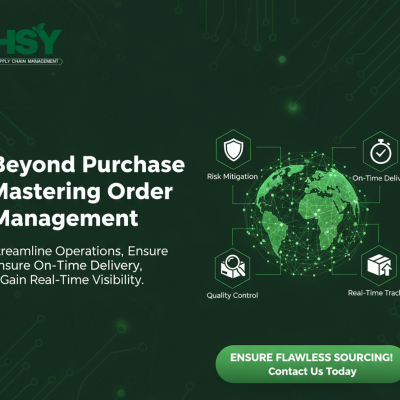

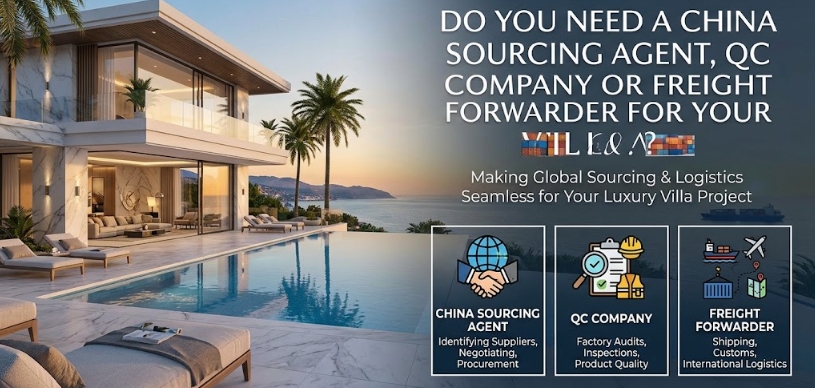
You do not necessarily need all three companies for your villa project, but you must make sure all three jobs get done. A freight forwarder moves cargo, a quality control (QC) company inspects finished products, and a sourcing agent helps you identify factories, evaluate specifications, and coordinate production.
┌─────────────────────────────────────────────────────────────────────────────────┐
│                           VILLA PROCUREMENT LIFECYCLE                           │
├───────────────────┬──────────────────────────┬──────────────────────────────────┤
│   SOURCING AGENT  │        QC COMPANY        │        FREIGHT FORWARDER         │
├───────────────────┼──────────────────────────┼──────────────────────────────────┤
│ • Factory Selection│ • Specification Check    │ • Export Logistics               │
│ • Drawing Review  │ • Workmanship Audit      │ • Ocean Booking                  │
│ • Sample Alignment│ • Defect Identification  │ • Port Clearance                 │
│ • Progress Follow │ • Pre-Shipment Reporting │ • Destination Delivery           │
└───────────────────┴──────────────────────────┴──────────────────────────────────┘
For a simple order—such as buying a single sofa from a supplier you already trust—a freight forwarder is often the only third party you need. However, when you are sourcing a whole-villa package containing custom kitchens, wardrobes, stone, aluminum windows, and loose furniture across ten different factories, the primary challenge is no longer just moving containers or inspecting finished boxes. The main challenge is procurement coordination—ensuring that multiple suppliers build products to your exact architectural drawings, on schedule, and to a consistent specification.
What Is the Difference Between a China Sourcing Agent, QC Company, and Freight Forwarder?
While some service providers offer overlapping capabilities, each entity fulfills a distinct function within the international supply chain.
- China Sourcing Agent: Acts as an operational partner on the ground in China. Their job is to review architectural drawings, pre-screen suitable manufacturers, normalize supplier quotations, coordinate custom samples, follow production schedules, and communicate design updates to the factory floor.
- QC / Inspection Company: Functions as an independent auditor. They visit the factory at designated milestones (during production, pre-shipment, or container loading) to inspect physical goods against an approved spec sheet, sample, or drawing set. They issue an objective report detailing visual defects, dimensional variances, or quantity shortfalls.
- Freight Forwarder: Operates as a transport coordinator. They manage the movement of goods from the factory or warehouse in China to your final destination, handling export customs clearance, ocean or air freight bookings, bill of lading documentation, and local port delivery.
Who Is Responsible for What?
Understanding where one company’s responsibility ends and another’s begins is essential for managing risk across your villa build.
| Procurement Task | Sourcing Agent | QC Company | Freight Forwarder |
| Find & Screen Factories | Yes | No | No |
| Compare Quotations against Drawings | Yes | No | No |
| Manage Sample Development | Yes | No | No |
| Day-to-Day Production Tracking | Yes | No | No |
| Pre-Shipment Quality Inspection | Often Coordinates | Yes | No |
| Warehouse Receiving & Consolidation | Often Coordinates | No | Sometimes |
| Export Documentation & Customs | Coordinates | No | Yes |
| Ocean Freight & Cargo Booking | Coordinates | No | Yes |
| On-Site Installation at Villa | Usually Not | No | Usually Not |
Why Is Whole-Villa Sourcing Different From Buying One Product?
Sourcing materials for a full villa build is not simply a larger version of buying a single product; it is a multi-supplier project management effort. A typical high-value villa build in China involves multiple specialized factories:
                          ┌───────────────────────────┐
                          │   VILLA DRAWINGS & BOQ    │
                          └─────────────┬─────────────┘
                                        │
        ┌──────────────┬────────────────┼──────────────┬──────────────┐
        ▼              ▼                ▼              ▼              ▼
  ┌───────────┐  ┌───────────┐    ┌───────────┐  ┌───────────┐  ┌───────────┐
  │ Kitchen   │  │ Wardrobes │    │ Joinery   │  │  Stone    │  │ Furniture │
  │ Factory   │  │ Factory   │    │ Factory   │  │ Factory   │  │ Factory   │
  └─────┬─────┘  └─────┬─────┘    └─────┬─────┘  └─────┬─────┘  └─────┬─────┘
        │              │                │              │              │
        └──────────────┴────────────────┼──────────────┴──────────────┘
                                        │
                                        ▼
                          ┌───────────────────────────┐
                          │ FOSHAN CONSOLIDATION HUB  │
                          └─────────────┬─────────────┘
                                        │
                                        ▼
                          ┌───────────────────────────┐
                          │    OCEAN FREIGHT / SITE   │
                          └───────────────────────────┘
Managing this multi-supplier workflow remotely introduces distinct operational challenges:
- Inconsistent Quotation Formats: One factory quotes cabinetry using marine plywood with Blum hardware; another quotes particleboard with unbranded runners. Without detailed specification comparison, pricing looks deceptively different.
- Unsynchronized Lead Times: Aluminium windows may take 25 days to produce, custom joinery 45 days, and stone fabrication 35 days. Without unified oversight, finished goods sit in factories accumulating storage fees while waiting for late items.
- Shop Drawing Misalignment: A kitchen factory might alter an island dimension by 50 mm to fit standard board cuts, without realizing it throws off the electrical floor boxes laid by your site team.
- Fragmented Freight Logistics: Shipping individual Less-than-Container Load (LCL) crates from six separate factories incurs high port handling fees, documentation costs, and risk of loss compared to consolidating everything into full 40-foot containers.
Scenario Analysis: Managing Suppliers Independently vs. With Sourcing Coordination
Consider a hypothetical private villa owner sourcing custom kitchen cabinets, walk-in wardrobes, interior doors, bathroom stone vanities, and loose furniture across five separate factories in Guangdong.
+-----------------------------------------------------------------------------------+
|                        VILLA PROCUREMENT COMPARISON                               |
+--------------------------+--------------------------+-----------------------------+
| Operational Stage        | Independent Management   | Coordinated Procurement     |
+--------------------------+--------------------------+-----------------------------+
| Factory Selection        | Selects via online       | Pre-screens suppliers based |
|                          | storefronts or sales     | on export track record      |
|                          | reps with limited        | and factory machinery.      |
|                          | verification.            |                             |
+--------------------------+--------------------------+-----------------------------+
| Shop Drawings & Specs    | Reviews multiple factory | Normalizes drawing standards|
|                          | formats independently;   | across all suppliers to fit |
|                          | high risk of misread     | architectural plans.        |
|                          | site dimensions.         |                             |
+--------------------------+--------------------------+-----------------------------+
| Production Progress      | Relies on verbal updates | Conducts on-site tracking   |
|                          | from sales staff; delays | visits to verify actual     |
|                          | discovered late.         | manufacturing progress.     |
+--------------------------+--------------------------+-----------------------------+
| Quality Control          | Dispatches QC auditor    | Performs pre-shipment audit |
|                          | at the end; defects may  | during fabrication when     |
|                          | require complete rebuilds| corrections can still be   |
|                          | on site.                 | made efficiently.           |
+--------------------------+--------------------------+-----------------------------+
| Consolidation & Shipping | Coordinates five LCL     | Receives, inspects, and     |
|                          | shipments; incurs higher | packs all orders into       |
|                          | terminal handling costs. | consolidated containers.    |
+--------------------------+--------------------------+-----------------------------+
Without dedicated procurement coordination, minor miscommunications during design approval can snowball into costly, irreversible delays once the goods arrive at your villa site overseas.
When Is a Freight Forwarder Enough?
A freight forwarder alone is often sufficient when your procurement scope is simple and clearly defined.
                  ┌────────────────────────────────────────┐
                  │    ESTABLISHED SUPPLIER & SPECIFICATION│
                  └───────────────────┬────────────────────┘
                                      │
                                      ▼
                  ┌────────────────────────────────────────┐
                  │    DIRECT FREIGHT FORWARDER BOOKING    │
                  └───────────────────┬────────────────────┘
                                      │
                                      ▼
                  ┌────────────────────────────────────────┐
                  │      EXPORT / IMPORT & SITE DELIVERY   │
                  └────────────────────────────────────────┘
A freight forwarder is typically all you need if:
- You are buying from an established manufacturer you have worked with previously.
- The products are standard, off-the-shelf items requiring no custom CAD engineering.
- Your order consists of a single large shipment from one factory.
- You or your designer are managing production schedules, shop drawings, and quality checks directly with the supplier.
In this scenario, adding a sourcing agent offers little value. You simply need a logistics provider to handle export customs, ocean shipping, and port delivery.
When Is a QC Company Enough?
An independent inspection company is the right tool when your sourcing decisions are complete, but you need objective verification before paying the final balance.
┌─────────────────────────┐     ┌─────────────────────────┐     ┌─────────────────────────┐
│  Factories Selected &   │ ──► │  Independent Pre-Ship   │ ──► │ Freight Forwarder Ships │
│   Production Managed    │     │   QC Audit Executed     │     │     Approved Goods      │
└─────────────────────────┘     └─────────────────────────┘     └─────────────────────────┘
Hiring a third-party QC company makes sense when:
- You have already chosen your factories and negotiated all commercial terms.
- You have a clear, signed technical specification sheet, finish sample, and shop drawing set.
- You need a qualified inspector to visit the factory, open boxes, check finish quality, measure dimensions, and issue a pass/fail report.
A QC company gives you an objective snapshot of product condition at a single moment. However, they do not manage factory communications, resolve design disputes, or organize logistics across multiple vendors.
When Does a China Sourcing Agent Become Useful?
A sourcing and procurement management team becomes valuable when your project involves multiple custom categories, unvetted suppliers, and complex technical drawings.
┌─────────────────────────┐
│ Architectural Plans /   │
│ Bill of Quantities      │
└────────────┬────────────┘
             │
             ▼
┌─────────────────────────┐
│ SOURCING & PROCUREMENT  │ ──► Pre-screens factories and normalizes quotes
│ COORDINATION TEAM       │ ──► Aligns shop drawings with architectural plans
└────────────┬────────────┘ ──► Coordinates mid-production QC and revisions
             │              ──► Consolidates multi-vendor goods at local hub
             ▼
┌─────────────────────────┐
│ Consolidated Freight &  │
│ Site Delivery           │
└─────────────────────────┘
A sourcing agent is worth considering when:
- You have detailed architectural floor plans, CAD elevations, and a Bill of Quantities (BOQ), but no established supplier network in China.
- You need to compare quotations from multiple factories using standardized material specifications.
- Your project involves custom joinery, kitchen cabinets, and stone that require precise shop-drawing reviews before production starts.
- You want a local team to track manufacturing progress on-site across several facilities in Guangdong.
- You require warehouse space to consolidate goods from multiple factories into unified container shipments.
The Difference Between QC and Production Follow-Up
Many private villa owners confuse quality control inspection with production follow-up. They are fundamentally different functions:
+-----------------------------------------------------------------------------------+
|                   QC INSPECTION vs. PRODUCTION FOLLOW-UP                          |
+--------------------------+--------------------------+-----------------------------+
| Feature                  | Quality Control (QC)     | Production Follow-Up        |
+--------------------------+--------------------------+-----------------------------+
| Primary Objective        | Verify finished product  | Proactively track progress  |
|                          | against specifications.  | and resolve issues early.   |
+--------------------------+--------------------------+-----------------------------+
| Timing                   | Point-in-time milestones | Continuous monitoring       |
|                          | (e.g., pre-shipment).    | throughout production.      |
+--------------------------+--------------------------+-----------------------------+
| Scope of Work            | Count boxes, measure     | Verify raw materials,       |
|                          | dimensions, check finish | audit schedules, handle     |
|                          | defects, issue report.   | drawing revisions.          |
+--------------------------+--------------------------+-----------------------------+
| Operational Focus        | Passive audit (Pass/Fail)| Active intervention and     |
|                          | result.                  | issue resolution.           |
+--------------------------+--------------------------+-----------------------------+
An independent QC report might state that your custom wardrobes are 60% complete and behind schedule. It will not, however, push the factory manager to re-allocate labor, expedite raw material deliveries, or resolve an outstanding drawing detail. That active intervention is the job of production follow-up.
What Should Be Checked Before Custom Villa Products Are Shipped?
For high-value residential interiors, inspection checklists must go far beyond checking shipping marks and box counts. Every custom category requires specific visual and physical checks:
- Custom Kitchens: Carcass board thickness, moisture resistance, edge-banding adhesive quality, drawer mechanism smoothness (e.g., Blum/DTC hardware), door alignment, finish consistency across continuous runs, and appliance cutout dimensions.
- Wardrobes & Built-in Joinery: Panel squareness, veneering consistency, integrated LED channel wiring, concealed hinge adjustment range, and hardware counts.
- Aluminum Windows & Doors: Frame profile thickness, corner seam tightness, thermal break alignment, powder-coat finish consistency, glass certification markings (CE/AS-NZS/IGCC), and seal integrity.
- Cut-to-Size Stone: Slab color matching, vein continuity across adjacent panels, edge profiling, dry-lay assembly layout, thickness tolerance, and reinforced export crating.
- Loose Furniture: Overall dimensions, frame stability, upholstery stitching quality, cushion density, wood/metal finish alignment with approved swatches, and protective packaging.
+-----------------------------------------------------------------------------------+
|                        PRE-SHIPMENT AUDIT WORKFLOW                                |
+-----------------------------------------------------------------------------------+
|  [Verify Approved CAD Drawings] ──► [Check Material Specs & Finishes]            |
|                                                                 │                 |
|  [Approve Crating & Loading] ◄── [Inspect Structural Workmanship]                 |
+-----------------------------------------------------------------------------------+
Do You Need a Warehouse and Consolidation Service?
If your villa project involves products from more than two or three factories, warehouse consolidation is essential. When multiple manufacturers are involved, goods are rarely completed on the exact same day.
  Factory A (Kitchens)    ──── Finished Week 2 ────┐
  Factory B (Stone)       ──── Finished Week 4 ────┼──► [Foshan Warehouse Hub]
  Factory C (Furniture)   ──── Finished Week 5 ────┘           │
                                                               ▼
                                                     [Consolidated 40ft HQ Container]
A dedicated consolidation hub in an industrial center like Foshan allows your procurement team to:
- Receive goods from different factories as they are completed without incurring factory storage fees.
- Perform incoming warehouse inspections, unpacking items to check for transit damage or spec errors before final export.
- Group items strategically to maximize container space and reduce total shipping costs.
- Prepare unified shipping documents (Packing List, Commercial Invoice, Certificate of Origin) for streamlined destination customs clearance.
How to Decide Which Services Your Villa Needs
Use this practical decision matrix to determine the right service combination for your project:
| Your Current Project Situation | Primary Service Required | Secondary Service Required |
| Buying standard products from 1 known supplier | Freight Forwarder | Optional Third-Party QC |
| Buying custom products from 1 known supplier | Third-Party QC Company | Freight Forwarder |
| Have architectural plans, need suppliers & quotes | Sourcing / Procurement Agent | Freight Forwarder |
| Sourcing 4+ custom product categories in Guangdong | Sourcing Agent (with Warehouse) | Freight Forwarder |
| Need multi-factory consolidation & QC | Sourcing Agent (Procurement Hub) | Freight Forwarder |
Essential Questions to Ask Before Hiring a Partner
Before engaging any sourcing agent, inspection firm, or freight forwarder, ask these specific questions to clarify their service scope:
| Question to Ask | Operational Reason | What to Watch Out For |
| How do you pre-screen manufacturers? | Ensures suppliers are selected based on technical capability, not just low prices. | Vague promises without clear factory evaluation criteria. |
| Do you review factory shop drawings against my CAD plans? | Confirms whether the team understands technical drawing alignment. | Agents who simply pass unreviewed drawings back and forth. |
| Who conducts the product inspections? | Clarifies whether inspections are done by in-house staff or third parties. | Claims of “guaranteed quality” without formal inspection reports. |
| Do you have your own consolidation warehouse in Foshan? | Determines whether they can store and group multi-factory orders safely. | Agents who rely on factory floor storage or temporary loading docks. |
| How are your service fees structured? | Clarifies whether costs are flat-rate, hourly, or percentage-based. | Hidden markups embedded within factory product prices. |
| What happens if an item arrives damaged or incorrect? | Establishes claim handling procedures and liability boundaries before ordering. | Promises that “nothing ever goes wrong.” |
Why Foshan Is Central to Villa Sourcing
Foshan, located in Guangdong Province, is a major manufacturing ecosystem for residential construction materials, custom cabinetry, sanitary ware, tiles, stone, and furniture. Neighboring production hubs such as Shunde (furniture), Guzhen (lighting), and Dongguan (high-end joinery) all sit within a two-hour radius.
                  ┌────────────────────────────────────────┐
                  │      FOSHAN MANUFACTURING CLUSTER      │
                  │  (Building Materials, Tiles, Stone)    │
                  └───────────────────┬────────────────────┘
                                      │
     ┌────────────────────────────────┼────────────────────────────────┐
     ▼                                ▼                                ▼
┌─────────┐                      ┌─────────┐                      ┌─────────┐
│ SHUNDE  │                      │ GUZHEN  │                      │DONGGUAN │
│Furniture│                      │Lighting │                      │ Joinery │
└─────────┘                      └─────────┘                      └─────────┘
For a private villa owner, this industrial concentration makes Foshan a practical base for procurement coordination. Having a local team in Foshan simplifies factory visits, shop-drawing reviews, mid-production checks, and warehouse consolidation across multiple supply chains.
Key Takeaways
- Differentiate the Three Roles: Sourcing agents help you select suppliers and manage specs; QC companies inspect finished goods; freight forwarders handle ocean transport and customs logistics.
- Match Services to Project Scale: Simple, single-factory orders only require a freight forwarder. Multi-category, custom villa builds require dedicated procurement coordination.
- Separate Follow-Up from Inspection: QC is a point-in-time audit. Production follow-up is an ongoing project management effort that keeps factories on schedule.
- Enforce Technical Specifications: Inspections are only as effective as the CAD drawings, finish samples, and spec sheets used as a baseline.
- Utilize Warehouse Consolidation: Grouping multi-factory orders at a central warehouse in Foshan reduces shipping costs and protects finished goods.
- Maintain Local Trade Support: Sourcing agents and forwarders manage China-side procurement, but you still need local trade professionals on site for final installation.
Frequently Asked Questions
Do I need a sourcing agent if I already have a freight forwarder?
If you are sourcing multiple custom categories from unvetted suppliers, yes. Freight forwarders handle logistics and shipping documentation, but they do not evaluate factory capabilities, review shop drawings, manage production delays, or inspect product specifications.
What is the difference between a sourcing agent and a QC company?
A sourcing agent helps you select manufacturers, compare quotes, review drawings, and coordinate production across your build lifecycle. A QC company is hired to inspect finished or semi-finished goods at a specific moment, providing an objective pass/fail audit.
Can a freight forwarder inspect my villa products?
Standard freight forwarders do not perform technical quality control. While some offer basic warehouse receiving checks (verifying carton counts and outer packaging condition), they do not inspect joinery details, stone finishes, or CAD drawing accuracy.
Do I need an independent QC company when buying from China?
If you work with an independent sourcing agent who performs structured in-house inspections with detailed photographic reporting, an external QC firm may not be necessary. However, if you manage factories directly without local representation, hiring an independent QC company before paying your final balance is strongly recommended.
Who checks whether custom kitchen cabinets match my drawings?
This is the responsibility of your sourcing management team, interior designer, or architect during shop-drawing reviews and pre-shipment inspections. Factories build according to the shop drawings you sign; they do not independently verify if those drawings match your site conditions.
Can one company handle sourcing, QC, and shipping?
Yes, some procurement coordination companies handle supplier selection, technical drawing alignment, factory inspections, warehouse consolidation, and shipping coordination. However, verify their exact service scope and fee structure upfront.
Do I need a sourcing agent for a single custom kitchen?
Usually no. If you are ordering only one custom kitchen, working directly with a reputable kitchen manufacturer and hiring an independent QC inspector for a pre-shipment audit is generally more cost-effective.
Who handles installation after the goods arrive at my villa?
Local installation must be performed by your local general contractor, finish carpenters, stone fabricators, and tradespeople. China-based sourcing agents and factories handle manufacturing and delivery to your site, but they do not provide local installation labor overseas.
Managing Your Villa Procurement with HSY Sourcing
If you are planning a high-value private villa project and already have architectural drawings, CAD plans, 3D renders, or a detailed Bill of Quantities (BOQ), HSY Sourcing can help coordinate your procurement process in China.
Based in Foshan, Guangdong, HSY Sourcing acts as a local procurement partner connecting overseas private homeowners, architects, and interior designers with vetted manufacturers. Services include:
- Matching project requirements with qualified, capability-verified factories.
- Comparing vendor quotations on a normalized, specification-matched basis.
- Aligning factory shop drawings with your architectural plans.
- Conducting mid-production visits and pre-shipment quality control audits.
- Receiving, inspecting, and consolidating multi-factory shipments at a Foshan warehouse hub.
- Coordinating container loading, export documentation, and ocean freight logistics.
To determine which parts of your villa build need sourcing management, independent inspection, or direct logistics, share your project details and drawings with HSY Sourcing.
Suggested Internal Links
- How to Turn Your Villa BOQ into a China Sourcing Plan
- Building a Luxury Villa from the US: Managing Multiple Chinese Suppliers Remotely
- What Should You Specify When Ordering Custom Kitchen Cabinets from China?
- Can Chinese Factories Work Directly From Your Villa Floor Plans and 3D Designs?
- How to Source Windows and Doors from China for a Villa Project
- China vs Europe: Where Should You Source Custom Villa Interiors?