
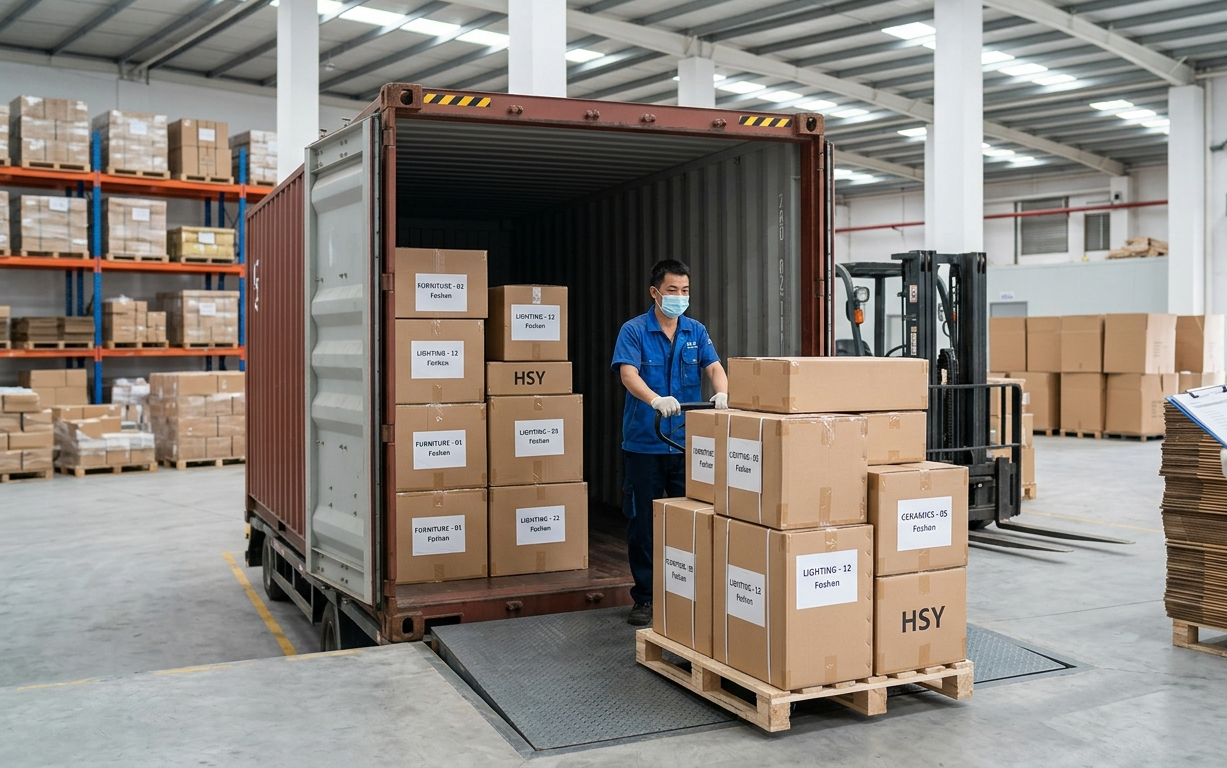
Sourcing products from Foshan offers unparalleled access to high-quality furniture, building materials, and lighting. However, if you are buying handmade woven lighting from one factory, ceramic tiles from another, and sofas from a third, managing the logistics can quickly erode your profit margins.
Shipping multiple LCL (Less than Container Load) orders directly from different suppliers results in duplicate customs fees, higher freight rates, and a logistical nightmare upon arrival. The practical solution is shipment consolidation—combining goods from multiple factories into a single FCL (Full Container Load). Here is exactly how to manage this process without delays.
Why is Consolidating Shipments from Foshan So Complex?
The biggest hurdle in consolidation is timing. Foshan factories operate independently, meaning their production schedules rarely align. A lighting supplier might finish your order in 15 days, while a custom furniture manufacturer might take 45 days.
If you do not actively manage these timelines, you end up paying high storage fees while waiting for the slowest supplier, or worse, factories might ship goods to the port prematurely, leading to lost cargo.
How Do You Synchronize Production Lead Times?
You cannot assume factories will communicate with each other. You must take control of the timeline from day one.
- Build in a Buffer: Always add a 7 to 10-day buffer to the estimated lead times provided by your suppliers.
- Establish a Master Schedule: Create a centralized tracker. If the furniture factory is delayed, immediately notify the lighting factory to hold their production or delay shipping to the consolidation point.
- Negotiate Storage Terms: Before placing the PO (Purchase Order), negotiate 15 to 30 days of free storage at the factory level. This prevents you from paying third-party warehouse fees while waiting for other orders to finish.
Where Should You Warehouse Your Goods Before Shipping?
You have two realistic options for holding your goods:
- Using an Anchor Supplier: If one supplier accounts for 80% of your container volume, you can ask them to act as the loading point. The smaller suppliers will ship their goods to this “anchor” factory. Caution: Only do this if you have a strong relationship with the anchor factory, as they will see your other suppliers’ pricing and contact details on the cartons.
- Using a Third-Party Consolidation Warehouse: This is the most secure method. All suppliers ship their completed goods to a neutral warehouse in or near Foshan. This keeps your supplier network confidential and allows for professional palletizing and container loading.
How Can You Ensure Quality Control Before Consolidation?
Once goods are loaded into a consolidated container, fixing a defect is nearly impossible.
Never wait until the goods arrive at the consolidation warehouse to perform Quality Control (QC). Send inspectors directly to the individual factory floors before the goods are packed and dispatched. If an issue is found with a batch of lighting fixtures, it must be reworked at the factory, not at the port.
Key Takeaways
- Timing is everything: Do not let factories dictate the shipping schedule; manage the lead times centrally.
- Protect your data: Use a third-party warehouse if you want to prevent suppliers from learning about each other.
- Pre-shipment QC is mandatory: Inspect goods at the factory level before they merge into the consolidation warehouse.
- Consolidation saves money: Combining LCL shipments into an FCL container drastically reduces freight and destination port fees.
FAQ
1. Who provides the commercial invoice and packing list for a consolidated shipment?
When consolidating, your sourcing agent or consolidation partner will combine the individual factory documents into one master Commercial Invoice and one master Packing List for customs clearance. You only deal with one set of documents.
2. Can I consolidate goods from Foshan and Guangzhou in the same container?
Yes. Geographically, Foshan and Guangzhou are adjacent. A common strategy is to have Guangzhou garment or electronics suppliers send their goods via local truck to a consolidation warehouse in Foshan (or vice versa) to load into a single container.
3. Do Foshan factories charge extra to send goods to a consolidation warehouse?
Typically, factories quote EXW (Ex Works) or FOB (Free on Board). If you need them to deliver to a warehouse within Foshan, you will need to negotiate this local delivery fee (often very low, or free for larger orders) upfront.
About HSY Sourcing Team
Managing multiple suppliers across different cities requires more than just emails; it requires boots on the ground. While massive, generalized sourcing groups might treat your order as just another ticket number, the HSY Sourcing Team offers hands-on, localized supply chain management.
Based right in the manufacturing heart of Guangdong, we don’t just find suppliers. We actively synchronize production schedules, perform rigorous on-site factory quality control, and manage your consolidation warehouses. Whether you are shipping heavy furniture from Foshan, denim from Guangzhou, or a mix of both, we handle the logistics so you receive one perfect container, one set of documents, and zero headaches.