
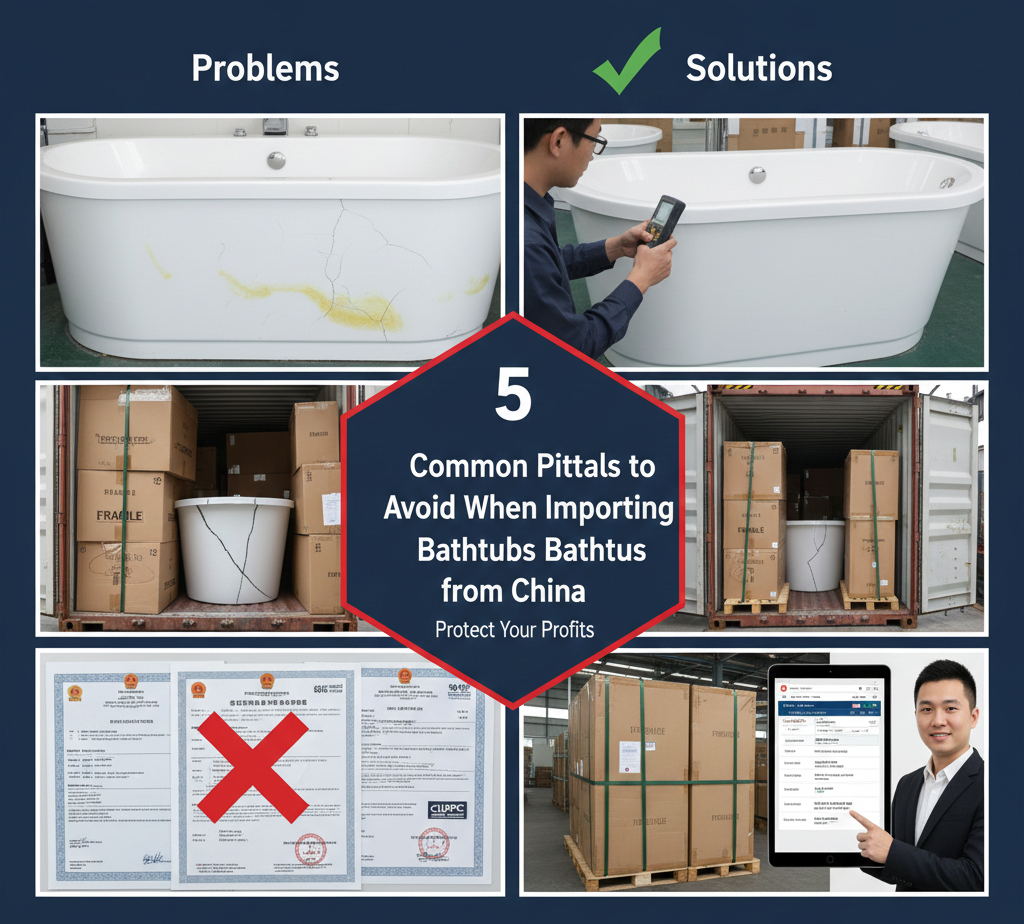
Importing bathtubs is not like importing T-shirts or phone cables. It is a high-stakes game. The product is bulky, fragile, expensive to ship, and heavily regulated. If you make a mistake with a T-shirt, you can sell it at a discount. If you make a mistake with a bathtub—whether it cracks during shipping or fails a plumbing inspection—it becomes a total loss. You can’t easily repair it, and you certainly can’t ship it back to China.
Yet, despite the risks, the rewards are massive. China, and specifically Foshan, remains the world’s factory for high-quality sanitary ware. The margins for importers who get it right are significant.
At HSY Sourcing, we have seen every mistake in the book. We have seen containers arrive with shattered goods. We have seen “pure white” tubs turn yellow after six months. We have seen shipments stuck at customs because of missing paperwork.
We wrote this guide not to scare you, but to prepare you. Success in sourcing bathtubs isn’t about luck; it’s about knowing where the traps are before you step into them. Here are the five most common pitfalls we see, and exactly how to avoid them.
Is the material you paid for actually the material you are getting?
The first and most common pitfall happens long before the product is shipped: it happens in the material selection. To the untrained eye, a brand-new white bathtub looks like a brand-new white bathtub. But in the factory, there is a massive difference between “pure acrylic” and the cheaper alternatives that some suppliers might try to swap in.
One of the biggest issues we face is the “yellowing” problem. High-quality bathtubs are made from continuous-cast cross-linked acrylic sheets (often referred to as PMMA). This material is UV stable. You can put it under a skylight for ten years, and it will remain bright white.
However, to save cost, some unscrupulous factories use “composite board” or ABS plastic capped with a very thin layer of acrylic. On the day you inspect it, it looks perfect. But after a few months of use, or exposure to sunlight, the material starts to degrade. It turns a sickly yellow color or develops fine spider-web cracks. Once this happens, your brand reputation is destroyed.
Another material trap lies in the reinforcement. Turn a bathtub upside down. You will see a rough, fibrous layer. This is the fiberglass and resin reinforcement. In a quality tub, this layer is thick, uniform, and fully cured. In a “cost-down” tub, factories mix too much calcium powder (chalk) into the resin to save money. This makes the reinforcement brittle. If a heavy person stands in the tub, the bottom might flex or even crack because the support structure is weak.
✅ The Solution: You cannot verify material quality just by looking at a photo. You need an agent on the ground to check the raw material storage at the factory. We also perform “light tests” (shining a strong light through the shell) and check the cross-section of the material to ensure you are getting the 100% pure acrylic you paid for, not a cheap sandwich of plastics.
Will your investment survive the ocean journey intact?
Bathtubs are mostly air. They are large, hollow shells. This makes them structural nightmares when it comes to shipping. If you stack them incorrectly, the weight of the top tubs will crush the bottom ones. If you pack them too loosely, the vibration of the ship engine and the swaying of the ocean will cause them to rub against each other, leading to scratches or micro-cracks.
The pitfall here is assuming that the factory’s “standard packaging” is good enough for your specific needs. It often isn’t.
Many factories are used to shipping domestic orders where the goods travel by truck for a few hours. They might use a simple cardboard box and a thin plastic bag. If you put that in a shipping container for 30 days, moving through cranes and rough seas, you are asking for trouble.
We often see “nesting” done wrong. Nesting is when factories stack tubs inside each other to save space. It’s a great way to lower shipping costs, but if the factory doesn’t place high-density foam blocks perfectly between the shells, the friction will ruin the finish.
✅ The Solution: Packaging specifications must be part of your contract. For e-commerce clients, we recommend honeycomb cardboard boxes that can withstand a drop test. For wholesalers, we supervise the loading process personally. We play “Tetris” with the container, ensuring that heavy items are on the bottom, lighter items are on the top, and everything is strapped down so tight that nothing moves, even in a storm.
Do your products actually meet local plumbing codes?
This is the pitfall that can get you sued or force you to recall an entire shipment. Plumbing is a regulated industry. You cannot just install any fixture in a home, especially in North America, Europe, or Australia.
In the United States and Canada, the magic word is cUPC. If your bathtub does not have a valid cUPC certification, most licensed plumbers will refuse to install it because they don’t want to lose their license. If you are selling to a hotel project, the building inspector will ask for the certification number. If you don’t have it, the tubs have to be ripped out.
Here is the trap: Many Chinese factories will say, “Yes, we have cUPC.” They might even send you a certificate. But is it valid? Is it for the specific model you are buying? Or is it an expired certificate borrowed from another company? We have seen factories use Photoshop to change the dates on old certificates. We have also seen factories that claim their material is certified, but the tub itself is not.
In Europe, you need to worry about CE marking and REACH compliance (ensuring no toxic chemicals are used).
✅ The Solution: Never trust a PDF file. At HSY Sourcing, we verify certifications directly with the issuing body (like IAPMO for cUPC). We check that the factory name on the certificate matches the factory we are paying. We ensure the specific model number is listed. We do this due diligence before you send a single dollar of deposit.
Have you calculated the true “landed cost” beyond the factory price?
New importers often get excited when they see the FOB (Free On Board) price of a bathtub in China. “Wow, only $300? I can sell this for $1,200!”
This math is dangerous because it ignores the unique costs associated with bulky goods. This is the “hidden cost” pitfall.
- Freight Volume: You are paying to ship volume, not weight. A 40-foot container might only hold 40 to 60 freestanding tubs depending on the size and packing method. If ocean freight rates spike, your cost-per-unit skyrockets.
- Anti-Dumping Duties (ADD): Many countries have imposed special tariffs on Chinese ceramic and bathroom products. These rates can be punitive—sometimes over 200%. If you classify your product under the wrong HS Code, you could be hit with a tax bill that is higher than the cost of the goods.
- Last Mile Delivery: Delivering a bathtub to a customer’s door requires a truck with a liftgate and a scheduled appointment. FedEx or UPS won’t just leave it on the porch.
✅ The Solution: You need a comprehensive landed cost analysis. We help you estimate the ocean freight per unit based on the loading quantity, advise on the correct HS Codes, and look at the whole picture so you know your true profit margin.
Can you trust the factory’s internal quality report?
Every factory in China has a QC (Quality Control) department. They will tell you, “Don’t worry, we check 100% of the goods.” The pitfall is believing that their definition of “acceptable” is the same as yours.
Factory QC is often pressured to get goods out the door. If there is a small scratch on the back, they might buff it out. If the drainage hole is 2mm off-center, they might think “close enough.” But for a Western consumer paying top dollar, “close enough” is not acceptable.
A specific issue with bathtubs is drainage. The bottom of the tub must have a precise slope so that all water flows to the drain. If the mold is old, water might pool in the corner, leading to mold buildup. A factory QC inspector might not take the time to water-test every tub.
✅ The Solution: You need third-party inspection. This is non-negotiable. At HSY Sourcing, we perform water retention tests, check overflow drains for leaks, and use color cards to ensure consistency. If we find a defect, we demand the factory fix it before the goods are packed.
Conclusion
Importing bathtubs from China offers an incredible opportunity to scale your business. The manufacturing capabilities in Foshan are truly world-class, but the difference between a profitable shipment and a financial disaster lies in the details.
It lies in the thickness of the fiberglass, the validity of a certificate, the density of the packaging foam, and the accuracy of the loading plan. These are not things you can manage effectively through email. You need a partner who can physically go to the factory.
At HSY Sourcing, we specialize in this category. We navigate these pitfalls every day to ensure that when your container arrives, you open it with a smile, not a sigh of relief.