
Key Takeaways:
- Residential Specs Fail in Commercial Spaces: Using standard 25kg/m³ foam for hotel lobbies or rental apartments guarantees the sofa will flatten and fail within the first year. Commercial seating requires a minimum 40kg/m³ High-Resilience (HR) foam.
- Hidden Frame Degradation: Frames built with unseasoned wood (moisture content above 12%) will warp, squeak, or grow mold during ocean freight. Kiln-dried solid wood is non-negotiable.
- Compliance is Mandatory: Fabrics must be engineered at the factory level to pass local fire codes (e.g., CAL 117 or BS 5852) and high-traffic abrasion tests.
- Blind QC is a Financial Risk: Inspecting a finished, upholstered sofa tells you nothing about its structural integrity. Quality control must occur mid-production while the frame and suspension are still exposed.
While Foshan is globally recognized as the epicenter for architectural building materials like aluminum windows and doors, its adjacent districts (Lecong and Longjiang) form the world’s largest furniture manufacturing cluster. For developers outfitting a 200-room hotel or a luxury apartment complex, consolidating both building materials and FF&E (Furniture, Fixtures, and Equipment) procurement in Foshan offers unmatched cost leverage.
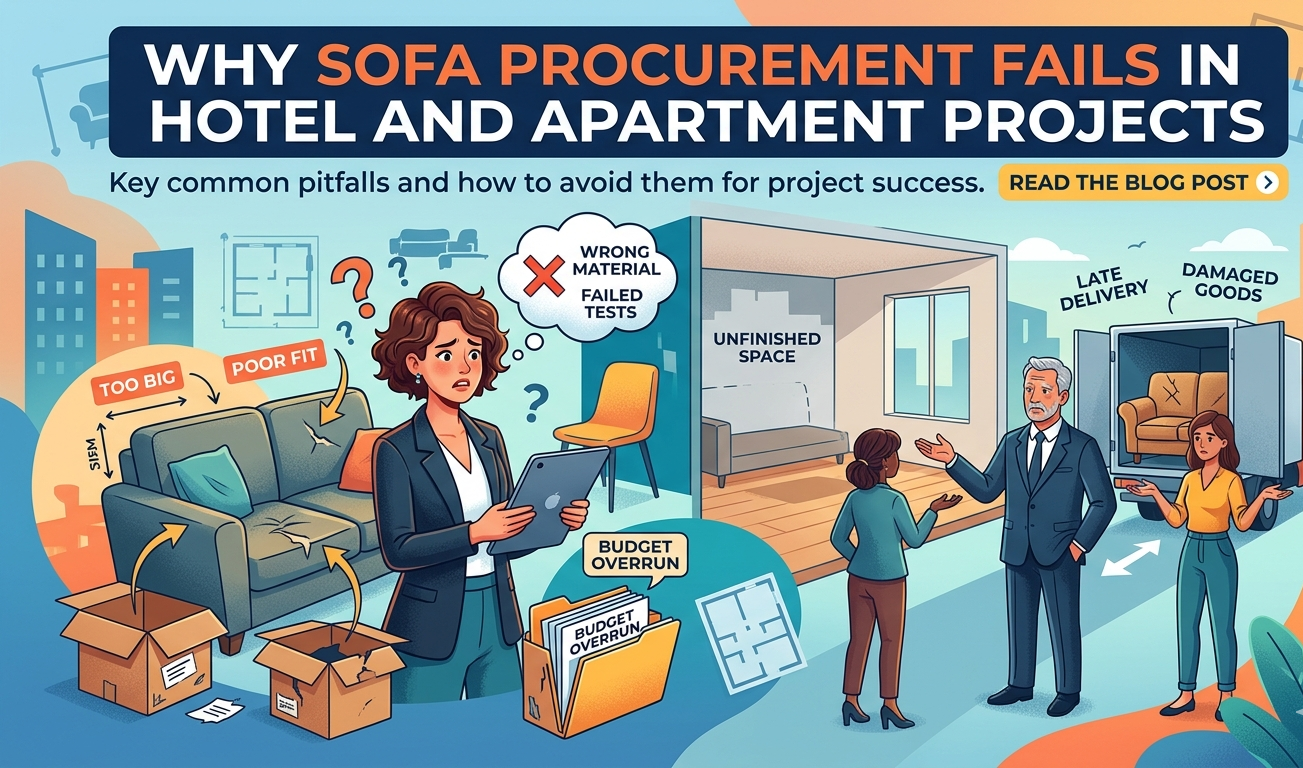
However, sourcing soft goods like sofas carries unique risks. Hard building materials can be easily measured and tested; the critical components of a sofa are hidden under fabric. When project buyers focus only on external aesthetics and unit price, procurement fails. Here is exactly where the breakdowns occur and how to prevent them.
Are You Specifying Residential Foam for Commercial Use?
The most frequent reason project sofas are replaced prematurely is foam collapse. When a factory aggressive cuts costs to win a commercial bid, the first thing they downgrade is the internal polyurethane foam.
A standard residential sofa might use a foam density of 25kg/m³ to 28kg/m³. If you place that same sofa in a high-traffic hotel lobby or a heavily used rental apartment, the foam cells will permanently crush within months. The fabric will loosen, wrinkle, and look entirely dilapidated.
For commercial procurement, your Bill of Quantities (BOQ) must explicitly dictate the structural metrics:
- Seat Cushions: Must utilize High-Resilience (HR) foam with a minimum density of 40kg/m³ to 45kg/m³.
- Backrests: Can use slightly softer foam for comfort, but should not drop below 30kg/m³.
Does the Internal Frame Meet High-Traffic Structural Demands?
A beautiful fabric exterior means nothing if the internal skeleton fails. In budget-focused procurement, factories frequently substitute solid hardwood with MDF (Medium Density Fiberboard) or cheap plywood. Under the daily strain of hotel guests or apartment tenants, MDF joints loosen, causing the sofa to squeak and eventually collapse.
Furthermore, remote buyers rarely specify wood moisture content. If the factory uses green or unseasoned wood, the frame will shrink and crack as it dries. Worse, if the moisture content exceeds 12% and the sofa sits in a humid shipping container for 30 days, mold will aggressively develop inside the upholstery.
You must require kiln-dried solid hardwood (such as larch or eucalyptus) and ensure your local agent physically tests the wood with a moisture meter before assembly.
Have You Verified Local Fire and Abrasion Compliance?
Procuring commercial furniture involves strict legal liability. You cannot simply select a fabric from a factory’s standard swatch book and assume it is legal to install in an Australian, US, or European commercial property.
- Abrasion Resistance: Hotel and rental apartment fabrics must endure constant friction. Specify commercial fabrics that pass rigorous Wyzenbeek or Martindale tests (aiming for 50,000+ double-rubs).
- Fire Flammability Standards: Commercial spaces have strict fire codes. Depending on your project’s location, the fabric and internal foam must pass specific retardancy tests, such as CAL 117 (US) or BS 5852 / Crib 5 (UK). Factories must use treated materials and provide valid testing certificates to pass your local building and safety inspections.
Why Is Post-Production Quality Control Too Late?
A standard practice in international sourcing is reviewing pre-shipment photos. The factory sends a picture of a flawless, fully upholstered “golden sample,” and the buyer transfers the final balance.
This is a massive vulnerability. Once the fabric is stapled to the frame, you cannot verify if the factory actually used the heavy-duty serpentine springs, the 40kg/m³ foam, or the kiln-dried hardwood you contracted them for.
Quality Control (QC) for commercial seating must be conducted in stages. An inspector must be on the factory floor mid-production to photograph and measure the raw wooden frame and suspension system before the upholstery phase hides the evidence.
Why Choose HSY Sourcing for Your FF&E Project?
At HSY Sourcing, we leverage Foshan’s complete supply chain ecosystem. We understand that outfitting a real estate development requires both heavy building materials (like doors and windows) and highly customized interior FF&E. We manage the entire spectrum on the ground.
- Technical Specification Enforcement: We do not rely on factory goodwill. We write your specific requirements for foam density, Wyzenbeek ratings, and wood moisture into local, binding manufacturing contracts.
- Mid-Production Inspections: Our team visits the Longjiang furniture factories while your frames are still bare. We physically verify the internal engineering before allowing the factory to proceed to upholstery.
- Factual Transparency: We provide unedited, real-time photos from the assembly line. You see exactly what materials are going into your products.
- Cross-Category Consolidation: If you are buying aluminum windows from Dali and sofas from Lecong, we synchronize the production timelines. We receive all goods at our Foshan warehouse and strategically consolidate them into Full Container Loads (FCL)—packing heavy materials at the base and lighter FF&E on top to maximize your freight efficiency and prevent transit damage.
Visit www.hsysourcing.com to share your FF&E schedules and interior design drawings. Let us build a reliable, commercial-grade supply chain for your next development.
Frequently Asked Questions (FAQ)
Q: Can Foshan factories manufacture custom sofas based on our interior architect’s 3D renderings?
A: Yes. Foshan’s infrastructure is built for OEM (Original Equipment Manufacturer) production. We take your architect’s CAD drawings or 3D renders, work with the factory to develop a physical prototype, and refine the pitch, foam layering, and fabric selection before approving bulk production.
Q: What is the Minimum Order Quantity (MOQ) for custom commercial sofas?
A: For entirely bespoke designs requiring new frame engineering, factories usually request 10 to 20 pieces. However, if you select an existing, structurally sound factory design and only customize the commercial upholstery and foam density, we can frequently negotiate lower MOQs for boutique projects.
Q: How do you prevent leather or fabric goods from suffering moisture damage during ocean freight? A: Ocean transit introduces extreme humidity and temperature swings. We mandate strict export packaging protocols: sofas must be wrapped in heavy-duty, sealed moisture-barrier plastics, and industrial desiccant packets must be placed both inside the packaging and throughout the shipping container to absorb ambient moisture.