
Moving a product from a concept to a shipping container is the most dangerous phase for any brand. Many businesses hire design firms that produce beautiful 3D renders, only to find out months later that the product is impossible to manufacture at scale or within budget.
Choosing the right product development service isn’t about finding the best artist; it’s about finding the best bridge between your vision and the factory floor.
Why Does “Design for Manufacturing” (DFM) Matter More Than Aesthetics?
In the world of Chinese manufacturing—whether you are developing complex Products or structural furniture—a design is only as good as its technical execution. Many “product developers” focus on the “what” but ignore the “how.”
A service that understands DFM will evaluate your material choices (like fabric weight or wood density) and assembly methods early on. This prevents costly “re-tooling” mid-production and ensures your target retail price remains realistic. If a service doesn’t talk to you about tolerance levels or scrap rates during the design phase, they aren’t developing a product; they are just drawing a picture.
How Can You Tell if a Service Is a “Paper Agency” or an Execution Team?
There is a massive difference between an agency that operates from a sleek office in a capital city and a team that spends its time on the factory floor in Foshan or Guangzhou.
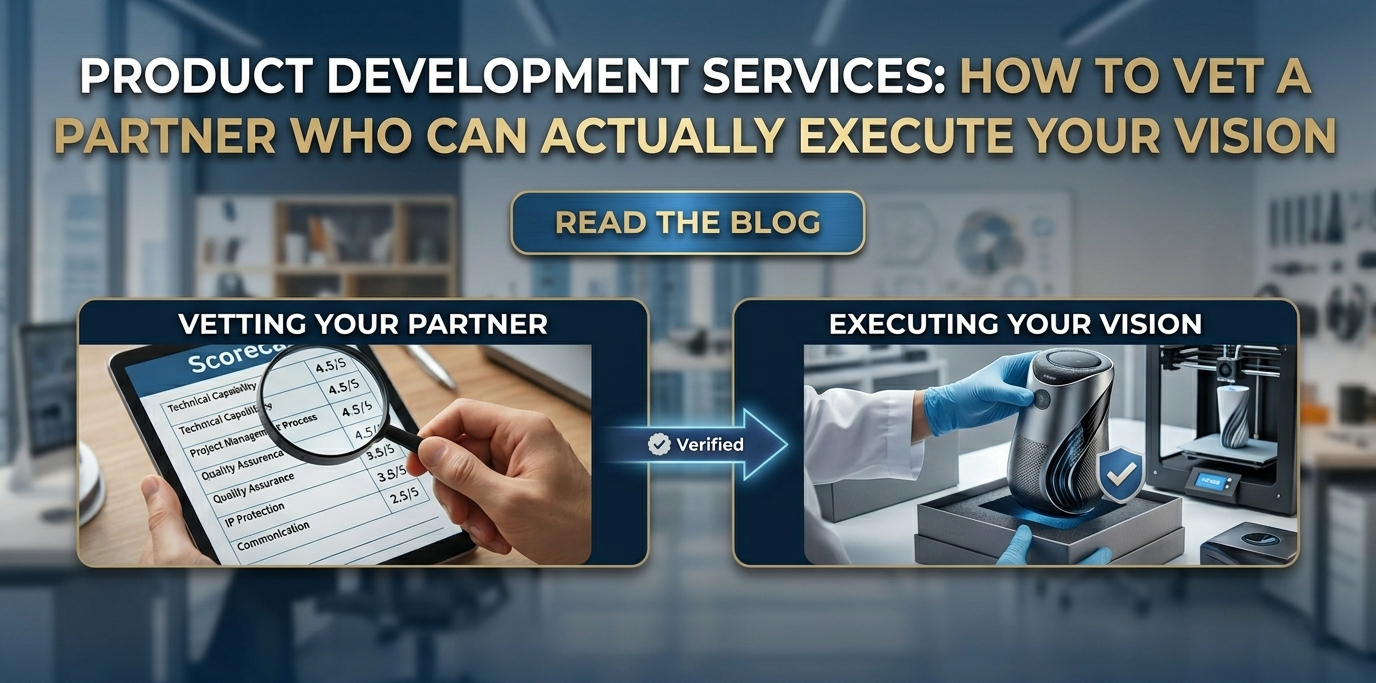
To vet a potential partner, ask them about their Sourcing and Sampling Protocol.
- The Paper Agency: Will send your files to three random factories and wait for quotes.
- The Execution Team: Will physically visit the workshops, evaluate the machinery’s capability to handle your specific project, and troubleshoot the prototype in person with the factory engineers.
What Core Technical Capabilities Are Non-Negotiable?
The right partner should provide more than just “communication.” You should look for:
- Tech Pack Development: They must be able to translate your idea into a professional technical file that a Chinese factory foreman can understand without ambiguity.
- Material Science Knowledge: Whether it’s the chemistry of products or the load-bearing limits of a lighting fixture, they should understand the raw materials.
- On-Site Prototyping Management: They should be there to catch mistakes during the first sample run, not after it arrives at your door.
Key Takeaways
- Prioritize Manufacturability: A pretty render that can’t be built is a waste of money.
- Location is Capability: A partner based near the industrial clusters (like Guangdong) has more control over the supply chain.
- Vetting is Hands-On: Ask for examples of how they solved a technical problem during the sampling phase of a previous project.
- Document Ownership: Ensure you own all tech packs and molds at the end of the development cycle.
FAQ: Choosing a Development Partner
1. How much should I expect to pay for product development?
Fees vary wildly. Some services charge a flat project fee, while others take a percentage of the first production run. Be wary of “free” development services; they often bake their margins into the unit price, making it harder for you to scale later.
2. Should my developer also be my sourcing agent?
Ideally, yes. When the team that developed the tech pack is also responsible for quality control during mass production, there is a clear “chain of custody.” This prevents the factory from blaming “bad designs” for “bad production.”
3. How long does the development process take?
For a standard apparel or furniture project, expect 4 to 8 weeks for the design and sampling phase. Complex hardware or custom-molded items can take 3 to 6 months.
About HSY Sourcing Team
At HSY Sourcing, we don’t believe in idealized marketing or “perfect” AI-generated supply chains. We believe in the reality of the factory floor. Based in the heart of the Foshan and Guangzhou manufacturing hubs, our team acts as your technical eyes and ears on the ground.
We specialize in taking the “impossible” out of product development. Whether you are dialing in the perfect inseam tolerance for a denim line, engineering custom handmade lighting, or sourcing specialized industrial materials, we focus on execution. We manage the technical details, the sampling iterations, and the factory communication so that your final product matches your original vision—down to the last millimeter.
Let’s turn your concept into a reality. Visit us and let’s discuss your next project.