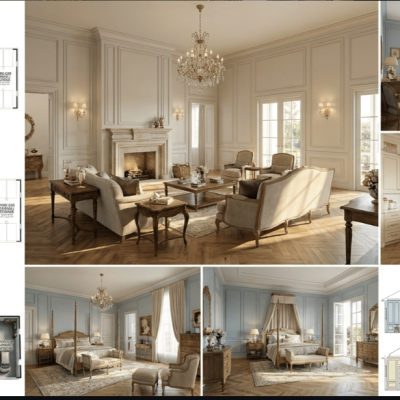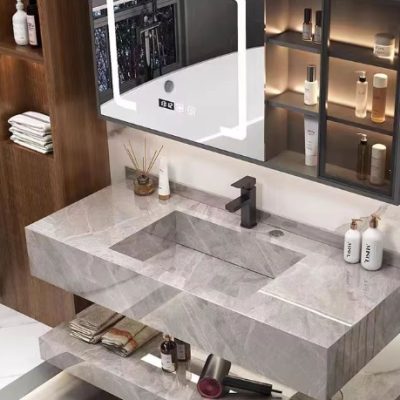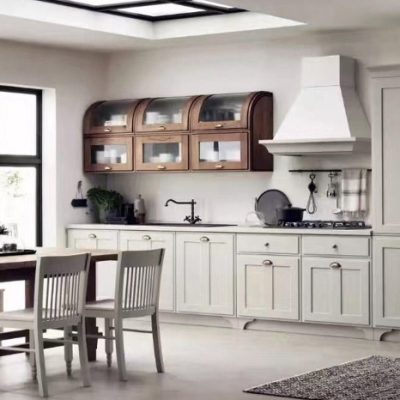

Managing the supply chain for a commercial real estate development—whether a mid-rise apartment complex, a boutique hotel, or a portfolio of luxury villas—involves coordinating highly fragmented product categories. A typical interior fit-out requires synchronizing structural windows, porcelain flooring, custom millwork, upholstered seating, and complex bathroom fixtures.
When these items are procured from geographically scattered factories across different provinces, the project faces compounding logistics costs, communication delays, and cross-category assembly errors.
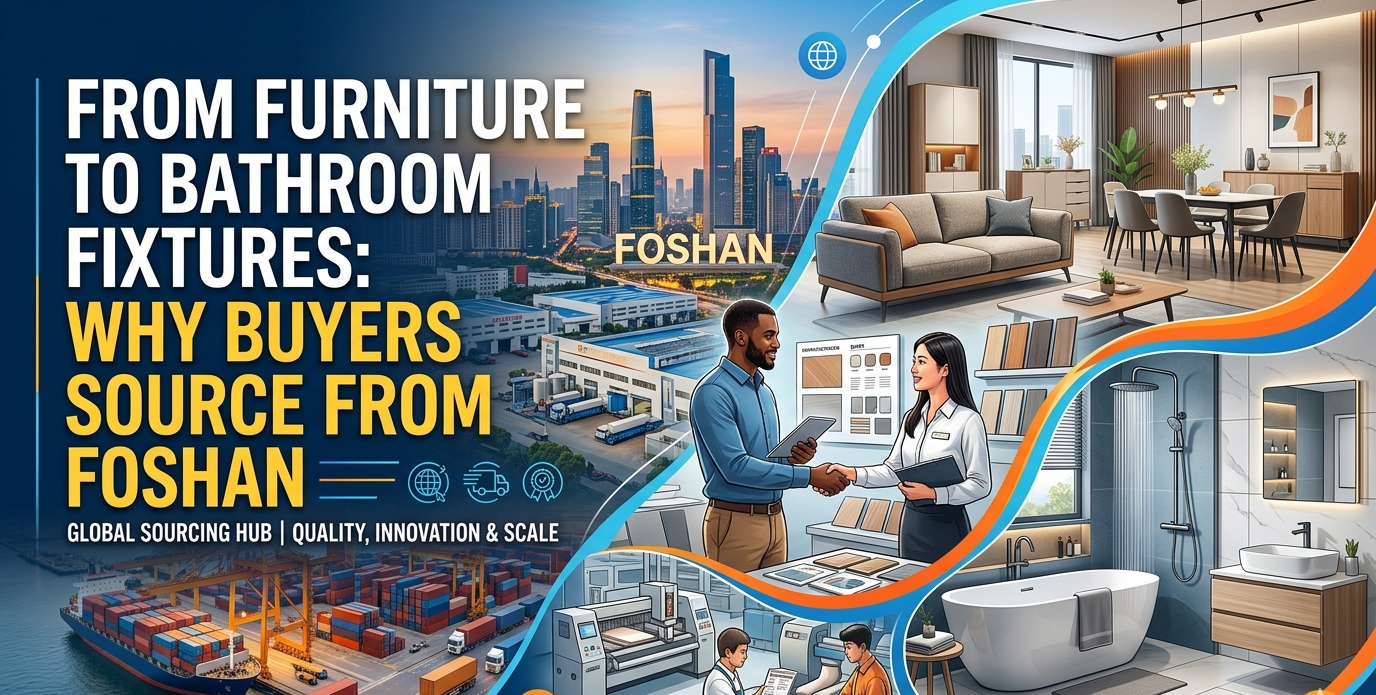
Foshan, a major industrial city in Guangdong Province, has established itself as the global benchmark for one-stop interior procurement. Sourcing from this singular hub allows institutional buyers to leverage localized industrial clusters, streamlining everything from technical compliance to mixed-container shipping.
Key Takeaways
- Geographic Hyper-Specialization: Sourcing ceramic tiles, aluminum fenestration, contract furniture, and sanitary ware within a 50-kilometer radius minimizes domestic transit times and cross-factory friction.
- Container Density Optimization: Consolidating heavy structural materials (like tiles and toilets) with volumetric items (like sofas and lighting) maximizes container weight and space utilization, significantly lowering ocean freight per unit.
- Cross-Category Compatibility: On-the-ground management ensures that technical dimensions, plumbing connections, and finish aesthetics are physically cross-checked between different factories before export.
Why does fragmented sourcing across different regions increase project risk?
Fragmented procurement introduces structural vulnerabilities to a project’s timeline and budget. If a developer sources porcelain tiles from one province, bathroom vanity units from another, and plumbing fixtures from a third, they become the default coordinator of a highly unstable supply chain.
The primary risk is a lack of centralized accountability. If a bathroom vanity arrives on-site and the pre-drilled countertop holes do not align with the thread specifications of the faucets sourced from a different vendor, both factories will deny liability.
Logistically, managing multiple regional vendors increases tracking overhead. A production delay at a single factory can stall a multi-product shipment, leading to split container fees, expensive Less-than-Container Load (LCL) rates, or unexpected storage charges at the port.
How does Foshan’s industrial clustering lower procurement overhead?
The core structural advantage of Foshan is the high density of its specialized manufacturing districts. Rather than operating as general fabricators, separate zones within Foshan have spent decades refining highly integrated supply chains for specific interior categories.
Within a short driving distance, project buyers can access tier-one contract manufacturers across the region:
- Shunde District (Lecong & Leliu): The world’s largest furniture manufacturing hub, specializing in hotel case goods, custom wardrobes, and commercial seating.
- Chancheng District (Shiwan): The central hub for commercial-grade porcelain tiles, sintered stone slabs, and technical architectural ceramics.
- Nanhai District (Dali): A massive industrial cluster for aluminum extrusion, commercial window systems, and structural architectural facades.
- Foshan Sanitary Ware Cluster: Located across Chancheng and Shunde, specializing in vitreous china toilets, integrated smart bidets, and premium brassware faucets.
Because raw material refineries, plating shops, and specialized packaging plants sit adjacent to primary assembly factories, local manufacturers run with low inventory overhead and shortened lead times. These efficiencies translate into lower prices for volume commercial buyers.
How does mixed-product consolidation lower total landed shipping costs?
Ocean freight is billed based on container volume, meaning that maximizing both the physical weight capacity and volumetric space of every container directly lowers your landed costs.
Interior finishing materials generally fall into two distinct logistical categories:
- High-Density Cargo: Materials like porcelain tiles, marble countertops, and ceramic toilets are heavy but consume minimal volume. Shipping a container filled solely with these items will hit the legal weight limit long before the container is physically full, wasting available volumetric space.
- Volumetric Cargo: Items like custom wardrobes, sofas, and decorative lighting consume massive spatial volume but carry very little weight. Shipping these alone means paying full ocean freight rates for a light container.
Foshan’s diverse industrial ecosystem allows procurement agents to implement a precise mixed-container loading strategy. Heavy sanitary ware and ceramics are loaded securely at the floor of the container, while lightweight furniture or lighting cartons are stacked safely on top. This logistical balance ensures you pay for fully utilized container space.
What technical checkpoints must be managed across product categories?
Successfully executing a multi-category interior order requires rigorous, hands-on engineering checks on the factory floors.
1. Plumbing and Thread Compatibility
Bathroom fixtures destined for North America, Europe, or Australia must match specific localized standards. Faucet thread pitches (e.g., NPT vs. G thread), valve cartridges, and drainage dimensions must be verified at the factory. Sourcing teams must ensure the brassware matches the pre-drilled holes on stone vanity tops produced by a separate factory.
2. Structural Joint Precision
For custom cabinetry, millwork, and doors, the internal moisture content of the wood core must be regulated between 8% to 12% to prevent warping in transit or post-installation. Furthermore, locking mechanisms and concealed hinges must be cycle-tested to ensure long-term durability in high-use hospitality environments.
3. Finish and Color Cohesion
When a project design calls for consistent hardware accents—such as matte black or brushed gold across door handles, bathroom faucets, and lighting fixtures—achieving color matching across different factories is notoriously difficult due to varying plating techniques (e.g., powder coating vs. PVD electroplating). A local sourcing agent must distribute physical master control samples to every participating factory to ensure visual cohesion.
Why choose HSY Sourcing as your procurement office in Foshan?
Navigating thousands of manufacturers across Foshan’s vast industrial landscape requires independent, transparent, and technically competent representation. HSY Sourcing operates strictly as your dedicated purchasing and engineering office on the ground, protecting your commercial interests at every stage.
- Direct Factory Access: We bypass trading companies and speculative brokers, connecting your project directly with audited, primary manufacturers capable of handling institutional commercial volume.
- Rigorous BOQ and Drawing Review: Our team analyzes your project’s Bill of Quantities (BOQ) and architectural drawings, ensuring shop drawings, material substrates, and international certifications (e.g., CUPC, CE, WaterMark) are aligned before production.
- In-Line Quality Enforcement: We conduct unannounced, in-person factory inspections during raw material intake, mid-term assembly, and final pre-packaging to guarantee structural integrity and finish accuracy.
- Turnkey Warehousing and Loading Optimization: We manage the entire domestic logistics process through our centralized Foshan warehouse. We sequence production timelines, receive and check shipments from multiple categories, and engineer precise container loading plans to minimize transit damage and drive down landed costs.
Frequently Asked Questions (FAQ)
How do you coordinate production timelines when different products have different lead times?
Timeline synchronization is a core part of our sourcing management. Custom wood millwork or wardrobes may require a 45-day production window, while standard porcelain tiles or bathroom fixtures may only take 20 days. We reverse-engineer the project schedule, issuing deposit payments and production releases on a staggered basis so that all components arrive at our consolidation warehouse within the same window, avoiding storage penalties.
Can Foshan manufacturers provide certification for specific building codes?
Yes. Export-oriented manufacturers in Foshan routinely produce goods to meet global compliance standards. We verify and source materials that match your specific regional requirements, such as CUPC or WaterMark for plumbing fixtures, CE/UL for electrical lighting, and fire-retardant standards for textiles and woodwork. These parameters must be explicitly locked down during the initial RFQ stage.
How do you protect fragile sanitary ware and furniture during mixed container loading?
We enforce strict export packaging protocols. Ceramic toilets and basins are packed in reinforced, multi-layer corrugated cartons with form-fitting molded foam inserts. Heavy pallets are loaded strictly at the base of the container. Lightweight furniture or cabinetry panels are securely blocked and braced above the heavy cargo using internal load-bearing structures to eliminate shifting or crushing during transit.
What is the minimum project size that justifies sourcing directly from Foshan?
Sourcing directly through a local agent becomes highly cost-effective for projects requiring at least one full 40HQ container of mixed interior materials—typically equivalent to a boutique villa, a multi-unit apartment renovation, or a small hotel fit-out. At this volume, the structural savings on materials and shipping optimization easily outweigh the procurement and inspection overhead.