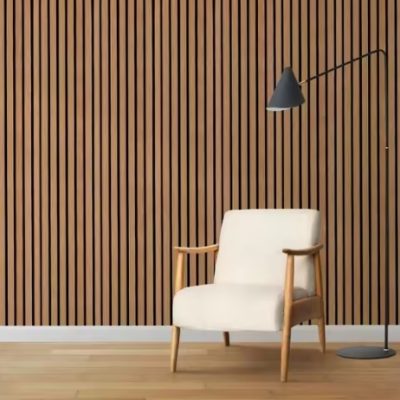

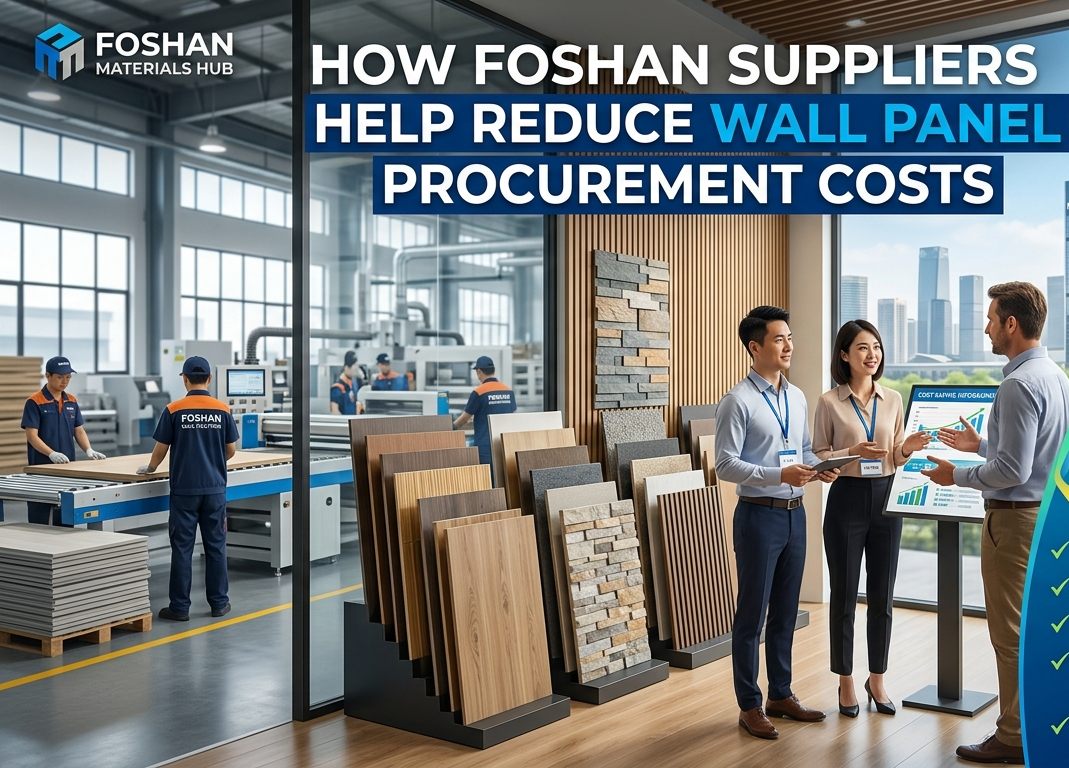
When sourcing interior wall panels—such as WPC (Wood Plastic Composite) fluted panels, bamboo charcoal fiber boards, or high-end engineered wood veneers—for large-scale commercial projects like hotels, apartments, or villas, procurement costs escalate quickly.
Many international buyers assume that lowering costs requires squeezing a factory’s profit margin or compromising on material density. In practice, the most sustainable cost reductions come from structural efficiencies within the manufacturing ecosystem itself.
Foshan, Guangdong operates as a massive hub for building materials and whole-house customization. Understanding how this industrial cluster functions allows project developers and purchasing managers to systematically reduce expenses while maintaining commercial-grade specifications.
Key Takeaways
- Zero Tooling Fees: Utilizing pre-existing factory public molds saves thousands of dollars per profile shape and cuts production lead times by 15–20 days.
- Integrated Logistics: Combining lightweight wall panels with heavy building materials like tiles inside the same container maximizes volumetric weight efficiency and lowers ocean freight costs per square meter.
- Risk Mitigation: Localized sample cross-checking across different product lines (wall panels, doors, and cabinets) prevents costly site rejections caused by color or grain variance.
Why does the Foshan industrial cluster lower baseline material costs?
The cost of any wall panel is heavily dictated by the local supply chain of its raw inputs. For composite panels like WPC or PVC-based sheets, factories require continuous access to polymer resins, high-density polyethylene (HDPE), bamboo fiber powders, stabilizers, and surface decorative films.
In Foshan, raw material processing plants, chemical suppliers, and film printing facilities operate within the same municipal grid.
- Reduced Domestic Freight: Factories do not pay high long-distance transit fees to bring raw components to the production line.
- No Distributor Markups: Plant managers purchase bulk chemical feeds directly from local processors rather than secondary trading agents.
- Stable Pricing Tiers: The massive volume of material moving through the region buffers local factories against sudden global commodity price spikes, allowing them to offer stable, predictable price quotes for long-term real estate build phases.
How do existing public molds eliminate tooling fees for large developments?
Extrusion-molded wall cladding—including 3D fluted panels, hollow grilles, and tongue-and-groove interlocking systems—requires precision-cut steel extrusion dies (molds) to shape the substrate material.
If a procurement manager approaches an isolated factory with a specific profile size, the factory often charges a custom tooling fee ranging from $1,500 to $3,500 per profile shape. Cutting, testing, and calibrating a new die also adds two to three weeks to the timeline.
Because Foshan suppliers cater to thousands of global commercial projects annually, their collective mold libraries are exceptionally broad. Standard commercial dimensions—such as the popular 160mm x 24mm or 150mm x 10mm profiles—are almost always available as “public molds.” By selecting an existing profile shape from a supplier’s inventory, project buyers completely bypass tooling costs and shorten production lead times down to 7–10 days.
How does surface treatment integration protect project budgets?
A common failure point in cheap wall panels used in hospitality settings is film delamination or peeling, particularly in high-humidity zones like hotel bathrooms, kitchens, or coastal villa developments. Remedying this on-site after installation destroys project profitability.
Foshan’s advanced manufacturing infrastructure relies heavily on automated PUR (Polyurethane) hot-melt lamination lines.
Technical Detail: PUR adhesives form a covalent chemical bond with the panel substrate that is irreversible once cured. Unlike standard cold glues or water-based adhesives, PUR will not re-soften or release when exposed to moisture or temperature fluctuations.
Because the machinery builders and adhesive chemical formulations are developed locally in districts like Shunde and Nanhai, Foshan factories run these high-performance PUR lines at a lower operational cost per linear meter. Buyers get high-grade, moisture-resistant bonding without paying premium specialized-factory rates.
How can cross-category matching prevent costly site rejections?
One of the largest hidden expenses in multi-unit projects (like a 200-room hotel or a multi-family apartment complex) is batch color and texture variance. Sourcing wall panels from a supplier in one region and interior doors, millwork, or kitchen cabinetry from another frequently results in visual mismatches. A “Natural Walnut” film from an isolated panel factory rarely matches a “Natural Walnut” veneer from a cabinet plant.
When materials arrive at the job site and fail to match, developers face a difficult choice: halt installation and reorder materials, or accept a cohesive design failure that lowers the property value.
The density of the Foshan cluster solves this structurally. Wall panel extrusion lines sit directly adjacent to custom door factories and wardrobe manufacturers. This proximity allows an on-the-ground sourcing team to physically transport master finish samples between independent vendors before mass production begins. Ensuring that the wall cladding, baseboards, and custom cabinetry match perfectly at the factory level eliminates the financial risk of material rejection.
How does volumetric consolidation lower ocean freight expenses?
Wall panels are structurally rigid and relatively flat-packed, meaning they take up significant physical volume but are comparatively light. If a buyer fills an entire shipping container solely with hollow WPC fluted panels, the container will hit its maximum volume capacity long before it reaches its legal weight limit. The buyer effectively pays to ship empty air space.
Foshan’s diverse industrial landscape allows for strategic volumetric container loading (mixed consolidation).
| Material Type | Density / Weight Profile | Container Placement |
| Porcelain Tiles / Sanitary Ware | High Density, Very Heavy | Bottom of the container to establish a stable gravity base. |
| Wall Panels / Trim Profiles | Medium Density, Volumetric | Stacked flat or vertically along the side walls and core spaces. |
| Cabinetry Boxes / Lighting | Low Density, High Volume | Secured at the top of the load to utilize remaining space without crushing. |
By consolidating heavy building materials with lightweight wall cladding from the same geographic zone, procurement managers maximize both the weight and volume caps of a 40ft HQ container, lowering the localized freight cost per square meter of wall paneling by up to 25–30%.
Why Choose HSY Sourcing
Managing multi-vendor procurement within the Foshan cluster requires continuous, physical oversight to capture these cost efficiencies. The HSY Sourcing Team acts as your dedicated on-the-ground technical eyes and hands in the factories.
- Cross-Factory Finish Matching: We carry physical master color swatches between your chosen wall panel extruder, your interior door manufacturer, and your custom cabinetry plant, guaranteeing a completely unified aesthetic across different manufacturing processes.
- Strict Tolerance & Density Inspections: Our team conducts live quality checks during production runs—measuring structural wall thickness, testing click-lock tolerances, verifying B1 fire-retardant compliance, and confirming true PUR adhesive application.
- Volumetric Warehouse Staging: We operate localized staging facilities in Foshan where we receive, check, crate, and balance mixed-material containers, ensuring your wall panels are safely packed alongside your project’s furniture and stone surfaces to optimize freight costs.
FAQ (Frequently Asked Questions)
What are the most cost-effective wall panel options for high-traffic apartment corridors?
For high-traffic, budget-sensitive commercial projects, high-density WPC fluted panels or bamboo charcoal fiber solid boards finished with a scratch-resistant PVC or PET film offer the best balance of low upfront cost and long-term durability. They resist scuffs from luggage and cleaning carts better than traditional drywall and paint, and require zero post-installation finishing.
Can wall panels be manufactured to custom lengths to reduce jobsite waste?
Yes. Because these panels are produced via continuous extrusion lines, factories can cut them to custom lengths (e.g., 2.9 meters, 3.2 meters, or exact floor-to-ceiling heights) for volume orders. This eliminates the 5–10% scrap material waste commonly generated when cutting standard 2.8-meter stock boards on-site, directly lowering both material and cleanup labor costs.
How do Foshan manufacturers handle international building code compliance?
Reputable commercial-grade factories in Foshan routinely produce formulations tested to meet global export standards, including Class B1 fire-retardant ratings (difficult to ignite, self-extinguishing) and E0/E1 formaldehyde emission standards. The HSY Sourcing team explicitly verifies these laboratory test reports and matches batch raw materials to the required certifications before production begins.