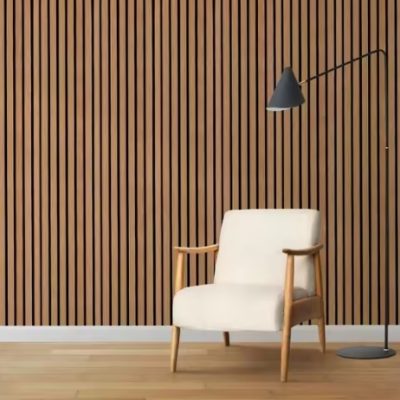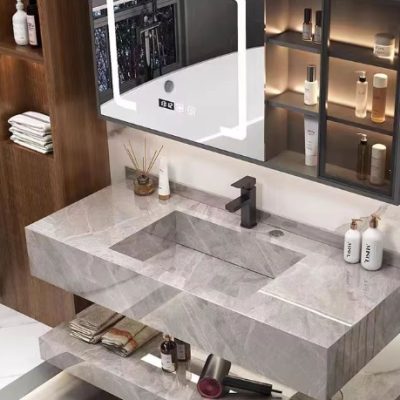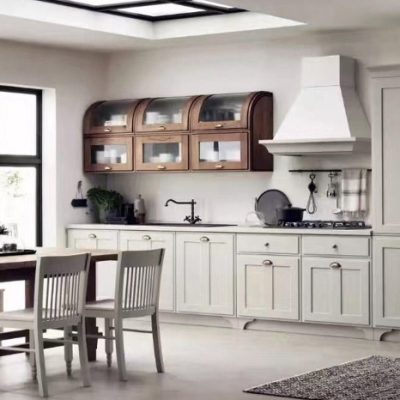


For commercial real estate developers, hotel procurement teams, and apartment builders, interior wall finishes are a major line item. The industry is rapidly shifting away from traditional wet work—like plastering and painting—toward pre-finished modular wall panels. Substrates like WPC (Wood Plastic Composite), SPC (Stone Plastic Composite), and Bamboo Charcoal fiber drastically reduce on-site labor hours and deliver a standardized finish across hundreds of units.
However, sourcing these panels at a commercial scale requires a highly integrated supply chain. You cannot rely on isolated factories that must import their raw polymers and decorative films from other provinces. This is why institutional buyers center their procurement in Foshan, China. Foshan is not just a manufacturing city; it is a hyper-concentrated industrial ecosystem designed for interior building materials.
Key Takeaways
- Supply Chain Density: Foshan houses polymer extruders, decorative PVC film printers, and lamination workshops within the same industrial zones, eliminating domestic freight delays and lowering baseline FOB prices.
- Commercial Compliance: Export-oriented factories in Foshan are equipped to meet strict hospitality fire codes (e.g., ASTM E84) and indoor air quality standards (e.g., E0 formaldehyde emissions).
- Logistical Optimization: Sourcing wall panels in Foshan allows buyers to consolidate long, linear cargo with dense materials (like tiles) or volumetric goods (like furniture) into mixed containers, maximizing ocean freight efficiency.
Why does Foshan’s supply chain density matter for volume buyers?
In a fragmented manufacturing region, a wall panel factory is essentially just an assembly plant. They must order PVC resin from the north, purchase decorative wood-grain films from the east, and wait weeks for materials to arrive before extrusion begins. This disjointed process inflates costs and makes rapid prototyping impossible.
Foshan operates on a localized cluster model. Within districts like Nanhai and Gaoming, the entire raw material infrastructure is physically adjacent to the extrusion factories. The companies that manufacture the heavy steel extrusion molds sit right next to the factories that run the production lines.
For a project buyer, this means operational speed. If your interior designer specifies a custom walnut texture or a specific RAL color for a hotel corridor, the factory can walk down the street to the film printer, source the exact decorative layer, and run a physical sample in a matter of days. This proximity also keeps inventory holding costs near zero, allowing Foshan manufacturers to offer more competitive pricing on high-volume real estate orders.
How do Foshan manufacturers handle commercial compliance and fire ratings?
Residential wall panels focus on aesthetics; commercial panels are dictated by building codes. When outfitting a 200-key hotel or a multi-family apartment building, procurement managers must verify that the materials will pass local fire marshal and environmental inspections.
Because Foshan is the primary export hub for Chinese building materials, its tier-one factories are structurally aligned with international standards:
- Fire Retardancy: To meet standards like North America’s ASTM E84 (Class A) or Europe’s EN 13501-1, specific flame-retardant chemicals must be mixed into the polymer core during extrusion. Foshan factories maintain precise batch formulas to achieve these ratings without compromising the panel’s structural integrity.
- VOC and Formaldehyde Emissions: Hospitality environments require strict indoor air quality controls. Foshan’s top manufacturers utilize PUR (Polyurethane Reactive) hot-melt adhesives for panel lamination. Unlike older urea-formaldehyde glues, PUR adhesives emit zero VOCs, ensuring the panels easily clear CARB Phase 2 or E0 environmental standards.
What are the logistical advantages of sourcing wall panels here?
Wall panels present a unique shipping challenge. They are long (often 2.8 to 3.0 meters) and relatively flat, meaning a container loaded exclusively with wall panels will often leave unused volumetric space or risk exceeding weight limits depending on the core density (SPC is much heavier than WPC).
Foshan’s primary advantage is that it is a “one-stop” hub for all interior materials. This geography allows procurement teams to execute mixed-container consolidation. Instead of shipping a poorly optimized container of just wall panels, buyers can utilize a local warehouse to combine the panels with other project requirements sourced in Foshan.
Heavy goods like porcelain tiles or sanitary ware can be loaded at the base, the flat wall panels securely strapped alongside them, and volumetric, lightweight items like hotel furniture or lighting loaded on top. This engineered loading strategy ensures you extract maximum value from every cubic meter of ocean freight.
Why choose HSY Sourcing for your project procurement?
Navigating the Foshan manufacturing cluster requires technical oversight. Standard trading companies often push off-the-shelf residential products that fail commercial durability tests. HSY Sourcing operates as your independent, on-the-ground purchasing and engineering department, specifically focused on real estate and hospitality projects.
- Direct OEM Factory Matching: We do not work through brokers. We analyze your Bill of Quantities (BOQ) and place your orders directly with primary extrusion factories that have the capacity and certifications required for commercial volume.
- In-Line Quality Control: We conduct physical inspections on the factory floor before packaging. We verify the interlocking tongue-and-groove joint tolerances, test the surface film adhesion, and ensure batch-to-batch color consistency.
- Compliance Verification: We demand and verify third-party laboratory testing data (SGS, Intertek) for fire ratings and substrate density before authorizing mass production.
- Turnkey Consolidation: Operating from our Foshan facility, we receive your wall panels, synchronize them with your other interior finish orders, and engineer strict export packaging (reinforced pallets and edge protectors) to guarantee safe, optimized container loading.
Frequently Asked Questions (FAQ)
Can the factory match our interior designer’s custom color or texture?
Yes. Foshan extrusion mills work closely with specialized film printers. For project orders meeting a minimum threshold (typically 800 to 1,000 square meters), manufacturers can custom-match exact wood grains, solid colors, or stone textures based on physical control samples provided by your design team.
How do you prevent wall panels from being damaged during ocean freight?
Wall panels are vulnerable to edge crushing and surface scratching during transit. We enforce strict export-grade packaging protocols. Panels are packed face-to-face with protective foam interlayers, boxed in heavy-duty corrugated cartons, and secured onto enclosed, fumigated wooden pallets. Heavy plastic strapping and rigid edge protectors are applied to prevent any movement inside the shipping container.
What is the standard lead time for a bulk order of commercial wall panels?
For standard profiles and in-stock decorative films, mass production for a 40HQ container generally requires 15 to 20 days. If your project demands a custom extrusion profile that requires the factory to cut new steel molds, the engineering and sampling phase will add an additional 10 to 15 days to the timeline.