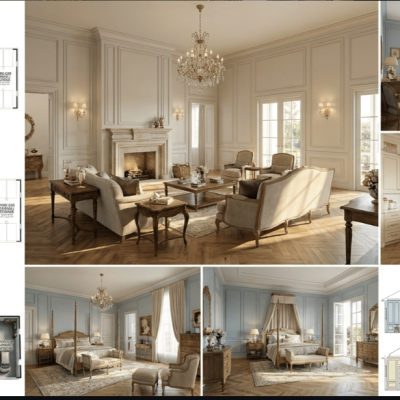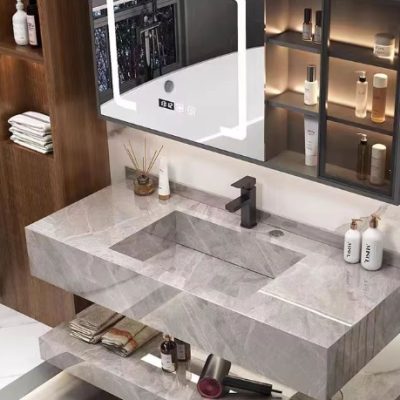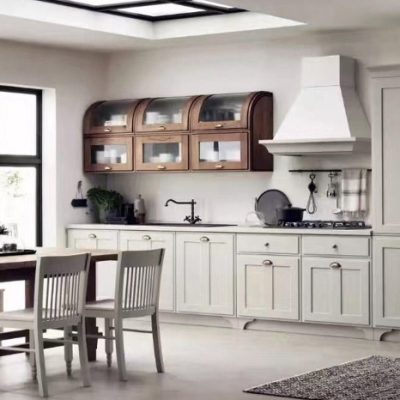

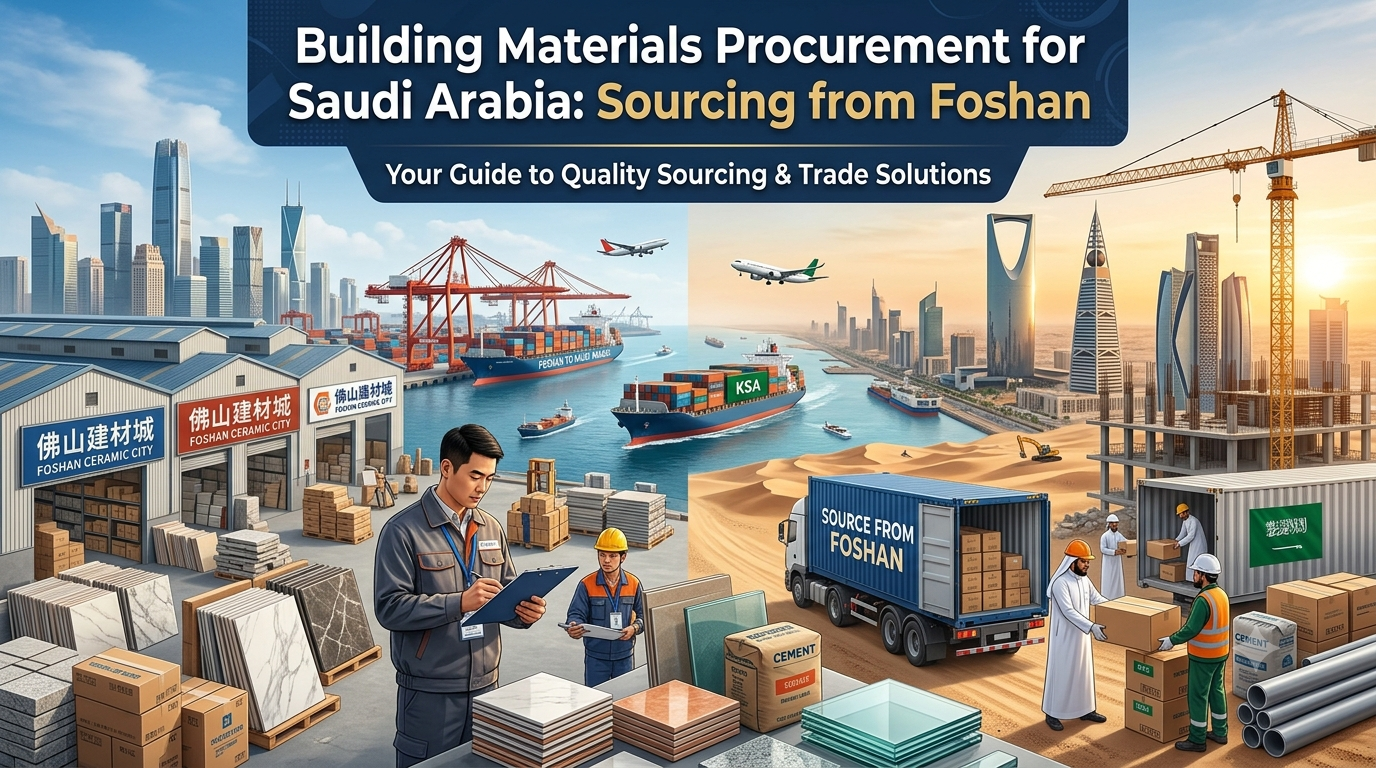
The scale of construction across Saudi Arabia—driven by Vision 2030 initiatives, giga-projects, hospitality developments, luxury villa communities, and high-density apartment towers—has created unprecedented demand for finishing materials. Developers and general contractors in Riyadh, Jeddah, Dammam, and NEOM frequently turn to Foshan, China, to procure ceramic tiles, sanitary ware, custom millwork, and fenestration at competitive factory costs.
However, exporting building materials from Foshan to Saudi Arabia involves strict regulatory frameworks and technical requirements. Failing to align factory production with Saudi Standards, Metrology and Quality Organization (SASO) regulations or underestimating desert climate impacts can cause severe customs holds at port or premature building envelope failure.
This guide breaks down the technical specifications, compliance pathways, and logistics strategies required for successful procurement from Foshan to Saudi Arabia.
Key Takeaways
- Mandatory SABER Registration: Every imported building material must hold a valid Product Certificate of Conformity (PCoC) and a Shipment Certificate of Conformity (SCoC) issued through the online SABER platform prior to vessel arrival.
- SASO Quality Mark (SQM) Compliance: Ceramic tiles and specific sanitary items require the mandatory Saudi Quality Mark (SQM), which involves rigorous factory audits and laboratory testing.
- Climate-Driven Engineering: Exterior materials must meet strict solar heat gain coefficient (SHGC), U-value, UV-resistance, and thermal expansion standards to withstand extreme temperature swings and high ambient dust in the Kingdom.
- Water Efficiency Mandates: Plumbing fixtures, faucets, and flush mechanisms must carry official Saudi Water Efficiency Labels with verified flow-rate compliance.
- Factory Staging & Consolidation: Centralizing multi-factory shipments in a Foshan warehouse simplifies pre-shipment inspections, document matching, and container stuffing optimization.
What Are the Mandatory SASO, SABER, and Quality Mark Rules for Saudi Arabia?
Navigating customs in Saudi Arabia requires strict adherence to digital clearance procedures and product-specific safety certifications.
┌────────────────────────────────────────────────────────────────────────┐
│                   SAUDI ARABIA SABER CLEARANCE FLOW                    │
├────────────────────────────────────────────────────────────────────────┤
│ 1. Product Audit     ──> Verify HS Codes & Technical Regulations       │
│                                                                        │
│ 2. PCoC Issuance     ──> Test Reports + Lab Audit ──> SABER PCoC       │
│                                (Valid for 1 Year)                      │
│                                                                        │
│ 3. SQM Mark (If Req) ──> Factory Inspection ──> Saudi Quality Mark     │
│                                                                        │
│ 4. Shipment SCoC     ──> Invoice & Packing List ──> SABER SCoC         │
│                                (Issued per Shipment)                   │
│                                                                        │
│ 5. FASAH Integration ──> Automatic Customs Verification at KSA Ports   │
└────────────────────────────────────────────────────────────────────────┘
| Material Category | Primary Regulatory Requirement | Essential Documentation |
| Ceramic & Porcelain Tiles | Technical Regulation for Building Materials Part 4 (SASO SQM mandatory) | • Saudi Quality Mark (SQM) • ISO 17025 Test Reports (<0.5% abs.) |
| Sanitary Ware & Faucets | SASO Water Efficiency Scheme & Plumbing Regulations | • Saudi Water Efficiency Label • Lead-Free Brass Test Reports |
| Aluminum Windows & Glass | Structural & Thermal Performance Regulations (SASO 2922 / Thermal Insulation Code) | • U-Value / SHGC Calculations • Tempered Glass Test Certificates |
| Wooden Doors & Cabinets | Formaldehyde Emissions & Fire Safety (SASO/Civil Defense Standards) | • E0/E1 Emissions Certification • Fire-Rated Core Certificates (UL/EN) |
1. SABER PCoC and SCoC Certificates
Saudi Arabia uses the SABER platform to manage product registration and customs entry. For every product line:
- Product Certificate of Conformity (PCoC): Issued by a SASO-notified body (such as SGS, Intertek, or TÜV) after reviewing factory test reports. It remains valid for 12 months.
- Shipment Certificate of Conformity (SCoC): Issued for each specific container shipment once the commercial invoice and packing list are submitted against a valid PCoC.
2. The Saudi Quality Mark (SQM)
Under the Technical Regulation for Building Materials – Part 4, ceramic tiles, porcelain slabs, and certain sanitary items must obtain the Saudi Quality Mark (SQM). Unlike a standard test report, SQM requires an initial audit of the manufacturer’s quality control system, sample testing in certified labs, and periodic annual surveillance. Importing ceramic tiles without a valid SQM license will result in total customs rejection at Saudi ports.
3. Saudi Water Efficiency Labeling
Faucets, shower heads, toilets, and flush valves installed in Saudi commercial and residential buildings must display the official Saudi Water Efficiency Label indicating compliance with maximum allowable flow rates (measured in liters per minute or liters per flush).
How Do Saudi Climate Conditions Dictate Material Specifications?
Building materials deployed in the Arabian Peninsula face harsh exposure: summer temperatures exceeding 50°C, direct ultraviolet (UV) radiation, high humidity along coastal regions (Jeddah, Dammam), and abrasive sandstorms.
                    ┌─────────────────────────────────────────┐
                    │    Saudi Climate Material Checklist     │
                    └────────────────────┬────────────────────┘
                                         │
       ┌─────────────────────────────────┼─────────────────────────────────┐
       ▼                                 ▼                                 ▼
┌───────────────┐               ┌─────────────────┐               ┌─────────────────┐
│  Fenestration │               │ Ceramic & Stone │               │  Metal Finishes │
├───────────────┤               ├─────────────────┤               ├─────────────────┤
│ • Double Low-E│               │ • Water Absorb. │               │ • High-Durable  │
│ • Thermal-    │               │   < 0.5%        │               │   PVDF Coating  │
│   Break PA66  │               │ • Stain & UV    │               │ • PVD Brassware │
│ • Dust Seals  │               │   Resistance    │               │ • Anti-Corrosive│
└───────────────┘               └─────────────────┘               └─────────────────┘
Key Technical Considerations:
- Thermal Performance (Windows & Curtain Walls): Aluminum fenestration must feature thermal break polyamide (PA66) profiles combined with double-glazed, Argon-filled Low-E glass units. Specify low Solar Heat Gain Coefficients (SHGC < 0.25) and low U-values to reduce interior HVAC cooling loads.
- Surface Coating Durability: Exterior metal cladding, louvers, and window frames require high-performance PVDF (Fluorocarbon) powder coatings (minimum 25–30 microns) or high-grade anodizing to prevent chalking, fading, and sand abrasion damage over time.
- Low Water Absorption in Tiles: Full-body porcelain tiles fired above 1,200°C with water absorption below 0.5% are necessary for outdoor plazas, facades, and wet areas. Low-density tiles absorb salt-laden air, leading to efflorescence and cracking under extreme thermal stress.
- Joinery Moisture Content: Custom timber doors and cabinetry destined for interior air-conditioned spaces in dry regions (like Riyadh) must have a core moisture content between 7% and 10%. Excessively high moisture levels cause wood contraction, surface cracking, and joint separation once installed in desert environments.
How Can Developers Manage Multi-Category Sourcing Across Foshan Factories?
A typical hotel or residential project in Saudi Arabia requires sourcing across multiple specialized industrial zones in Guangdong Province: tiles from Nanhai, sanitary ceramics from Shiwan, lighting from Guzhen, and furniture from Lecong.
SEPARATE UNCOORDINATED SHIPMENTS:
Factory A (Tiles)     ──> Independent Export ──> High Shipping Cost & SABER Friction
Factory B (Sanitary)  ──> Independent Export ──> Separate Customs Charges & Delays
Factory C (Joinery)   ──> Independent Export ──> Disjointed Arrival at KSA Job Site

HSY CONSOLIDATED PROCUREMENT:
Factory A ──┐
Factory B ──┼──> Foshan Staging Warehouse ──> QC & SABER Verification ──> FCL Shipping
Factory C ──┘
Step-by-Step Execution Plan:
- Integrated BOQ and Technical Harmonization: Review the Bill of Quantities (BOQ) with factory engineers to ensure raw materials (brass grades, board emissions, glass specifications) align with Saudi project specifications before issuing contracts.
- Master Control Sample Sign-Off: Establish three signed sets of physical control samples (stone, wood veneers, hardware finishes, tile glazes). One set remains on-site with the project architect in Saudi Arabia, one stays at the factory, and one is held by your local agent in Foshan.
- Pre-Shipment Trial Assemblies: Require cabinetry and vanity manufacturers to perform 100% workshop trial assemblies. Inspect drawer mechanisms, soft-close alignment, and stone top cutouts before flat-packing.
- Centralized Staging & Container Optimization: Transport finished goods from various factories to a single Foshan warehouse. Inspect packaging, verify line-item counts, and optimize container volume loading to lower ocean freight costs per cubic meter ($/\text{CBM}$).
What Are the Main Risk Factors in Shipping and Customs Clearance to Saudi Ports?
Shipping building materials to major entry ports—such as Jeddah Islamic Port, King Abdulaziz Port (Dammam), or King Abdullah Port—requires precise documentation matching to pass through the Saudi Customs single-window system (FASAH).
| Common Risk Factor | Operational Cause | Prevention Strategy |
| Customs Inspection Rejection | Discrepancy between invoice HS codes and SABER PCoC/SCoC records. | Audit all HS codes and line-item descriptions against the SABER portal prior to packing. |
| SQM Verification Failure | Ceramic tiles shipped without permanent country of origin (“Made in China”) or SQM logo on boxes/backs of tiles. | Enforce factory packaging checks ensuring back-stamps and carton markings comply with SASO regulations. |
| Container Demurrage Fees | Delayed issuance of the SABER SCoC after the vessel arrives at the port. | Upload commercial invoices and final shipping documents to SABER as soon as the container is loaded in Foshan. |
| Maritime Transit Damage | Fragile ceramics or marble slabs packed in standard domestic cartons without reinforced crating. | Mandate ISPM 15 fumigated plywood crating, edge corner protection, and floor-level strapping inside containers. |
Why Choose HSY Sourcing for Your Saudi Arabia Projects?
Navigating the complexities of building material procurement for Saudi Arabia requires local engineering expertise and hands-on operational support in Foshan. HSY Sourcing serves as your dedicated procurement, inspection, and logistics partner on the ground.
- In-Depth SABER & SASO Regulatory Knowledge: We guide developers and contractors through the SABER registration process, working with SASO-notified certification bodies to verify test reports, obtain PCoCs, and clear SQM mandates efficiently.
- Direct Access to Top-Tier Foshan Factories: We connect procurement managers directly with certified OEM manufacturers across ceramics, sanitary ware, fenestration, and custom millwork, bypassing trading markups.
- Rigorous On-Site Quality Control: Our QC engineers conduct three-stage inspections—raw material verification, mid-production audits, and 100% pre-shipment trial assemblies—to guarantee defect-free manufacturing.
- Centralized Foshan Warehouse Staging: We receive, inspect, and store goods from multiple suppliers at our local warehouse facility, optimizing container space and ensuring export packaging complies with maritime shipping standards.
- End-To-End Project Transparency: Receive bilingual inspection reports, high-definition video walkthroughs, and milestone tracking updates across your entire supply chain.
Frequently Asked Questions (FAQ)
How long does it take to obtain SABER certificates for building materials?
If factory test reports are ready and valid, issuing a Product Certificate of Conformity (PCoC) on SABER typically takes 3 to 7 business days. Once the PCoC is active and final shipping documents are available, the Shipment Certificate of Conformity (SCoC) can usually be generated within 24 to 48 hours.
What is the typical lead time for shipping building materials from Foshan to Saudi Arabia?
Manufacturing lead times range from 25 to 45 days, depending on product customization (e.g., custom joinery or aluminum window systems). Direct ocean shipping from South China ports (Nansha, Yantian, or Shekou) to Jeddah Islamic Port or King Abdulaziz Port in Dammam takes approximately 18 to 28 days, plus 4 to 7 days for customs clearance via FASAH.
How do you ensure ceramic tiles pass SASO Quality Mark (SQM) inspections?
We verify that the manufacturing kiln holds an active SQM certificate issued by an accredited body before order placement. During production, our team inspects tile water absorption, diagonal squareness, shade uniformity, and ensures the required “Made in China” and SQM markings are permanently stamped on both the tile backs and outer cartons.
Can HSY Sourcing manage small custom quantities for luxury villa projects in Saudi Arabia?
Yes. While large factories prefer high-volume production runs, we work with specialized OEM manufacturers in Foshan accustomed to high-end, low-volume villa builds. We negotiate reasonable factory minimum order quantities (MOQs) and consolidate diverse categories into unified container shipments to lower unit freight costs.