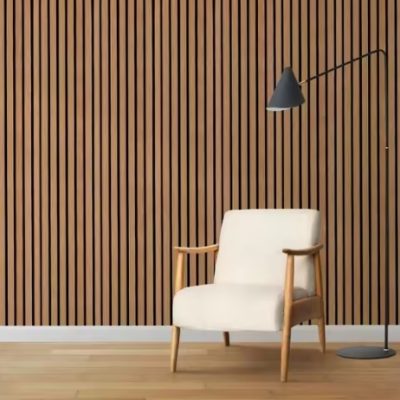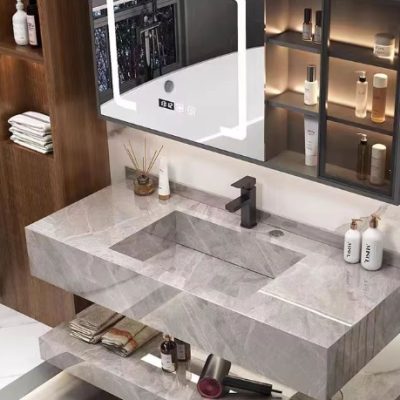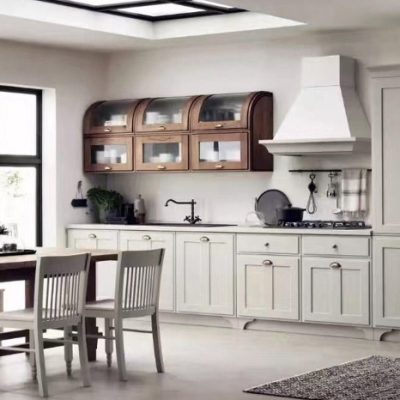


In commercial real estate developments—such as high-density apartments, hotels, and luxury villas—interior wall finishes represent a significant portion of the fit-out budget. Developers are increasingly moving away from traditional drywall plastering and painting, choosing instead pre-finished modular wall panels. These systems eliminate on-site wet work, reduce installation labor hours, and provide a uniform finish across hundreds of units.
However, selecting a wall panel for commercial infrastructure requires analyzing technical performance metrics beyond pure aesthetics. The material must withstand high traffic, comply with local municipal building codes, and hit specific cost-per-square-meter targets. Sourcing these materials from Foshan, China—the primary manufacturing cluster for modern interior finishes—offers distinct supply chain advantages, provided the buyer understands how to audit the material specifications.
Key Takeaways
- Substrate Material Dictates Lifespan: The core substrate (such as SPC or Bamboo Charcoal) determines the panel’s impact resistance, moisture deflection, and long-term maintenance costs in high-traffic corridors.
- Regulatory Compliance Is Mandatory: Commercial hospitality and multi-family projects require verified, factory-direct certifications for flame-spread ratings and low volatile organic compound (VOC) emissions.
- Foshan’s Industrial Cluster Lowers Costs: Procuring from Foshan removes multi-province raw material logistics costs, as polymer extruders, film printers, and lamination plants operate within the same local manufacturing zone.
What core substrates are best suited for commercial real estate?
A wall panel’s durability and structural stability depend entirely on its core substrate. While residential buying focuses on visual trends, commercial procurement requires matching the physical properties of the core to the environmental demands of the project site.
| Panel Substrate | Material Composition | Performance Metrics | Typical Project Application |
| WPC (Wood Plastic Composite) | Polymer resin blended with recycled wood fiber | High moisture resistance; moderate impact resistance; natural timber hand-feel. | Apartment bedrooms, hotel suite feature walls, decorative ceilings. |
| SPC (Stone Plastic Composite) | Natural limestone powder and PVC stabilizers | Extremely dense core; high impact and scratch resistance; 100% waterproof. | Hotel lobbies, elevator corridors, commercial public areas. |
| Bamboo Charcoal Fiber Co-extrusion | Bamboo powder, calcium, carbon fiber matrix | High structural stability; minimal thermal expansion; lightweight structural profile. | Luxury villa living spaces, office partitions, modular headboard walls. |
| Engineered Wood Veneer | Multi-layer birch plywood or MDF core with natural timber veneer | Premium acoustic absorption; low moisture resistance (requires climate-controlled transit). | High-end presidential suites, hotel boardrooms, luxury villa millwork. |
What technical safety certifications must procurement managers verify?
Commercial properties face strict regulatory oversight during building inspections. Relying on showroom samples without auditing third-party laboratory test data exposes a project to severe legal and financial risks.
1. Fire Retardancy and Smoke Density
Hotel corridors, egress paths, and apartment common areas require fire-rated cladding. Standard consumer-grade plastics melt rapidly and generate toxic smoke. To meet international commercial codes (such as ASTM E84 Class A in North America or EN 13501-1 Class B-s1, d0 in Europe), manufacturers must introduce precise percentages of flame-retardant additives (like aluminum trihydrate) during the extrusion process. Sourcing teams must demand valid, batch-specific test reports from accredited bodies like SGS or Intertek.
2. Formaldehyde and VOC Emissions
In enclosed hospitality rooms, indoor air quality directly impacts safety compliance. Panels utilizing low-grade adhesives or urea-formaldehyde resins in engineered wood cores release harmful gases over time. Institutional buyers should mandate an E0 or CARB Phase 2 standard. Modern co-extruded composite panels (like SPC and Bamboo Charcoal) are bound using heat-molding or PUR hot-melt adhesives, which emit zero VOCs.
3. Linear Thermal Expansion Coefficient
In regions with high ambient humidity or temperature shifts, low-grade composite panels expand and contract significantly. If the thermal expansion coefficient is too high, the panels will buckle, warp, or pull away from the substrate wall post-installation. This tracking metric must be verified in the factory lab before authorizing mass production.
How do interlocking design mechanisms affect the total fit-out budget?
The initial material cost of a wall panel is only one part of the financial calculation; on-site installation labor often scales higher than the factory invoice.
Commercial wall panels utilize interlocking tongue-and-groove joints or hidden aluminum snap-clip profiles. This design allows installation crews to mount panels directly onto metal furring channels or leveled masonry walls without dry-wall tape, mudding, or intensive sanding.
However, this efficiency relies entirely on machining precision at the factory. If an extrusion mold is worn or poorly calibrated, a minor 0.3mm deviation in the locking joint will accumulate across a long corridor wall, resulting in visible seams and misaligned patterns. Regular calibration checks on the factory floor are necessary to maintain acceptable tolerances.
How does Foshan’s geographic density lower panel procurement costs?
Foshan functions as a hyper-integrated ecosystem for building materials and interior finishes. When a buyer sources panels from an isolated factory in a non-specialized province, that factory must pay domestic freight to ship in PVC resins, stabilizers, protective wear layers, and high-fidelity decorative films from other regions.
In Foshan’s Nanhai and Gaoming districts, the polymer refineries, the film printing mills, the tool-and-die makers, and the automated lamination plants operate adjacent to one another. This industrial concentration removes intermediate shipping tariffs and enables factories to secure custom designs quickly. These baseline operational savings are passed directly to real estate buyers in the form of lower FOB prices.
Why choose HSY Sourcing as your procurement office in Foshan?
Navigating thousands of extrusion lines and lamination workshops in Foshan without local engineering oversight often leads to material substitutions, compromised core densities, and delayed shipping containers. HSY Sourcing acts as your independent, technical purchasing department on the ground, protecting your financial interests.
- Direct OEM Factory Matching: We bypass local brokers and trading companies, placing your order directly with audited, primary manufacturers whose production capacity matches your project’s volume and lead times.
- Strict Specification Enforcement: We review your Bill of Quantities (BOQ) and architectural plans to ensure the factory utilizes the exact core density, flame-retardant formula, and PUR adhesive grades required by your contract.
- On-Line Tolerance Inspection: Our quality control inspectors physically measure tongue-and-groove joint clearances, check color matching across separate production batches, and run scratch-resistance tests on the factory floor before packing.
- Logistical Packing Optimization: Wall panels are long, linear items prone to edge bending. We manage the physical consolidation of your panels inside our local Foshan warehouse, coordinating their arrival with heavy building components (like ceramic tiles or bathroom fixtures) to build stable, dense container loads that lower your total ocean freight per unit.
Frequently Asked Questions (FAQ)
Can the factory match custom textures or branding colors specified by our interior designer?
Yes. Foshan extrusion mills work with specialized film printers who can duplicate wood grains, natural stone veins, concrete textures, or specific RAL/Pantone colors. For custom surface films, factories typically require a minimum order quantity (MOQ) ranging from 800 to 1,200 meters per color to calibrate the industrial printing rollers.
How are wall panels packaged to prevent damage during long-distance ocean shipping?
Wall panels are sensitive to corner crushing and surface scratching. HSY Sourcing enforces export-grade packaging standards: panels are packed face-to-face with protective foam sheets, enclosed in five-layer corrugated cartons, and stacked onto reinforced, fumigated wooden pallets. Every pallet is bound with rigid edge protectors and tight plastic strapping to prevent movement inside the container.
What is the average manufacturing lead time for a multi-apartment project order?
For standard stock profiles and cataloged surface films, mass production for two to three 40HQ containers generally takes 15 to 20 days. If your project requires a proprietary, custom-designed extrusion shape, engineering the new steel molds and processing trial samples will add an extra 10 to 14 days to the initial production timeline.
Are composite wall panels suitable for installation inside hotel bathrooms?
SPC and WPC wall panels are highly moisture-resistant and perform well in bathroom dry zones (around vanities and toilets). However, they are not recommended for the interior walls of open shower enclosures. Continuous exposure to pressurized hot water requires specialized commercial waterproofing membranes, commercial epoxies, and seamless joint structures that standard interlocking tongue-and-groove panels are not designed to provide.