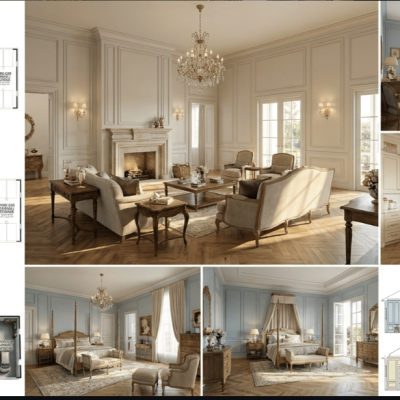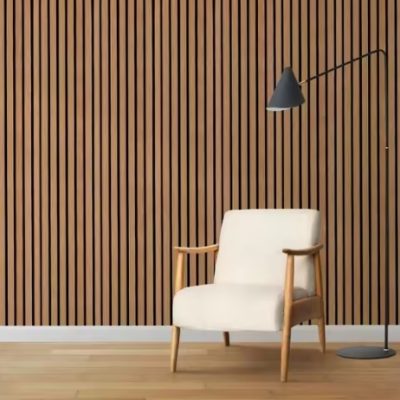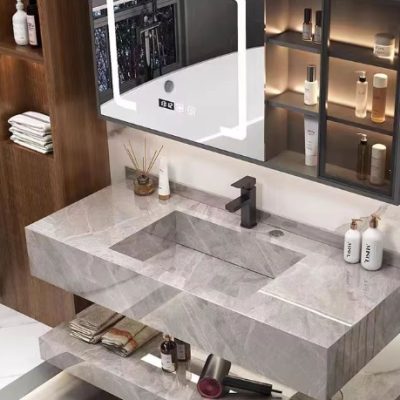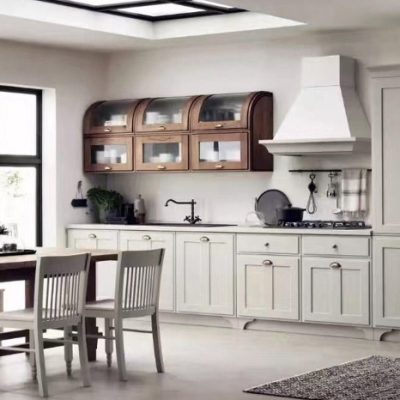


Specifying architectural finishes for a luxury custom villa or multi-family estate in the United States represents the single largest allocation of a project’s interior and envelope budget. High-end fenestration packages, custom integrated millwork, kitchen cabinetry, and hard-surface flooring frequently account for hundreds of thousands of dollars in line-item costs when quoted through North American dealer networks.
Direct factory procurement from Foshan, Guangdong—the world’s most concentrated industrial hub for architectural building materials—offers custom builders, developers, and project owners direct access to advanced manufacturing capabilities, custom material selections, and significant cost advantages.
However, sourcing across three distinct trade packages (windows, millwork, and flooring) thousands of miles away introduces real operational risks: code non-compliance, dimensional misunderstandings, staggered factory lead times, and ocean transit damage.
This guide details how US general contractors and developers can safely navigate the technical, legal, and logistical requirements of sourcing high-spec windows, custom cabinetry, and flooring from Foshan.
Key Takeaways
- Tri-District Industrial Synergies: Sourcing from Foshan leverages specialized industrial clusters—Shunde for custom joinery and cabinetry, Nanhai for structural aluminum windows, and Nanzhuang for porcelain slabs and engineered stone.
- US Code Compliance Mandates: Imported finishes must meet strict federal and state standards prior to shipment: permanent etched SGCC (ANSI Z97.1) safety glass marks, NFRC thermal ratings, EPA TSCA Title VI wood emission certifications, and Lacey Act timber origin disclosures.
- Mitigating Dimensional Risk via Shop Drawings: Converting architectural plans into millimeter-precise CAD shop drawings—with explicit Rough Opening (R.O.) deductions, nail fin setbacks, and appliance cutouts—is required before factory fabrication begins.
- Warehouse Consolidation and Weight Balancing: Combining 8 to 15 factory orders at a central Foshan staging warehouse allows heavy products (tiles, stone) to be paired with lightweight volumetric cargo (cabinets, wardrobes) in unified 40ft High Cube containers, staying strictly within US Department of Transportation (DOT) highway weight limits.
- Local On-Ground Supervision: Having a dedicated technical representative in Foshan ensures pre-shipment dry-fit inspections occur on the factory floor, preventing dimensional or finishing errors from reaching an overseas construction site.
Why Is Foshan the Primary Industrial Hub for Custom Villa Finishing Packages?
Foshan is not a single manufacturing park; it is a regional cluster of specialized industrial cities located within a 30-mile radius in Guangdong Province. Each municipality specializes in a specific construction trade:
[FOSHAN MANUFACTURING NETWORK]
 ├── Shunde District ──> Custom Kitchen Cabinetry, Architectural Joinery, Wardrobes
 ├── Nanhai District ──> Thermally Broken Aluminum Windows, Sliding Doors, Curtain Walls
 └── Nanzhuang District ──> Large-Format Porcelain Slabs, Sintered Stone, Marble Tiles
- Shunde District: The global center for architectural joinery, custom millwork, and furniture. Shunde factories specialize in complex veneer matching, high-gloss lacquer finishes, integrated LED cabinetry, and custom vanity runs built to millimeter specifications.
- Nanhai District: Specialized in aluminum extrusion and architectural fenestration. Nanhai plants process heavy 6063-T5/T6 alloy profiles, thermal break assemblies, and oversized glass panels up to 10–12 feet in height.
- Nanzhuang & Shiwan Districts: Famous for advanced ceramic engineering, producing large-format sintered stone slabs (up to 120″ x 60″) that mimic natural marble while offering superior stain, scratch, and heat resistance.
For a luxury residential project, purchasing directly from these specialized manufacturing clusters provides factory-direct pricing without multi-tiered distributor markups.
How Do You Safely Source Windows, Millwork, and Flooring to Meet US Building Codes?
The primary hurdle when importing building materials to the United States is passing municipal building inspections and clearing US Customs and Border Protection (CBP). Each material category requires specific technical compliance checks during the purchasing phase:
+-----------------------------------------------------------------------------------+
|                   MATERIAL COMPLIANCE & SPECIFICATION MATRIX                      |
+------------------+----------------------------------+-----------------------------+
| Material Category| Core Technical Specifications    | Mandatory US Standards      |
+------------------+----------------------------------+-----------------------------+
| Aluminum Windows | 6063-T5 Alloy, 2.0-3.0mm wall;   | Permanent SGCC (ANSI Z97.1) |
| & Glass Doors    | PA66 GF25 Polyamide Thermal Break| glass etching; NFRC reports |
+------------------+----------------------------------+-----------------------------+
| Custom Cabinets  | Marine-grade Plywood / E0 MDF;   | EPA TSCA Title VI certs;    |
| & Millwork       | Blum / Hettich soft-close hardware| CARB Phase 2 compliance     |
+------------------+----------------------------------+-----------------------------+
| Hard Surface     | Porcelain Slabs / Sintered Stone;| Lacey Act plant disclosure  |
| Flooring         | Engineered Hardwood (wear layer) | (wood); PEI abrasion rating |
+------------------+----------------------------------+-----------------------------+
1. Thermally Broken Aluminum Windows & Doors
Standard commercial replacement windows built for Asian domestic markets do not meet North American residential building codes.
- Safety Glazing (SGCC): All glass units installed near doors, wet areas, or low window sills must feature a permanently etched SGCC logo in the glass corner. Removable paper stickers are rejected by US inspectors.
- Thermal Integrity (NFRC): Windows must feature PA66 GF25 polyamide thermal insulation strips and double- or triple-pane Low-E Argon glass. Factories must provide NFRC thermal performance ratings (U-Factor and SHGC) for municipal energy code submittals.
- Installation Detailing: Frames must be built with integrated nailing flanges (nail fins) set back to match the home’s exterior wall sheathing thickness.
2. Custom Cabinetry and Millwork
Custom kitchens, vanities, and built-in wardrobes require strict material testing to prevent off-gassing and hardware failure.
- Formaldehyde Emission Limits: Plywood and MDF carcases must comply with EPA TSCA Title VI / CARB Phase 2 regulations. Official emission certificates must accompany the export commercial manifest.
- Hardware Standardization: Cabinet runs should specify global hardware standards—such as Blum (Austrian) or Hettich (German) concealed hinges and soft-close drawer runners—ensuring hardware longevity and easy availability of replacement parts in the US.
3. Flooring (Porcelain, Sintered Stone, and Hardwood)
- Porcelain & Sintered Stone Slabs: Slabs must be evaluated for water absorption (under 0.5%) and breaking strength. Sintered stone slabs (12 mm to 20 mm thickness) offer non-porous surfaces ideal for kitchen countertops, bathroom walls, and main floor areas.
- Engineered Hardwood & Lacey Act Compliance: Imported wood flooring requires full disclosure under the US Lacey Act, detailing the scientific botanical name, harvest country, and legality of the timber source.
How Does the Procurement Workflow Protect US Builders from Dimensional and Quality Errors?
Managing custom orders across multiple overseas factories requires a rigid, multi-stage engineering workflow:
[1. BOQ & Plan Conversion] ➔ [2. Physical Sample Sign-Off] ➔ [3. Metric CAD Shop Drawings]
                                                                        │
[6. Supervised FCL Loading] ◄── [5. Pre-Shipment Dry-Fit QC] ◄──────────┘
Step 1: Converting Architectural Plans to Metric Shop Drawings
US blueprints use imperial feet/inches and reference Rough Openings (R.O.). Chinese factories manufacture strictly to exact Outer Frame Dimensions (O.D.) in millimeters.
A qualified local sourcing team reconciles imperial plans into metric shop drawings, applying precise perimeter installation allowances (typically subtracting 1/2″ or 12 mm from the rough opening) so components fit into framed stud walls without jobsite modification.
Step 2: Physical Sample Sign-Off
Before mass production starts, physical control samples—wood veneer cuts, painted door panels, aluminum extrusion profiles, and stone cutouts—are sent via express courier to the US builder or owner for physical review under jobsite lighting.
Step 3: Factory Floor Pre-Assembly (Dry-Fit Audits)
For complex custom joinery or multi-panel sliding door systems, the factory performs a full physical dry-fit assembly on the workshop floor in Foshan. Inspectors check joinery alignment, drawer slide actions, veneer grain matching, and frame squareness before the product is packed into export crates.
How Are Multi-Category Materials Consolidated into a Single Container Without Damage or Port Fines?
Because a luxury villa build involves ordering from multiple factories across Foshan, shipping goods in separate Less than Container Load (LCL) batches leads to exorbitant port handling fees and high damage rates.
Consolidating all trade packages into dedicated 40ft High Cube (HQ) Full Container Loads (FCL) solves this logistics hurdle.
+-------------------------------------------------------------------------+
|                  40ft HQ MIXED CARGO CONTAINER LAYOUT                   |
|                                                                         |
|  [FRONT / TRACTOR AXLE]                                [REAR / DOORS]   |
|  +-------------------+  +--------------------+  +--------------------+  |
|  | Porcelain Slabs,  |  | Flat-Packed        |  | Sanitary Ware &    |  |
|  | Stone & Flooring  |  | Cabinetry Boxes    |  | Loose Lighting     |  |
|  | (Floor Level)     |  | (Mid Section)      |  | (Rear Section)     |  |
|  +-------------------+  +--------------------+  +--------------------+  |
|  | Windows & Sliding Doors Secured Vertically on Side A-Frames          |
+-------------------------------------------------------------------------+
Balancing Weight and Volume for US Highways
A 40ft High Cube container has a physical payload capacity of up to 26,000 kg (57,300 lbs). However, US Department of Transportation (DOT) highway road weight limits restrict gross vehicle weight on American roads.
To prevent expensive overweight fines or forced container transloading at destination ports, total cargo payload is calculated and capped around 17,500 to 19,500 kg (38,500 to 43,000 lbs).
- Volumetric Staging Strategy: Dense, heavy goods (porcelain tiles, stone slabs, wood flooring) are distributed flat across the container floor over the front and center axles.
- Upper Space Utilization: The vertical headspace above the heavy flooring is loaded with lightweight, bulky items like pre-assembled vanity boxes, flat-packed wardrobes, or acoustic wall paneling.
- Vertical Glass Protection: Windows and oversized sliding doors are mounted vertically inside custom-built wooden A-frame skids, ratcheted to internal container tie-down rings, and cushioned with inflatable dunnage air bags.
- ISPM 15 Fumigation Stamps: All solid wood packaging, pallets, and bracing skids must feature clear ISPM 15 heat-treatment (HT) stamps to pass US Customs and Border Protection agriculture checks without port rejection.
What Are the Financial and Lead Time Realities of Importing Sourced Materials?
Understanding the landed cost structure and manufacturing timelines prevents financial and scheduling surprises:
[Factory Gate Price (EXW/FOB Foshan)]
               +
[Ocean Freight & Marine Cargo Insurance]
               +
[US Import Duties & Tariffs (Section 301 / 232)]
               +
[Customs Brokerage, Port Handling, & Inland Trucking]
               =
[TOTAL LANDED JOBSITE COST]
Landed Cost Dynamics
Even after factoring in 25%+ Section 301 federal import tariffs, ocean freight ($4,000 to $8,000 per 40ft HQ container), port handling fees, customs brokerage, and local flatbed delivery, sourcing a multi-category villa package directly from Foshan yields net savings of 35% to 50% compared to North American retail dealer quotes.
The cost advantage is particularly evident on custom cabinetry packages, oversized glass sliding doors, and large-format sintered stone, where US dealers apply high custom surcharges.
Real-World Production and Shipping Timelines
A realistic procurement schedule spans 10 to 14 weeks from initial shop drawing sign-off to jobsite unloading:
- Shop Drawing Reconciliation & Sample Approval: 1 to 2 weeks.
- Factory Manufacturing Runs: 4 to 6 weeks (windows and cabinetry fabricated concurrently).
- Warehouse Consolidation & Container Loading: 1 week.
- Ocean Freight & US Customs Clearance: 4 to 5 weeks (depending on US West Coast vs. East Coast destination ports).
- Inland Jobsite Trucking: 3 to 5 days.
By comparison, custom window and cabinet packages ordered through US domestic luxury dealers frequently face backlogs of 16 to 22+ weeks.
Why Choose HSY Sourcing for Your Villa Project in Foshan?
Navigating multi-category factory schedules, quality inspections, and international logistics from North America requires a dedicated advocate on the factory floor. HSY Sourcing acts as your technical owner’s representative, quality control auditor, and logistics controller in Foshan.
- Dedicated Staging Warehouse in Foshan: We operate clean, secure staging warehouse facilities in Foshan. We receive, inspect, and store goods from your various specialized suppliers free of charge during the project consolidation window, avoiding premature port storage fees.
- Technical CAD Drawing Reconciliation: We review factory CAD shop drawings against your US architectural blueprints—verifying Rough Opening deductions, nail fin setbacks, hardware specifications, and appliance cutouts before production starts.
- Multi-Stage On-Site Quality Control: HSY inspectors conduct hands-on audits at the factory floor and inside our warehouse—verifying aluminum wall thickness with calipers, checking wood TSCA Title VI labels, auditing glass SGCC stamps, and testing dry-fit cabinetry assemblies.
- 3D Container Loading & Weight Optimization: Our logistics team designs 3D container loading blueprints to maximize spatial volume while remaining strictly within US Department of Transportation (DOT) highway weight limits.
- Transparent Agency Business Model: We operate on a clear, flat agency fee structure. You receive genuine factory-direct invoices with zero hidden middleman markups, accompanied by complete export documentation support for your US customs broker.
Frequently Asked Questions (FAQ)
Can HSY Sourcing work directly with my US architect, designer, or general contractor?
Yes. We routinely collaborate directly with US project teams. We translate architectural elevation sheets, review technical CAD shop drawings, coordinate material sample selections, and provide detailed itemized packing lists so your general contractor knows exactly how items are packed and labeled for site unloading.
What happens if a crate or product arrives damaged at the HSY staging warehouse?
Because we perform receiving inspections at our Foshan staging warehouse, damaged packaging or defective items are caught immediately—while the product is still local. We reject the damaged crate and coordinate with the local manufacturer to repair or remake the item before the ocean container is loaded, preventing defective goods from ever shipping overseas.
How are spare hardware and replacement parts handled for custom cabinetry or windows?
When consolidating your shipment, HSY Sourcing coordinates with the factories to pack extra hardware components (hinges, drawer slides, door handles, rollers, and touch-up paint) directly into the container. For insulated glass units accidentally broken on site during installation, local US glass shops can replace glass panes locally using the frame’s removable interior glazing beads.
What is the minimum project budget required to make importing from Foshan cost-effective?
Importing is most cost-effective for custom villa projects, multi-family builds, or commercial developments requiring at least $40,000 to $60,000+ in combined material value (windows, cabinetry, flooring). At this scale, the total savings easily exceed international freight, tariff, customs, and agency representation costs while preserving significant net savings.