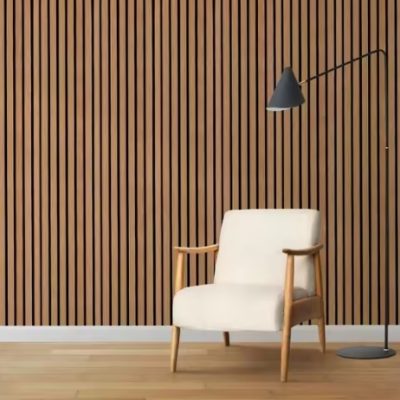


In large-scale commercial real estate—particularly hotels, multi-family apartments, and luxury villas—interior wall finishes are a major line item in the Bill of Quantities (BOQ). Developers are increasingly shifting away from traditional drywall, plastering, and painting in favor of pre-finished wall panels. Panels eliminate wet work, drastically reduce on-site labor hours, and provide a standardized finish across hundreds of rooms.
However, selecting a wall panel for commercial use requires more than just picking a decorative finish. The material must withstand high traffic, comply with strict building codes, and fit within the project budget. Sourcing these materials directly from Foshan, China—the primary manufacturing hub for interior finishes—offers significant cost advantages, provided the buyer understands the technical specifications required.
Key Takeaways
- Substrate Determines Lifespan: The core material (such as SPC or Bamboo Charcoal) dictates impact resistance and moisture tolerance, directly affecting maintenance costs in high-traffic commercial zones.
- Compliance is Mandatory: Hotel and apartment wall claddings must possess verifiable factory-direct certifications for fire retardancy (e.g., Class A) and low VOC emissions.
- Foshan’s Supply Chain Lowers Overhead: Sourcing from Foshan eliminates domestic raw material transit costs, as polymer suppliers and lamination factories operate within the same industrial cluster.
What core materials are best suited for commercial real estate?
A wall panel’s durability is entirely dependent on its core substrate. While a residential buyer might prioritize aesthetics, a procurement manager must match the substrate’s physical properties to the specific demands of the project area.
| Panel Material | Core Composition | Durability Metrics | Ideal Project Application |
| WPC (Wood Plastic Composite) | Polymer resin mixed with wood fiber | Highly moisture resistant; moderate impact resistance. | Apartment bedrooms, hotel bathrooms, ceiling features. |
| SPC (Stone Plastic Composite) | Limestone powder and PVC stabilizer | Extremely dense; high impact and scratch resistance; completely waterproof. | Hotel lobbies, elevator corridors, high-traffic public spaces. |
| Bamboo Charcoal Fiber | Bamboo powder, calcium, carbon fiber | Excellent structural stability; resists thermal expansion and contraction. | Luxury apartment living areas, hotel feature walls, office partitions. |
| Engineered Wood Veneer | MDF or Plywood core with real timber veneer | High acoustic absorption; lower moisture resistance (requires climate control). | High-end villa master suites, executive boardrooms, boutique hotel rooms. |
What technical and safety certifications must procurement managers verify?
Commercial buildings are subject to strict regulatory oversight. Relying on visual samples without verifying the underlying technical data can result in failed building inspections and costly project delays.
1. Fire and Flame Spread Ratings
Hotel corridors and apartment lobbies require fire-rated materials. Standard polymers will melt or ignite. To meet commercial codes (such as ASTM E84 Class A in North America or EN 13501-1 in Europe), factories must mix specific flame-retardant additives into the extrusion process. Procurement teams must request current, third-party lab testing reports (e.g., from SGS or Intertek) prior to placing bulk orders.
2. Environmental and Air Quality Standards
In enclosed hospitality and residential spaces, indoor air quality is critical. Panels utilizing adhesives or engineered wood cores must be tested for formaldehyde emissions. Buyers should specify E0 or CARB Phase 2 compliance. Modern co-extruded composite panels (like SPC and Bamboo Charcoal) generally utilize PUR hot-melt adhesives, which emit zero VOCs.
3. Dimensional Stability
In large-scale installations, panels are subjected to temperature fluctuations. Materials with high thermal expansion rates will warp or buckle over time. Procurement managers must verify the factory’s expansion coefficient data to ensure the panels will remain flat across expansive hotel walls or long apartment corridors.
How do installation mechanisms affect the total fit-out budget?
The initial unit cost of a wall panel is only one part of the financial equation; installation labor often costs more than the material itself.
Commercial wall panels utilize interlocking tongue-and-groove or metal snap-clip systems. This allows installation crews to mount panels directly onto furring strips or leveled concrete without heavy adhesives or specialized carpentry. However, this system relies on absolute precision during manufacturing. If a factory’s extrusion molds are worn, a 0.5mm deviation in the locking joint will compound across a 10-meter wall, resulting in visible gaps and failed installations. Strict in-line quality control at the factory is required to monitor milling tolerances.
How does Foshan’s industrial geography lower procurement costs?
Foshan represents an integrated ecosystem for building materials. When a buyer sources wall panels from an isolated region, the factory must import PVC resin, decorative surface films, and packaging materials from other provinces, adding heavy domestic freight costs to the final FOB price.
In Foshan, the polymer extruders, the high-fidelity PVC film printing factories, and the custom mold-making workshops are concentrated within the same logistics zones. This density allows manufacturers to run leaner operations, source custom decorative films in days instead of weeks, and avoid long-distance shipping tariffs. These structural cost savings make Foshan the most competitive sourcing base for volume real estate buyers.
Why choose HSY Sourcing for your project procurement?
Procuring bulk building materials requires technical oversight on the factory floor. Digital communication is insufficient for managing commercial tolerances. HSY Sourcing operates as your dedicated purchasing and inspection office in Foshan.
- Direct Factory Access: We bypass speculative trading companies, matching your project’s volume and quality requirements directly with tier-one extrusion factories.
- Specification Enforcement: We verify that the factory utilizes the correct substrate density, PUR adhesives, and fire-retardant chemicals specified in your BOQ.
- On-Site Quality Control: Our inspectors physically measure locking joint tolerances, verify color batch consistency across thousands of panels, and test surface adhesion before packaging begins.
- Consolidated Logistics: We manage the physical consolidation of your wall panels alongside other project materials (such as hotel furniture, lighting, and sanitary ware) in Foshan, optimizing container loading density to aggressively lower your total landed shipping costs.
Frequently Asked Questions (FAQ)
Can the factory match our interior designer’s custom color or texture?
Yes. Foshan factories maintain vast libraries of decorative surface films. For project orders meeting a minimum threshold (typically 800 to 1,000 square meters), manufacturers can custom-match exact wood grains, solid RAL/Pantone colors, or stone textures based on physical control samples provided by your design team.
How do you prevent wall panels from being damaged during ocean freight?
Wall panels are lengthy and prone to edge crushing. HSY Sourcing enforces rigorous export packaging standards. Panels must be packed face-to-face with protective foam interlayers, boxed in heavy-duty corrugated cartons, and secured onto enclosed, fumigated wooden pallets with rigid plastic edge protectors and heavy strapping.
What is the standard lead time for a bulk order of commercial wall panels?
For standard profiles and in-stock surface films, mass production for a 40HQ container generally requires 15 to 20 days. If your project demands a custom extrusion profile that requires new steel molds, the engineering and sampling phase will add an additional 10 to 15 days to the timeline.
Can composite wall panels be used in wet areas like hotel bathrooms?
WPC and SPC panels are highly moisture-resistant and are frequently used in hotel bathroom dry zones. However, they are not recommended for direct installation inside shower enclosures, as continuous water exposure requires specialized waterproof backing and sealed joints that standard interlocking panels do not provide.