
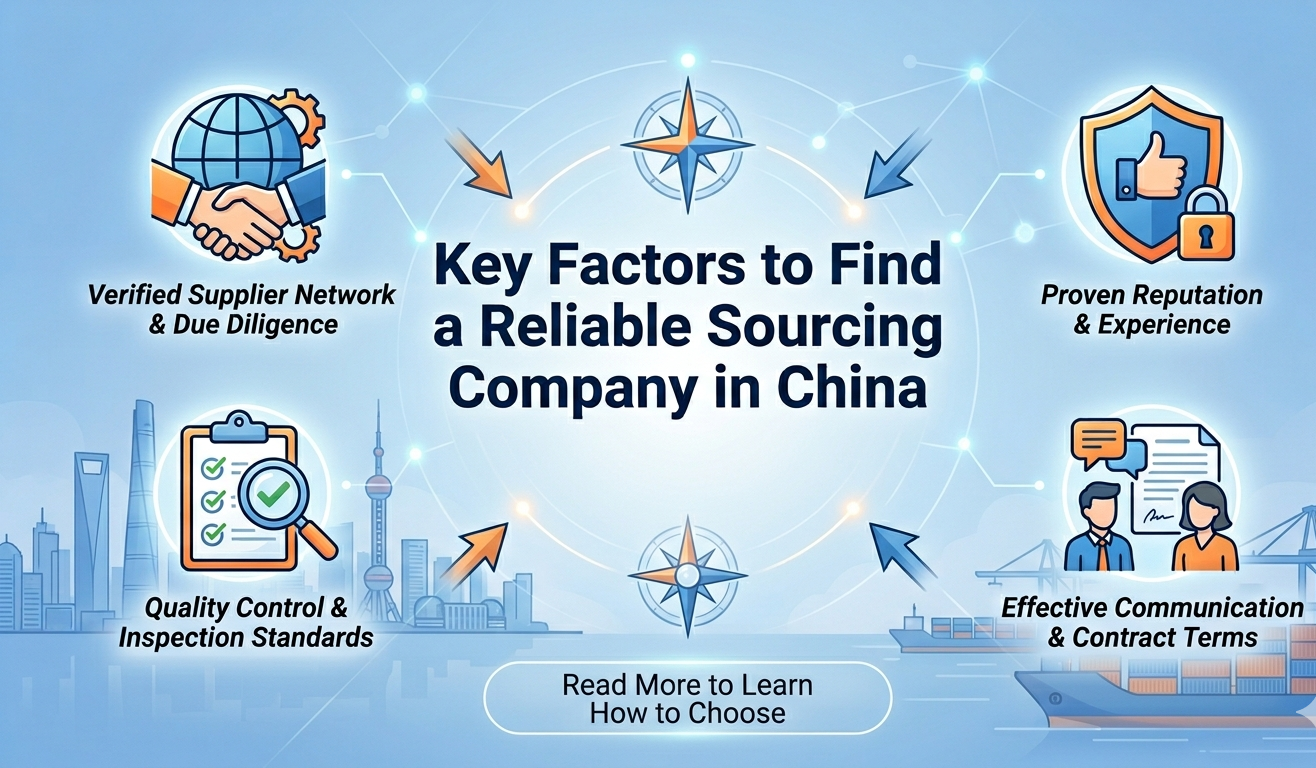
For any importer or brand owner, hiring a sourcing company is essentially hiring a remote management team. In China’s vast manufacturing landscape, the difference between a “broker” and a “partner” can be the difference between a profitable project and a total loss.
Many buyers make the mistake of choosing an agent based solely on the lowest commission. In reality, a low commission often means the agent is making their money elsewhere—usually through unrecorded markups or factory kickbacks. To find a partner who actually protects your interests, you need to look past the sales pitch and examine their operational reality.
Does the company actually understand your specific industry?
A generalist sourcing agent who buys toys on Monday and electronics on Tuesday is rarely the best fit for technical products. Every industry has its own “language” and failure points.
If you are sourcing building materials, your agent needs to know the difference between 6063-T5 aluminum and cheaper alternatives. If you are in lighting, they must understand certification requirements like UL or CE. A reliable sourcing company should have a track record in your specific niche. They should be able to tell you which factories in a specific town (like Foshan for furniture or Zhongshan for lighting) are top-tier and which are just assembly workshops.
Where is the sourcing team physically located?
In China, “local” means more than just being in the same country. If your factories are in Guangdong but your sourcing agent is in Shanghai, they are over 1,000 kilometers away. This distance creates a lag in communication and increases travel costs for inspections.
A reliable partner should be based near the manufacturing hubs they cover. For example, being based in the Guangdong cluster (Foshan, Guangzhou, Dongguan) allows an agent to visit a factory on short notice if a production issue arises. This “boots on the ground” presence is the only way to verify that the “real factory” isn’t actually a small sub-contractor.
Is the fee structure transparent, or are there hidden markups?
Transparency is the foundation of trust in procurement. You should know exactly how your sourcing partner gets paid. Common structures include:
- Flat Service Fees: A fixed price per project or per month.
- Commission Based: Usually a percentage (e.g., 3% to 10%) of the total order value.
The red flag occurs when an agent claims a “zero commission” or an unusually low fee. In these cases, the agent is almost certainly receiving a “rebate” from the factory. This creates a conflict of interest: the agent is now working for the factory’s profit, not your cost savings. A reliable company will be upfront about their fees and provide original factory invoices whenever requested.
What does their Quality Control (QC) process look like in practice?
A reliable sourcing company doesn’t just “check the boxes”; they provide objective, data-driven reports. You should ask to see a sample inspection report before hiring them.
Does the report include:
- Specific AQL (Acceptable Quality Limit) standards?
- High-resolution photos of defects and packaging?
- Actual measurements compared against the approved sample?
- Live video during the loading process?
If their QC process consists only of a quick walk-through and a “looks good” email, they are not protecting your supply chain.
How do they handle the inevitable “Plan B”?
No supply chain is perfect. Raw material prices spike, power cuts happen, and production delays occur. The mark of a reliable sourcing company is not the absence of problems, but how they solve them.
When a factory misses a deadline or a batch of products fails inspection, does the agent help you negotiate a rework at the factory’s expense? Do they have backup suppliers ready to go? A partner should be a proactive problem-solver who gives you the “unfiltered reality” of a situation immediately, rather than hiding bad news until it’s too late to fix.
Key Takeaways
- Industry Niche Matters: Choose an agent who speaks the technical language of your specific product.
- Proximity is Power: Ensure the agent is physically located within the manufacturing cluster of your products.
- Demand Transparency: If the fee seems too good to be true, the agent likely has a hidden conflict of interest.
- Evidence-Based QC: Always request detailed, photographic inspection reports based on international AQL standards.
FAQ: Finding a Sourcing Partner
Q: Should I use a large sourcing agency or a smaller, specialized team?
A: Large agencies often have better software and scale, but small-to-medium specialized teams usually provide more “hands-on” attention and deeper industry-specific knowledge.
Q: Is it okay if my sourcing agent takes a commission from the factory?
A: Only if they are transparent about it. If they hide it, they are essentially taking money out of your pocket by inflating the factory price.
Q: Can a sourcing agent help with shipping and logistics?
A: Yes, a full-service agent should handle container consolidation, export documentation, and coordination with your freight forwarder to ensure a smooth transition from factory to port.
Why Choose HSY Sourcing?
Finding a reliable partner in China shouldn’t be a guessing game. HSY Sourcing operates with a focus on technical precision and radical transparency.
We are based directly in Foshan, Guangdong, the heart of China’s building material, furniture, and lighting industries. Our team doesn’t just sit in an office; we are on the factory floors in Foshan, Dongguan, and Zhongshan every week.
- We are Specialists: We have deep technical experience in sectors like denim manufacturing, lighting, and building materials. We know exactly what to look for—from the weight of a fabric to the thermal break of an aluminum window.
- Direct Communication: You get straight talk. If a factory is struggling with quality or a timeline is unrealistic, we tell you immediately.
- Verified Procurement: We don’t just “find suppliers.” We conduct rigorous factory audits, checking business licenses, production capacity, and historical export performance.
- Comprehensive QC: Our inspection reports are detailed, photographic, and based on your specific quality benchmarks. We act as your eyes and ears on the ground.