
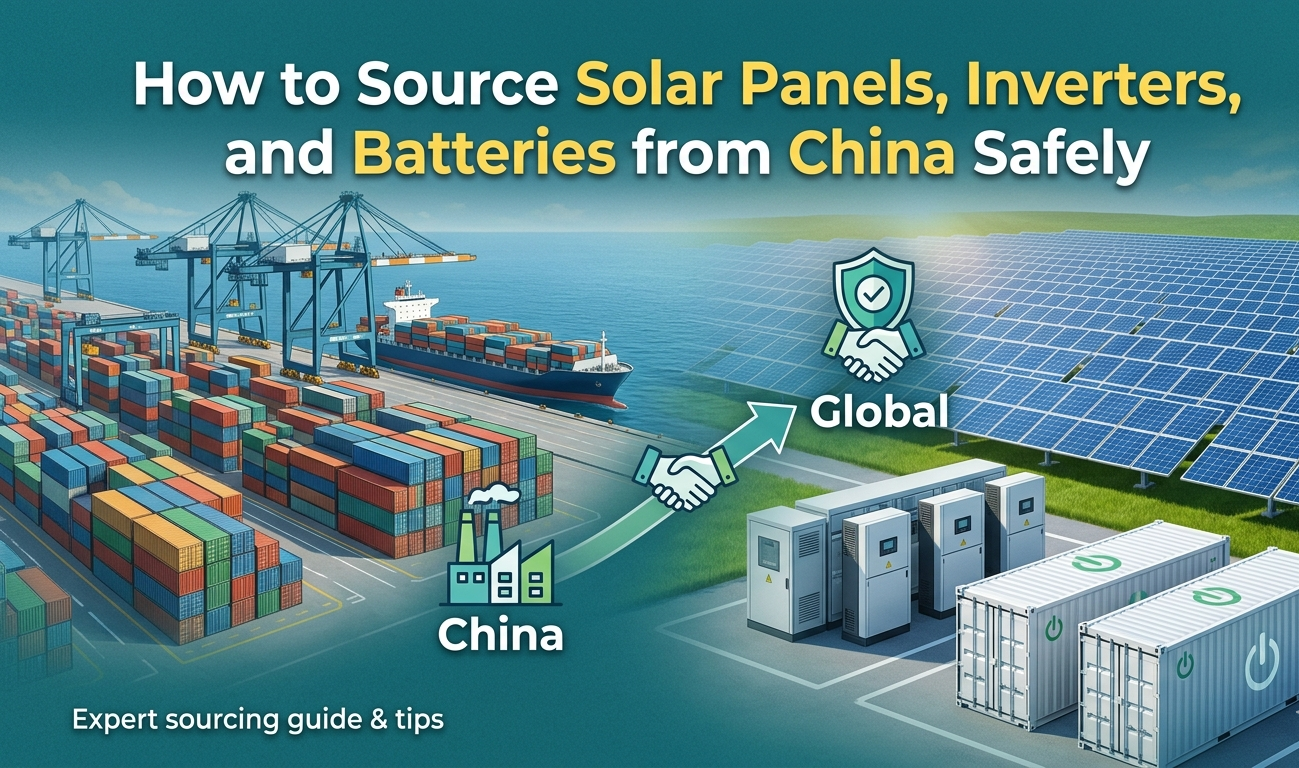
As the global push for energy independence accelerates, solar energy systems—comprising panels, inverters, and battery storage—have become standard requirements for modern construction projects. For developers and project managers, the challenge is no longer finding a supplier, but navigating a market flooded with varying quality tiers and complex safety regulations.
In 2026, sourcing solar components is no longer just about “buying hardware”; it is about integrating renewable energy into the broader Whole-House Customization ecosystem.
How do you verify the technical credentials of solar suppliers?
China dominates the global PV (photovoltaic) supply chain, but not all factories are equal. When sourcing panels, you must distinguish between Tier 1 manufacturers and smaller assembly shops. Tier 1 brands (like LONGi, Jinko, or Trina) invest heavily in R&D and offer 25-year warranties that are actually bankable.
For inverters and batteries, the stakes are higher. You must demand verified test reports for:
- IEC 61215 / 61730: For solar panel durability and safety.
- UL 1741 or EN 50549: For grid-tied inverters.
- UN38.3 & IEC 62619: Critical for lithium battery transport and stationary storage safety.
Do not accept scanned copies. A professional sourcing partner should verify these certificates directly with the issuing bodies (such as TUV or SGS).
Why is integration with “Whole-House Customization” the future of sourcing?
Modern property developers are moving away from piecemeal procurement. The “Smart & Green Home” concept integrates solar energy directly into the architectural design.
In a Whole-House Customization project, the solar system must “talk” to the home’s interior ecosystem. This means:
- Aesthetic Integration: Using BIPV (Building-Integrated Photovoltaics) that matches the roof or facade design.
- Smart Energy Management: Ensuring the inverter and battery storage system are compatible with the home automation systems used for lighting, HVAC, and custom appliances.
- Spatial Planning: Designing custom cabinetry or utility rooms that specifically house the inverter and battery racks, ensuring proper ventilation and fire safety.
What are the hidden logistical risks of shipping lithium batteries?
Solar batteries (Lithium Iron Phosphate – LiFePO4) are classified as Class 9 Dangerous Goods. Sourcing them safely requires more than just a low price; it requires a specialized logistics strategy.
Risk management involves:
- Strict Packaging Standards: Batteries must be shipped in UN-certified packaging to prevent short circuits or thermal runaway.
- State of Charge (SoC): Batteries should be shipped at approximately 30% charge to meet international maritime safety standards.
- MSDS & Pre-shipment Inspection: Never load a container without an updated Material Safety Data Sheet (MSDS) and an on-site inspection to ensure the battery cells match the technical specs promised in the contract.
How can you perform an effective on-the-ground factory audit?
A website profile cannot tell you if a factory uses “Grade A” or “Grade B” cells. To source safely, you need a physical presence in the manufacturing hub.
A real-world audit should focus on the EL (Electroluminescence) Testing for panels, which reveals micro-cracks invisible to the naked eye. For inverters and batteries, the audit must check the Aging Room—how long is the equipment tested under load before being boxed? If a factory skips the 48-hour burn-in test, the failure rate on your construction site will be unacceptably high.
Key Takeaways
- Stick to Tier 1: For long-term projects, the reliability of established brands outweighs the initial savings of “no-name” components.
- Design for Integration: Treat the solar system as a component of your whole-house customization, not an afterthought.
- Safety is Non-Negotiable: Prioritize UN-certified packaging and verified lithium battery certifications to avoid catastrophic shipping or installation failures.
- Verification over Trust: Use a local sourcing agent to perform physical EL testing and aging-room audits before final payment.
FAQ: Sourcing Solar & Energy Storage
Q: Can I mix different brands of panels, inverters, and batteries?
A: Technically yes, but it increases the risk of communication errors between the Battery Management System (BMS) and the Inverter. It is safer to source a “Validated Bundle” where the inverter and battery protocols have been pre-tested for compatibility.
Q: What is the lifespan of modern LiFePO4 solar batteries?
A: High-quality “Grade A” cells typically offer 6,000+ cycles, which translates to roughly 10–15 years of daily use, depending on the depth of discharge (DoD).
Q: How do I handle solar sourcing for a large-scale apartment project?
A: Large projects require a “Technical Specification Document” before quoting. Your sourcing agent should coordinate with your project engineers to ensure the container consolidation matches the phased construction timeline.
Integrate Your Energy Future with HSY Sourcing
At HSY Sourcing, we bridge the gap between technical energy systems and premium architectural design. Based in the heart of China’s manufacturing clusters, we help developers and project owners source solar panels, inverters, and battery storage solutions that are safe, certified, and fully integrated with your Whole-House Customization requirements.
From factory-gate EL testing to managing the complexities of Dangerous Goods logistics, we ensure your “Green Building” vision becomes a reality without the technical headaches.