
When buying products from overseas suppliers, one of the biggest concerns for importers is product quality. This is especially true when sourcing from factories in China, where buyers often cannot be present during production.
That is why many companies arrange a pre-shipment inspection in China before goods leave the factory.
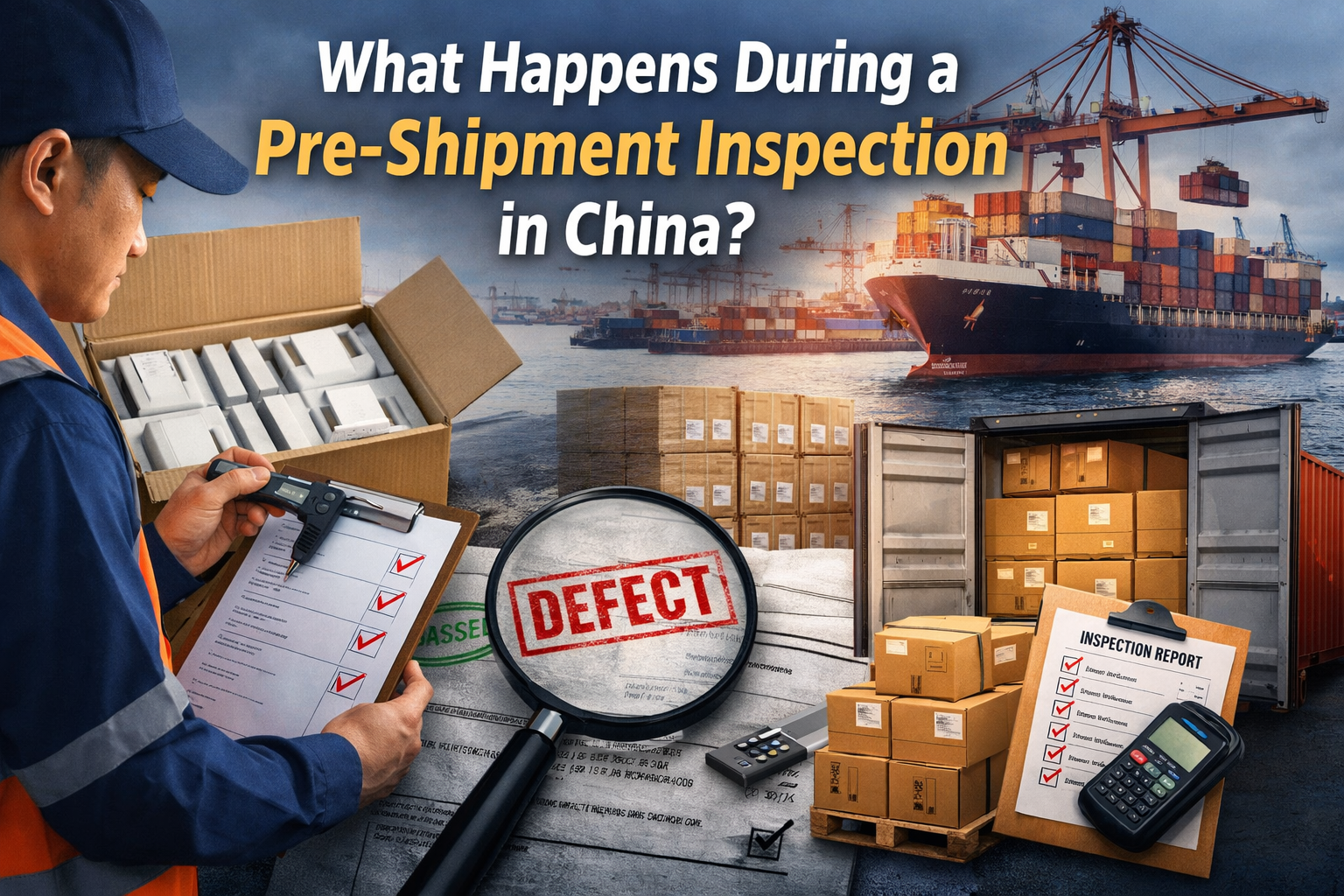
A pre-shipment inspection is a final check carried out when production is finished and most of the goods are packed. The goal is simple: confirm that the order meets the agreed requirements before the products are shipped.
For many importers, this step helps reduce risk and avoid surprises after the goods arrive.
What Is a Pre-Shipment Inspection in China?
A pre-shipment inspection (often called PSI) is a quality control process that takes place when production is almost complete.
Typically, the inspection happens when:
- Production is finished
- At least 80–100% of goods are packed
- The shipment is almost ready to leave the factory
During this inspection, an inspector checks whether the products match the buyer’s specifications.
This type of quality inspection in China is widely used by importers, wholesalers, and e-commerce brands that want to confirm product quality before making the final payment.
Why Do Overseas Buyers Arrange Pre-Shipment Inspections?
Many buyers cannot visit factories themselves, especially when sourcing from different regions in China.
Factories are often located in manufacturing hubs such as:
- Foshan
- Shenzhen
- Dongguan
- Zhongshan
For overseas buyers, arranging a pre-shipment inspection service in China helps confirm that the products meet expectations before shipping.
Without inspection, problems may only be discovered after the goods arrive in the destination country. By that time, fixing the issue can be expensive or difficult.
Inspection does not guarantee perfect products, but it helps identify major problems early.
What Does an Inspector Usually Check?
During a pre-shipment inspection, several aspects of the order are reviewed.
Common checks include:
Product appearance
Inspectors look for visible defects such as scratches, color differences, or poor finishing.
Product quantity
The inspector confirms whether the total number of products matches the order quantity.
Workmanship
Basic workmanship is checked to see if the product meets the agreed standard.
Packaging
Inspectors verify that packaging follows the buyer’s requirements, including labels, barcodes, and carton markings.
Carton condition
Shipping cartons are checked to make sure they are strong enough for transportation.
These checks help confirm whether the order meets the agreed specifications before shipment.
How Are Products Selected for Inspection?
Inspectors usually do not check every single product.
Instead, they follow a sampling method, which means randomly selecting products from different cartons.
Many inspections follow the AQL standard, which stands for Acceptable Quality Limit. This method helps determine how many units should be checked and how defects are evaluated.
Sampling is widely used in quality control inspections in China, especially for large production orders.
What Happens If Problems Are Found During Inspection?
If defects are found during the inspection, the inspector records them in a report.
Typical issues might include:
- Incorrect product specifications
- Poor workmanship
- Missing accessories
- Wrong labels or packaging
After the inspection, the buyer can decide what to do next. Possible options include:
- Asking the factory to fix the problems
- Replacing defective items
- Re-packing the shipment
- Delaying shipment until issues are resolved
The inspection report helps buyers make informed decisions before goods leave the factory.
What Does a Pre-Shipment Inspection Report Include?
After the inspection is completed, the inspector prepares a report for the buyer.
A typical pre-shipment inspection report in China may include:
- Product photos
- Defect descriptions
- Quantity verification
- Packaging details
- Carton photos
- Overall inspection result
The report allows the buyer to see the condition of the goods without being physically present at the factory.
Is Pre-Shipment Inspection the Same as Factory Audit?
No, these are different processes.
A factory audit focuses on evaluating the supplier itself, including:
- Production capability
- Management system
- Factory facilities
A pre-shipment inspection, on the other hand, focuses on the finished products of a specific order.
Both processes are part of a broader China sourcing quality control process, but they serve different purposes.
Do All Importers Use Pre-Shipment Inspections?
Not every order requires inspection.
Some buyers skip inspections when:
- The order value is small
- They have long-term suppliers
- The product is simple and low risk
However, many experienced importers still arrange pre-shipment inspection services in China, especially for new suppliers or large orders.
It is generally considered a practical step for reducing sourcing risks.
Final Thoughts
A pre-shipment inspection in China is a practical way for overseas buyers to check their orders before shipment.
The goal is not to find minor flaws in every product. Instead, the inspection helps confirm that the goods generally match the agreed requirements before they are shipped.
For companies sourcing products from China, this step often provides an extra level of confidence in the supply process.
It may not eliminate every risk, but it helps buyers make better decisions before goods leave the factory.