
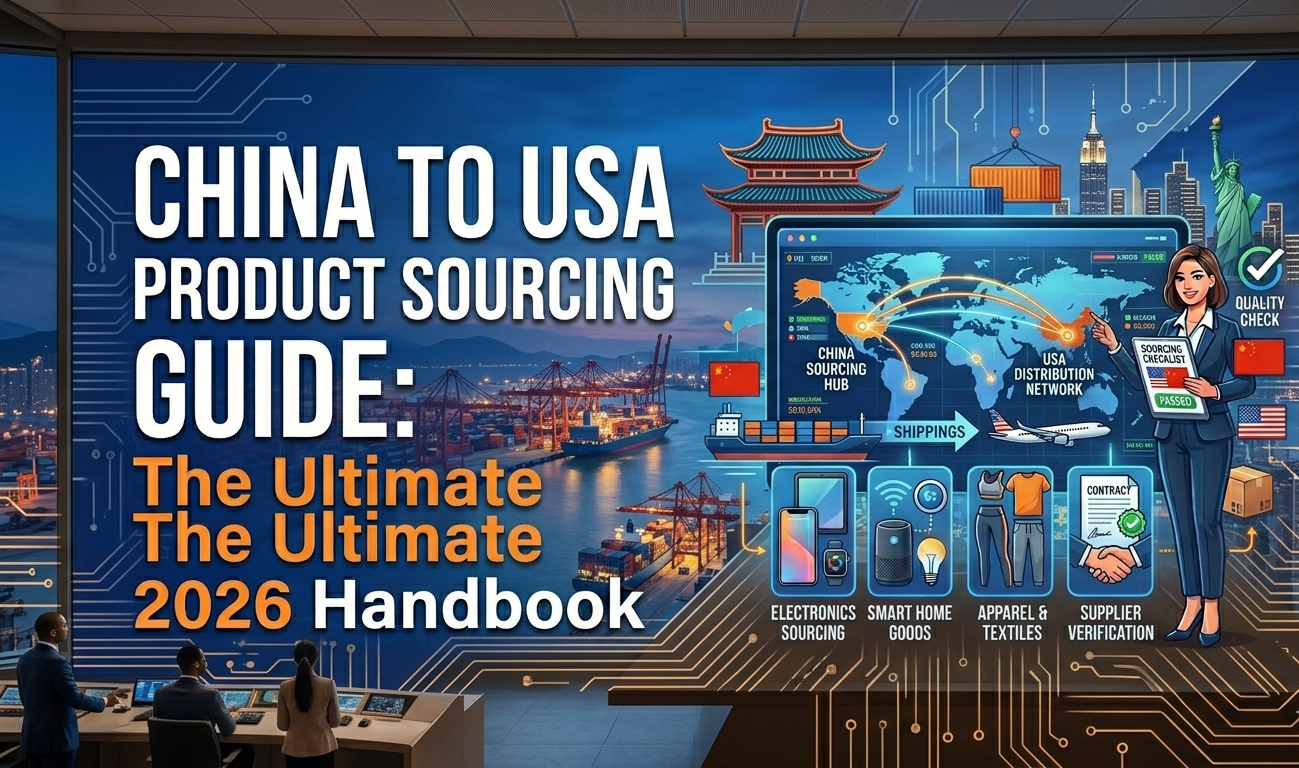
Navigating the trade bridge between China and the United States has become more sophisticated in 2026. With shifting tariffs, a greater emphasis on sustainability, and the rise of AI-driven supply chain tools, importers must be more strategic than ever. Whether you are sourcing technical textiles, high-end building materials, or consumer electronics, success lies in your ability to bridge the geographical and cultural gap.
Key Takeaways
- Verify at the Source: Use a combination of digital background checks and physical factory audits to avoid trading companies masquerading as factories.
- Understand Total Landed Cost: Don’t just look at the unit price; factor in 2026 shipping rates, Section 301 tariffs, and insurance.
- Compliance is King: Ensure products meet US-specific standards (UL, FDA, ASTM) before they leave the Chinese port.
- Leverage Clusters: Focus your search on specific industrial hubs—like Foshan for furniture or Xintang for specialized garments—to find the best expertise.
How do you identify reliable Chinese suppliers for the US market?
In 2026, a “Gold Supplier” badge on Alibaba is only the starting point. To find a partner capable of meeting American quality standards:
- Check Export History: Ensure the supplier has a track record of shipping to the USA. They will be more familiar with US customs documentation and quality expectations.
- Request Specific Documentation: Ask for ISO 9001 certifications and, more importantly, recent Material Test Certificates (MTC). For instance, if you are sourcing denim, verify the fabric weight (oz) and dye composition.
- Video Audits: Use real-time video calls to tour the production line. If a supplier refuses to show the actual machines in operation, they may be a middleman.
What are the essential compliance and legal requirements for USA imports?
The US Customs and Border Protection (CBP) has increased scrutiny on product safety and labor transparency.
- Targeted Certifications: Depending on your niche (e.g., children’s products or construction materials), you must ensure the factory can provide CPC (Children’s Product Certificate) or relevant UL listings.
- Country of Origin Marking: Every single item must be clearly marked “Made in China.” Failure to do this can lead to expensive “marking duties” or shipment seizures.
- The UFLPA Compliance: Ensure your supply chain is transparent. Importers are now responsible for proving that no forced labor was used at any stage of the raw material sourcing.
Which logistics strategy minimizes costs for China-to-USA shipping?
Shipping in 2026 requires a mix of speed and cost-efficiency.
- LCL vs. FCL: For smaller brands, Less than Container Load (LCL) is flexible, but Full Container Load (FCL) offers better protection and a lower per-unit cost if you can meet the volume.
- Door-to-Door (DDP): For new importers, “Delivered Duty Paid” is often the simplest route, as the supplier or freight forwarder handles all taxes and duties. However, “Free on Board” (FOB) usually offers more control over the final shipping costs.
- East Coast vs. West Coast: Be strategic about your entry port. Shipping to LA/Long Beach is faster, but if your warehouse is in the Midwest, shipping to Savannah or New York might save on domestic trucking costs.
How do you manage quality control from across the Pacific?
Quality “drift” is the biggest risk for long-term sourcing.
- The Golden Sample: Never start mass production until you have a signed-off “Golden Sample.” This sample serves as the legal and physical benchmark for the entire order.
- Third-Party Inspections: Hire an independent inspection firm to visit the factory when production is 80% complete. They can check everything from the stitching on a garment to the finish on a piece of furniture.
- Payment Terms: Use a 30/70 payment structure. Pay 30% as a deposit to start production, and only release the final 70% after a successful quality inspection report is issued.
Frequently Asked Questions (FAQ)
What are the current US tariffs on Chinese imports in 2026?
Tariffs vary significantly by product category. While many consumer goods fall under Section 301 tariffs (ranging from 7.5% to 25%), some industrial and green-energy products may have different rates. Always check the latest Harmonized Tariff Schedule (HTS) code for your specific product.
Is it better to use a sourcing agent or go direct?
If you are spending over $50,000 per year or dealing with complex custom designs (like specialized textiles or furniture), a local sourcing agent is invaluable. They handle factory negotiations, language barriers, and on-site quality control that is difficult to manage from the USA.
How long does it typically take to source and receive products?
A standard timeline is 90 to 120 days. This includes 30 days for sourcing and sampling, 30–45 days for production, and 30–40 days for sea freight and customs clearance.
Expert Tip: In 2026, the most successful importers are those who treat their suppliers as partners rather than just vendors. Clear communication and a deep understanding of the manufacturing process in hubs like Guangdong province will always result in better pricing and higher quality.